In this week’s New Yorker

September 26, 2013

new yorker sept 30 cover
It took me a while to understand Barry Blitt’s cover (“Bad Chemistry”), but I guess I’m one of the last halfway sentient people in New York who has never watched an episode of Breaking Bad.

I found all four of the feature stories absorbing:

* Xan Rice’s “Now Serving,” about a brave Somali who opened a string of restaurants and hotels in Mogadishu and continues to operate despite being attacked by the Shabab, the same band of crazed thugs who shot up the shopping mall in Nairobi this week;

* Josh Eells’s “Night Club Royale,” about the dance nightclub industry in Las Vegas, where certain clubs pull in half a million dollars a night from drinks alone and star DJs get paid astronomical fees;

* I kept telling myself, ugh, I don’t want to read any more details about the distressing/hopeless situation in Syria, and yet the great reporter Dexter Filkins’s piece “The Shadow Commander” tells us about a figure it’s important to know about, Qassem Suleimani, an Iranian operative who has been calling the shots in Iraq and Syria for the last fifteen years;

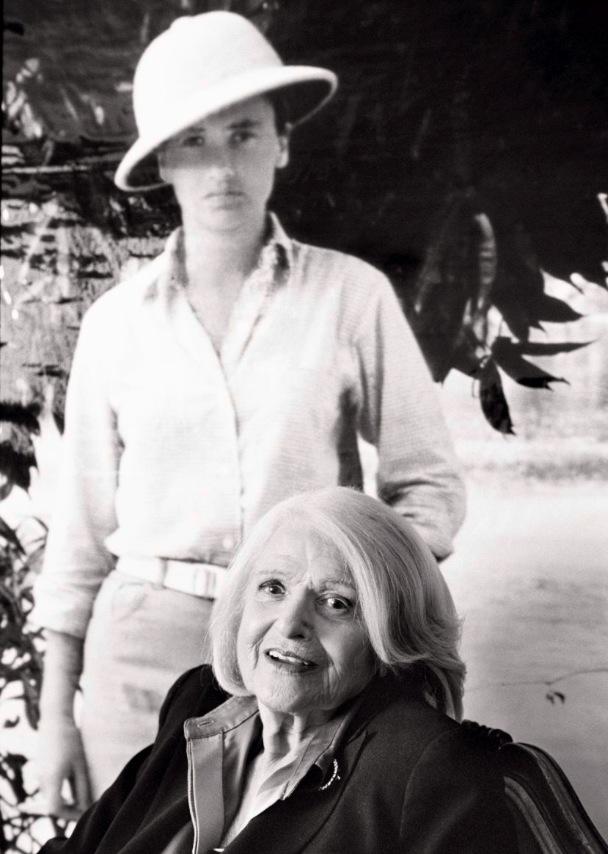
edie windsor
* Ariel Levy’s “The Perfect Wife,” about how marriage equality activists and lawyers selected Edie Windsor as the case to take to the Supreme Court — and what a wild gal she is, even today.

I read with interest Emily Nussbaum’s essay about “Key and Peele,” a TV comedy show by a team of biracial comedians I’ve never heard of — I definitely plan to check them out. I also liked Cora Frazier’s hilarious Shouts & Murmurs piece, “To The N.S.A.: Some Explanations.”

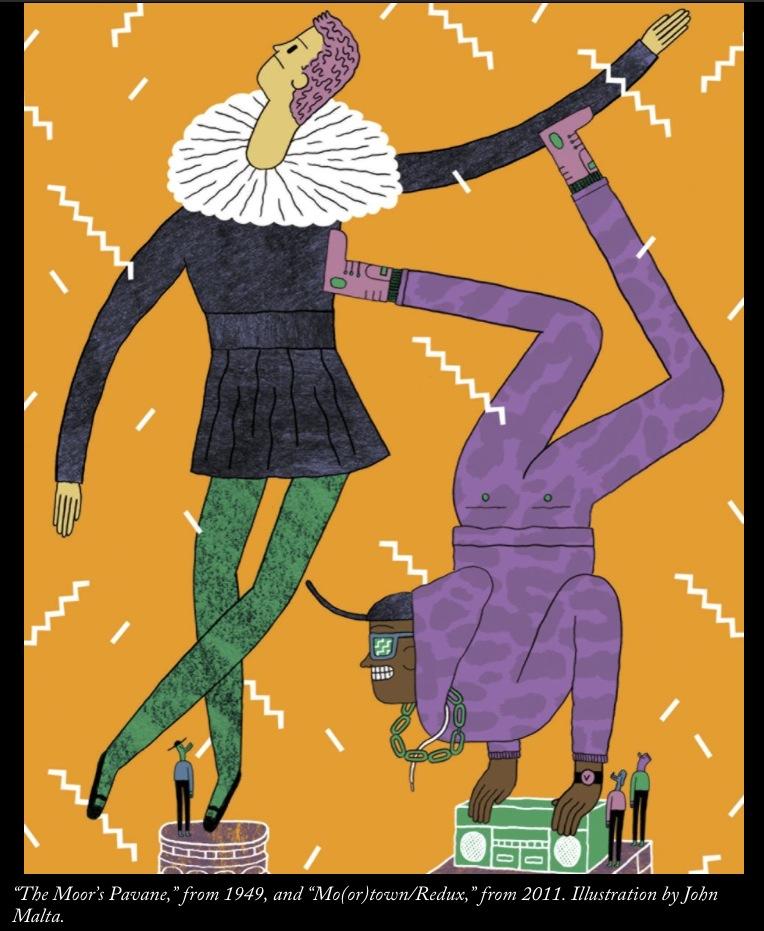
Still not loving the newly designed Goings On Around Town, though I did admire this illustration accompanying Joan Acocella’s Critic’s Choice about two dance pieces based on Othello:

OTHELLo illo
But the best thing in the entire issue is Ian Frazier’s Talk of the Town piece about Shaina Harrison, a young community activist working hard to educate kids about guns in Red Hook. I liked the piece so much I reproduced it in full here.


Quote of the day: GUNS

September 26, 2013

GUNS

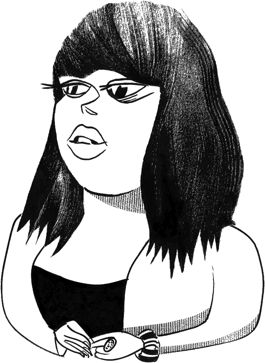
SHAINA HARRISONA New Jersey driver who had previously seen the Red Hook housing projects only while passing by on an elevated span of the Brooklyn-Queens Expressway got off the highway the other day, parked, walked into the projects, and met up with Shaina Harrison, a young woman whose job is helping to prevent gun violence among kids in New York City. Harrison is twenty-six years old and has lived in the Red Hook projects all her life. Watching her approach, the Jersey driver wondered if that could really be she. She wore a necklace of big gold-colored links, a pumpkin-orange top, striped drawstring trousers, and cream-colored pumps with gold tips. She is five feet eleven inches tall. Her long, wavy hair, black streaked with cinnamon highlights, fell to below her shoulders.

“Don’t ask me about my hair,” she said, joining the Jersey driver on a playground bench. “My hair is this way today, and it will be completely different tomorrow. You’ve never been to Red Hook before? I love it here. For the rest of my life, I am never going to leave. The apartment I live in used to be my grandmother’s. Her name was Myrtee Harrison and she came up from North Carolina in 1942, when she was thirteen, and started cleaning offices and apartments. When I was ten, she got temporary custody of me and my younger sister, Ashley. My grandmother was part Blackfoot Indian and never let you forget it. When she had to fill out a form, she would put ‘Native American,’ or ‘Other.’ I would joke, ‘Gramma, we’re black! Why can’t we just be black? I don’t want to be more minority than I am already!’

“Gramma died in this apartment, with just me and my sister there,” Harrison went on. “I was eighteen and Ashley was fourteen. After the funeral, we didn’t know what to do, so we just stayed. I had a full scholarship to go to Bowling Green University, in Ohio. But I decided I had to stay here and raise my little sister. I went to John Jay College of Criminal Justice instead.”

Harrison led the Jersey driver on a stroll around the neighborhood. Almost everybody—kids, old ladies pushing walkers, guys drinking beer on benches—said hello to her. “People don’t shoot here as much as they used to,” she said. “I remember when it was so bad you’d hear gunshots and not even run. It was, like, ‘Oh, who is that shooting now?’ Like the bullets belonged to individual people and had names. Everybody knew what a gunshot sounded like and what a firecracker sounded like. Kids of seven and eight years old could tell you the difference right away—and that’s crazy. But Red Hook has gotten better. We even have our own IKEAnow! I haven’t heard a gunshot around here in nine or ten months.”

She and the Jersey driver came to the corner of Mill and Henry Streets, at the projects’ northern border. “This is where Ronald D. was shot,” Harrison said. “There was a corner store here, and one night a guy in front of it started shooting at someone else, and Ronald D.—Ronald D. Williams was his name—happened to be in between, and he was shot and killed. Ronald D. was a funny, chubby kid who was not the type of person you might think would probably get shot. That was the saddest shooting.”

On another day, Harrison wore business attire—paisley blouse, brown pleated skirt—as she sat at a conference table in the offices of her employer, New Yorkers Against Gun Violence, in Chinatown. This time, her hairdo consisted of extra-large Chaka Khan-style curls, extending horizontally on either side of her face.

She held up her nails, polished in a peach-pink shade. “See my nails? The person who does my nails has to have a license to do nails. You have to have a license to cut hair, a license to be a plumber. I went to buy a goldfish and the pet-store person wanted proof that I owned a fish tank before he would sell me a goldfish. Many people do not know how easy it can be to purchase a gun without a license. I teach after-school classes in high schools and middle schools, and sometimes I show the kids pictures of gun shows and I ask them, ‘Who do you see in this picture that looks like you? The guns are coming to your community from places where almost nobody looks like you, and you are using these guns to kill each other.’

“If I ask a room of kids at a high school in Crown Heights if they could get a gun if they wanted to, every hand goes up. These kids can get a gun more easily than a MetroCard. There are guns nobody owns, guns you can borrow—community guns.

“The reason kids pick up guns is that they are powerless. I try to let them understand how they can have power. We draw maps of their neighborhoods and figure out who their representatives are. The first time I ask who represents them in the government, they always shout, ‘Obama!’ I try to show them there are dozens and dozens of other people between them and him.

“People sometimes ask them what they want to be when they grow up. Don’t ask that! Ask what they want to be right now! I want to help them find that out—how they can have some direction and some power, without it coming from a gun.”

— Ian Frazier, The New Yorker, Talk of the Town, September 30, 2013


Performance diary: THE BLUE DRAGON and MR. BURNS

September 24, 2013

9.20.13 – The Blue Dragon at the BAM Next Wave Festival is a spinoff from The Dragons’ Trilogy, the two-part six-hour epic that I saw at the Los Angeles Festival in 1990, my first exposure to the work of Quebecois director Robert Lepage. Set in Quebec, Toronto, and Vancouver, the trilogy told a sprawling story about the influence of Chinese immigrants on Canadian culture in the 20th century. The Blue Dragon concerns two Canadian characters from the trilogy 25 years later in Shanghai, art dealer Pierre and vacationing ad executive Marie, where they interact with a young Chinese artist named Xiao Ling, Pierre’s protégée and lover. Pierre and Marie married for a lark as kids and never bothered to divorce; now Marie wants a child and has come to adopt – or, more accurately, buy one on the black market.

ET-Dragon
The Blue Dragon
contains all the things I admire about Lepage’s work – the visual splendor, where the sets and images are constantly transforming from one thing to another; the narrative ambition to connect vastly disparate worlds; the low-key humanity at the heart of the performances. I’d never seen Lepage perform onstage until now, only on film, and he has a compelling intimacy and beautiful speaking voice. The works he creates with his company (first Theatre Repere, now Ex Machina) always contain little nuggets of research on topics that seem offhand but wind up pertinent to the plot (Chinese calligraphy is a big one here). The play is co-written with Marie Michaud, who plays Marie, and Xiao Ling is played by Tai Wei Foo, a Singaporean dancer who does two gorgeous dances that show off the mesmerizing and original lighting design by Louis-Xavier Gagnon-Lebrun. My only quarrel with the play is dramaturgical – the set-up of the story is compelling and rich, but at a certain point the authors realized that they’ve set up an easy plot resolution (Xiao Ling becomes pregnant, Marie wants a child, so…) and then contort the story to avoid landing at what seems like a perfectly obvious and reasonable conclusion, and the contortions don’t make sense. I love that the script is published as a graphic novel (below), which I bought at the BAM bookstall.

bluedragon26rv8-detail

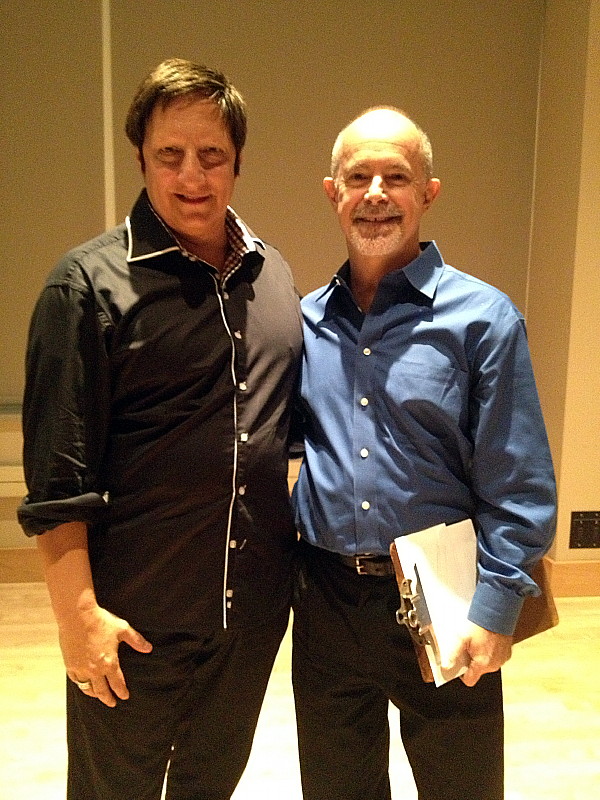
9.21.13 – Saturday afternoon I had the pleasure of interviewing Lepage live in front of an audience as part of BAM’s Iconic Artist Talk series at the Hillman Studio in the new Fisher Building. He talked a little bit about his early training with Alain Knapp and the influence of artists like Lawrence and Anna Halprin, Ariane Mnouchkine, and Pina Bausch on his aesthetic taste in composing theater. A period of time he spent working in Japan directing opera made a life-changing impression on him. And he talked a little about the tetralogy he is at work on now called Playing Cards, which concerns the impact of the Arab world on global culture.

9-21 lepage et moi
9.22.13 – Something told me I had to see Anne Washburn’s play Mr. Burns – a post-electric play at Playwrights Horizons, directed by Steve Cosson (of The Civilians) with music by Michael Friedman. It’s a smart, unusual variant on the much-used theme of “what if X-and-such cultural artifact was the only thing left after the apocalypse and creatures from other planets relied on it to make sense of life on Earth?” After nuclear plant explosions have wiped out the electrical grid, survivors form community around recalling episodes of The Simpsons (which are themselves repositories of a dense assortment of cultural references). The first two acts are intriguing and surprising; the third goes on about three times longer than is needed to make its point. The cast is one of those high-powered ensembles of Off-Broadway heavyweights: Quincy Tyler Bernstine, Susannah Flood, Gibson Frazier, Matthew Maher, Nedra McClyde, Jennifer Morris, Colleen Werthmann, and Sam Breslin Wright (the characters are named after them). This is one of those brave Playwrights Horizons productions that divides its core audience – some people who get the cultural references love it, some people hate it, not much in between. As usual, the theater has made available a bunch of cool background material for people who want to know more about the show — online you can listen to separate podcasts with the author and composer, and at the theater after the show you can pick up a copy of a long illuminating interview with Washburn by artistic director Tim Sanford.


Photo diary: weekend urban walkabout

September 23, 2013

(click on photos to enlarge)

The Apple Store is a madhouse the first day new products go on sale.

The Apple Store is a madhouse the first day new products go on sale.

I'd never noticed the gilt detail at the top of this building on W. 57th Street before.

I’d never noticed the gilt detail at the top of this building on W. 57th Street before.

I spun through MOMA's "American Modern: Hopper to O'Keefe" show, with easy reminders: I love Robert Rauschenberg ("Canyon," above), I don't love Jasper Johns.

I spun through MOMA’s “American Modern: Hopper to O’Keefe” show, with easy reminders: I love Robert Rauschenberg (“Canyon,” above), I don’t love Jasper Johns.

Richard Serra's "Delineator" invited viewers to step on it

Richard Serra’s “Delineator” invited viewers to step on it

so I did.

so I did.

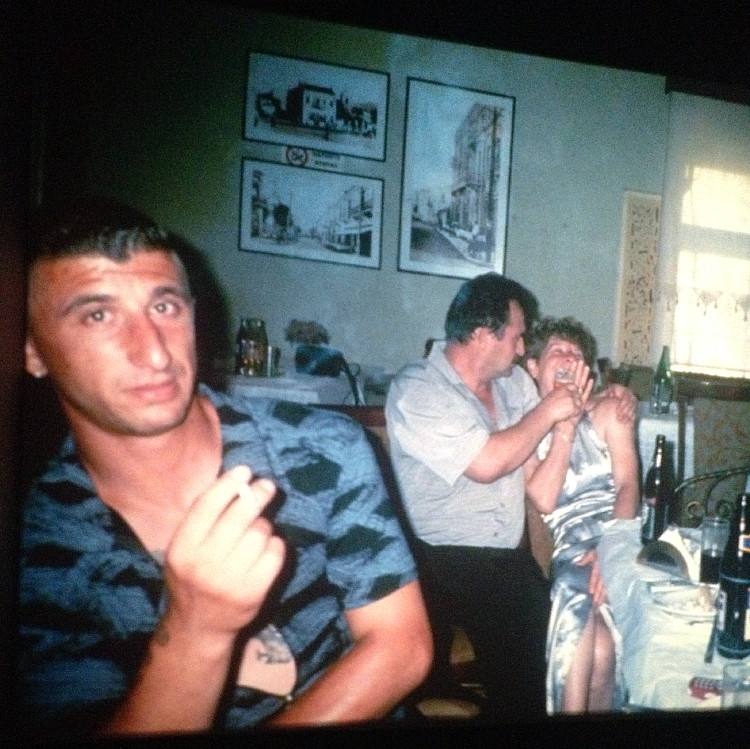
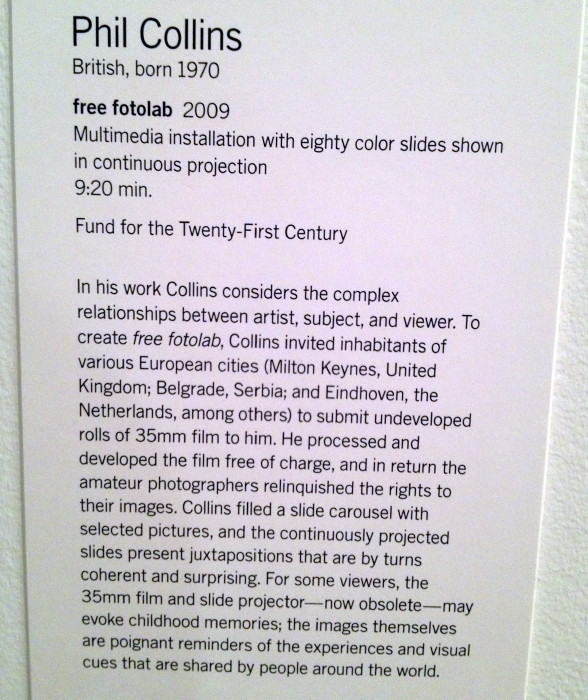
Some discoveries -- like this "Woman" by a painter unknown to me, Ivan le Lorraine Albright (above), and the slideshow by contemporary British artist Phil Collins (NOT the guy from Genesis)

Some discoveries — like this “Woman” by a painter unknown to me, Ivan Le Lorraine Albright (above), and the slideshow by contemporary British artist Phil Collins (NOT the guy from Genesis)

9-20 phil collins slide9-20 collins wall card

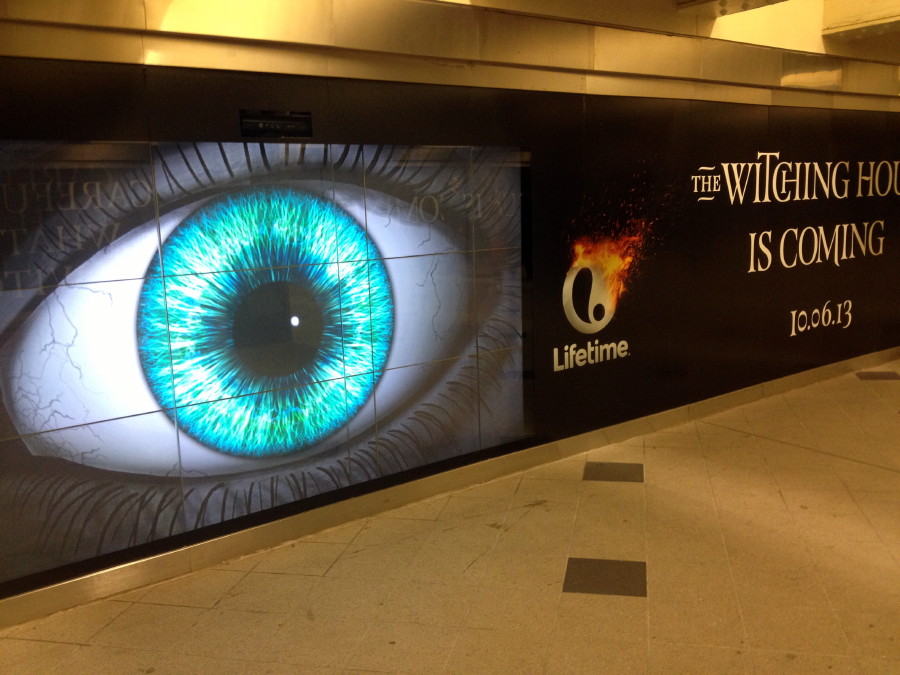
Andy pointed out that the giant eye on the billboard in the walkway at Columbus Circle follows you as you walk

Andy pointed out that the giant eye on the billboard in the walkway at Columbus Circle follows you as you walk

9-21 eye 29-21 random swirl

At Discount Shoe Warehouse I bought new rain boots to take to the Amazonian jungle

At Discount Shoe Warehouse I bought new rain boots to take to the Amazonian jungle


In this week’s New Yorker

September 22, 2013

new yorker goings on cover
The Style Issue contains a bunch of stories in a row that I found engrossing, often to my surprise:

bryan goldberg
Lizzie Widdicombe on Bryan Goldberg, a cocky young entrepreneur (above) who is launching an online magazine for women, Bustle.com, that he hopes becomes as popular and financially successful as his sports site, Bleacher Report, was with men;

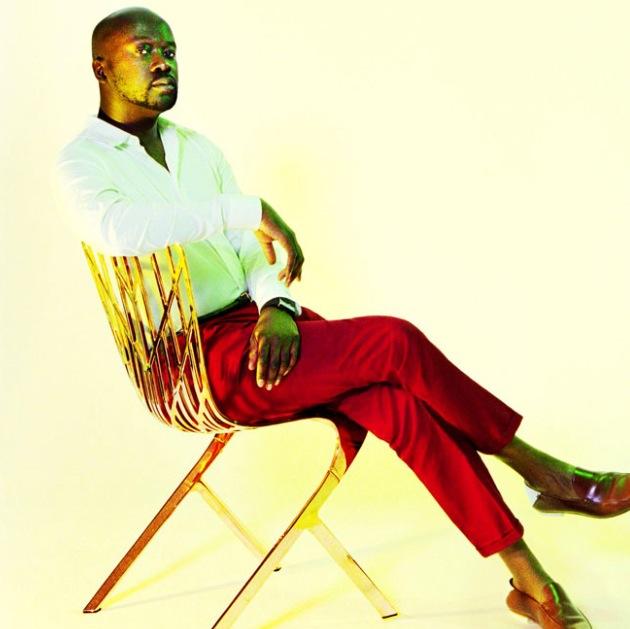
david adjaye
* Calvin Tomkins on David Adjaye, the Ghanaian-British architect (above) who is designing the National Museum of African American History and Culture in Washington, DC, which made him sound so appealing that I ordered his book of photographs of the architecture of African capitals;

* Rebecca Mead on Andrew Rosen, the schlubby founder of the fashion company Theory, a profile that doubles as a succinct history of the garment district;

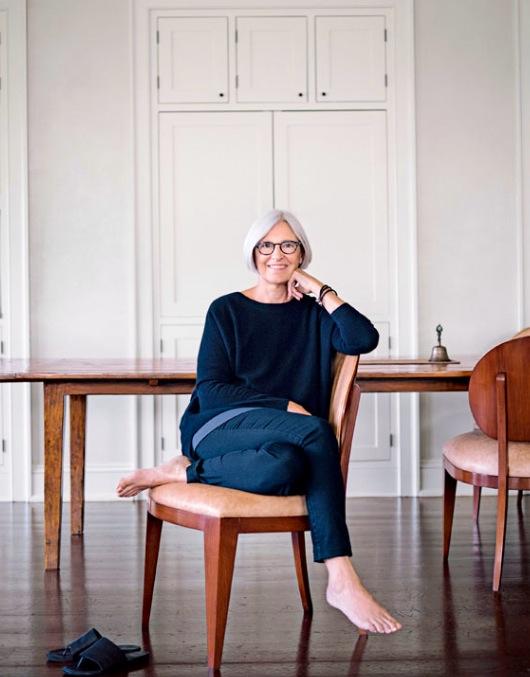
eileen fisher
and a fascinating profile of modest but chic women’s clothing designer Eileen Fisher by Janet Malcolm. Fisher is a smart feminist who runs her company according to principles of non-hierarchical management and simple Buddhist kindness, and Malcolm plays a strange game with her of pretending not to understand the language she uses to describe how the business runs. Her language is slightly vague not not jargonistic, and it’s curious to watch Malcolm play dumb in print. But she is one of the New Yorker’s shrewdest veteran writers who is very open with her subjects about the duty of journalists to betray the people they write about, so I suppose it’s part of her strategy. On the New Yorker’s Page Turner blog, editor-in-chief David Remnick’s Letter from the Archive acknowledges that readers may be surprised to see Malcolm writing about a fashion designer. But Remnick also reminds us that she wrote the shopping column, On and off the Avenue, for a while. He steers Malcom fans to a couple of other surprising profiles from years past, “The Window Washer” and “A Girl of the Zeitgeist” (a memorable story about Ingrid Sischy, then-editor of Artforum, in which the august New Yorker published the word “asshole” for the first time, in a direct quote). Remnick also mentions Katie Roiphe’s Paris Review interview with Malcolm, which I have bookmarked to read very soon.

The New Yorker has done a major redesign, especially in the front of the book. I’m not sure I like it, and the iPad app is very buggy. But I’m prepared to wait and see how it shakes out over the next weeks and months.

twitter cartoon