Archive for the 'In this week's New Yorker' Category

Photo diary: Friday morning at MOMA

December 1, 2013

(click pictures to enlarge)

I stopped by the Museum of Modern Art on Friday to take advantage of their Black Friday special — six months extra when you buy a year’s membership. Such a deal! While I was there, since it was members’ early hour (9:30-10:30) and the place was surprisingly unthronged, I took the occasion to stroll through the current blockbuster show, “Magritte: The Mystery of the Ordinary, 1926-38.” I love Magritte’s work for its wit and its ability to peel strangeness out of everyday tableaux. It’s fascinating to notice how many of his images have become embedded in our cultural consciousness. It’s not that they look any less strange or striking — I would say that Magritte has contributed to how we accept surrealism as part of our landscape, literally and figuratively. There are many pictures in the show I’ve never seen before, and some favorites are not here, which reminded me that I must have seen a giant retrospective of his work before, possibly in London, because that show turned me on to what I think is my favorite of his paintings, “Homesickness.”

magritte homesickness
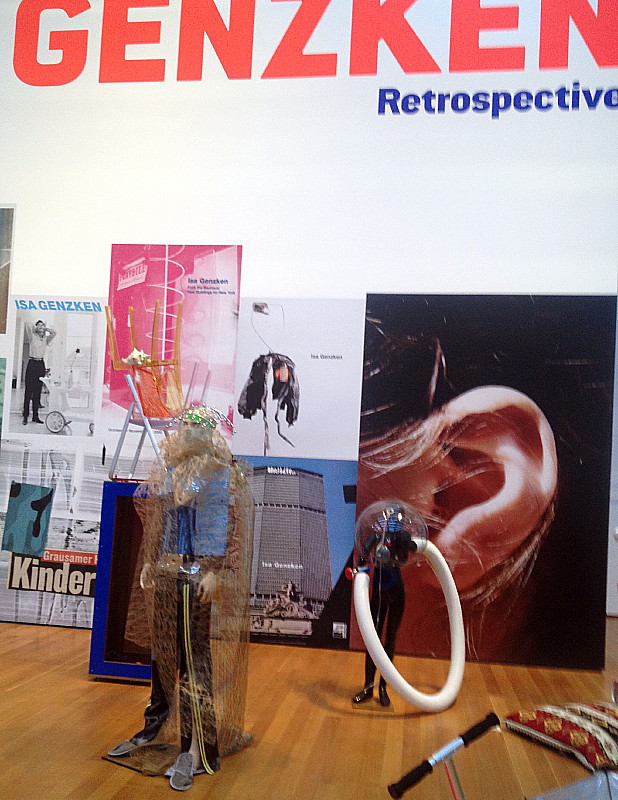
No photography is permitted in the Magritte galleries, but also on the sixth floor is the Isa Genzken retrospective, where pictures are encouraged. Before this week, I’d never heard of her, but I read Peter Schjeldahl’s glowing review in this week’s New Yorker, along with Nick Paumgarten’s profile of high-powered art dealer David Zwirner (who represents her) and Judith Thurman’s blog post about her aborted profile of the artist. So I felt sufficiently prepped to tour her array of sculptures, videos, collages, assemblages, paintings, photographs, and notebooks.
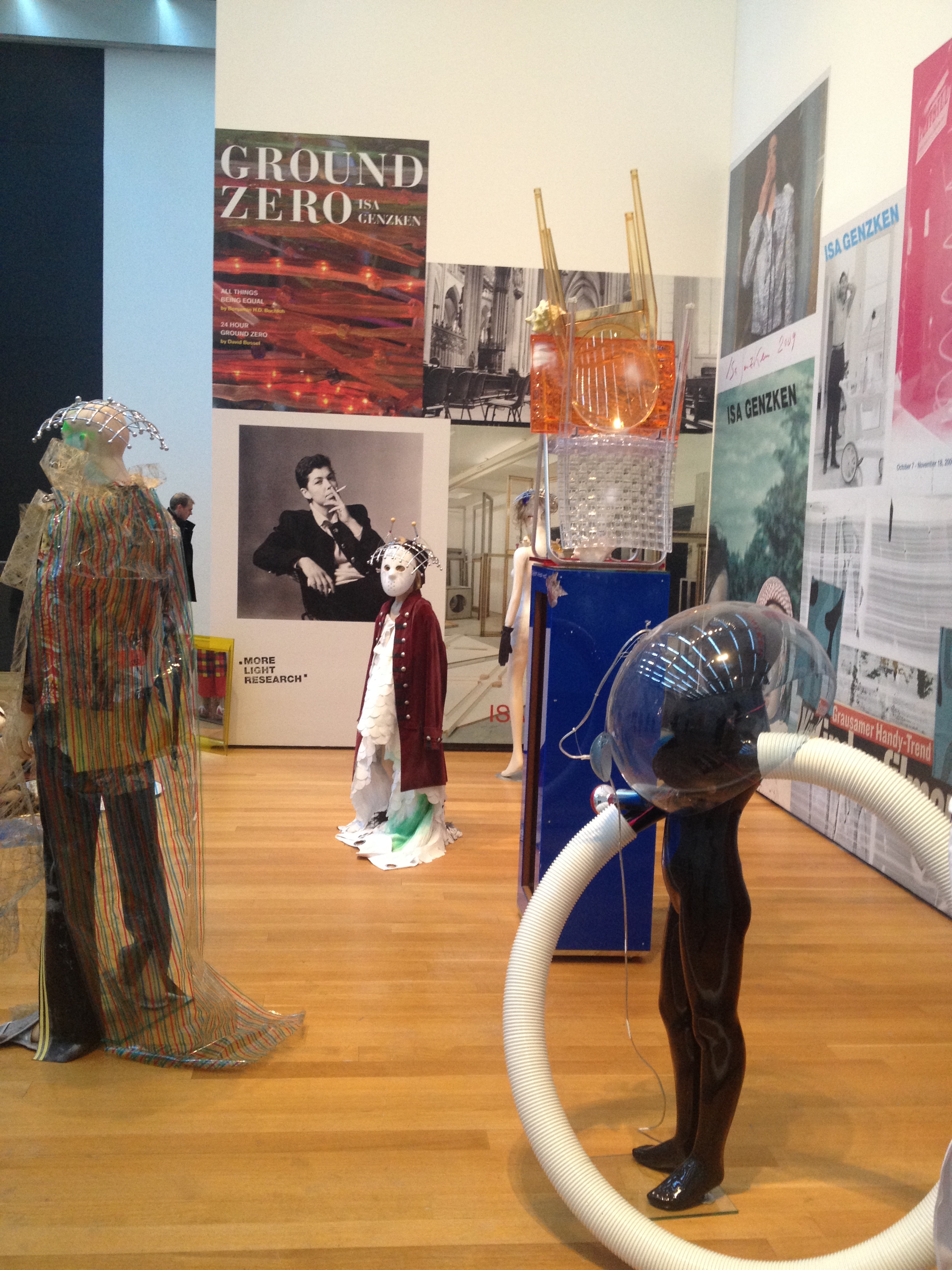
11-29 isa 411-29 isa 211-29 isa genzken 1
I was intrigued to read about and then to see evidence of her curious and strong identification with the gay male culture she encountered both in Berlin and in New York City.

11-29 isa and the gays
This piece, for instance, is called “Gay Babies” — a handful of suspended assemblages of net metal pans, chains, and other debris:

11-29 gay babies
She likes to use cruddy everyday objects for whimsical constructions, like this one, part of a piece called “Fuck the Bauhaus”:

11-29 fuck the bauhaus detail11-29 fuck the bauhaus
And there are a bunch of dioramas depicting vaguely sci-fi scenarios collectively called “Empire/Vampire,” an indirect response to the 9/11 attack on the World Trade Center (which apparently she witnessed firsthand):

11-29 empire vampire 1

In this week’s New Yorker

November 10, 2013

new yorker cover nov 11
I read Nicholas Lemann’s profile of SEC chair Mary Jo White from beginning to end, though I’m not sure why. Ditto Jill Lepore’s piece on “Doctor Who,” even though I’m not a fan and don’t really understand the appeal (unlike Andy, who is a rabid fanboy excited that he’s been invited to watch the 50th anniversary season-opener broadcast live in a movie theater). I loved Joan Acocella’s breezy digest of competing translations of Boccaccio’s Decameron, and Emily Nussbaum almost convinced me that “It’s Sunny in Philadelphia” is worth watching. In her review she says “It’s as unhinged as ‘Monty Python’ but as polished as ’30 Rock.” Which sounds impressive, except that I’m not a fan of either show. (One of the great things about good writers reviewing television is that they tell all the best jokes, so you don’t actually have to watch the shows.)
Marianne Moore, Poet, 1957_jpg
My favorite piece in the magazine this week is Dan Chiasson’s essay about Marianne Moore, on the occasion of Linda Leavell’s new biography Holding On Upside Down. Moore’s life story is quite amazing: her father went mad before she was born and so she virtually never knew him; her mother had a ten-year love affair with a woman while raising her daughter; and after her mother broke up with her lesbian lover, Moore and her mother moved in together and shared a bed until the mother died when the poet was 60 years old. Chiasson’s piece is terrific, as is his conversation with Sasha Weiss on the New Yorker Out Loud podcast this week. (Apparently, the poet’s first name is pronounced as if it were Marion, not Mary Anne. Who knew?) One great factoid: “Ford famously hired her to name its much anticipated new model for the year 1958. The episode has struck some as pitiful—a great poet pandering to the crassest patron—but her submissions are unforgettable: Mongoose Civique, Utopian Turtletop, Pastelogram. Ford said no thanks, and went with Edsel.”

In this week’s New Yorker

November 3, 2013

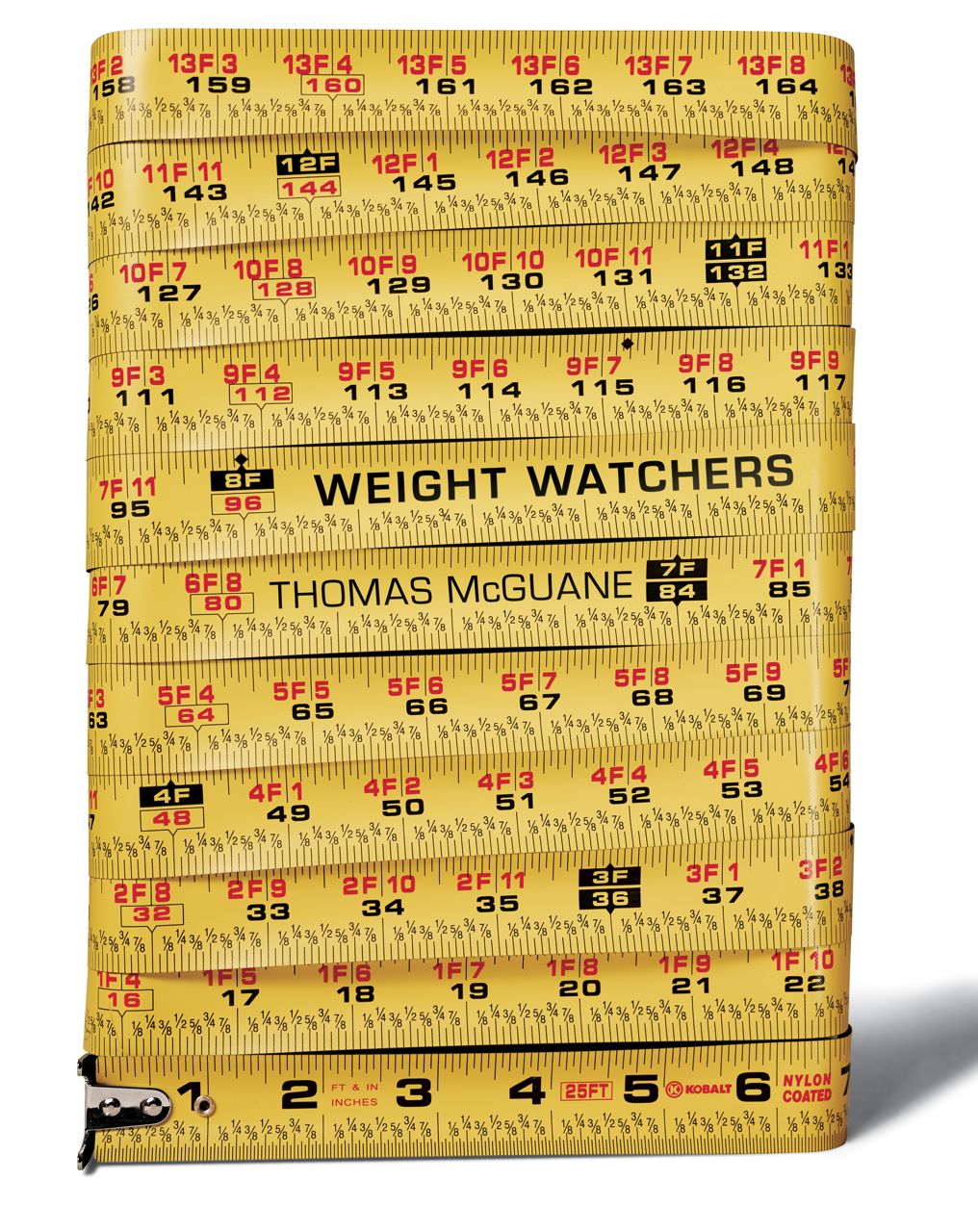
It’s the Food Issue, with terrific  in-depth stories on Greek yoghurt by Rebecca Mead, Adam Gopnik baking bread with his mother, the question of animals we love to much to eat by Dana Goodyear, and Italian superstar chef Massimo Bottura by Jane Kramer. Plus a few short takes, including one by Zadie Smith that I liked very much. And a short story by Thomas McGuane full of surprising and emotionally charged sentences called “Weight Watchers.”

weight watchers

In this week’s New Yorker

September 26, 2013

new yorker sept 30 cover
It took me a while to understand Barry Blitt’s cover (“Bad Chemistry”), but I guess I’m one of the last halfway sentient people in New York who has never watched an episode of Breaking Bad.

I found all four of the feature stories absorbing:

* Xan Rice’s “Now Serving,” about a brave Somali who opened a string of restaurants and hotels in Mogadishu and continues to operate despite being attacked by the Shabab, the same band of crazed thugs who shot up the shopping mall in Nairobi this week;

* Josh Eells’s “Night Club Royale,” about the dance nightclub industry in Las Vegas, where certain clubs pull in half a million dollars a night from drinks alone and star DJs get paid astronomical fees;

* I kept telling myself, ugh, I don’t want to read any more details about the distressing/hopeless situation in Syria, and yet the great reporter Dexter Filkins’s piece “The Shadow Commander” tells us about a figure it’s important to know about, Qassem Suleimani, an Iranian operative who has been calling the shots in Iraq and Syria for the last fifteen years;

edie windsor
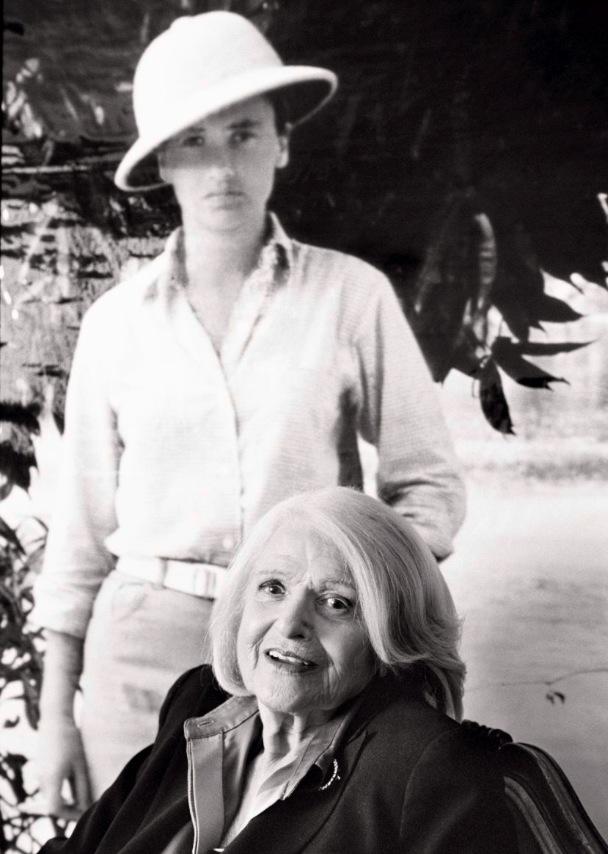
* Ariel Levy’s “The Perfect Wife,” about how marriage equality activists and lawyers selected Edie Windsor as the case to take to the Supreme Court — and what a wild gal she is, even today.

I read with interest Emily Nussbaum’s essay about “Key and Peele,” a TV comedy show by a team of biracial comedians I’ve never heard of — I definitely plan to check them out. I also liked Cora Frazier’s hilarious Shouts & Murmurs piece, “To The N.S.A.: Some Explanations.”

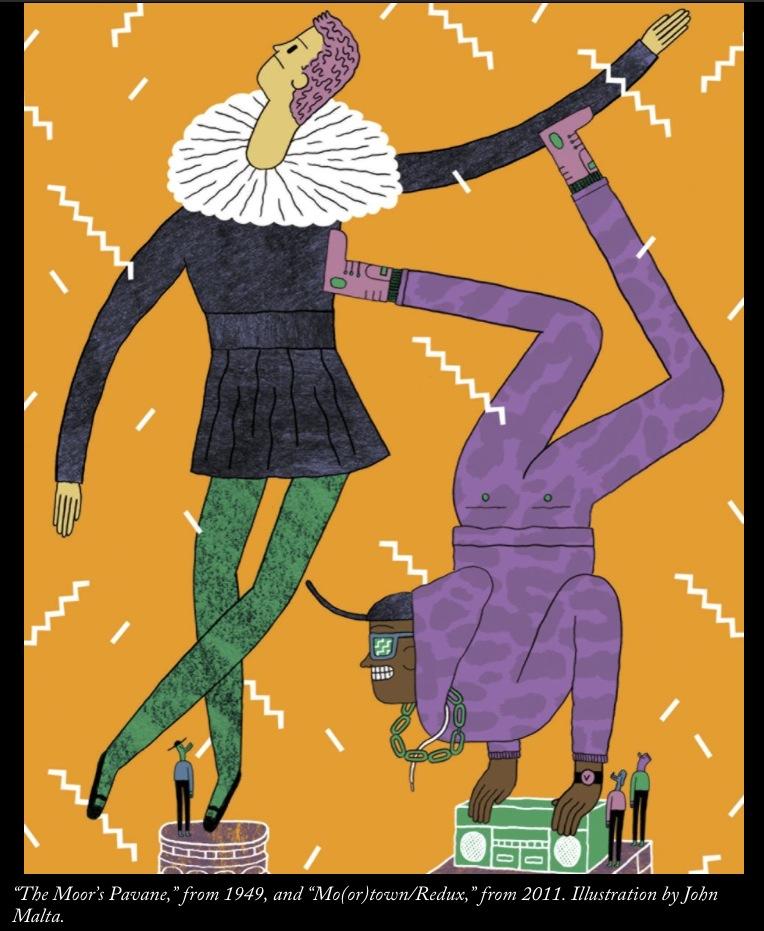
Still not loving the newly designed Goings On Around Town, though I did admire this illustration accompanying Joan Acocella’s Critic’s Choice about two dance pieces based on Othello:

OTHELLo illo
But the best thing in the entire issue is Ian Frazier’s Talk of the Town piece about Shaina Harrison, a young community activist working hard to educate kids about guns in Red Hook. I liked the piece so much I reproduced it in full here.

In this week’s New Yorker

September 22, 2013

new yorker goings on cover
The Style Issue contains a bunch of stories in a row that I found engrossing, often to my surprise:

bryan goldberg
Lizzie Widdicombe on Bryan Goldberg, a cocky young entrepreneur (above) who is launching an online magazine for women, Bustle.com, that he hopes becomes as popular and financially successful as his sports site, Bleacher Report, was with men;

david adjaye
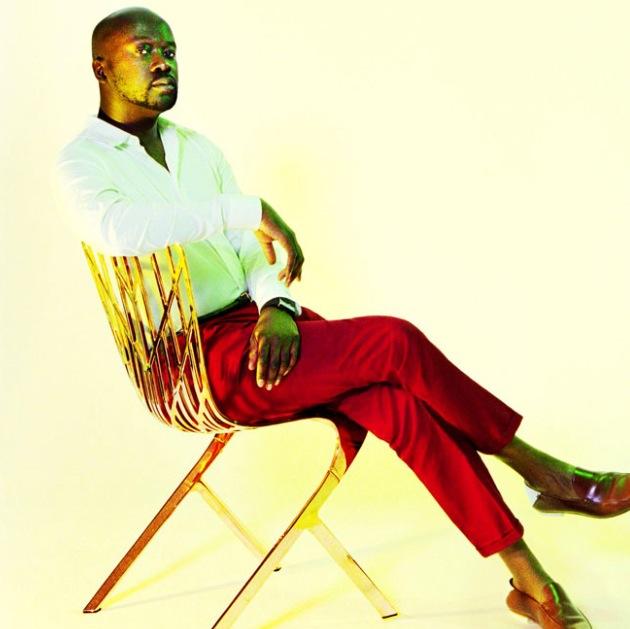
* Calvin Tomkins on David Adjaye, the Ghanaian-British architect (above) who is designing the National Museum of African American History and Culture in Washington, DC, which made him sound so appealing that I ordered his book of photographs of the architecture of African capitals;

* Rebecca Mead on Andrew Rosen, the schlubby founder of the fashion company Theory, a profile that doubles as a succinct history of the garment district;

eileen fisher
and a fascinating profile of modest but chic women’s clothing designer Eileen Fisher by Janet Malcolm. Fisher is a smart feminist who runs her company according to principles of non-hierarchical management and simple Buddhist kindness, and Malcolm plays a strange game with her of pretending not to understand the language she uses to describe how the business runs. Her language is slightly vague not not jargonistic, and it’s curious to watch Malcolm play dumb in print. But she is one of the New Yorker’s shrewdest veteran writers who is very open with her subjects about the duty of journalists to betray the people they write about, so I suppose it’s part of her strategy. On the New Yorker’s Page Turner blog, editor-in-chief David Remnick’s Letter from the Archive acknowledges that readers may be surprised to see Malcolm writing about a fashion designer. But Remnick also reminds us that she wrote the shopping column, On and off the Avenue, for a while. He steers Malcom fans to a couple of other surprising profiles from years past, “The Window Washer” and “A Girl of the Zeitgeist” (a memorable story about Ingrid Sischy, then-editor of Artforum, in which the august New Yorker published the word “asshole” for the first time, in a direct quote). Remnick also mentions Katie Roiphe’s Paris Review interview with Malcolm, which I have bookmarked to read very soon.

The New Yorker has done a major redesign, especially in the front of the book. I’m not sure I like it, and the iPad app is very buggy. But I’m prepared to wait and see how it shakes out over the next weeks and months.

twitter cartoon