Posts Tagged ‘david remnick’

In this week’s New Yorker

April 26, 2013

Another week of exemplary reporting. Editor-in-chief David Remnick literally overnight called on his years of experience reporting from Russia to post on the magazine’s website his amazingly thorough, thoughtful, deep Talk of the Town piece on the Tsarnaev brothers and the Chechen culture they came from.

With his typically tenacious reporting and dry-eyed scrutiny, William Finnegan reports (“The Deportation Machine”) the horrific story of Mark Lyttle, a 35-year-old biracial mentally ill American citizen from North Carolina, who  — through a series of bureaucratic mishaps that even Kafka might have considered far-fetched — was deported, shoved across the Mexican border with three dollars in his pocket, and forced to spend four months wandering (sometimes on foot) through Central America until the American Embassy in Guatemala contacted his family and sent him home. Except that he was arrested at the airport in Atlanta under the assumption that his newly issued passport was a fake.

Then there’s Luke Mogelson’s “Letter from Aleppo,” a soul-wrenching dispatch from the bloody midst of Syria’s raggedy civil war. Mogelson’s piece focuses on the people who have assumed the task of burying the corpses that get pulled out of the River Queiq that runs through Syria’s largest city (234 in recent months) and the heavily-traveled bridge on which Syrian Army snipers shoot commuters “in order to bait rebel fighters and would-be rescuers,” except that most of the victims turn out to be women, children, and old men who can’t run fast enough to escape.

I confess that after reading Finnegan’s and Mogelson’s pieces, I was relieved to turn the page and read Ian Parker’s profile of filmmaker Noah Baumbach.

Also in the issue: excellent piece about writing by echt New Yorker staffer John McPhee, who makes a case for the dictionary being a writer’s best friend; a portfolio of pieces (including “Onlookers,” below) by photographer Roger Ballen, whose images fueled Die Antwood’s stunning music video “I Fink U Freeky”; and a column in the Current Cinema department that reminds me that the way to brighten anyone’s day is to read aloud Anthony Lane’s movie reviews out loud.
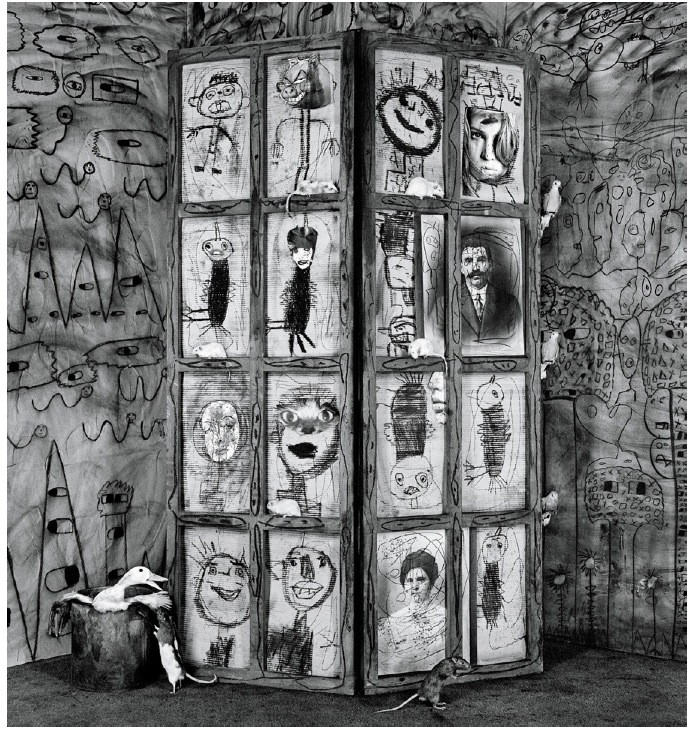
bollen onlookers

In this week’s New Yorker

January 26, 2013

jan 21 cover
Not a lot excited me, aside from Hilton Als’ scathing review of the new revival on Broadway of Tennessee Williams’ Cat on a Hot Tin Roof. But last week’s issue (cover date January 21) had three strong features:

* David Remnick’s disheartening “Letter from Jerusalem,” about the rise of Israel’s new frightening radical right movement;

* David Owen’s very entertaining story, “The Psychology of Space,” about the Norwegian design firm (Snøhetta, creators of the Oslo Opera House, below) that has been hired to transform Times Square “to reconfigure the space in such a way that city residents will stop walking blocks out of their way to avoid it”;
oslo opera houseand

* “Tasmanian Devil,” Richard Flanagan’s profile of David Walsh, a nutty high-stakes gambler who has sunk a fortune into creating The Museum of Old and New Art (MONA) dedicated to artistic representations of sex and death.

I didn’t read James Wood’s review of pseudonymous Italian author Elena Ferrante’s novels but the New Yorker Out Loud podcast made Ferrante sound intriguingly intense — all three of the people talking about her work said there were times when they had to put the books down because they described things that were unbearable to contemplate.

In this week’s New Yorker

August 1, 2012


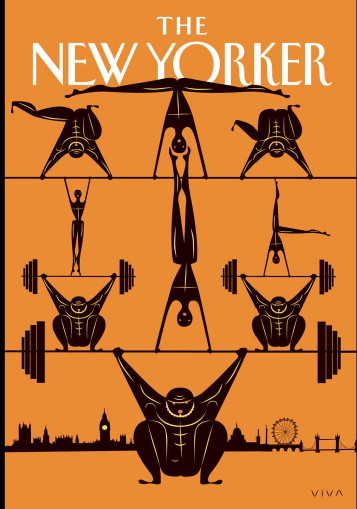
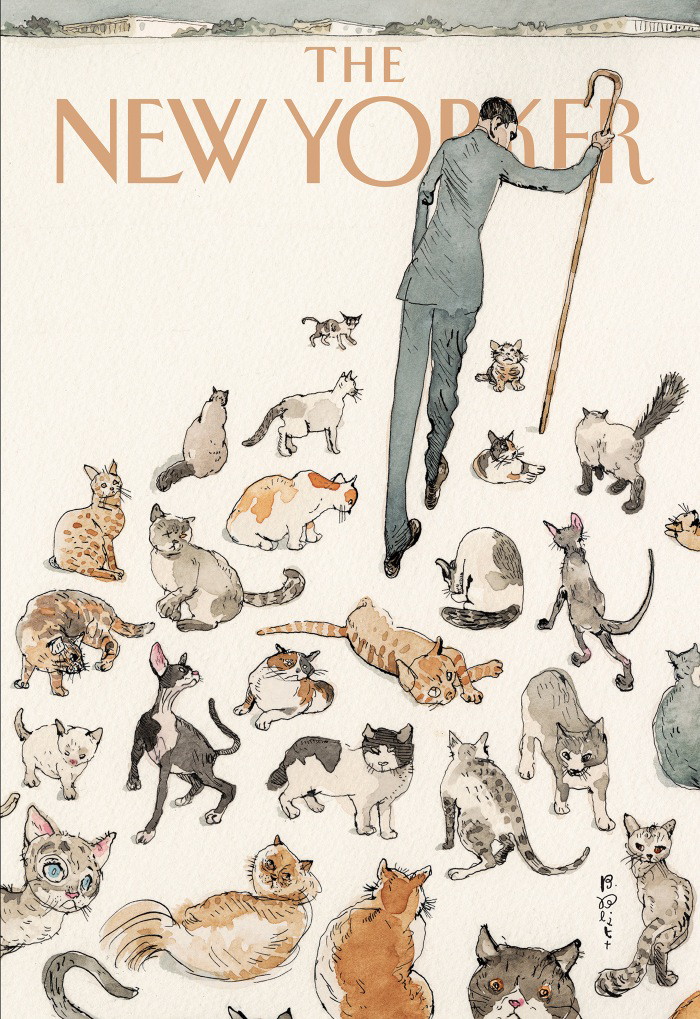
An engrossing issue to read on a three-hour plane ride. Having spent a good chunk of the weekend watching the Olympics, I enjoyed the cover, along with a string of engrossing articles I might not otherwise have devoured quite so closely:

Ryan Lizza’s informative and characteristically in-depth profile of Wisconsin Congressman Paul Ryan, he of the ostensibly sensible budget that barely conceals all kinds of ideological landmines. Obama’s budget director, as Lizza puts it, “dismantled Ryan’s plan, point by point.” Ryan’s proposal would turn Medicare “into a voucher program, so that individuals are on their own in the health-care market,” he said. Over time, the program wouldn’t keep pace with rising medical costs, so seniors would have to pay thousands of dollars more a year for health care. The Roadmap would revive Bush’s plan to privatize Social Security and “provide large tax benefits to upper-income households . . . while shifting the burden onto middle- and lower-income households. It is a dramatically different approach in which much more risk is loaded onto individuals.”

Lauren Collins’ piece on conceptual artist Tino Sehgal, whose work involves no objects whatsoever but focuses on personal interaction;

Mark Singer’s absolutely riveting story about a Michigan dentist who went to incredibly arduous lengths to present himself as a marathon champion without ever actually completing a race and in some cases inventing them (and their websites) from scratch — which falls into the Department of Ugly Truths, or How Fucked-Up Human Beings Can Be. It is essentially a sleuth job on a pathological liar, a mysterious breed of personality;

Evan Osnos on the curious case of Myanmar’s bloodless regime change; and

— a curious little previously unpublished story, “Thank You for the Light,” recently discovered among the papers of F. Scott Fitzgerald, which you can read in its (brief) entirety here. The evocative illustration (below) is by Owen Freeman.


While I’m at it, let me put in a word for two must-reads in the previous issue (cover date July 30): the long and terrific profile of Bruce Springsteen, all the more impressive for being written by New Yorker editor-in-chief David Remnick, who often surprises me with his choice of subjects; and Zadie Smith’s delightful story, “Permission to Enter,” an excerpt from her forthcoming novel NW.

In last week’s New Yorker

January 18, 2012

I’m not a huge shopper and can’t imagine reading a magazine like Lucky, but I enjoy reading Patricia Marx’s special brand of shopping dispatches for the New Yorker. Last week she concentrated her laser-beam observational skills on NYC supermarkets. Of my very favorite, Fairway, she had this to say: “The main store, at Broadway and Seventy-Fourth Street, can be an anxiety-filled combat zone. Are you tough enough to venture into the crowd and do battle with the strollers, the walkers, the killer shopping carts, and the line-cutting, salt-phobic, food-sample-noshing regulars, each of whom has more neuroses than you’ll find in the waiting room of the average West End Avenue shrink? No wonder the management hired a woman last year whose job is simply to roam the store, being nice to customers.”  And at Dean & DeLuca in Soho: “As for the chocolates, delicate hand-carved and painted pieces of sculpture: in the words of one friend, never eat anything prettier than you are.”

In his review of Jodi Kantor’s book on the Obamas, David Remnick gives it more credence than I would have imagined, plucking out numerous good quotes” “Obama was elected to lead ‘a rational, postracial, moderate country that is looking for sensible progress,’ a White House official tells Kantor. ‘Except, oops, it’s an enraged, moralistic, harsh, desperate country. It’s a disconnect he can’t bridge.”

Then there’s the hilarious Talk of the Town piece by Andrew Marantz in which some Brooklyn Republicans watching the results of the Iowa caucuses discover by Googling the way Rick Santorum’s name has been repurposed, under the instigation of columnist Dan Savage. It’s weird that Marantz describes the definition of santorum as “unprintable,” given the various verbal barriers that the once-staid New Yorker has leapt over in recent years, but whatever. (Google it yourself and see.) But I love that Marantz contacted Savage himself for a response. Asked by e-mail if he felt he had helped make history, Dan Savage wrote back: “No, I’ve made mischief.”

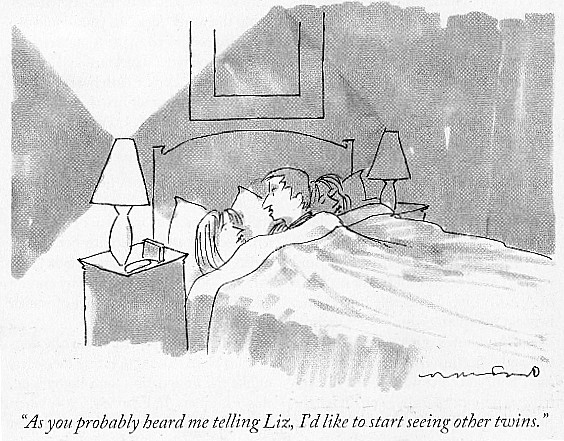
And it’s an issue with a high ratio of especially good cartoons, too.

In this week’s New Yorker

December 20, 2011


The issue starts off right with a fabulous seasonal cartoon by Danny Shanahan, closely followed by this amazing illustration by Kristina Collontes for the music listing of a show at Glasslands Gallery: “Tokyo’s Trippple Nippples, fronted by Yuka Nippple, Qrea Nippple, and Naabe Nippple, powers through overcaffeinated electronic art rock, but the music is almost secondary to the group’s outrageous appearance: they’re dressed as giant mammary glands, spewing milk, and have often swathed themselves in mud, feathers, or old spaghetti. Neat freaks may want to stay home.”


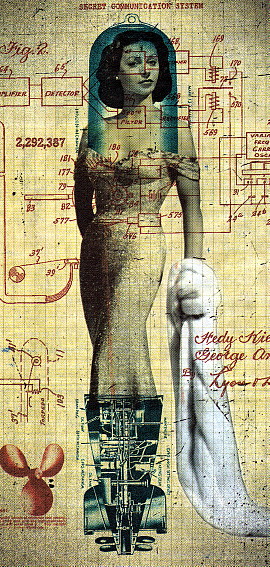
(Speaking of illustrations: did you see the amazing creation by David Plunkert that accompanied composer John Adams’ intriguing review of Richard Rhodes’ book Hedy’s Folly, about how “the most beautiful woman in Hollywood” helped design sophisticated weapons systems with George Antheil??? But I digress….)


The double-issue is devoted to World Changers, and the subject ranges wildly from how thieves are handled at a mosque in Tahrir Square (Peter Hessler’s “The Mosque on the Square”) to the austere music and wild life of 16th century Italian composer Don Carlo Gesualdo (Alex Ross’s “Prince of Darkness”). But the most compelling read is “The Civil Archipelago,” the long, well-sourced, knowledgeable Letter from Moscow written by David Remnick, the New Yorker‘s editor-in-chief and, I must acknowledge, a real culture hero of mine, for the way he has maintained if not exceeded the magazine’s high standards of journalistic excellence. (Read, by the way, his blog post about the Republicans and gay rights.)

There are also terrific critical columns by Joan Acocella, writing about Alvin Ailey, and Hilton Als, exercising his usual, admirable, self-given freedom to transcend conventional theater criticism while writing about David Adjmi’s play Elective Affinities.

Oh, also interesting to learn from Abby Aguirre’s Talk of the Town piece that Occupy Wall Street has, in three months’ of existence, acquired $650,873.59 in donations.)