Posts Tagged ‘ariel levy’

Culture Vulture: HELEN., SABBATH’S THEATER, and STEREOPHONIC

October 31, 2023

Cultural weekend! Friday night, Andy and I met friends for dinner at The Smith in the East Village in honor of a recently departed college chum. It was Hallo-weekend and the streets were full of costumed revelers. We were most amused to see a couple dressed as tourist (him in I ❤️ NY t-shirt) and the Statue of Liberty.

Saturday – beautiful day, up to 80 degrees. We took part in the Gays Against Guns action in response to the mass shootings in Lewiston, ME. I had a Google Hangout conversation with Alastair Curtis, a young theater artist in London who’s just discovered the work of Harry Kondoleon and wanted to talk to me in preparation for a reading he’s doing of Christmas on Mars. In the evening, Andy and I were back in the East Village to see Helen., the SuperGeographics production of Caitlin George’s play directed by Violeta Picayo. In the lobby we chatted a little with producer Anne Hamburger (whose En Garde Arts brought the show to La Mama), Linda Chapman, Chay Yew (looking very buff), and two young artists Anne is cultivating. I enjoyed the play, a dense, poetic, cheeky, queer/feminist riff on Greek mythology that reminded me of Young Jean Lee’s Lear the way it played fast and loose with familiar stories. In this version, Helen and her twin sister (!) Klaitemnestra and their sibling Timandra operate under the supervision of Elis, god of discord. This restless Helen isn’t waiting around to be abducted from her husband – she’s got wanderlust and knows how to use it. Picayo’s excellent production – light, fun, funny – made extensive use of quirky props (crowns, marbles, a barbecue) and almost continuous underscoring (by the great sound designer Darron L. West) with terrific performances, especially by charismatic Constance Strickland as Eris and Lanxing Fu as Helen (below center, with Grace Bernardo as Klaitemnestra and Melissa Coleman-Reed as Timandra).

Sunday afternoon we saw Sabbath’s Theater, Philip Roth’s late novel adapted for the stage by John Turturro with Ariel Levy. I never read the novel but the promotional material and the advance feature in the New York Times built up my expectations for a sexier/ filthier event than the New Group production turned out to be. But I guess for some (straight?) people any reference to masturbation comes off as racy rather than (as Roth has always demonstrated) a typical feature of most people’s sex lives. For all its lustiness, the play is primarily a melancholy contemplation of loss, desire, and death as the title character Sabbath (played by the brave, inventively comic, ever-watchable Turturro, below), a former puppeteer brought down by arthritis and a sex-with-student scandal, recalls the lovers, friends, and relatives he’s lost and considers joining them by throwing himself out the window of his high-rise apartment or walking naked into the sea. Jason Kravits and the great Elizabeth Marvel have fun playing all the other characters with distinctly different costumes, voices, and body habitus. Jo Bonney’s production struck me as tame, and in contrast to Helen., the sound score (by Mikaal Sulaiman) came off as intrusive and annoying at times rather than evocative or scene-setting. I pointed out to Andy that the fine-print trigger warning in the program (“This production contains nudity, sexual situations, strong and graphic language, and discussion of suicide.”) could apply to virtually every show at the New Group.

photo by Jeenah Moon for the New York Times

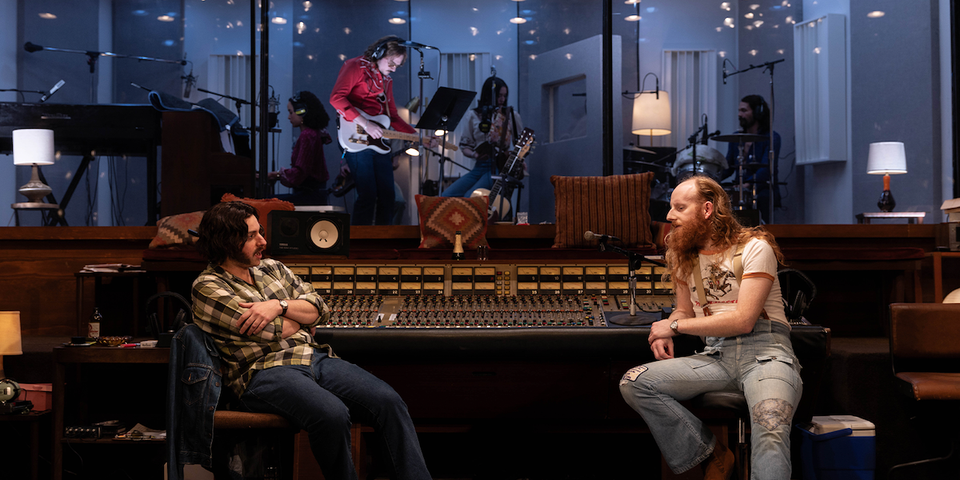
I loved Rob Weinert-Kendt’s succinct summary: “If Robert Altman directed a Chekhov play about a 1970s rock band struggling to perfect their next album, it might look (and sound) something like David Adjmi’s STEREOPHONIC.” I saw the play a couple of weeks ago and it’s stuck with me like few plays I’ve seen in recent years. A three-hour play can seem a little daunting these days, but Daniel Aukin’s production at Playwrights Horizons casts a spell. When I try to name the unusually evocative atmosphere to myself, I keep coming back to Fassbinder – the intense attention to tiny increments of human behavior, the honesty about intertwined love and depravity, artists at work, extraordinary design on every level, occasional longeurs but that being part of the astonishing success of capturing life in its complexity. Pop music was my first love, and I related to the play’s deep immersion in rock music culture much the same as Todd London did in his terrific essay on the PH website. (There you can also read commentary by David Byrne, who happened to be in the audience for the performance I attended; my friends and I noted how remarkably friendly and chatty Byrne was with the people sitting around him. One member of my posse is a hardcore Fleetwood Mac nerd and regaled us at intermission and afterwards with all of his observations about the Easter eggs hidden throughout the play – for instance, that Lindsay Buckingham has a brother who’s an Olympic swimmer, like the LB character in the play. And he knew exactly which Steve Nicks song was deemed too long to be included on Rumours.) The set designed by David Zinn manages to look completely natural and lived-in while being actually insanely meticulous in its creation of an artificial environment that works as an additional character in the play. Ditto the impossibly intricate sound design by Ryan Rumery. The performers are uniformly excellent, all playing their own instruments on ingenious original songs by Will Butler of the Arcade Fire. But what impressed me most of all is how the playwright, the director, and Tom Pecinka, the actor who plays Peter (the Lindsay Buckingham stand-in), collaborated to create the most nuanced and compassionate portrait of a perfectionist I’ve seen in any medium.
In this week’s New Yorker

July 13, 2018

For self-protection, I avoid TV news. I’m content to get my news of the world from the kind of deep dives that the New Yorker specializes in.

The current midsummer double-issue is extra-good, in a roller-coaster way.

Adrian Chen’s “No More Secrets,” about a guy who live-streams his mundane existence, reflects up-to-the-minute technology but in a way that fills me with despair — THIS is what people pay attention to? Yuk. But I guess it’s good to know.

David Sedaris writes hilariously, as always, about going to a shooting range with his sister Lisa (“Active Shooter”), where the instructor keeps calling him “Mike,” which he finds an amusing alternative to what he often gets when he presents his credit card (“Are you THE David Sedaris?”).

In “Tunnel Vision,” William Finnegan profiles the new head of the MTA, a Brit named Andy Byford who’s determined to overhaul the NYC subway system as he did in London and Toronto.

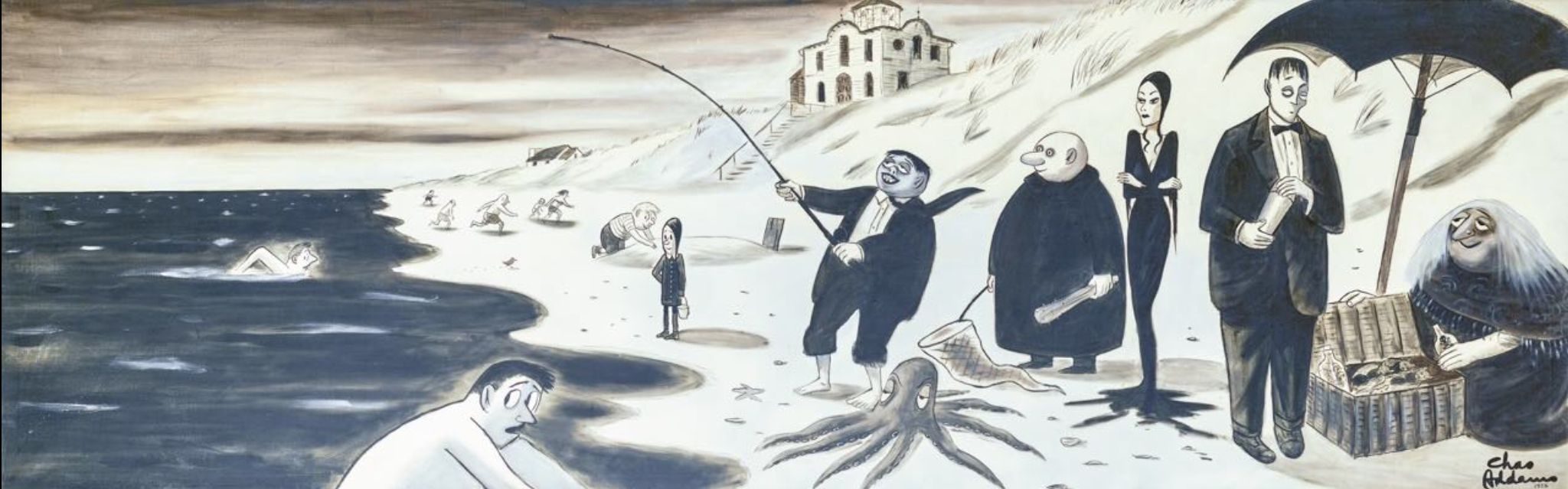
How cool to get a look at a mural Charles Addams painted for a Hamptons hotel in 1952, which has been quietly hanging in a library at Penn State.

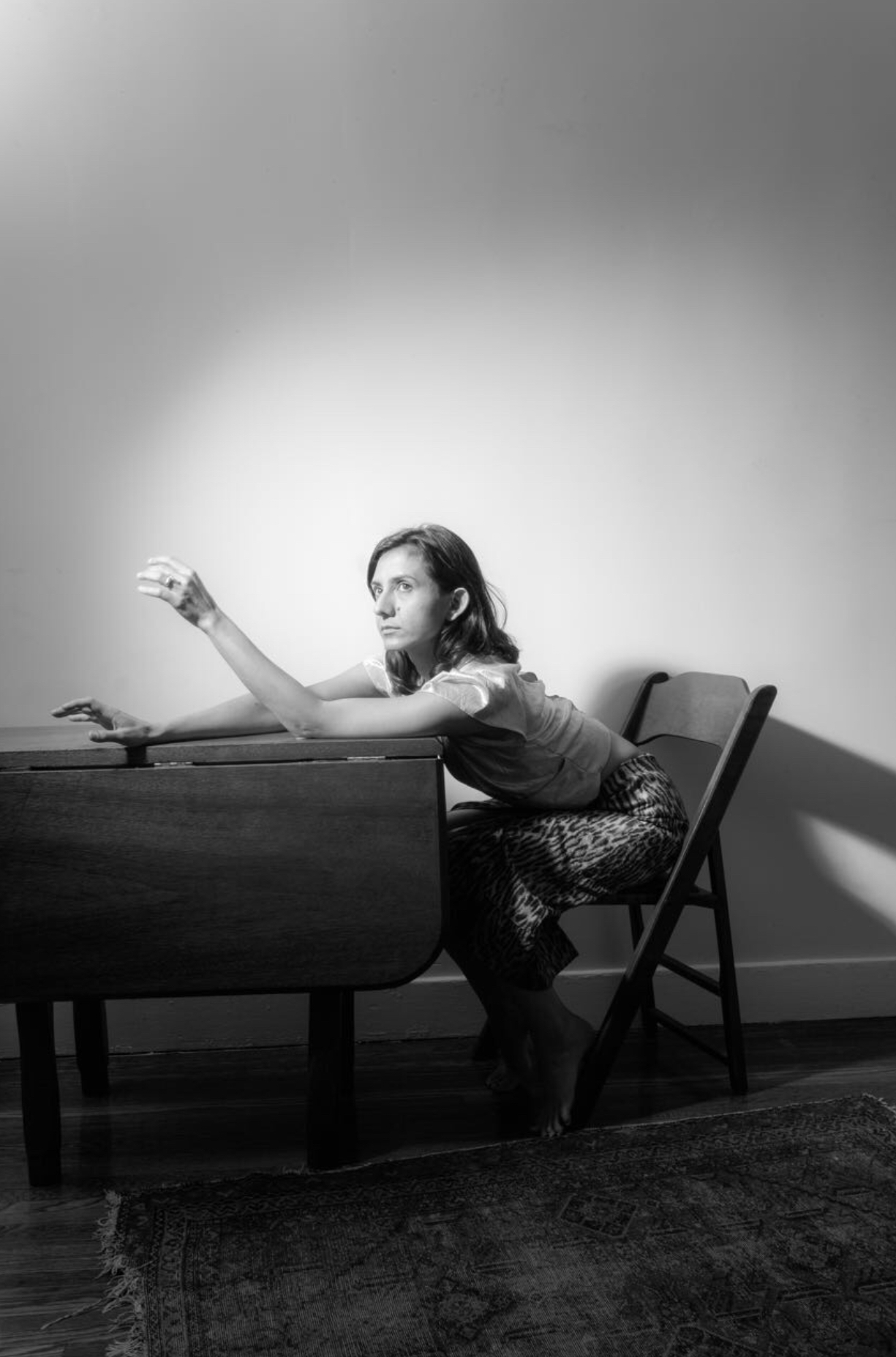
Ariel Levy writes about a fascinating Iranian-American novelist named Ottessa Moshfegh (below, photographed by Dru Donovan) and her crazy romantic life (“Not From Around Here”).

And Hilton Als pays tribute to Anika Noni Rose, who’s starring in a production of “Carmen Jones” directed by John Doyle that sounds worth seeing at Classic Stage Company (“Working It”).

In this week’s New Yorker

March 12, 2017

The March 13 issue is especially strong in both the feature well and the back of the book. I was edified by:

  • Jake Halpern’s report on a safe house in Buffalo designed to help refugees making their way to Canada from the U.S.;
  • “The Polymath,” the ever-brilliant Alec Wilkinson’s profile of Jack White, whose music (the White Stripes, etc.) has never interested me but who turns out to be a fascinating, adventurous, productive guy;
  • “Donald Trump’s Worst Deal,” Adam Davidson’s excellent follow-the-money expose of the current president’s unlawful business dealing with a legendarily corrupt Azerbaijani family — there are clearly innumerable stories like this to be told, not likely to result in impeachment given the Republican strangehold on Congress, but it’s an in-depth account of the thriving world of international corruption;
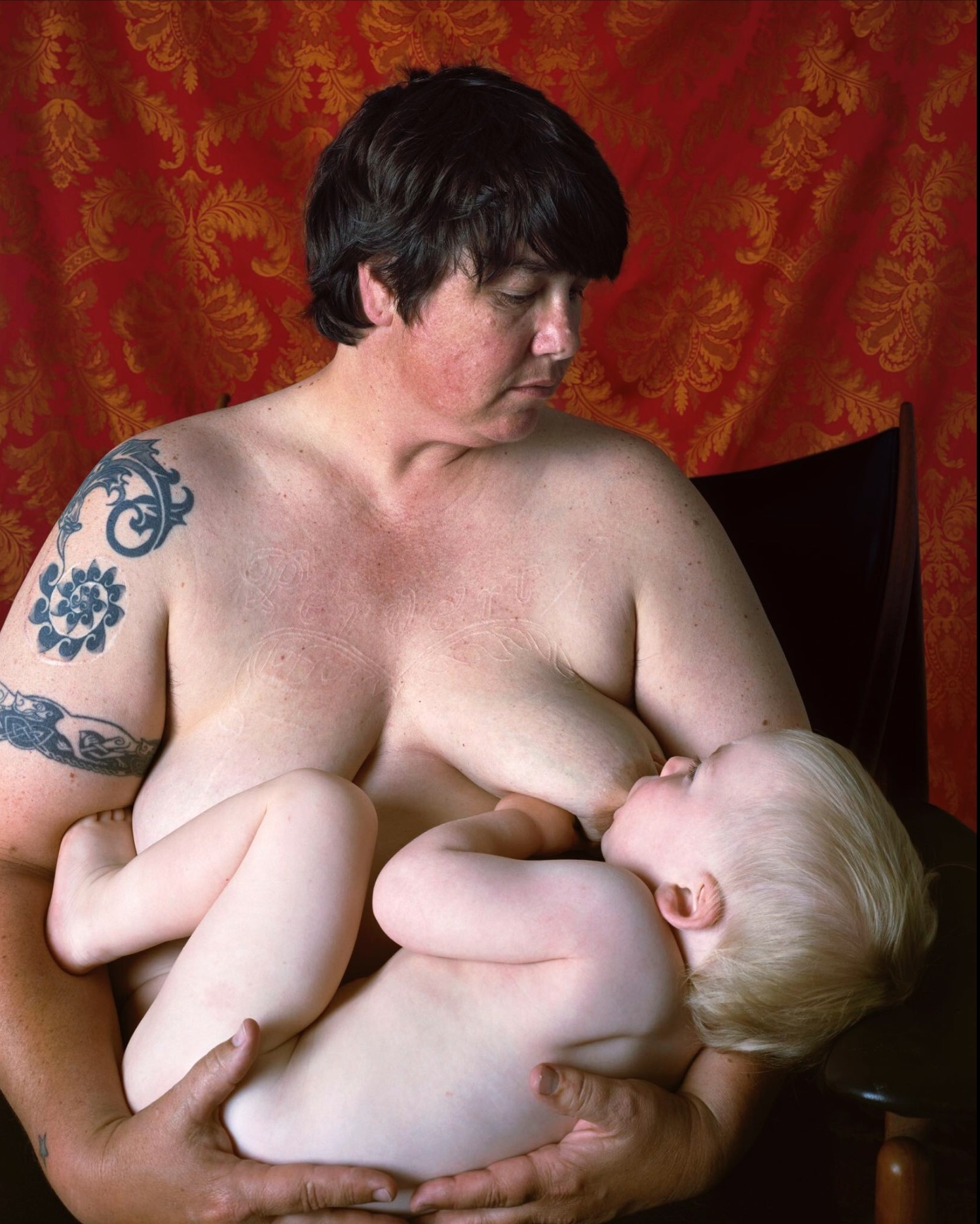
  • Ariel Levy’s characteristically exquisite and intimate profile of Catherine Opie, renowned photographer of communities on the edge (the New Yorker website and tablet app include a portfolio of 15 amazing Opie portraits and landscapes, including “Self-Portrait/Nursing,” below);


In last week’s New Yorker

May 1, 2016

This week’s issue of The New Yorker, the one with the instant-turnaround purple rain cover, has two pieces I highly recommend in categories the magazine is best-known for. Ian Frazier writes deep-dive articles in a folksy voice in the department called “Our Local Correspondents,” and this week he covers an issue near and dear to my heart: “The Bag Bill,” focusing on activist Jennie Romer and her campaign to reduce the number of plastic shopping bags we use because they do substantial environmental damages. Meanwhile, Eyal Press contributes “Madness,” a wrenching expose of how mentally ill inmates in Florida are routinely tortured.

erykah badu

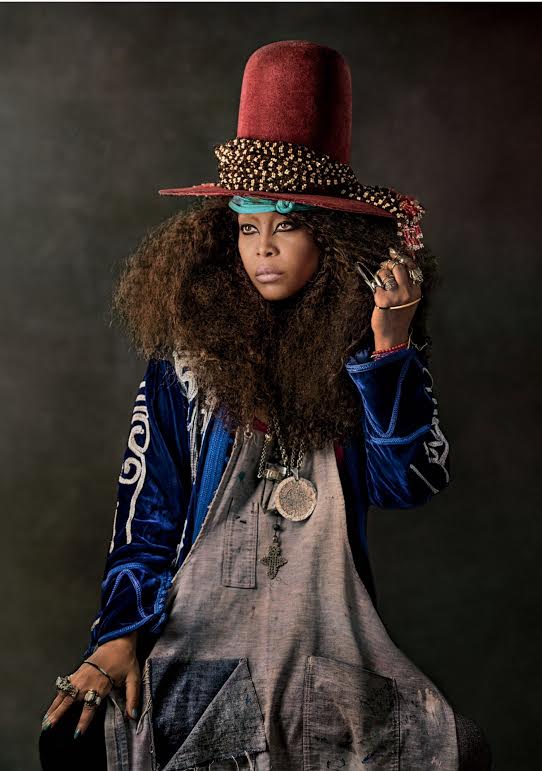
Last week’s “Entertainment Issue” had a few good pieces, notably Adam Gopnik on Paul McCartney, Kelefa Sanneh on Erykah Badu  (above, photographed by Amanda Demme), and Emily Nussbaum on Kenya Barris, the creator of the TV show “black-ish.” I’ve never watched the show, but Barris is smart and funny, and Nussbaum is a terrific writer — she deserves the Pulitzer Prize for criticism she just won. Here’s the way that article ends:

In April, Barris’s family went on a vacation that could be taken only by people at the pinnacle of success. During a visit to New York, they saw “Hamilton” not once but twice. They also flew to Washington for the White House Easter Egg Roll, and were part of a V.I.P. group who met the President and the First Lady. “That’s our family,” President Obama told Barris, about “black-ish.”

Not everything went smoothly. After four hours at the White House, Barris, tired, insisted that they leave. Once they were outside, Kaleigh got a text from Anthony Anderson’s son: they’d just missed Beyoncé and Jay Z. Barris’s daughters were furious at their dad; tears formed in Leyah’s eyes. When he saw those tears, Barris lost it: “You just met the President!” They apologized. Barris stayed mad. But he was also inspired. “I texted Groff and said, ‘We have to use this next season.’ ”

But the week before that was an especially good issue. Aside from Hilton Als’s piece about Maggie Nelson (which inspired me to go out and buy her book The Argonauts) and Ariel Levy on the delightful eccentric artist Niki de Saint Phalle, the issue contains one of the most important political news stories I’ve read all year. Ben Taub’s “The Assad Files” is a long, strong reporting piece about the Commission for International justice and Accountability, an independent investigative body founded in 2012 by American lawyer Chris Engels which has been collecting hundreds of thousands of top-secret documents tracing the mass torture and killings directly to Bashar Al-Assad and his regime. The first-hand accounts are horrifying and upsetting to encounter. The situation in Syria is so bad and so hopeless, who knows when and how it will ever be resolved. If there’s any good news in this story, it’s that whenever the moment comes to prosecute Assad in the International Criminal Court, there will be no lack of evidence for his responsibility.


In this week’s New Yorker

September 26, 2013

new yorker sept 30 cover
It took me a while to understand Barry Blitt’s cover (“Bad Chemistry”), but I guess I’m one of the last halfway sentient people in New York who has never watched an episode of Breaking Bad.

I found all four of the feature stories absorbing:

* Xan Rice’s “Now Serving,” about a brave Somali who opened a string of restaurants and hotels in Mogadishu and continues to operate despite being attacked by the Shabab, the same band of crazed thugs who shot up the shopping mall in Nairobi this week;

* Josh Eells’s “Night Club Royale,” about the dance nightclub industry in Las Vegas, where certain clubs pull in half a million dollars a night from drinks alone and star DJs get paid astronomical fees;

* I kept telling myself, ugh, I don’t want to read any more details about the distressing/hopeless situation in Syria, and yet the great reporter Dexter Filkins’s piece “The Shadow Commander” tells us about a figure it’s important to know about, Qassem Suleimani, an Iranian operative who has been calling the shots in Iraq and Syria for the last fifteen years;

edie windsor
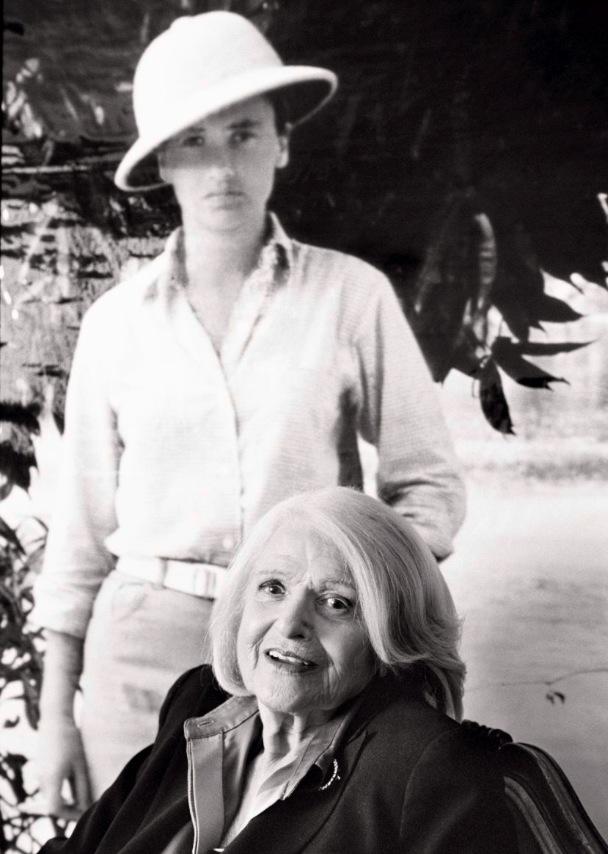
* Ariel Levy’s “The Perfect Wife,” about how marriage equality activists and lawyers selected Edie Windsor as the case to take to the Supreme Court — and what a wild gal she is, even today.

I read with interest Emily Nussbaum’s essay about “Key and Peele,” a TV comedy show by a team of biracial comedians I’ve never heard of — I definitely plan to check them out. I also liked Cora Frazier’s hilarious Shouts & Murmurs piece, “To The N.S.A.: Some Explanations.”

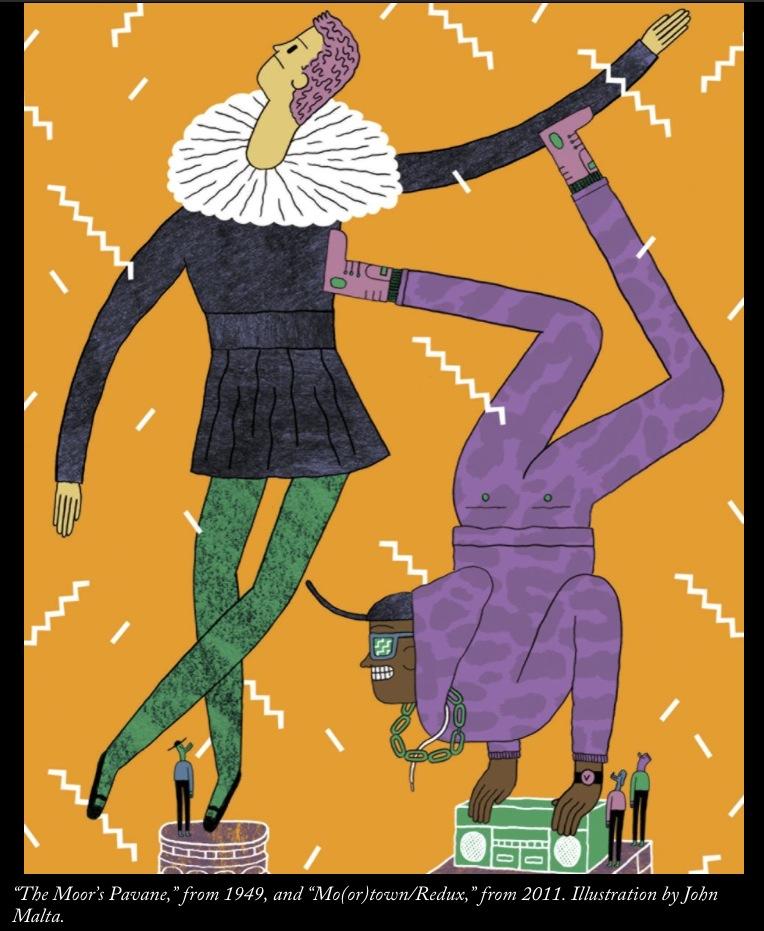
Still not loving the newly designed Goings On Around Town, though I did admire this illustration accompanying Joan Acocella’s Critic’s Choice about two dance pieces based on Othello:

OTHELLo illo
But the best thing in the entire issue is Ian Frazier’s Talk of the Town piece about Shaina Harrison, a young community activist working hard to educate kids about guns in Red Hook. I liked the piece so much I reproduced it in full here.