Posts Tagged ‘hilton als’

In this week’s New Yorker

March 28, 2012

Hilton Als lets us know that he loves Jesus, the same way Patti Smith does, but boy, does he not love Des McAnuff’s production of Jesus Christ Superstar on Broadway.

Rebecca Mead provides a coolly factual portrait of Christine Quinn, who may well be the next mayor of New York City.

David Sedaris writes a Personal History essay about his favorable experience with socialized medicine (specifically his dentist) in France, in contrast to current American preconceptions: “One thing that puzzled me during the American health-care debate was all the talk about socialized medicine and how ineffective it’s supposed to be. The Canadian plan was likened to genocide, but even worse were the ones in Europe, where patients languished on filthy cots, waiting for aspirin to be invented.”

But the highlight of the issue by far is “The Transition,” an excerpt from the great Lyndon B. Johnson biographer Robert A. Caro’s next volume microscopically detailing the events of the morning of November 22, 1963. Even though the outline of that infamous day in American history is known to one and all, not so well-known aspects to the story are:  the brewing financial scandal LBJ was facing (quickly squashed when he became president), exactly how miserably he hated being Vice President, what happened inside the cars in the presidential motorcade in Dallas, how delicately thoughtful and solicitous LBJ was of Jackie Kennedy, and all the logistical details that led up to his being sworn in after the assassination. A must-read.

Then there’s the cover by George Booth, titled “Rite of Spring.” As Andy noted, what the hell are we supposed to think is going on here?

In this week’s New Yorker

December 20, 2011


The issue starts off right with a fabulous seasonal cartoon by Danny Shanahan, closely followed by this amazing illustration by Kristina Collontes for the music listing of a show at Glasslands Gallery: “Tokyo’s Trippple Nippples, fronted by Yuka Nippple, Qrea Nippple, and Naabe Nippple, powers through overcaffeinated electronic art rock, but the music is almost secondary to the group’s outrageous appearance: they’re dressed as giant mammary glands, spewing milk, and have often swathed themselves in mud, feathers, or old spaghetti. Neat freaks may want to stay home.”


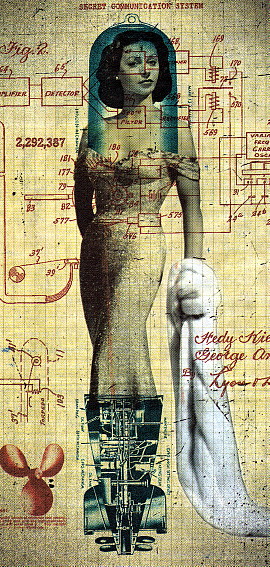
(Speaking of illustrations: did you see the amazing creation by David Plunkert that accompanied composer John Adams’ intriguing review of Richard Rhodes’ book Hedy’s Folly, about how “the most beautiful woman in Hollywood” helped design sophisticated weapons systems with George Antheil??? But I digress….)


The double-issue is devoted to World Changers, and the subject ranges wildly from how thieves are handled at a mosque in Tahrir Square (Peter Hessler’s “The Mosque on the Square”) to the austere music and wild life of 16th century Italian composer Don Carlo Gesualdo (Alex Ross’s “Prince of Darkness”). But the most compelling read is “The Civil Archipelago,” the long, well-sourced, knowledgeable Letter from Moscow written by David Remnick, the New Yorker‘s editor-in-chief and, I must acknowledge, a real culture hero of mine, for the way he has maintained if not exceeded the magazine’s high standards of journalistic excellence. (Read, by the way, his blog post about the Republicans and gay rights.)

There are also terrific critical columns by Joan Acocella, writing about Alvin Ailey, and Hilton Als, exercising his usual, admirable, self-given freedom to transcend conventional theater criticism while writing about David Adjmi’s play Elective Affinities.

Oh, also interesting to learn from Abby Aguirre’s Talk of the Town piece that Occupy Wall Street has, in three months’ of existence, acquired $650,873.59 in donations.)

In this week’s New Yorker

September 24, 2011

This week’s Style Issue is one of those exceptional issues, stuffed with goodies, that reminds me why I revere this magazine. The writing is so excellent that the magazine frequently serves as a writing manual. This issue alone has five exemplary non-fiction reporting stories that are marvels of fine prose that I would hand out to students if I were teaching a writing class.


Take, for instance, the lead of David Owen’s “Survival of the Fitted”: “On my first day in Colombia, two women in an old Toyota drove me to an industrial park on the outskirts of Bogota. There, in a building that from the outside looked like a warehouse, the man I’d come to interview — early forties, black hair, not tall — shot me in the abdomen with a .38-calibre revolver.”  The story is about bulletproof couture, and it’s vintage David Owen, who has made a name for himself by focusing on fascinating and unpredictable array of little-scrutinized pockets of contemporary culture. His writing style is both crisply journalistic and full of facts but also endearingly droll. For instance, he discusses cultural differences in armored clothing, which cultures have to deal with knife attacks more than gun attacks, and casually mentions that “Most ammunition used by soldiers…goes right through the kinds of bulletproof material that are worn by cops and recording artists.”

I’d never heard of Daphne Guinness and wouldn’t have thought I would be interested in reading about an eccentric aristocratic fashionista, but Rebecca Mead is such a good writer that I never lost interest in reading her engrossing story about this creature who clomps through the world in crazy designer shoes without heels, who was a close friend and customer of the late Alexander McQueen, and whose grandmother was Diana Mitford. Mitford, Mead reminds readers, married Sir Oswald Mosley, the founder of the British Union of Fascists, at the home of Joseph Goebbels. Among the wedding guests was Adolf Hitler, with whom Diana’s sister Unity was very close. Mead reports: “When [World War II] broke out, Diana spent three years in London’s Holloway prison. ‘She told me she read a lot of Racine,’ Guinness said. Meanwhile, when Britain declared war on Germany, Unity Mitford short herself in the head. ‘Why didn’t Unity shoot Hitler instead of herself?’ Guinness said. ‘Then we’d be descended from heroes instead of villains.’ ”


Whenever this annual issue rolls around, I always think to myself, “I don’t care about fashion,” and I don’t really. But again I could not resist reading every word of Susan Orlean’s profile of Jean Paul Gaultier (above). Among the exotic creatures we meet in this story are Donna and Meghan Spears, who own a designer boutique called Consortium, in Oklahoma City, and Gaultier is the best-selling designer in the store. “I admitted to the Spearses that I wouldn’t have guessed that Gaultier had many fans in Oklahoma, but Donna said, ‘Oklahoma City is much more progressive than people think. In our target market, everyone has more than one home, more than one airplane. In the past, everyone went to Dallas or Aspen or La Jolla to shop. Now they come to us. At the end of the season, we never have any Gaultier left.’ ” Plus — and I guess this is a generational thing — I never get tired of noticing how matter-of-factly fashion writers for the New Yorker and the New York Times (most of them women) write about the personal lives of famous designers (most of them gay men). There was a time when gay private lives were just never mentioned in the pages of these magazines. Just saying.

There are also two emotionally affecting gay life stories mentioned in passing in Peter Hessler’s terrific article “Dr. Don,” which focuses on a small-town pharmacist in a hippie-dippie utopian enclave in southwestern Colorado, a world I would never have imagined or known about before reading this story.

Anytime Janet Malcolm writes something for the New Yorker, you know that inevitably she will find some way of referencing some awkward complicated relationship between the journalist and her subject, and that does indeed show up halfway through her profile/essay about German photographer Thomas Struth, whose portrait of the Queen of England and the Duke of Edinburgh she dissects meticulously. I also learned from her the typically German compound expression Vergangenheitsbewältigung, which means “comes to terms with the past.”

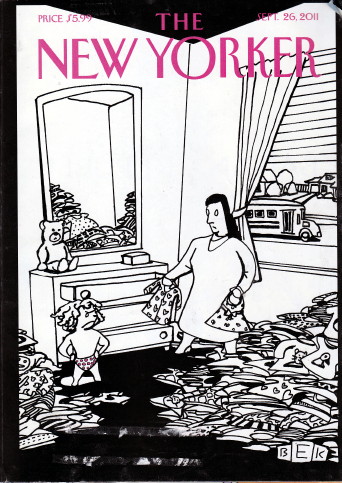
Hilton Als has been thinking a lot about Stephen Sondheim recently. His Critic-at-Large piece about Diane Paulus’s new production of Porgy and Bess carefully and thoughtfully rebuts Sondheim’s now-famous letter disparaging the remarks Paulus and playwright Suzan-Lori Parks made about the Gershwin opera in a New York Times Arts & Leisure story several weeks ago. Perhaps not surprisingly, he sides with Paulus and Parks in their revisionist take on Porgy and Bess and ever-so-gently trashes Sondheim for championing DuBose Heyward. That doesn’t stop Als from also writing a beautifully considered review of the current Broadway revival of Follies.

I also liked Jenny Diski’s piece on the history of shoplifting and Anthony Lane’s review of Drive. And, of course, there’s always Roz Chast:

In last week’s New Yorker…

May 10, 2011

Yes, I’m a week, maybe two behind. But I didn’t want to let the moment pass without citing a couple of articles that made an impression on me.

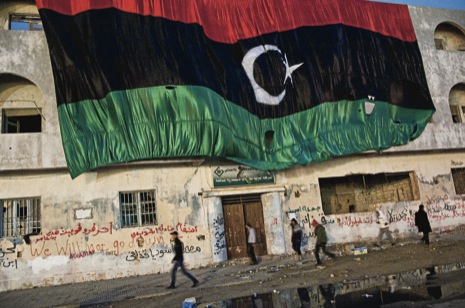
Jon Lee Anderson is one of the New Yorker’s extraordinary war reporters, and his dispatch from Libya conveys with revelatory specificity the particularly scrappy, hand-to-hand nature of the effort to end the dictatorial rule of Qadaffi. It’s a corner of the world I would never know anything about except for such fine first-hand reporting.

Hilton Als also does a beautiful job profiling Jane Fonda, someone it’s easy to feel like you know everything about. Yet Hilton got extraordinary access to her daily life, and he earned it through scrupulous, thoughtful, and sympathetic attention to her unusually sprawling life’s work. The complete article can only be read online by subscribers, but you can access the link here.

In last week’s New Yorker…

April 21, 2011

I seem to be running a week behind at this point. But in the “Journeys” issue I enjoyed reading Evan Osnos’s report about travelling through Europe with Chinese tourists. Hilton Als’ review of the new revival of Anything Goes starring Sutton Foster was so interesting it made me want to see the production, which otherwise I’ve been ignoring since the Lincoln Center production is still so fresh in my mind. Sasha Frere-Jones astonishes me by repeatedly writing interesting pieces about pop musicians I’ve never heard of who have already made 13 albums already! The latest is Bill Callahan, whom he makes sound quite intriguing. Since he turned me on to Of Montreal and Bon Iver, I tend to pay attention whenever Frere-Jones writes about music.

But my favorite piece in this issue is by Geoff Dyer, the novelist whose Jeff in Venice, Death in Varanasi impressed me very much. He writes about a pilgrimage he made to two famous earthworks, Walter De Maria’s “The Lightning Field” in New Mexico and Robert Smithson’s “Spiral Jetty” in Utah. Dyer is a fantastic writer, and his observations are worth reading. In passing, he refers to an essay D.H. Lawrence wrote about Taos, which he compares to the monasteries of Europe. I was particularly struck by this passage because Andy and I recently watched Into Great Silence, the engrossing documentary about the very austere Carthusian monastery in the French Alsp called the Grand Chartreuse, which made us question what purpose such isolated temples of worship and study serve in the bigger picture. Lawrence provides a very interesting perspective on that question:

“You cannot come upon the ruins of the old great monasteries of England, beside their waters, in some lovely valley, now remote, without feeling that here is one of the choice spots of the earth, where the spirit dwelt. To me it is so important to remember that when Rome collapsed, when the great Roman Empire fell into smoking ruins, and bears roamed in the streets of Lyon and wolves howled in the deserted streets of Rome, and Europe really was a dark ruin, then, it was not in castles or manors or cottages that life remained vivid. Then those whose souls were still alive withdrew together and gradually built monasteries, and these monasteries and convents, little communities of quiet labour and courage, isolated, helpless, and yet never overcome in a  world flooded with devastation, these alone kept the human spirit from disintegration, from going quite dark, in the Dark Ages. These men made the Church, which again made Europe, inspiring the martial faith of the Middle Ages.”