Posts Tagged ‘annie sprinkle’

Culture Vulture/Photo Diary: Annie Sprinkle and Beth Stephens’s “EcoSex and the City”

June 19, 2023

Annie Sprinkle, Beth Stephens, and 100 of their friends took over Performance Space New York (the venue formerly known as PS 122) with “EcoSex and the City: Exploring the Earth as Lover,” which sounded in advance like a wacky weekend of West Coast woo. Andy characterized it as “Witchy Ladies Talking About Their Vulvas, and Trees.” Both descriptions are not inaccurate. But in its sneaky way, it was a profound and timely festival of ideas.

I was going to say they aren’t kidding about being environmental activists, but really they are kidding, and that’s the point. Let’s face it, although it’s possibly the most urgent issue of the day, the language that surrounds environmental justice – climate change, sustainability, infrastructure – can be pretty dull and veer toward solemnity, shouting, and shaming. Annie and Beth bring a lively, loving, queer, body-centered, sensual approach to the topic that doesn’t mean they’re any less serious about it.

Playfulness permeates the language they use. To heal the world, Annie said more than once during the festivities, “It takes a brothel!” Annie of course came to fame in the 1970s as a porn star and sex worker and then evolved into a performance artist and sex educator whose cartoony persona allowed her to smuggle cutting-edge queer/feminist sensibility into an increasingly wider world. She and Beth, whom she met in 2002, identify as “eco-sexual,” meaning “The earth is our lover.” They were married to the earth by shamanic performance artist Guillermo Gomez-Peña, and it’s not a platonic love affair. They get down in the actual dirt, they made a beautiful film called Water Makes Me Wet, they’re working on a new movie called Playing With Fire, and they published a book called Assuming the Ecosexual Position. They model getting very personal and political about saving the planet. But they’re not fundamentalist about it – you can be “eco-romantic” or, if you’re still trying to figure out your entry point to environmental activism, you can be “eco-curious.” Submit to the “eco-sexual gaze”! Find your “e-spot”! Rub up against oaks and call it “Treebadism”!

Friday night Annie and Beth entered like royalty and were greeted as such by friends, fans, and collaborators. Intersectional to the nth degree, the festival opened with veteran life-art practitioner Linda Montano bestowing a ceremonial activation/benediction, followed by a collection of short films laying out the territory.
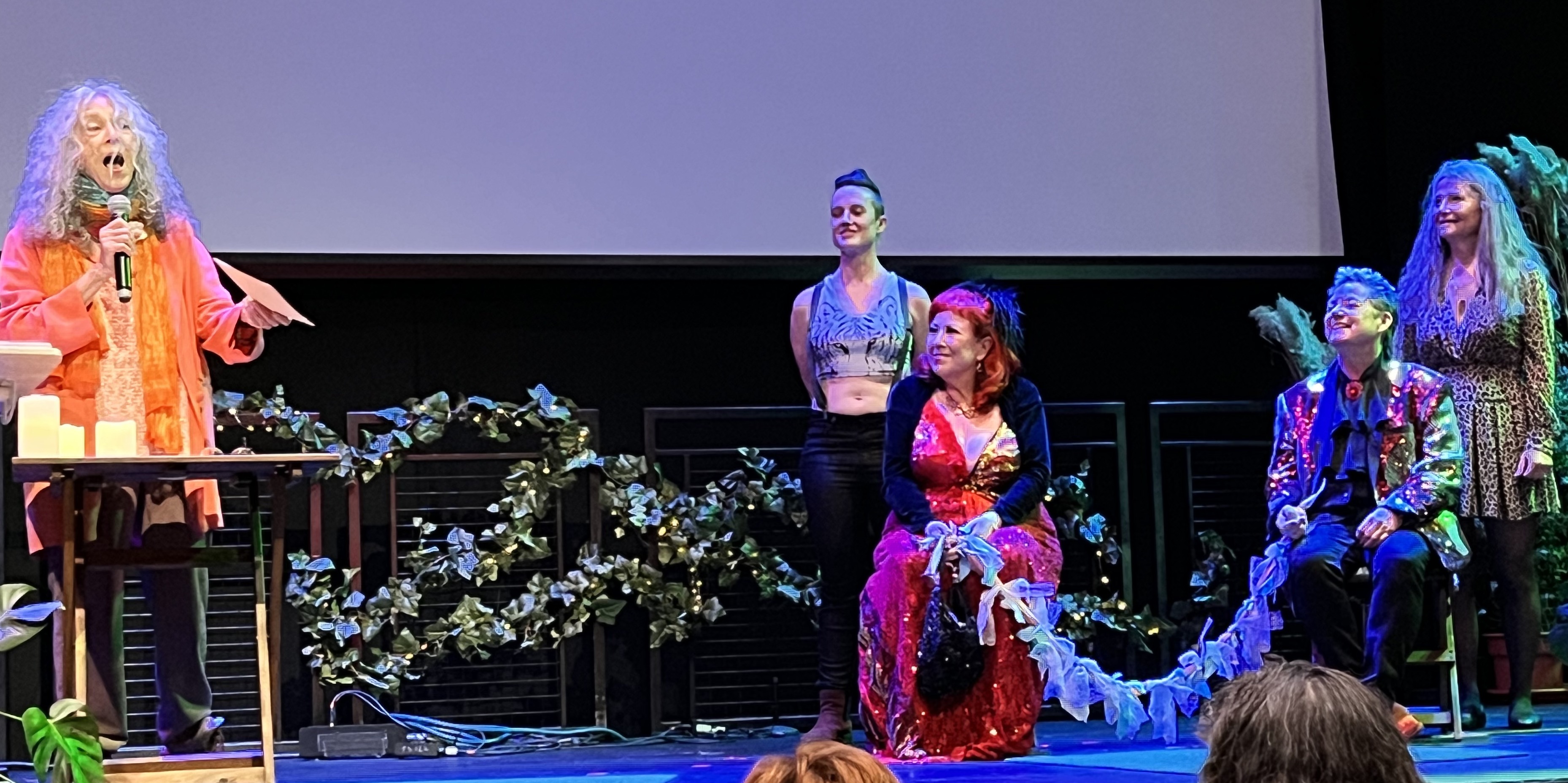
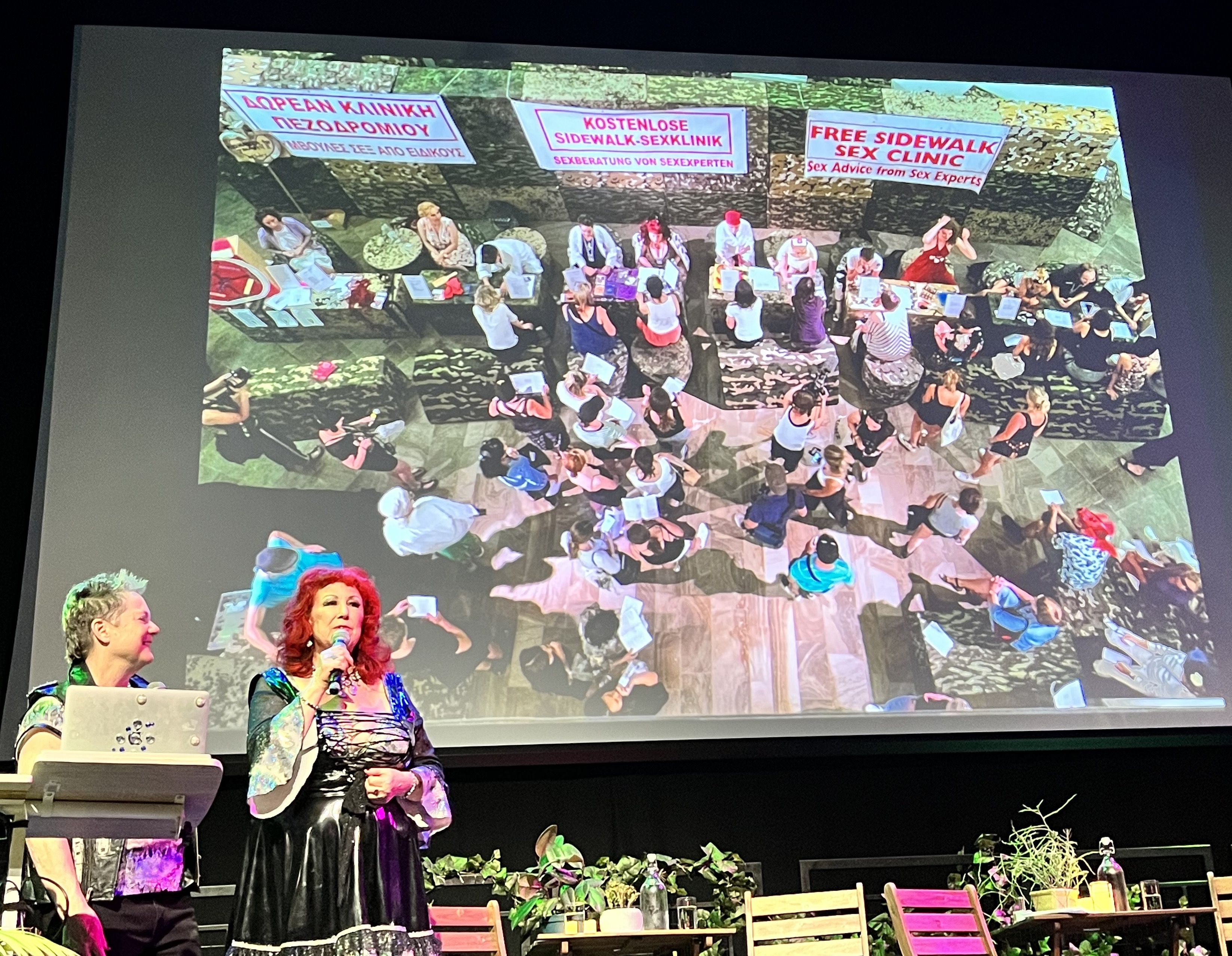
Annie and Beth started off the next morning with a whirlwind tour of their intertwined lives and art work.
The meat of the program on Saturday were two panels. In the morning, “Strange Kin,” filmmaker Maria Yoon (The Korean Bride) showed excerpts from her new work about marrying the dead (Ghost Wedding). Queer astrologer Michael J. Morris connected the stars to the earth. Scholar Camila Marambio talked about her cancer treatment and generously noted how human researchers and patients have benefited from lab animals who have “a talent for cancer.” Urban Tantra founder Barbara Carrellas showed scenes from her practice of Equine Tantra.

In the afternoon, “Elders & Ancestors,” charismatic Courtney Desiree Morris demonstrated  working with egun, which in Santeria is understood to mean the collective spirit of all the ancestors in a person’s lineage.
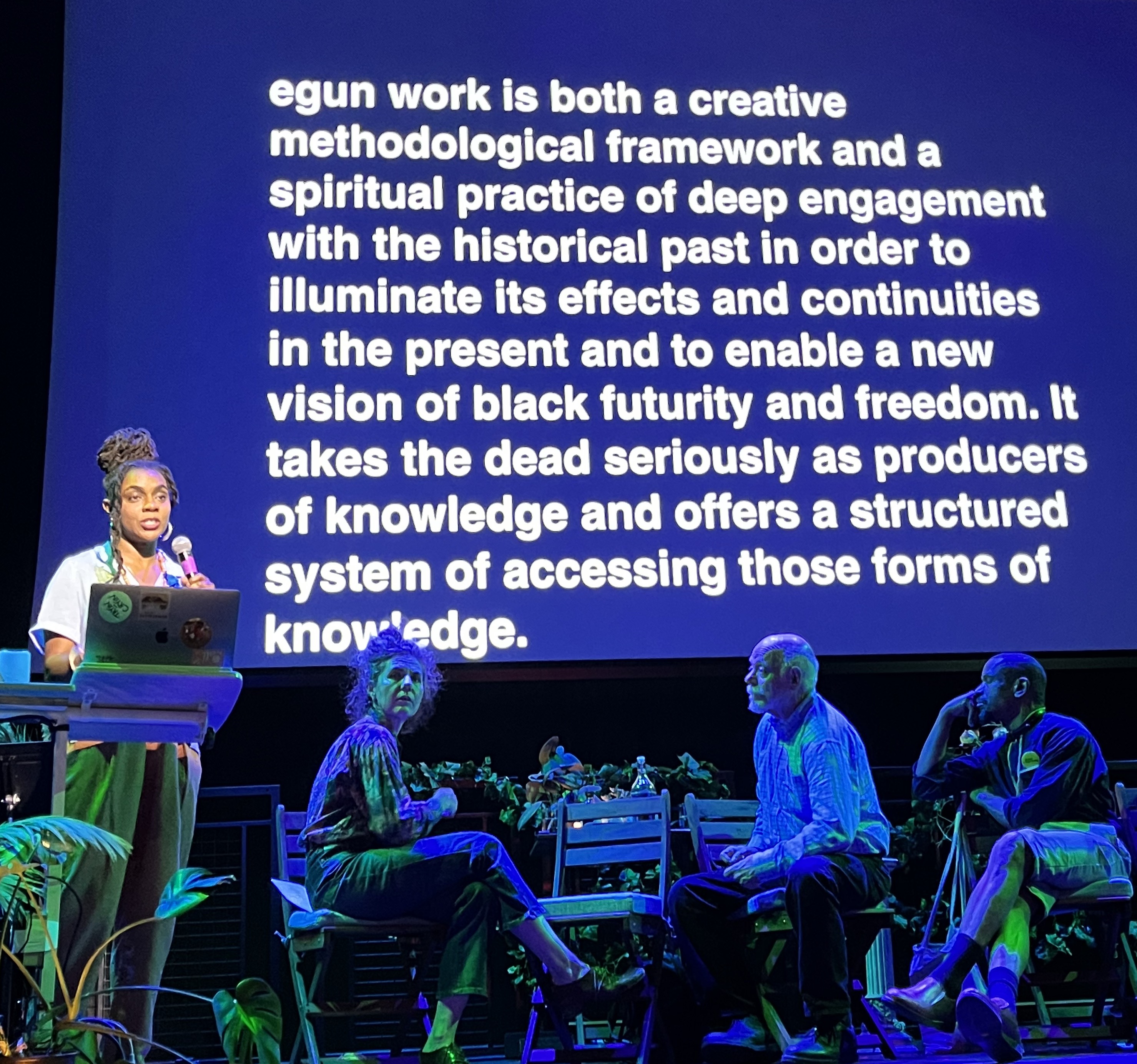
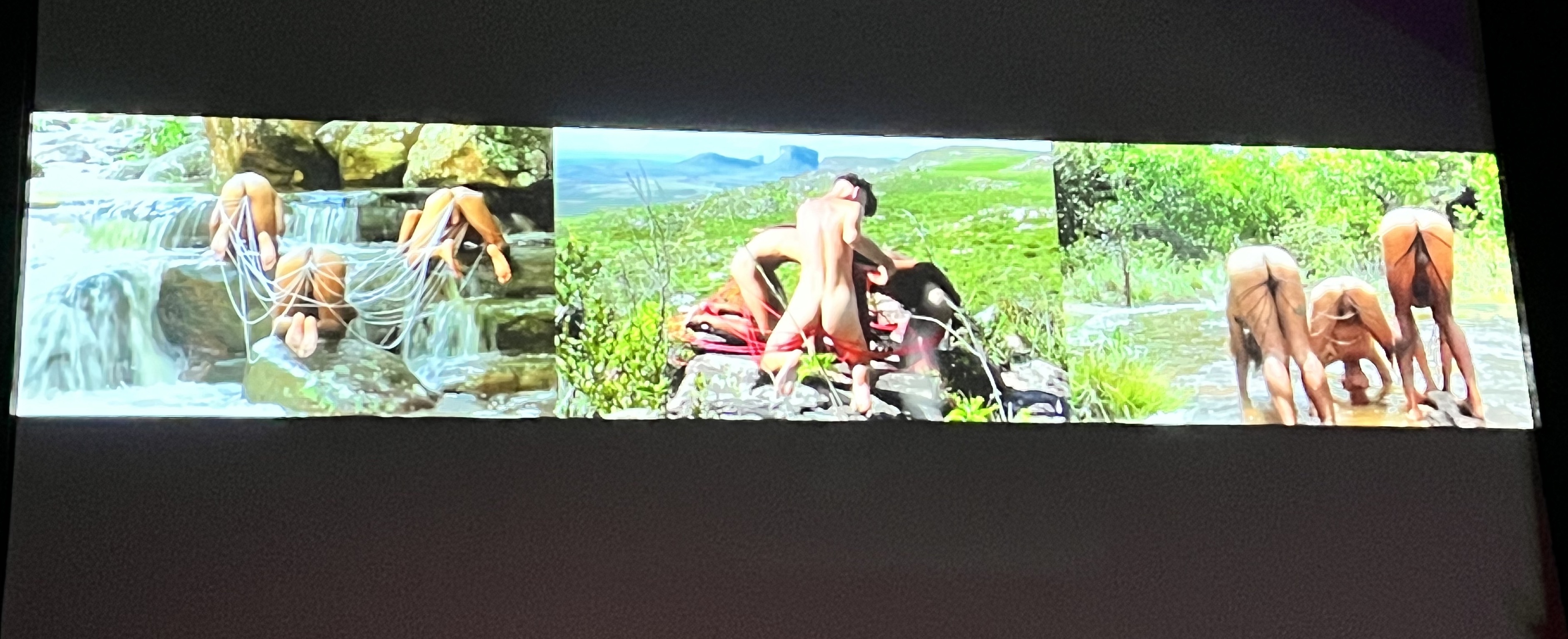
She also showed a clip from her film Oñí Ocan/The Heart of Sweetness, in which a succession of naked black bodies received a sensual libation of honey (she said they used 50 pounds of the stuff!).
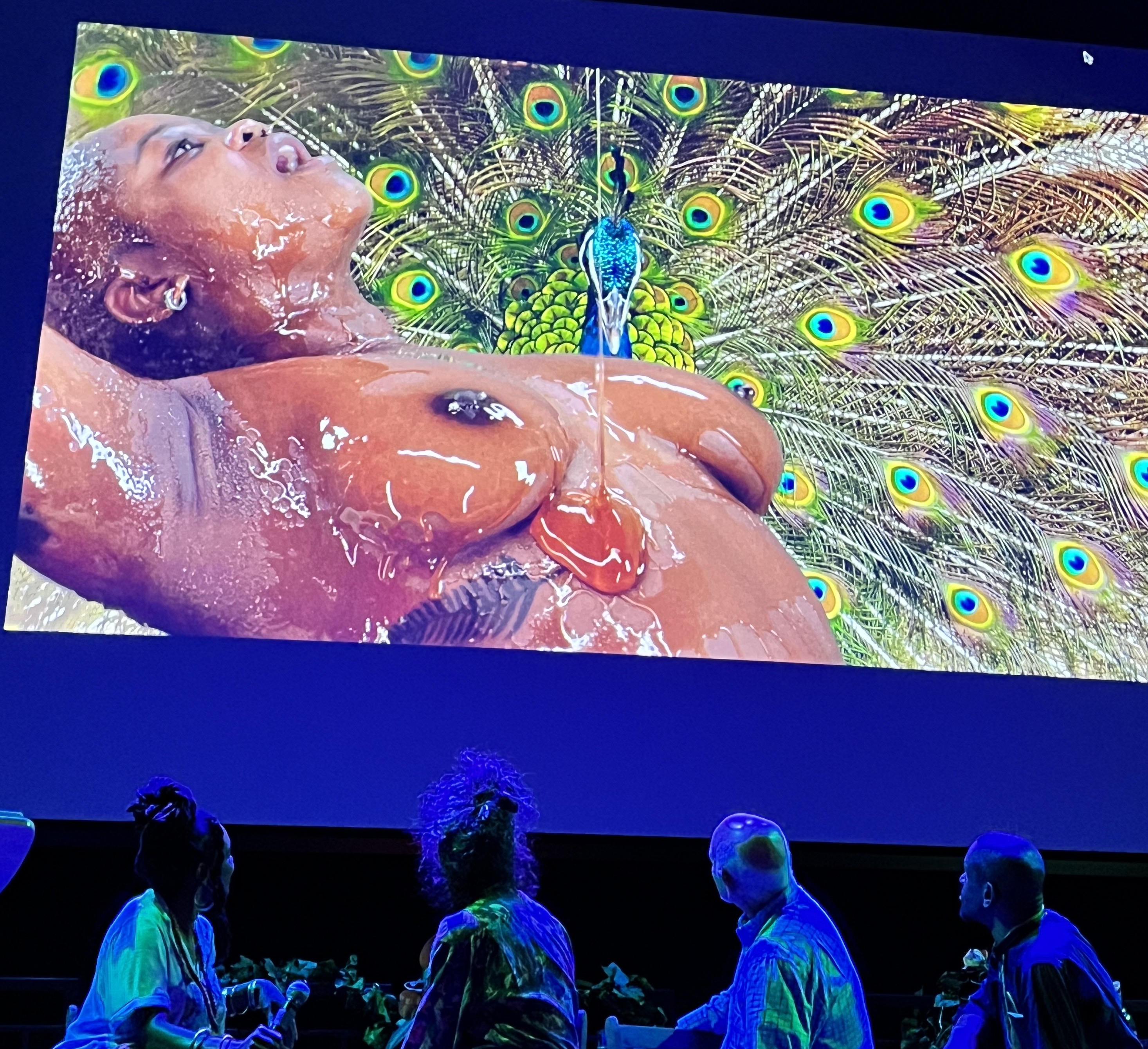
Savitri D. spoke about the value of being connected to a place, while video showed a gigantic tree being cut down limb-by-limb in NYC. Sur Rodney (Sur) and Philip Ward spoke about the sacred task of maintaining the archives of departed artists (Fluxus member Geoff Hendricks and writer-performer Quentin Crisp), constantly having to distinguish sentimental value from historical value.

Trans pioneer Kate Bornstein gave an ecstatically received talk on “Exploring Gender in Four Dimensions.”
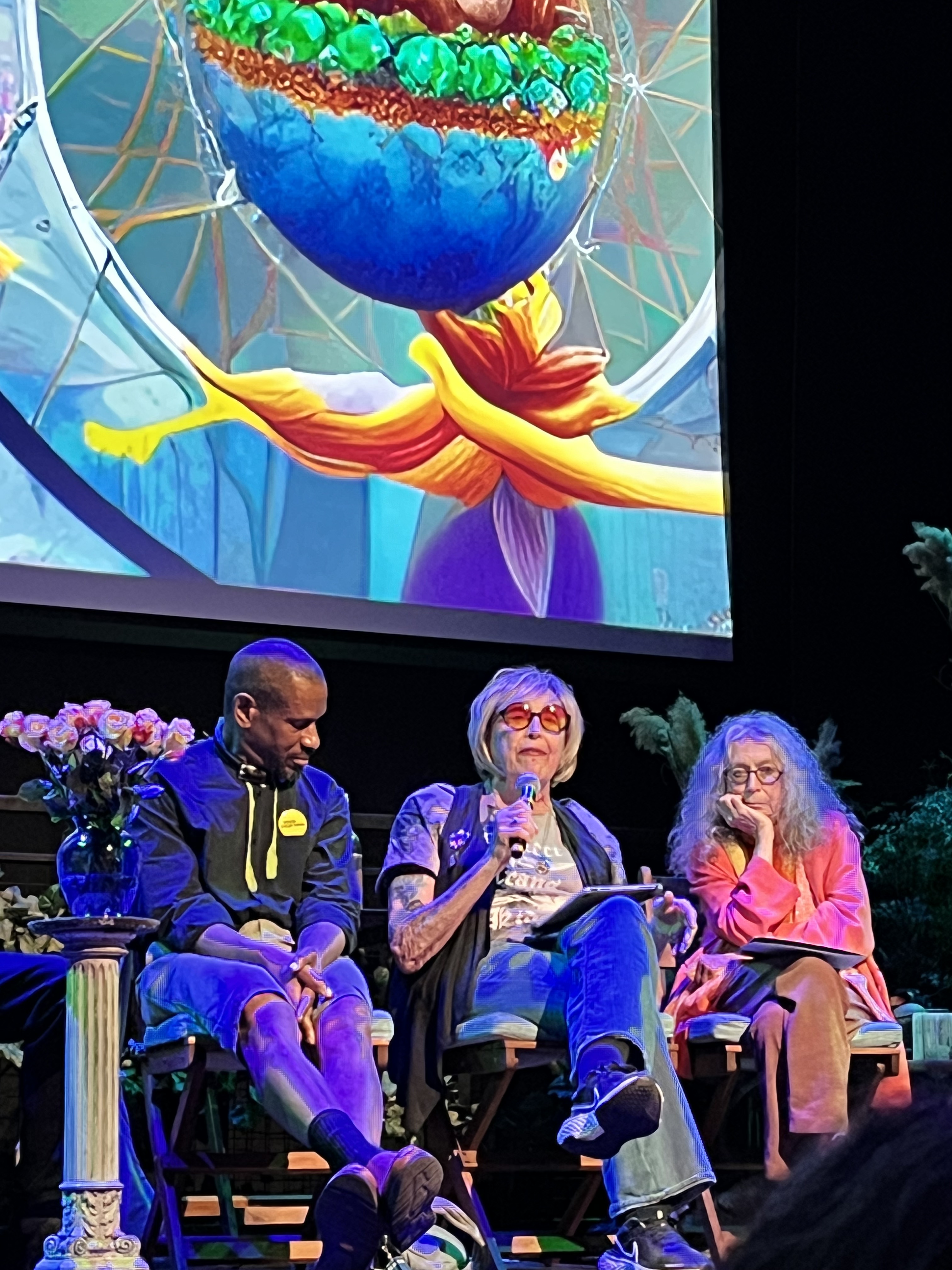
And Linda Montano, who confessed to having “panel anxiety,” schooled the audience in the art of asking for help and had the others on the panel read the text that she had written.

I was beside myself with joy at the honor of being in a room with such living legends, getting to meet the likes of Veronica Vera and Beth Stephens (in her Vaginas of Anarchy motorcycle jacket), exchanging books with Annie (she emailed in advance to say she was looking forward to fondling my new book, Daddy Lover God, which heavily features Joseph Kramer, whom she and Beth consider their husband), and hanging out with old friends and colleagues like Kim Irwin and C. Carr.

I’ve had the pleasure of communing with Annie Sprinkle at intervals over the years. I have fond memories to hanging out with her, Keith Hennessy, and AA Bronson at the 25th anniversary of Pride celebration in NYC in 1994.

I took part in the wonderfully silly “Liberty Love Boat” action in 1998 (a colorfully costumed queer invasion of the Statue of Liberty) and got to photograph her in her mermaid outfit with the great lesbian writer Sarah Schulman.

And one of my prize possessions is the Annie Sprinkle Aphrodite Award “for sexual service to the community,” given to participants in Joseph Kramer’s sacred intimate training in 1992.
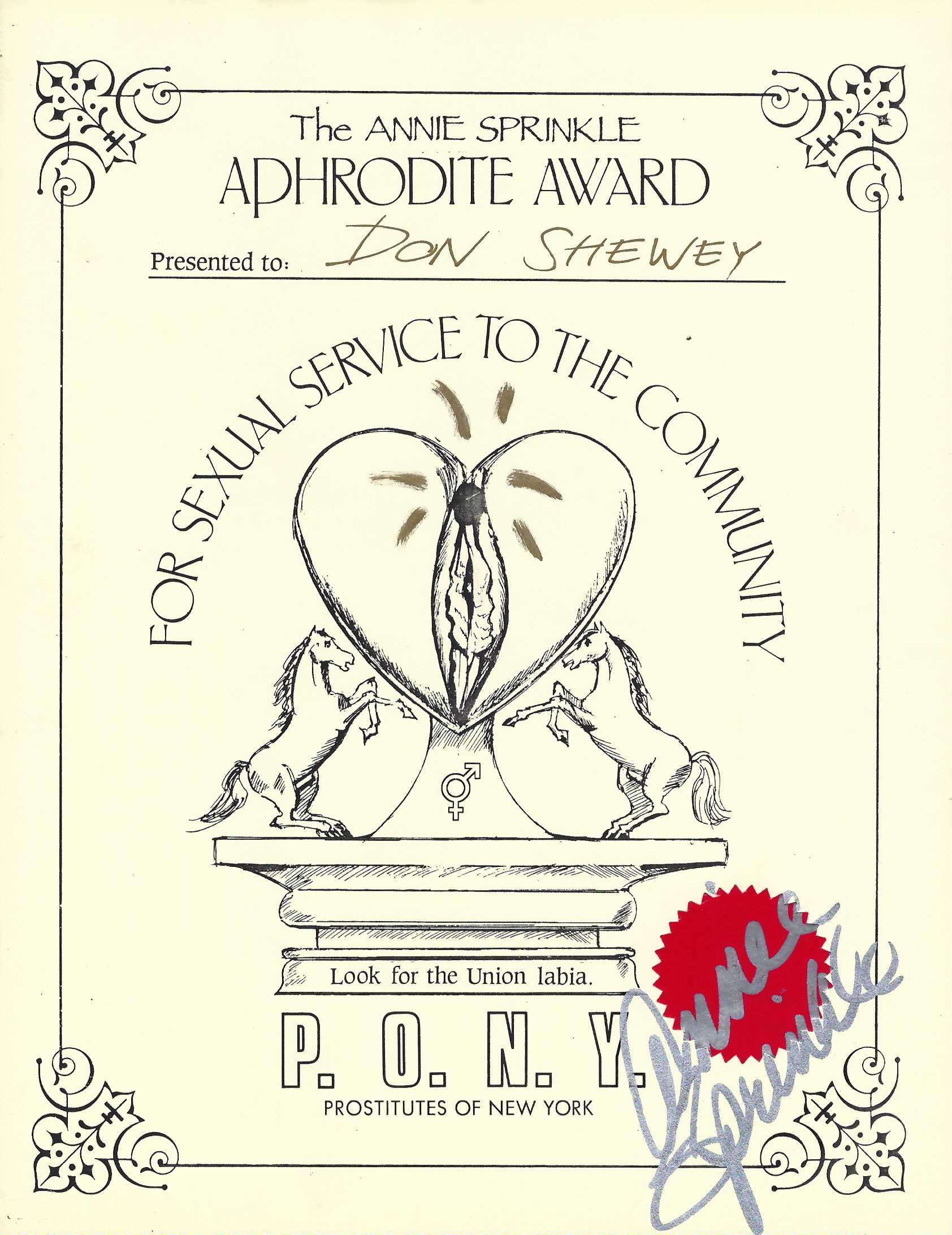
I love and respect Annie so much for her courage, her honesty, her vivaciousness, her sense of humor, her deep spiritual commitment to nature, and the revolutionary way she gives herself permission to do what she thinks must be done without asking for approval from anyone.

Culture Vulture: cinema summer

August 1, 2021

Streaming movies and TV have been a godsend during the pandemic. Talk about essential services! Over the last few weeks, I’ve been exploring two different avenues – this curious phenomenon called Going To a Movie Theater And Watching On The Big Screen, and in the opposite direction digging around among the kind online cinematic arcana Richard Brody likes to write about in the fine print of the New Yorker.

The first movie we saw in the theater was In the Heights, not a perfect movie but perfect for the moment, a feel-good New York City summertime romance with lots of dancing in the streets. The second theater movie, even more exciting, was Summer of Soul, a meticulous reconstruction and recontextualization of the Harlem Cultural Festival, which took place across six weekends in 1969. After enjoying the incredible line-up of performances – Stevie Wonder, Gladys Knight and the Pips, Sly and the Family Stone, the Fifth Dimension, Nina Simone – I gobbled up every interview I could find with Questlove, who created the film with the freewheeling precision of a genius mixtape. I loved learning that Aretha Franklin was originally supposed to perform the duet with Mahalia Jackson on “Precious Lord, Take My Heart” but cancelled at the last minute, leaving Mavis Staples to step in for a once-in-a-lifetime performance that is the highlight of the film. Also: Jimi Hendrix desperately wanted to be invited to play the festival; he was shut out but instead booked dates at a local blues club just to be in the vibe.

The third film I saw in the theater inhabits a whole other realm of cinema. Zola began life as a series of 148 Twitter posts by exotic dancer Aziah “Zola” King about a crazy road trip from Detroit to Tampa that turns into a much scarier ride than anticipated. David Kushner’s Rolling Stone article “Zola Tells All: The Real Story Behind the Greatest Stripper Saga Ever Tweeted” led to this wildly original film cooked up by director Janicza Bravo with playwright Jeremy O. Harris. Fast, wild, sexy, and nerve-wracking, Zola depends on the brave and hilarious performances of the central quartet – Taylour Paige as Zola, Riley Keough as Stefani (the faux-naif who lures Zola into an elaborate con), Nicholas Braun as her dweeby boyfriend Derrek, and Colman Domingo as Stefani’s pimp, known as X. I thought Keough looked a little familiar; only afterwards, I learned that she was not only the den-mother/gang-boss in American Honey but also the daughter of Lisa Marie Presley (which means her grandfather was Elvis and her stepfather was Michael Jackson). As we left the theater, my friend Ben and I agreed that the movie felt like a mash-up of Tarantino and Tangerine (Sean Baker’s dazzling iPhone-shot film about trans hookers in LA).

Meanwhile, some discoveries from off the beaten path:

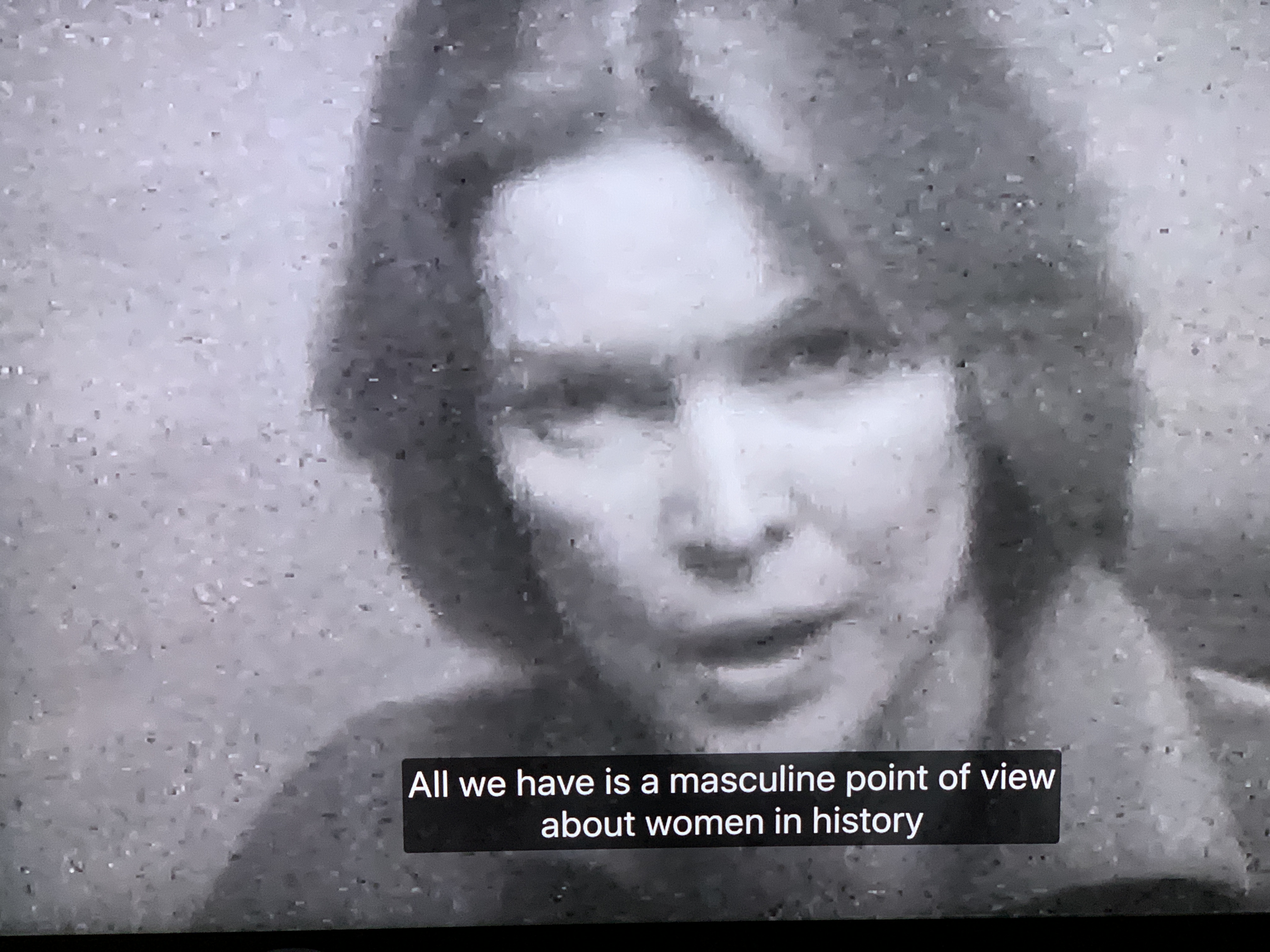
BE PRETTY AND SHUT UP! – Succumbing to some promotional offer, I subscribed to MUBI, which specializes in art cinema and emerging filmmakers even more obscure than what you’ll find in the Criterion Collection. I’ve watched LOST LOST LOST, six reels from Jonas Mekas’s Bolex with stilted voiceover, crude titles, and un-annotated glimpses of NYC in the 1960s (Frank O’Hara and Leroi Jones – later known as Amiri Baraka – at a play reading! Julian Beck and Judith Malina at a street demonstration!), and Alejandro Jodorowsky’s nutty Psychomagic: A Healing Art. There’s currently a whole series called “Sex, Truth, and Videotape: French Feminist Activism.” Who knew that the great Delphine Seyrig had taken it upon herself to do make a simple, one-camera, black-and-white, no-frills talking-heads documentary of her conversations with other women about their experiences acting in films?

Yes, Jane Fonda was married to Roger Vadim and co-starred with Yves Montand in Tout Va Bien but how often have we gotten the chance to hear her speak fluent French in conversation? The crew of interviewees is amazing: Ellen Burstyn, Viva, Shirley MacLaine, Cindy Williams, Maria Schneider, Jill Clayburgh, Louise Fletcher, and more, no makeup, no fancy backdrops. Almost all of them are amazed and thrilled to be asked questions they’ve never addressed before: have you ever been asked to play a scene where two women express friendliness to each other?

CAN YOU BRING IT – Rosalynde Leblanc and Tom Hurwitz’s documentary beautifully conjures the original production of the Bill T. Jones/Arnie Zane Dance Company’s D-Man in the Water while observing Leblanc’s restaging Jones’ choreography on a group of young dancers at Loyola Marymount College in Los Angeles. The Jones/Zane company figured heavily in the pop-dance explosion in NYC in the 1980s; like Twyla Tharp’s and Mark Morris’s, their company was like a favorite rock band. It’s thrilling to see this footage of gigantic Bill, tiny Arnie, chubby Larry Goldhuber, gorgeous Heidi Latsky, impy Sean Curran (below), athletic Arthur Aviles (I’ll never forget his gravity-defying performance in D-Man) – all of them dancing in vintage footage, the survivors speaking with wrenching eloquence.

Zane died of AIDS in 1988; he was 39. Demian Acquavella, the D-man of the title, died in 1990; he was 32. Jones’s status as long-term survivor is etched on his craggy face. The documentary is a tribute to the artists who lived through the worst of the AIDS epidemic and responded to it in their work. The fresh-faced kids in LA know virtually nothing about AIDS, which makes their approach to the production both dewy with innocence and kind of clueless. Jones has done a beautiful job of stepping into the role of community elder, and it’s moving to observe the patience and presence he brings to speaking with the students. (His smooth, avuncular speaking voice uncannily recalls Barack Obama’s.) And even though I don’t think about it that much, he’s literally an icon in my everyday life – a signed print of Keith Haring’s drawing of him (based on a photo by Tseng Kwong-Chi, another shining downtown artist lost to AIDS, like Haring) hangs just inside my front door.

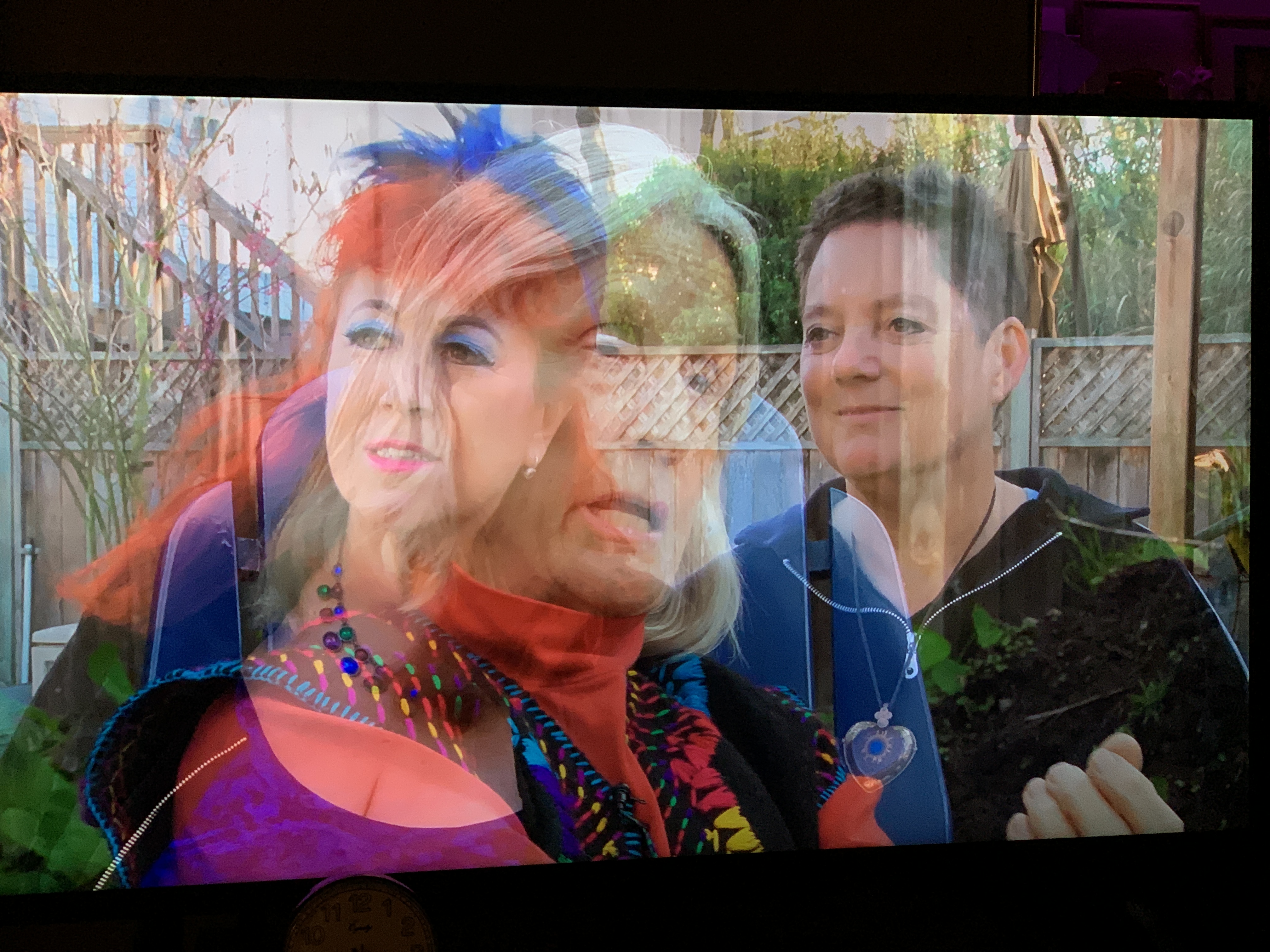
WATER MAKES US WET – Annie Sprinkle and Beth Stephens’ goofy yet informational documentary about the politics of water has made the rounds to festivals for a couple of years, and they’ve made the film available for free on Vimeo through the end of August. Modelling their spiritual practice as “ecosexuals,” they wander up and down the state of California in their RV, visiting wastewater treatment facilities, communing with philosopher Donna Haraway in her back yard (below), and chatting up sewage handlers who have cultivated tremendous tolerance for

the shit jokes that come their way. A program in San Francisco called “Adopt a Drain” enrolls local residents to keep drains swept clear of garbage and debris. Motto: “Your #2 Is Our #1.” Their irrepressible message is “Fight despair with joy!” I love getting access to smart, powerful lesbian couples and the wisdom they generate – see also the “On Being” podcast featuring author Glennon Doyle and world-champion soccer star Abby Wambach, two people I knew nothing about until listening to their funny and savvy chat with Krista Tippett.

PRIDE – “Where there’s a will, there’s a way” is an old saying whose truth has played out in world-changing ways these last couple of years. The U.S. government has plenty of money in reserve to not only vaccinate everyone in the country but to pull American citizens out of poverty with direct payments. Something significant happens when white male supremacy gives way to leadership by women and people of color. The remarkable achievement of the Hulu series Pride is that it doesn’t have to stretch very far to tell the story of the gay liberation movement primarily through black, trans, and female voices. The series makes that look so simple, easy, and obvious, but in reality until the last two years no overview of the gay movement has foregrounded these voices. (Sarah Schulman accomplishes the same corrective in her recently published, invaluable history of ACT UP, Let the Record Show.) The sixth and final episode, for instance, “Y2Gay,” spotlights Margaret Cho, David Wilson, Brontez Purnell, Dean Spade, Chase Strangio, Cece McDonald, Dr. Lourdes Hunter, Raquel Willis (below), and Ceyenne Doroshow. And the decade of the ‘70s, a turning point in gay history, is given a very different and richer spin because of the voices that black lesbian feminist filmmaker Cheryl Dunye chooses to tell the story. The whole series is so beautifully scripted and shot that you (almost) don’t mind the maddening deluge of the same commercials over and over on Hulu.

Good stuff online: Dan Martin and Michael Biello’s song “Annie Sprinkle”

January 1, 2013

Michael Biello and Dan Martin, partners in art and in life, have written many wonderful songs together over the years. They’re currently working on a show called In My Body, and they’ve made a demo recording of this delicious song about the legendary pleasure activist Annie Sprinkle. Sung by Michele Ragusa, the song describes the epiphanic experience of seeing Annie’s performance piece Post-Porn Modernist, where she invited audience members to the stage to look at her pussy…I mean, to examine her cervix. I witnessed an earlier version of this show, when Richard Schechner asked Annie to conduct her sex education class as part of a show he staged at the Performing Garage called The Prometheus Project, and I can attest to the beautiful, sweet, innocent, hilarious, and shamanic impact of Annie’s physical generosity. This was truly Living Theater! Dan and Michael capture the essence of Annie’s message: “To pleasure yourself is to pleasure the world!”