Photo diary: honeymoon in Hawaii, part 3 (Hanapepe)

February 22, 2018


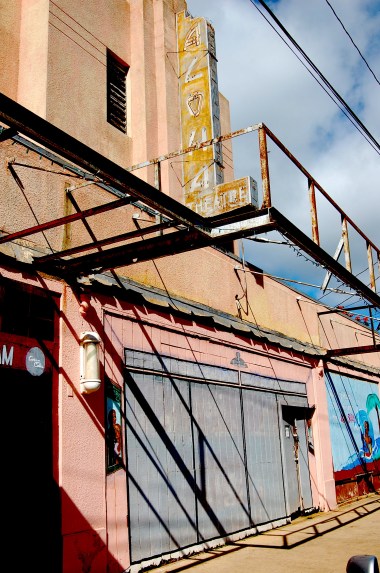
Our favorite place on Kauai turned out to be the historic old town of Hanapepe, which among other things is where the animated Disney film Lilo and Stitch took place, something we learned from a sign painted on the side of a delightfully funky derelict old stucco movie palace called the Aloha Theater.
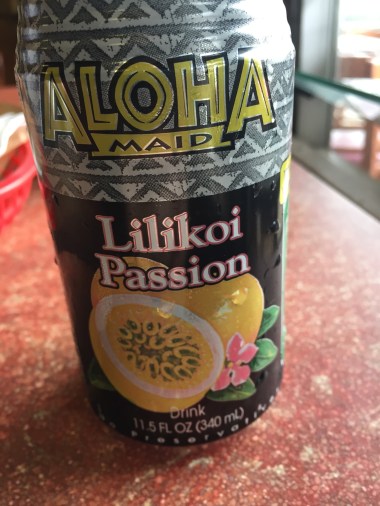
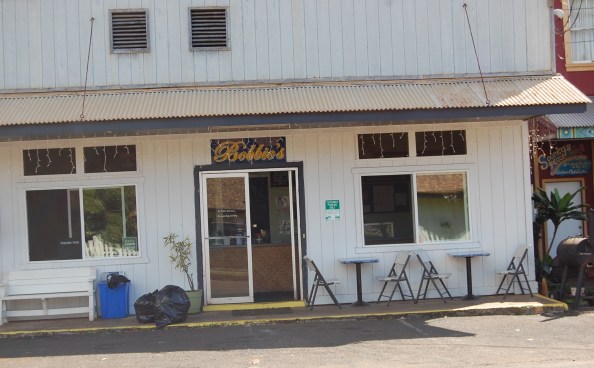
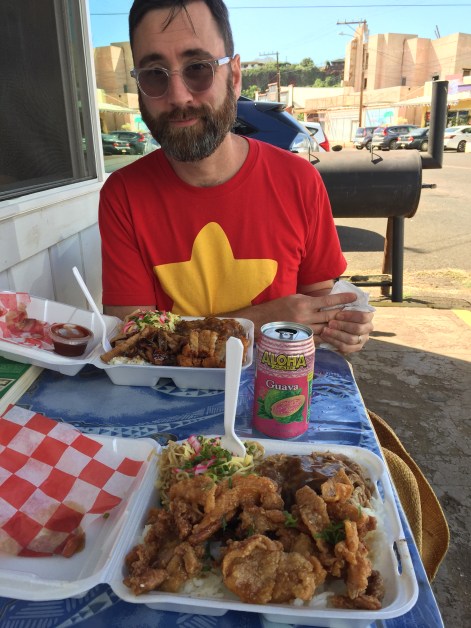
We had lunch at Bobbie’s, which serves very local cuisine — which in Hawaii means really fatty pork and spicy Korean deep-fried chicken over white rice with sugar-loaded soda pop in island-fruity flavors (guava, pineapple, lilikoi/passionfruit). Kinda gross, to tell you the truth.
We couldn’t resist stopping in at Talk Story Bookstore, which bills itself as the Westernmost bookstore in the United States. The friendly couple who run the store shelve fiction in separate sections for male authors and female authors, and they told us they’re such book-nerds that when they traveled to Iceland and discovered a cache of ’50s pulpy paperbacks they left clothes behind to make room in their luggage for the books.
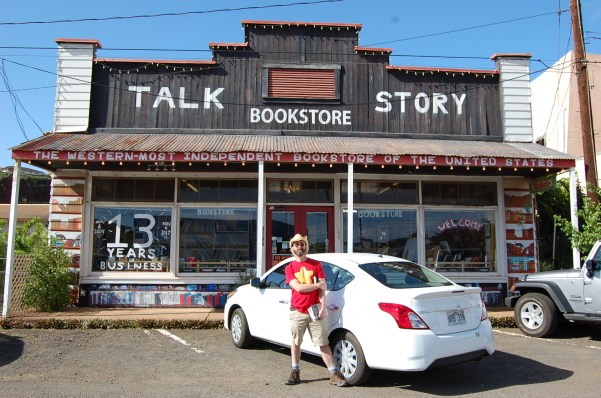
Clearly the town tries hard to stay in the game with a string of art galleries, but the number of boarded up or abandoned buildings gives it the feel of a ghost town, which I found perfectly charming. I also learned that there is such a thing as a movement for Hawaiian independence.

From Dave Seminara’s “36 Hours in Kauai” feature in the New York Times’ Travel section last November, we’d caught wind of “Jacqueline on Kauai,” aka The Aloha Shirt Lady, who will whip up a custom-made Hawaiian shirt for you overnight. Jacqueline Vienna is a character, a tough-cookie hippie grandma with great taste. We met her Wednesday afternoon and went back Friday morning to pick up our shirts, which we’re thrilled with.
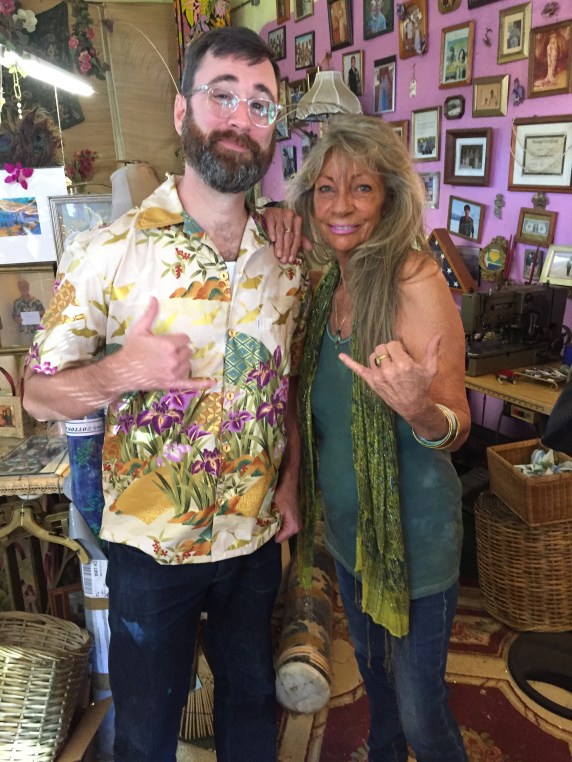
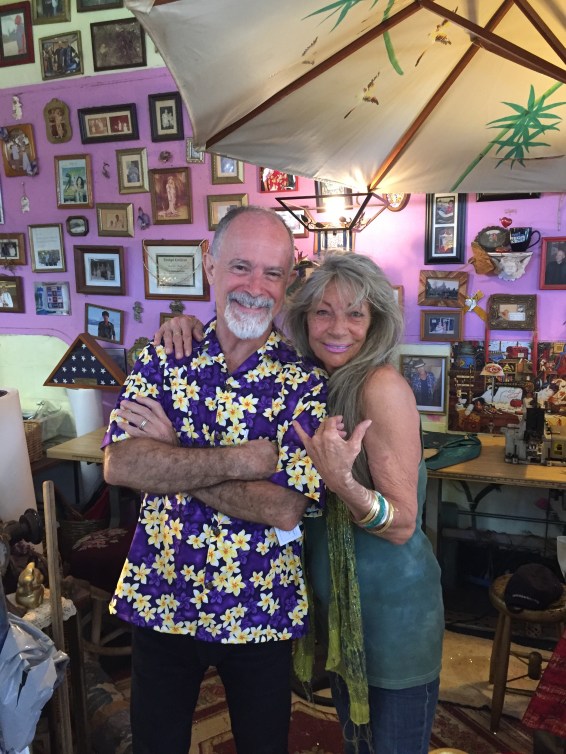
Photo diary: honeymoon in Hawaii, part 2 (Waimea Canyon)

February 22, 2018

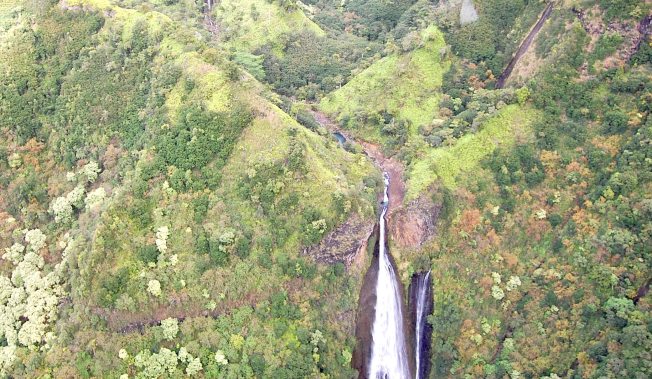
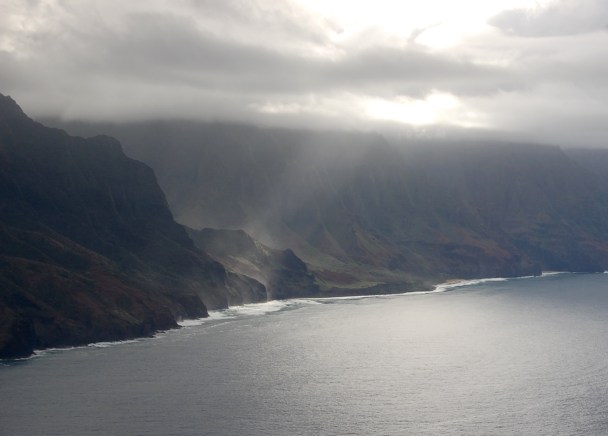
They call Kauai “the Garden Isle” for its natural beauty, which shows up in the lush greenery along the north shore, the striking cliffs along the Na Pali Coast (along which there is no roadway), and the colorful ridges that make up Waimea Canyon, Hawaii’s miniature version of the Grand Canyon.

We dutifully drove to the top of Koke’e State Park to have a look at both the coastal views and the canyon.

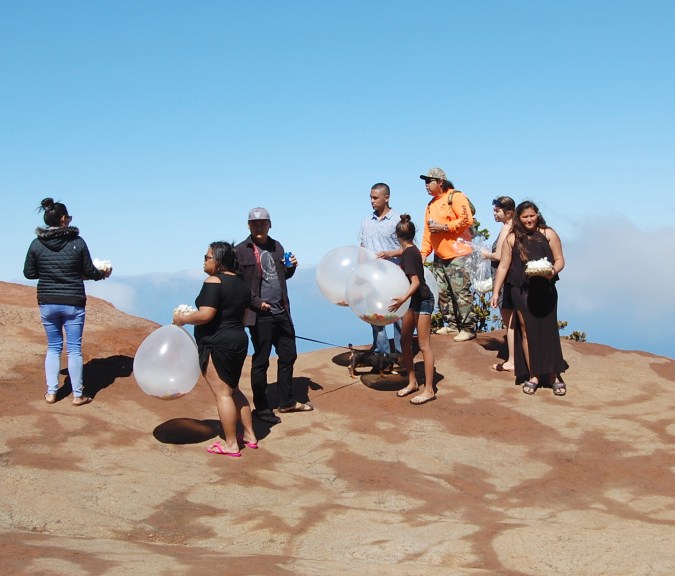
We encountered a local family scattering Grandma’s ashes in the form of five big balloons they tossed over the side of the cliff, which struck me as ecologically insensitive for Hawaiian natives, but whatever.

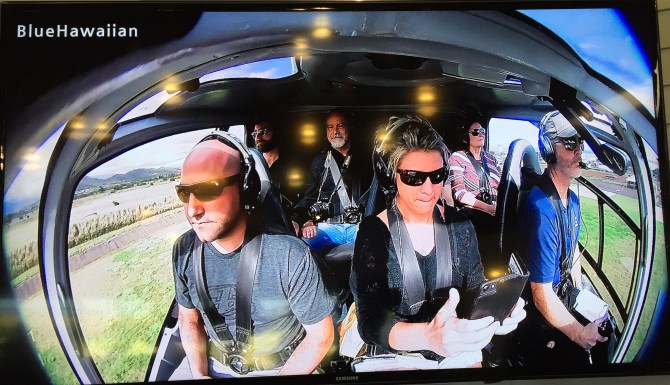
And inevitably we booked a one-hour helicopter tour, which is the only way you’re going to get a glimpse of the Na Pali Coast in all its splendor.

Our honey-voiced pilot, Marty, also flew us into the otherwise inaccessible crater of the long-dormant volcano.


Quote of the day: POWER

February 22, 2018

POWER

I learned that I’m powerful because I don’t have to say much to be heard.

–Mary J. Blige


Photo diary: honeymoon in Hawaii, part 1

February 21, 2018


After a brief overnight stopover in unseasonably balmy San Francisco, Andy and I arrived in Kauai for our belated honeymoon. We spent the first two nights at a lovely Airbnb in Kapaa hosted by a couple of yoga teachers and healing practitioners (one of whom lived in the same Upper West Side apartment as me in 1993).

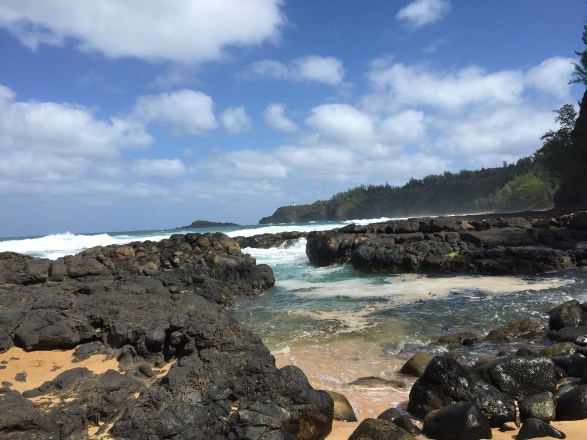
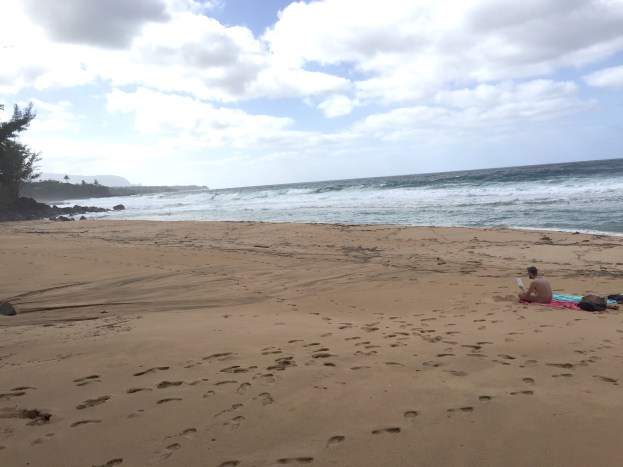
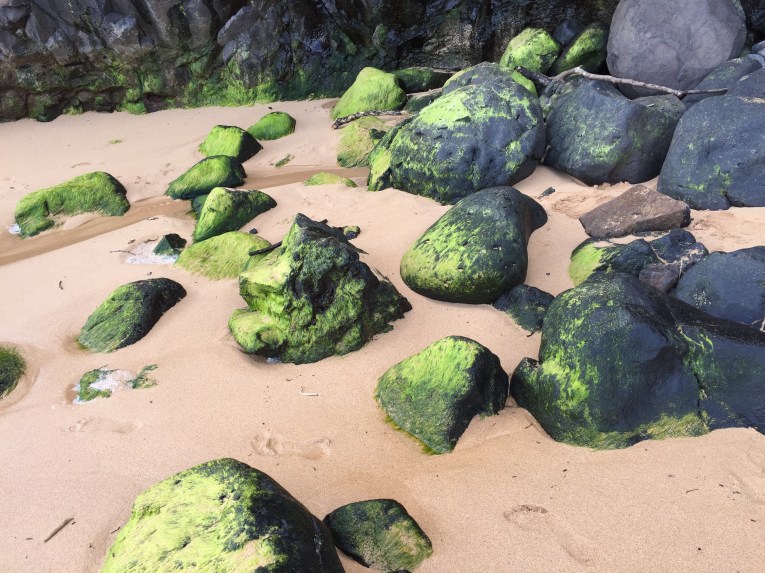
That gave us a perch from which to explore the north shore. We sought out Secret Beach, the secluded stretch of sand and rocks favored by clothing optional beach fans, which was so secret and secluded that we had it all to ourselves.


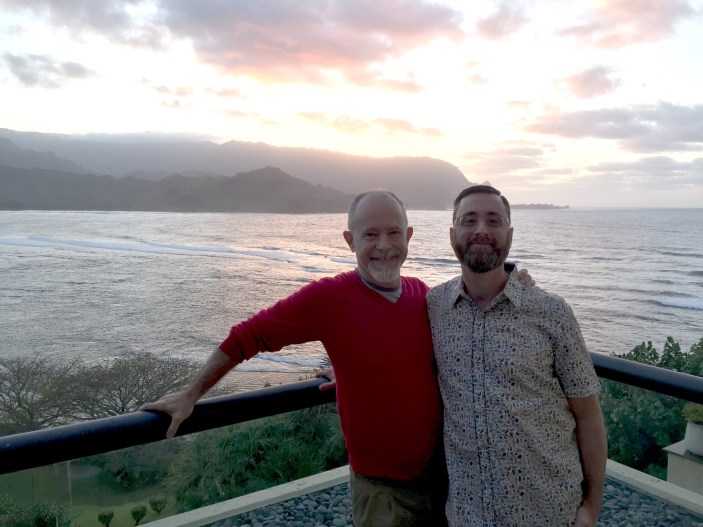
We stopped for a macaroon and tea at the Kilauea Bakery and then drove all the way to the end of the road, past the lush fields and gorgeous beaches made famous in the movies (South Pacific, Jurassic Park, King Kong). Then we doubled back to the schmancy St. Regis Hotel in Princeville for the obligatory sunset photos over cocktails on the balcony.


Quote of the day: ALLIES

February 19, 2018

ALLIES

Privileged people often ask me what they can do, and I think the idea of accompaniment is greatly underestimated: maybe I can’t help, but I can just be with this person while she sells papers. Recently Hyatt Hotel housekeepers in Boston asked people to show up to their protest for higher wages and better working conditions. If someone from an advantaged background walks in a picket, it might spark a moment of connection with those workers. And if the police come along and treat the protestors like dirt, this advantaged person will have his or her eyes opened.

Over the years I’ve participated in eviction blockades. When the police arrive to put a renter out on the street, some of us stand on the steps of the house and risk arrest, while others are just there to witness. I’ll invite people I know to come along for this experience. I want them to see it. If they ask what good it will do, I’ll say, Just come along. Sometimes our presence is enough to stop the eviction. Sometimes it goes through anyway, but we witness it, and this deepens our understanding and our empathy.

Q: How can people go further than just accompanying and become an ally?

Being an ally means actually leveraging your privilege to intervene in a situation or dismantle structural inequality. If you’re not sure how to do this, ask the people you’re trying to help. Let them tell you, Here’s what it means to be an ally in this situation. Here’s the code of conduct. That’s very important.

For example, in Montana a group of women, galvanized by a picture of a dead Syrian-refugee child, got a resettlement agency to come to their state, which has historically been unfriendly to refugees. Now they have a nonprofit in Missoula called Soft Landing, which provides services like driver’s education and English-language classes to refugee families. It also educates the Missoula community about the refugee crisis and how to extend welcome to all. This organization, which has more than six hundred volunteers, was started by a woman who had no background in activism or politics.

–Chuck Collins, interviewed by Megan Wildhood in The Sun,  February 2018 (“Separate and Unequal: Chuck Collins on How Wealth Divides Us”)