TO ROME WITH LOVE– I’ve always been a big Woody Allen fan. When I first moved to New York, I would line up to see his movies on opening day. I treasured the many years when I got invited to advance press screenings, so I got to sit in the plush seats at the Broadway Screening Room (Manhattan’s finest) and see the movie before anyone knew anything about it. Somewhere in the early 21st century, that interest took a dip, as Woody’s movies got pretty thin and bad. I actually skipped eight of them, starting with The Curse of the Jade Scorpion. I only saw one of his London movies, Match Point. But his other European films have been a cut above the recent crap – Vicky Cristina Barcelona, Midnight in Paris, and now To Rome with Love, in which Woody gives himself a huge canvas, a large cast, and a Fellini-esque freedom to wander back and forth between surrealism and living-room naturalism. The several stories don’t interlock, and they don’t even take place in the same time frame or the same language. One subplot rather wittily comments on reality TV and another is equally clever in reflecting the banal absurdism of shows like “American Idol” and the unlikely stardom of Susan Boyle. As a travelogue, it’s strictly lowest-common-denominator, but it’s fun to spy Piazza Navona, the Spanish Steps, Piazza Venezia, etc. The one booboo I caught was when Jesse Eisenberg and Ellen Page stroll through a produce market handling the veggies themselves, which is just not done, as this sign from a Bologna vendor attests:

MAGIC HOUR – The new Scissor Sisters CD didn’t really kick in for me until I jacked into my super-fine bass-boosting Klipsch headphones. Now I’m so addicted to it I can’t get certain fun, trashy dance tracks out of my head – namely, “Shady Love,” “F*** Yeah,” and the instant gay classic “Let’s Have a Kiki,” with one of those Anna Matronic spoken-word raps that you can’t help memorizing and repeating until the people around you have to beg you to stop. The pop triumph of the summer so far.
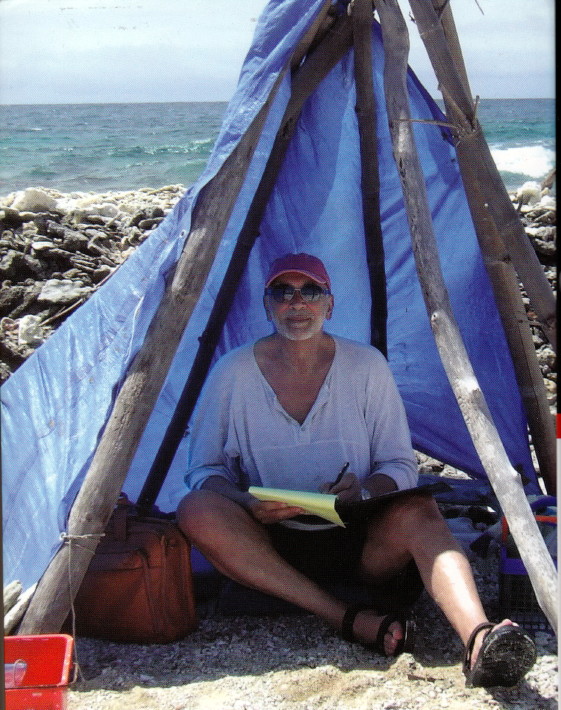
DROPPED NAMES – Frank Langella’s memoir, subtitled “Famous Men and Women As I Knew Them,” is a fascinating mixture of humility and arrogance, compassion and snarkery, shrewd observation and self-protection, radical honesty and annoying coyness. There are 65 chapters, one per famous name, each one seen through the lens of Langella’s particular fixations: how theater and film colleagues view the acting profession, how showbiz celebs handle their drinking, how nimbly they stroke the author’s ego, and sex sex sex sex sex. Often adoring, often admiring from a distance, sometimes petty and competitive, Langella (above) writes only about dead people (with the exception of Bunny Mellon, who’s 102 and gave her blessing. I found myself annoyed a lot by Langella’s tone – he describes his two dates with Elizabeth Taylor in great detail, emphasizing that they never had sex; but then he’s very coy about Jackie Kennedy Onassis, implying that they had a sexual relationship without actually stating it. He never admits to any homosexual liaisons himself but lectures Dominick Dunne on his deathbed for not coming out to his children. Nevertheless, he reveals a lot about both himself and his subjects. I’m haunted by his description of Ida Lupino, fired after four days’ work on a film version of Tennessee Williams’ Eccentricities of a Nightingale because the director couldn’t answer her keenly intelligent questions, and his account of meeting Bette Davis very briefly in a hotel lobby, watching her tell her young female assistant “Get the car” in a tone of voice that implied “…or I’ll kill you.” I love that he chatted with Jessica Tandy about sex in Broadway dressing rooms and that he asked Brooke Astor how she lost her virginity. All in all, a quirky and artful (and compulsively readable) survey of a rich, full life.
UNITED IN ANGER – Jim Hubbard’s documentary film at the Quad Cinema culls 90 minutes from the vast archive that he and Sarah Schulman have created with the ACT UP Oral History project. The film distils the important story of how a grass-roots community activist movement changed the American medical establishment’s approach to AIDS forever and leaves it to viewers to extrapolate the rest – how that example has and hasn’t affected medical treatment, government policy, world health initiatives, and the perception of gay and lesbian people since then. For me, watching the film was deeply personal and unavoidably emotional – this was the story of my life from 1987, when I attended the first ACT UP demonstration on Wall Street, through 1992, when ACT UP responded to the first Gulf War by taking over Grand Central Station declaring a “Day of Desperation” and demanding “Money for AIDS, Not for War.” I took part in “Storm the NIH” and spent the night in jail in Albany as a footsoldier in ACT UP’s army of lovers, friends, sick and dying warriors. The story is told both through contemporary footage (shot by video activists, many of them very young lesbians) and talking heads – people like Ann Northrup, Jim Eigo, Ron Goldberg, Mark Harrington, Gregg Bordowitz. These people were the heroes of Monday night ACT UP meetings at the Center because of their intelligence, courage, passion, political savvy, and commitment to direct action, all of which the film conveys. Like the best AIDS documentation, it’s sad, infuriating, and inspiring. This film limits its ambition to telling the history of ACT UP – I would have been happy to watch an hour more, and for the sake of Andy or others of his younger generation I might have wanted some way of stepping back and placing ACT UP in the context of gay culture, its relationship to Gay Men’s Health Crisis (the world’s first community-based AIDS health organization) and spin-offs such as Queer Nation, Lesbian Avengers, and (you could say) Occupy Wall Street. Nevertheless, it’s a good honest piece of work. Go see it. It will eventually be available digitally and on DVD, but seeing it in the movie theater, as a community experience, is the best way.
LOUIE – I’m chewing my way through the second season of Louis C.K.’s astonishing comedy series on Netflix. It’s so weird, so strangely paced, so original, so nakedly honest about race and parenting and the horrendous awkwardness of middle-aged dating that I can’t help feeling like Pavlov’s dog: when one episode is over, the only think to do is click the button, continue to next episode….




 another eye opens