In this week’s New Yorker

September 20, 2012


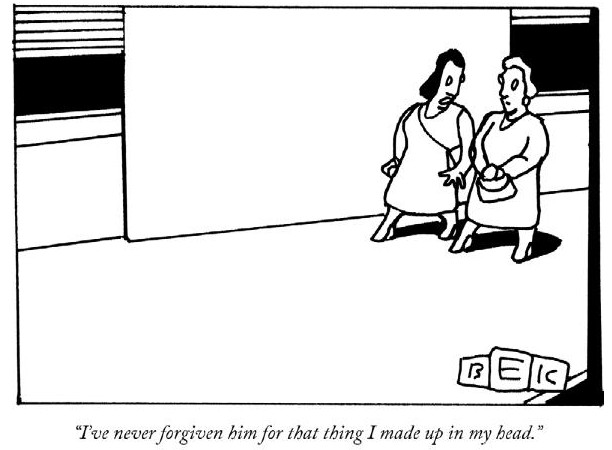
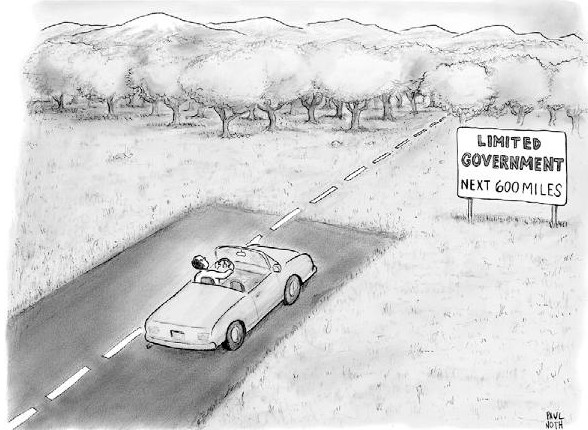
A weird thing about the New Yorker’s annual Cartoon Issue is that it pretty much always creates high expectations and doesn’t live up to them. This week, as in the past, the cartoons don’t seem as good as many regular issues, even though there are twice as many.


The best thing about this issue is “The Lie Factory,” Jill Lepore’s American Chronicles piece about the two individuals who created the whole industry of political lobbying . Clem Whitaker and Leone Baxter, a couple of right-wing conservative,  created Campaigns Inc. in 1933. They started out in newspapers and then figured out how to run political campaigns in favor of businesses by smudging the line between advertising, advocacy, and journalism. They were the ones who first undertook to persuade the American public that universal health care was “socialized medicine” and therefore unspeakably evil. It’s a fascinating and disheartening chapter of American political history.

Key quote from William Gavin, an advisor to Richard Nixon who wrote in a memo: “Voters are basically lazy, basically uninterested in making an effort to understand what we’re talking about…Reason requires a higher degree of discipline, of concentration; impression is easier. Reason pushes the viewer back, it assaults him, it demands that he agree or disagree; impression can envelop him, invite him in, without making an intellectual demand. . . . When we argue with him we demand that he make the effort of replying. We seek to engage his intellect, and for most people this is the most difficult work of all. The emotions are more easily roused, closer to the surface, more malleable.”

I did also love this amazing photo by Martin Roemers that accompanied Mohsin Hamid’s short story “The Third-Born”:


Last week’s issue, by the way, had a terrific profile of Elizabeth Warren by Jeffrey Toobin, an excerpt from Salman Rushdie’s new book about his life under the fatwa that made him a target for assassination by Muslim fanatics, and a good piece by Hilton Als on Robert Wilson and the evolution of Einstein on the Beach.


Performance diary: Amanda Palmer, INTO THE WOODS, and EINSTEIN ON THE BEACH

September 18, 2012

September 11 – Amanda Palmer first made her name as half of the Boston-based theatrical punk-cabaret duo Dresden Dolls. Most recently she achieved internet notoriety by raising over a million dollars with a Kickstarter campaign intended to raise $100K to finance the current tour supporting her newly released album Theatre Is Evil. In between she carved a major niche for herself as a DIY breast-baring grass-roots ukulele-toting championship social-networker, acquiring not only an ardent fan base but also a geek-idol husband, the charming, prolific and equally media-savvy science fiction-fantasy writer Neil Gaiman. I’ve been watching from the sidelines as Andy, a huge Gaiman fan, got intrigued and then swept up by the Kickstarter campaign. And I was perfectly happy to go along with reconfiguring September 11 as Amanda Fucking Palmer Day this year, even if it meant enduring the rigors of standing up for four hours straight at Webster Hall. (I swear I’m not going to say it, I refuse to say it, you’ll never hear me utter the words, but of course I’m thinking: I’m getting too old for this.)


It was a whiz-bang show, with three opening acts. We missed the first one. The second was a really young power-pop trio called the Pleasant Surprise led by AFP’s guitar player Jherek Bischoff. The third was Ronald Reagan, “Boston’s premiere ‘80s-rock saxophone duo” – a classic one-joke-two-song opening act who wailed out “Don’t Stop Believin’” and “Total Eclipse of the Heart” while half the audience sang out all the words (including my sweetie). Palmer had been traipsing out in her dressing gown to introduce each act and to whip up interest for the inevitable live-streaming webcast. Introduced by Meow Meow, an Australian female-impersonator-impersonating female, Palmer entered borne aloft through the crowd (above) and led her three-piece Grand Theft Orchestra through most of the new album, whose destined-to-be-some-kind-of-hit is the Bowie-esque instant earworm “Do It With a Rock Star.” There was stage-diving and crowd-surfing, there were costume changes, and there was the obligatory hilarious cheesy Top-40 cover encore (“Call Me Maybe”). Palmer made the pre-emptive strike of addressing an issue that would be all over the internet and the New York Times the next day – that she’s enhancing her touring band with crowd-sourced string and horn players (“crowd-sourced” meaning volunteer, meaning unpaid, meaning uh-oh, here comes the musicians’ union out for blood…). I think she’s handling the evolving music-world economy pretty well (giving her new album away online, trusting that fans will pay for it, for instance), but if she gets as big and successful as she seems to want to be, there will have to be some rethinking of all this.

September 15 – Andy has never seen Into the Woods, the Stephen Sondheim-James Lapine show, and he was dying to get tickets to see the production in Central Park this summer. We never managed to (which may have been a blessing), so we hunkered down instead with the DVD of the 1987 original Broadway production. The songs continue to dazzle, the performances hold up (especially Joanna Gleason as the Baker’s Wife, Danielle Ferland as Little Red Riding Hood, and Bernadette Peters as the Witch), James Lapine’s book….not so much. With the distance of time and home video, the holes in the second act gape like chasms. Without her magic powers, how does the Witch disappear in a puff of smoke? And the subtext related to AIDS, supplied by the zeitgeist when the show first appeared, is now completely imperceptible.

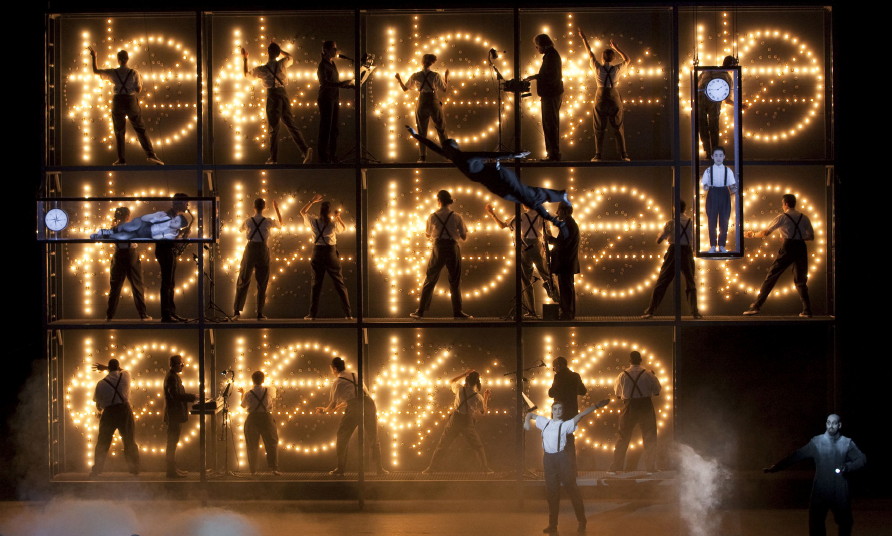
September 16 – Revisiting masterpieces is always worthwhile because they’re never the same twice. The original U.S. performances of the Robert Wilson-Philip Glass opera Einstein on the Beach (only two of them, at the Metropolitan Opera in 1976), epitomized the saying, “The legend is created by the people who weren’t there.” I heard about it as a college student in Boston, devoured the original cast recording, was thrilled to hear a concert version performed by the Philip Glass Ensemble at a church in Harvard Square, and couldn’t wait to actually see the first revival at BAM in 1984, in the early days of the Next Wave Festival. It lived up to all my expectations. This revival seemed, well, not exactly tamed but certainly different. My memory of the earlier production was that the music was extremely loud – body-bracing loud, rock-concert loud. This production is definitely not deafening (maybe because Glass isn’t playing in the band, for the first time ever?), and it’s funny to find that a little disappointing. Also in my memory of the first BAM revival, the performers maintained neutral facial expressions, which perfectly matched the Steinian prose of the spoken texts (by Christopher Knowles and Lucinda Childs, anyway) and the wordless vocals (all numbers and solfege syllables) as well as Glass’s monumentally release-avoidant score. In recent years, Wilson has been working a lot with German theater companies and incorporating much more expressionistic acting – white-painted faces, garish makeup, and exaggerated expressions at times virtually indistinguishable from clownish mugging. I didn’t like seeing that stuff in Einstein on the Beach. I wished the performances were as cool and sleek as the sets and the imagery and the lighting. But what the hell, to paraphrase what Paul McCartney said about critics who grumble about The White Album – “It’s fooking Einstein on the Beach. Shut up.” I was surprised that the music that grabbed me most was the choral music during the Knee Plays (maybe it helped that we could see the singers in the pit very clearly from where we were sitting). Four and a half hours without a break didn’t seem arduous at all. And I felt an unexpectedly strong wave of emotion when Wilson, Glass, and Childs came out and took bows at the end – three brave artists now old and gray who created a massive piece of work decades ago that still looks exceedingly strange and fiercely original.


In this week’s New Yorker

September 9, 2012

Before the moment passes, I’d like to put in a good word about several absorbing articles in the Style Issue, cover-dated September 10:

* John Seabrook on Federico Marchetti, the business nerd who dragged fashion kicking and screaming into e-commerce with Yoox.com;

* John Colapinto on Will Guidara and Daniel Humm, who bought out and took over Danny Meyer’s  Eleven Madison Park and elevated it to a ridiculously world-renowned restaurant;

* Aleksandar Hemon’s profile of Lana and Andy Wachowski, the filmmaking siblings who made The Matrix and its spin-offs and whose most recent work is the forthcoming adaptation of David Mitchell’s mind-bending novel Cloud Atlas (I enjoyed Tom Hanks’ quote — “I work for free. I get paid for waiting.” — and was touched by this remark by Steve Skroce, who has storyboarded for the filmmakers since The Matrix: “After the success of the first Matrix, they were able to get point son the box-office, video games, etc. They had a dinner at this great Italian restaurant in Santa Monica and all their key collaborators were invited. At each place setting was a golden envelope with a check inside. I’m not sure who got what, but I know what I received was far beyond what I could ever have guessed or hoped for.”); and

* Ian Parker on Bjarke Ingels, the Danish architect who has made himself a brand name at 37.

Then there’s Thomas McGuane’s short, pungent story “The Casserole” and Ariel Levy’s supercilious review of Naomi Wolf’s book Vagina: A New Biography, which made me laugh out loud. Key passage: “Wolf claims that vaginal slander — referring to the vagina by its ‘awful’ feline moniker, for instance — ‘apparently affects the very tissue of the vagina.’ She bases this conclusion on a study of female rats whose vaginal tissue showed signs of change after periods of stress. The experiment did not, however, entail researching yelling ‘Rat pussy!’ at the animals; stress was manufactured physically. Wolf’s interpretation of the science is, as usual, rather free.”

And who doesn’t love a cover by Ian Falconer?


Quote of the day: SONDHEIM

September 9, 2012

SONDHEIM

Q: What was it like working with Sondheim then and now?

When I worked on the first version of Marry Me a Little, his position in the world of theater was very different; a lot of people criticized his work for its purported coldness, lack of melodic rewards, technical virtuosity over natural beauty. All of those people have died and burned in hell, and he is now generally held to be the finest practitioner of his art in the last 50 years.

— Craig Lucas, interviewed on the occasion of reviving his 1981 Sondheim musical

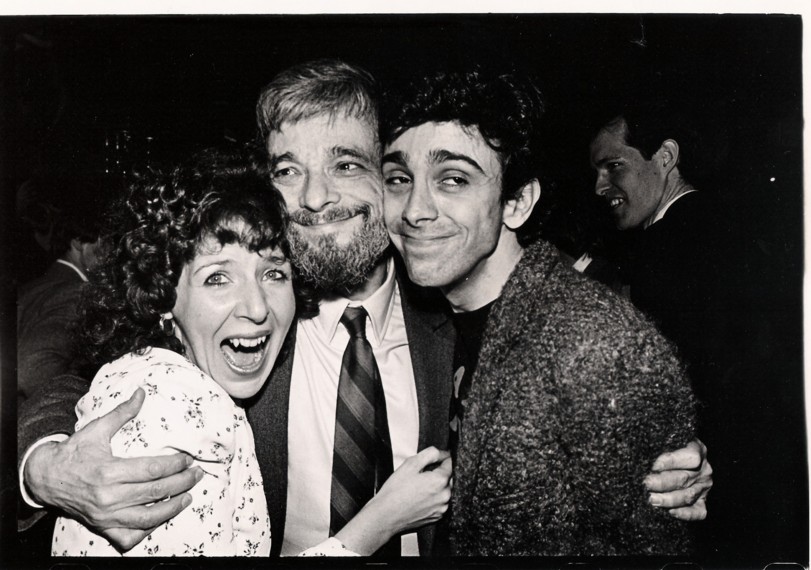
Suzanne Henry, Stephen Sondheim, and Craig Lucas in 1981


Culture Vulture: new movies, music, and books

September 6, 2012

Film

AI WEIWEI: Never Sorry – Alison Klayman’s documentary is a must-see. The Chinese artist-activist may be equally well-known for designing the “Bird’s Nest” stadium for the 2008 Beijing Olympics and for being held under house arrest incommunicato by the Chinese government for eight months. The film tracks his courageous commitment to the subversion of oppression and his deep humanity. The film, and his artistic career, pivots on the Chinese government’s reprehensibly stonewalling response to an earthquake in Sichuan where badly built school buildings collapsed and killed hundreds of children. The artist not only made art work in several media documenting the names of those who died (more than the government did) – he also created a beautiful and heartbreaking art installation on the outside wall of a museum in Munich: brightly colored children’s backpacks spelling out, in Chinese, “She lived happily for seven years.”

I WANT YOUR LOVE Travis Mathews’s debut as writer-director mashes up gay mumblecore drama with explicit sex scenes shot not like porn but with all the fumbling, ambient lighting, imperfect bodies, and squirtation of real-life sex. The ambition somewhat outweighs the execution – your reaction will depend on how interesting you find the central character, a drifting thirtysomething performance artist on his last day in San Francisco before moving back in with his parents in Columbus, Ohio.

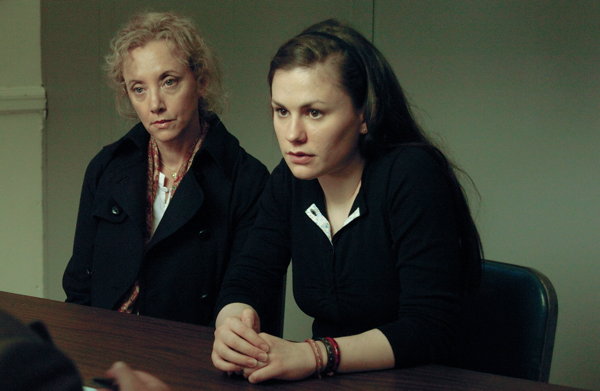
MARGARET – Playwright and filmmaker Kenneth Lonergan (best known for This Is Our Youth onstage and the screenplay of You Can Count on Me) had a lot of support and good intention behind his first feature as director, but after four years in the making it limped into movie theaters for a week and then went straight to DVD. It’s a fascinating film – not a triumph but not a failure, either, although it seems indulgently long and pokey at 2 hours 40 minutes, what could it possibly have looked like at its original four-hour length? The story grapples with a teenage girl’s struggle to place herself in a moral universe after witnessing a fatal bus accident that she was partly responsible for. The philosophical and emotional concerns are honest, and they’re played out with the recognizable detail of an Alice Munro story or one of Woody Allen’s more somber New York dramas (Interiors or Crimes and Misdemeanors). Many striking performances, most notably by J. Smith-Cameron (Lonergan’s spouse, below left), Jeannie Berlin, and Anna Paquin (below right) as the main character, whose name is not Margaret – you’ll have to watch the film to grasp the significance of the title, and I hope you will.

NEIGHBORING SOUNDS — Kleber Mendonça Filho’s first film is a knockout debut. Set in Recife (where I’ll be visiting next month!), the film tracks several overlapping stories with an unusual, supernaturally confident ability to court yet dodge genre expectations, boggling between comedy and menace, beautifully shot, full of large and small surprises. Very satisfying. Seeing it gave me an opportunity to check out the new Elinor Bunin Monroe Film Center at Lincoln Center, which is spiffy and comfortable, with unusual tasty snacks for sale.

JACK SMITH AND THE DESTRUCTION OF ATLANTIS Mary Jordan’s ambitious documentary of the influential yet elusive queer-theater legend Jack Smith (forever associated with his then-racy, now rather tame first major film, Flaming Creatures) rounds up great talking heads and archival footage, putting it all together in a somewhat demanding collage format that suits its subject.

Music

Dead Can Dance, Anastasis – wow, just when it seemed Lisa Gerrard had disappeared into the land of making eerie movie soundtracks forever, a new Dead Can Dance album. With lush orchestral arrangements, even, some of which suggest North African Arab orchestras. The plush sound really adds something. Often this group wears me out fast – a little bit of Gerrard’s keening vocals in her made-up language and Brendan Perry’s leaden earnestness can go a long way. But there are only two tracks that drag here (“Kiko” and “Opium”), otherwise it’s a welcome return to form.

Justin Vivian Bond, Silver Wells – I’m not always a fan of La Bond’s singing when it gets shrieky and histrionic, but damn, V has excellent taste in songs. Reclaiming Ronee Blakley’s “Dues,” the climactic ballad from Robert Altman’s Nashville, already wins my heart, but Bond’s second solo album also includes good choices by Kate Bush, Tracy Chapman, Joni Mitchell, and Leonard Cohen (“Famous Blue Raincoat,” one of my all-time favorite songs, frequently performed, but rarely with the same attentiveness to the gender-slipperiness of the lyric’s love triangle). Aside from “Dues,” my favorite track is Joni’s “Let the Wind Carry Me,” in which the songwriter recalls her stormy teenage relationship with her parents. Bond’s deep personal engagement with the lyric justifies shifting a couple of key words. “She don’t like my kick pleat skirt/She don’t like my eyelids painted green /She don’t like me staying up late/In my high-heeled shoes/Living for that Rock’n’Roll dancing scene/Papa says “Leave the boy alone, Mother/he’s looking like a Movie Queen…”

Books

Edmund White, SACRED MONSTERS – The great novelist’s anthology of essays about artists (most but not all of them gay) shows off all his best traits: staggering erudition (he happens to know that a close friend of Ford Madox Ford was Lewis Carroll’s cousin), generosity to other artists, relish of gossip, and disarming self-effacement. “In those  days I was a resentful young man,” he says in one essay, and he describes himself as “one of the duller bulbs” in the orbit of poet James Merrill, which I doubt. He writes about Martin Amis and Nabokov as well as he does big names like Tennessee Williams and Christopher Isherwood and nearly forgotten folks like Glenway Wescott and Howard Sturgis. He expands my vocabulary (“mute” is the word for a falcon’s shit, and the French expression en secondes noces is marvelously precise and useful). And he tosses off great lines with satisfying regularity: “I learned from that experience that you can say someone is the best poet since Dante but if you mention in passing that he should stop dying his hair or lose ten pounds he will never ever forgive you.

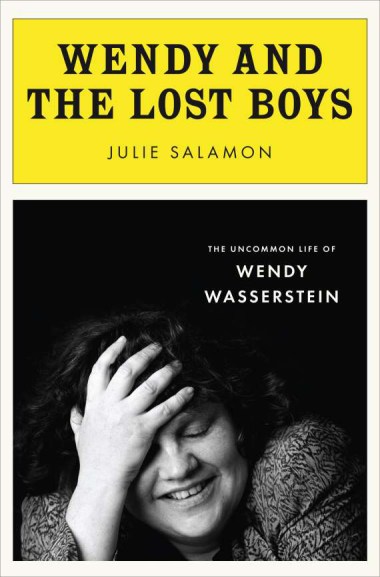
Julie Salamon, WENDY AND THE LOST BOYS – I confess that I put off reading Julie Salamon’s biography of Wendy Wasserstein for a long time because I assumed the title to be an insulting infantilization of the gay men who formed the center of the late playwright’s social circle. After starting and then happily, avidly consuming the book, I realize that the author meant something else completely. It’s not that playwrights Christopher Durang and Terrence McNally, producer Andre Bishop, director Gerald Gutierrez, and designer William Ivey Long were aimless lads stuck somewhere between adolescence and adulthood. It’s that however much time each of these guys spent being the love of Wendy’s life, they were lost to her by virtue of sexual preference. (In an earlier, more closeted era, she might have wed one of them and created a perfectly satisfying mariage blanc. That she and McNally did indeed conduct a clandestine sexual relationship is one of the book’s more gossipy tidbits.) There’s more to be written about the particulars of Wasserstein’s theatrical achievements, but this volume thoroughly documents Wasserstein’s extraordinary birth family and the ins and outs of her professional associations. Wendy was someone I knew slightly and liked very much — but then she was like Nora Ephron that way, a famous and accomplished woman who was such a down-to-earth New Yorker that it was easy to feel like the story of her life is also the story of yours.