Quote of the day: MATING HABITS

February 18, 2013

MATING HABITS

A number of articles have been written that tried to attribute promiscuity or adultery in men to a brain disorder. I find this questionable for a number of reasons.

First, it’s worrying to me that a group of psychiatrists is trying to determine how much sexual activity and how many encounters we can want or fantasize about before we’re considered “mentally ill.” Given the embarrassing history of the DSM revisions and all the shoddy science informing them, why should we trust the APA to dictate yet another norm to us, much less accept its judgment about something so personal and intimate? People have markedly different appetites for sexual experiences. I’m uncomfortable with the idea that the APA would determine implicit guidelines, even quotas, for sexual activity, with a view to pathologizing behavior that is, in its estimation, “excessive.”

Even if you were in favor of creating such a disorder should the parameters for young adults be the same as for retirees with, most likely, much lower sex drives? Would the standard for “excessive” sexual activity be identical for a newly formed relationship and one that’s lasted decades? Why should we see a man’s cheating on his wife with multiple women as a result of brain chemistry rather than, say, marital unhappiness or personal recklessness? Personally I think expecting lifelong fidelity to one partner may be asking too much of certain people who are ill-suited to it, or who simply don’t believe monogamy is the best way to achieve emotional and sexual happiness. That’s surely up to them, isn’t it? Yet there’s an expectation, even a kind of demand, in our culture that one person will meet all of our needs – emotional and sexual. That can happen, and it’s great when it satisfies both parties, but those choices don’t work for everyone, and an organization seeking to pathologize “excessive” sexual activity needs to recognize that. We need broader public discussion of this complex issue rather than the kind of psychiatric judgment and ritualized shaming that goes on right now for those who prefer to remain non-monogamous. Good for them if that’s what they want.

— Christopher Lane, interviewed in The Sun

Lane-Chris


Culture Vulture: January 2013

February 18, 2013

1.29.13 –

Theater: Nature Theater of Oklahoma, founded by Pavol Liska and Kelly Cooper, is definitely one of the most compelling downtown theater ensembles these days. I saw their first two productions (a very condensed Three Sisters at CSC and the four-hour No Dice, produced by Soho Rep), and I find their mission statement extremely beguiling. “NTOK has been devoted to making the work we don’t know how to make, putting ourselves in impossible situations, and working from out of our own ignorance and unease. We strive to create an unsettling live situation that demands total presence from everyone in the room. We use the readymade material around us, found space, overheard speech, and observed gesture, and through extreme formal manipulation, and superhuman effort, we affect in our work a shift in the perception of everyday reality that extends beyond the site of performance and into the world in which we live.”

life and times

I knew I didn’t have the stamina for all ten hours of their most recent four-part show, Life and Times, produced at the Public Theater’s Under the Radar Festival in conjunction with Soho Rep, but I thought I could deal with at least the four hours of Episode 1. Alas, I only made it through half. I saw what they were doing – got the Gertrude Steinian continuous present, locating the world in mundane speech (the text is based on a lengthy interview with a woman telling the story of her extremely ordinary life in great excruciating detail); got the Brechtian staging; got the Jan Fabre-like concept of putting performers through a boot-camp-like physical ordeal. But setting the banal text to music – every ah, um, you know – was deadly.

Restaurant: Decamping at intermission provided the occasion to check out Aroma Wine Bar around the corner on East Fourth Street, where I had a delicious bowl of unusual pasta (strascinati with wild mushroom sofritto and spicy lamb sausage) and a glass or two of a rugged Pugliese red wine new to me.
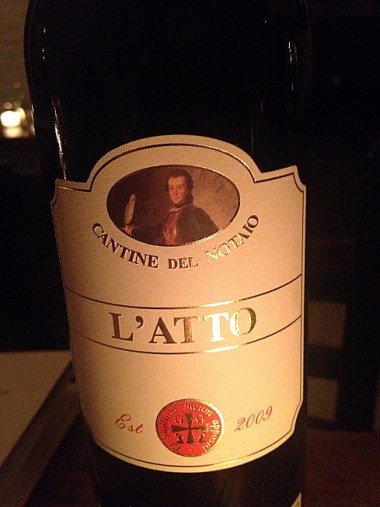
puglia wine
Music: While I was in the neighborhood, I exercised my nostalgia for record stores and stopped into Other Music, still going strong after all these years, and found myself buying the latest album by Toro y Moi (aka Chaz Bundick), Anything in Return. Fun, sonically rich pop tracks with the kind of lovely vocal harmonies that always get labeled Brian Wilson-esque. The lyrics don’t stand up to close scrutiny but I can attest the album supplies an excellent soundtrack for getting stoned and having sex.
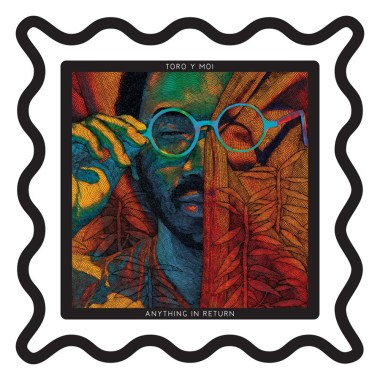
AIR_cover1.30.13

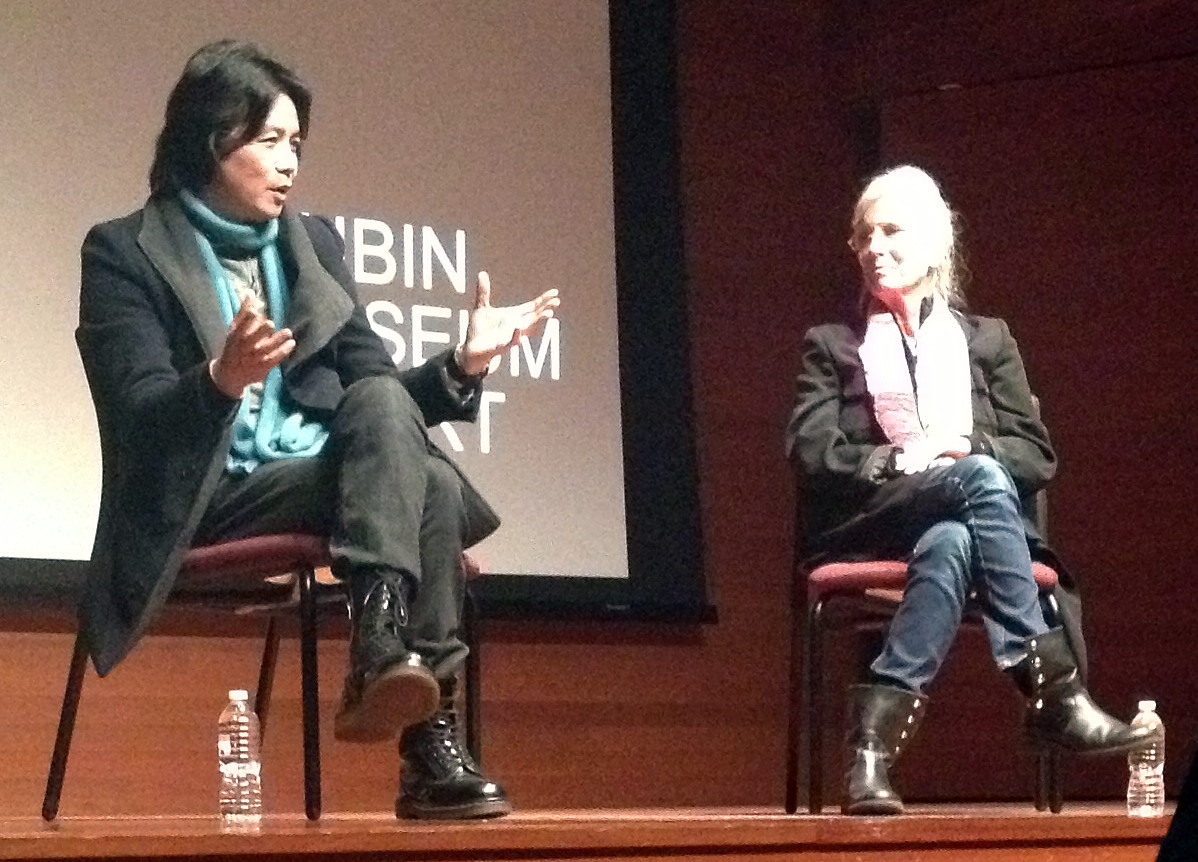
Film: The Rubin Museum presented a special screening of Sherwood Hu’s film adaptation of Hamlet, Prince of the Himalayas. I took a special interest because the Rubin’s whip-smart curator Tim McHenry booked the Wooster Group’s Elizabeth LeCompte to have a conversation with the director after the screening. I had the thrill of sitting between Hu and LeCompte (below), who was there with her own Hamlet, Scott Shepherd. The movie was fantastic, provocative and revelatory – Hu drew out interpretations of the story no one else ever has. Most notably: the reason Gertrude married Claudius so quickly after her husband’s death is that they’d been lovers before Gertrude’s marriage, and Claudius killed him because he was abusive to Gertrude. And Ophelia dies in the river (here a lake) giving birth to Hamlet’s son, who turns out to the title character. Set in ancient Tibet and shot on location mostly outdoors, the film is ravishingly beautiful and very well-performed. In the interview afterwards, though, the director came off badly. LeCompte kept asking him excellent questions, and he kept giving generic, bland blah-blah-blah answers; she was very persistent and kept asking him again, to no avail. And of course in her modest but unerring way, she noted that the child might have received a very different reception had it been a girl.
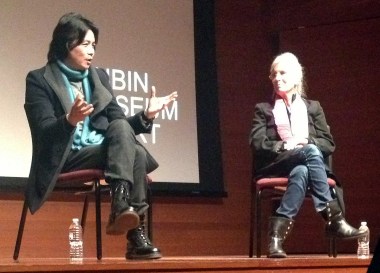
hu and lecompte1.31.13

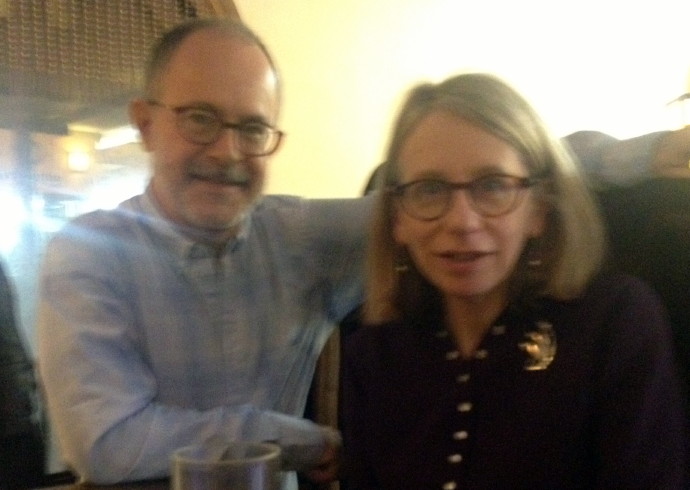
Restaurant: I had a lovely dinner with New Yorker cartoonist Roz Chast, whom I’ve known since I did a cover story for Soho News about her in 1980. I was happy to turn her on to one of my favorite restaurants in my neighborhood, Radiance Tea House on West 55th Street, with its yummy dumplings, rice bowls, and spectacular menu of Chinese teas.
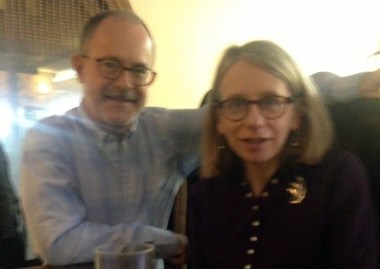
me and roz

Theater: I’d never seen or heard any version of Fiorello! so was delighted to accept a friend’s invitation to the Encores revival at City Center. Unfortunately, we arrived a little before 8 and the show had started at 7:30, so we missed a few scenes. For all its reputation as Pulitzer Prize-winning musical, I found Jerome Weidman and George Abbott’s book pretty thin and the Bock and Harnick score only medium. Danny Rutigliano made a strong impression as the Little Flower hisself, Kate Baldwin did a lovely rendition of the sweetest ballad (“When Did I Fall in Love?”), and Erin Dilly and Jenn Gambatese stood out among the rest of the ensemble.

Photo diary: Vieques 2

February 11, 2013

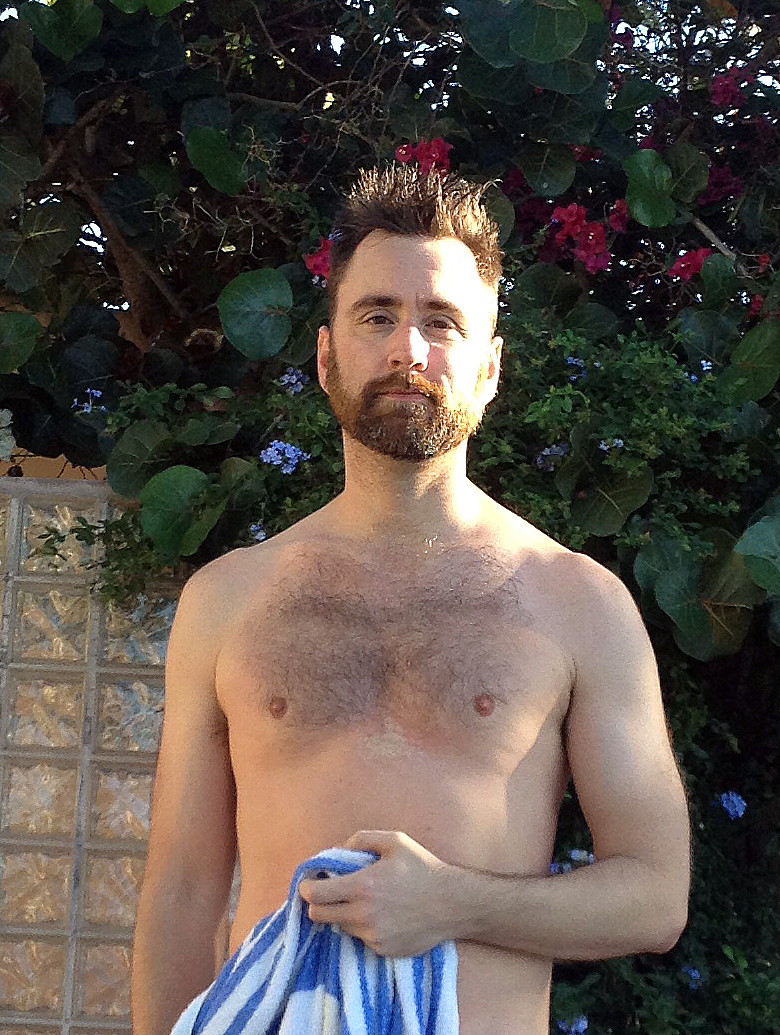
2-7 bluesky self-portrait

As previously mentioned, the week began with fire just down the hill that blazed all afternoon

As previously mentioned, the week began with fire just down the hill that blazed all afternoon

here's the view from the roof of the house in the previous shot, overlooking our friends Rick (above) and Peter's house -- the fire went right up to their property line

here’s the view from the roof of the house in the previous shot, overlooking our friends Rick (above) and Peter’s house — the fire went right up to their property line

this field has burned numerous times -- luckily, no casualties to the nearby houses -- even the horses survived

this field has burned numerous times — luckily, no casualties to the nearby houses — even the horses survived

2-3 hummingbird

Andy by the pool

Andy by the pool

front door at Vista Dos Mares

front door at Vista Dos Mares

Eric (above right) came for cocktails with his partner Greg -- turns out his college best friend is the next-door neighbor of Andy Holtzman (above left)

Eric (above right) came for cocktails with his partner Greg — turns out his college best friend is the next-door neighbor of Andy Holtzman (above left)

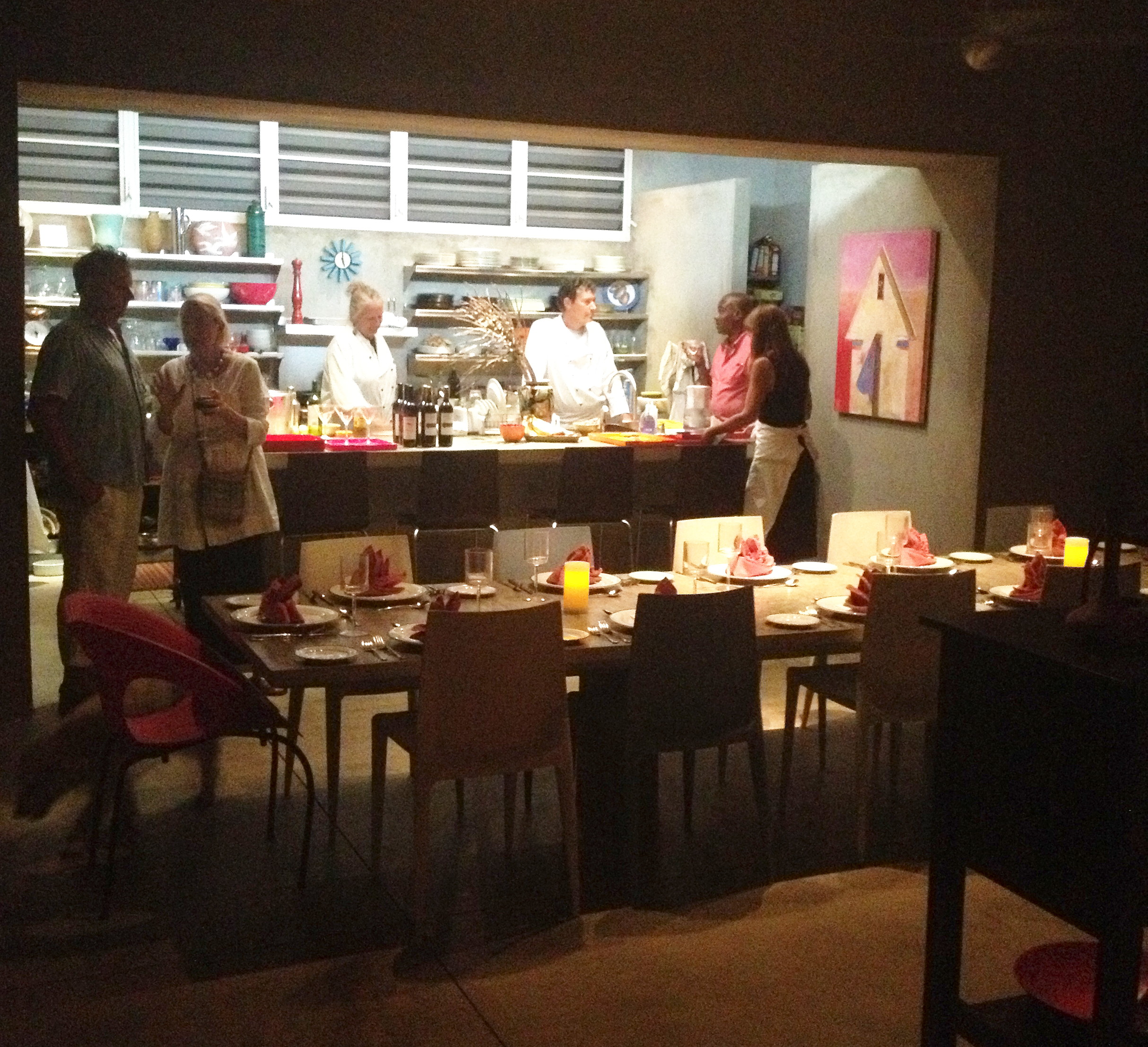
dinner at Villa Venti -- aka the private home of Greg and Alex, who live in a classic Hicks house

dinner at Villa Venti — aka the private home of Greg and Alex, who live in a classic Hicks house

2-8 bourganvillea

it was hard to tear ourselves away from this

it was hard to tear ourselves away from this

what a difference a day makes/24 little hours...

what a difference a day makes/24 little hours…


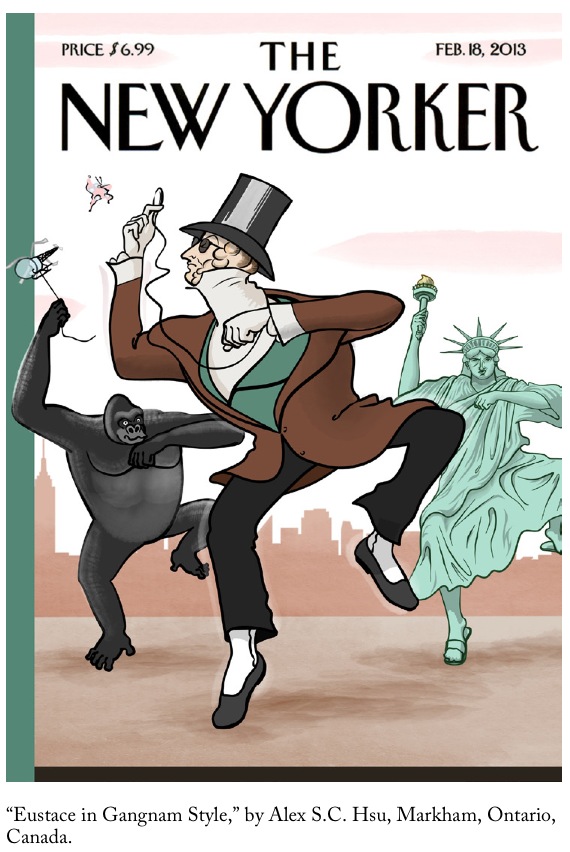
In this week’s New Yorker

February 7, 2013

photo
Some good stuff:

* Ian Frazier on the aftermath of Hurricane Sandy — a story called “The Toll,” with Frazier’s characteristic love of lists and place names;

* Susan Orlean’s Onward and Upward with the Arts piece on Brendan O’Connell, who paints pictures based on photos he’s taken at Walmart stores;

* Patrick Radden Keefe’s “A Loaded Gun,” a long engrossing Reporter at Large story about Amy Bishop, one of the rare women who suddenly snapped and killed a bunch of people — colleagues at the school in Alabama where she was a professor — with a gun she had in her purse; and

* Zadie Smith’s fiction piece, “The Embassy of Cambodia.”

Plus, an abundance of hilarious cartoons…

photo(1)
photo

…and since this is the anniversary issue, what has become a tradition of sharing some of the near-winners in the competition for cover illustration. This is my favorite runner-up:

photo(2)


Quote of the day: SODERBERGH

February 7, 2013

SODERBERGH

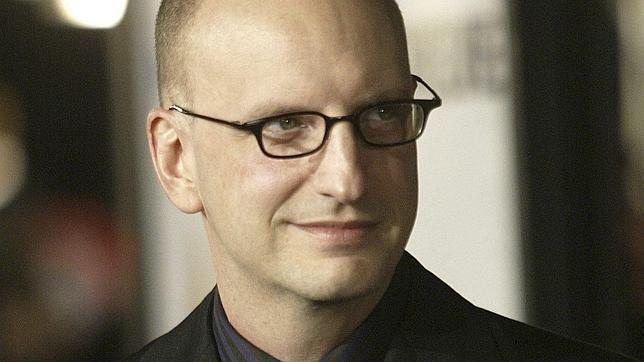
I’m always curious to hear how something was made—though I have no interest in why an artist did something, or what his work means. Like with Jackson Pollock: I’m always interested in what kind of paint and canvas he used, I just don’t want to know what he meant. You’re supposed to expand your mind to fit the art, you’re not supposed to chop the art down to fit your mind…

One thing I do know from making art is that ideology is the enemy of problem-solving. Nobody sits on a film set and says, “No, you can’t use green-screen VFX to solve that because I’m Catholic.” There’s no place for that, and that’s why I’ve stopped being embarrassed about being in the entertainment industry, because I’m surrounded by intelligent people who solve problems quickly and efficiently, primarily because issues of ideology don’t enter into the conversation.

After making a lot more films, I realized that the movie and TV business is, for all its inefficiencies, one of the best-run big businesses we have. It’s very transparent, financially, and the only business I know of that successfully employs trickle-down economics: When movies and shows make money, the profits go right back into making more movies and shows, because the stock price is all about market share. And these people excel at problem-solving—that’s 99 percent of the job. I look at Hurricane Katrina, and I think if four days before landfall you gave a movie studio autonomy and a 100th of the billions the government spent on that disaster, and told them, “Lock this place down and get everyone taken care of,” we wouldn’t be using that disaster as an example of what not to do. A big movie involves clothing, feeding, and moving thousands of people around the world on a tight schedule. Problems are solved creatively and efficiently within a budget, or your ass is out of work. So when I look at what’s going on in the government, the gridlock, I think, Wow, that’s a really inefficient way to run a railroad. The government can’t solve problems because the two parties are so wedded to their opposing ideas that they can’t move. The very idea that someone from Congress can’t take something from the other side because they’ll be punished by their own party? That’s stupid. If I were running for office, I would be poaching ideas from everywhere. That’s how art works. You steal from everything….

There are lots of things that America does really well.

Like what?
Comedy. We have the best comedy in the world, hands down. I’m very proud, for example, that we have Chris Rock.

Are you a Louis C.K. fan?
I love his show. He seems like someone who would be fun to know. Seems like. And we do sports entertainment better than anyone. It’s phenomenal—the production values, the computer graphics, the commentators …

What teams do you follow?
I followed the Jets, simply because they were such a train wreck this season. But I follow stories more than teams—stories like Robert Griffin III or Colin Kaepernick.

Do you watch basketball?
I was going to say that the only thing I don’t really watch is basketball. It has to do with my personality, how I’m wired. You can’t make a play in the first quarter of a basketball game that will determine the ultimate outcome the way you can in baseball or football—like if a touchdown is scored in the first quarter, that could conceivably be the only big play of the game. So I can never figure out why I’m supposed to watch the first half of a basketball game.

— Steven Soderbergh, interviewed in New York magazine

steven-soderbergh