Culture Vulture: LOVE’S LABOUR’S LOST, BLUE JASMINE, Amanda Palmer and Rosin Coven

August 11, 2013

THEATER

The musical adaptation of Love’s Labour’s Lost in Central Park reassembles the major dudes responsible for Bloody Bloody Andrew Jackson – writer/director Alex Timbers (who adapted Shakespeare’s early comedy), songwriter Michael Friedman, choreographer Danny Mefford, and some key players (Lucas Near-Verbrugghe and the hilarious Jeff Hiller). The show is even more fantastic than I could have dreamed it would be – a fast, funny, smart update of one of Shakespeare’s un-sacred texts. The four aristocrats renouncing pleasure are frat boys (they open the show ceremonially locking in a trunk a six-pack, a bong, and a string of condoms) who are as cute as a boy band. The four party girls who tease them out of their vows hit the stage like the cast of Bridesmaids crashing the set of Girls.
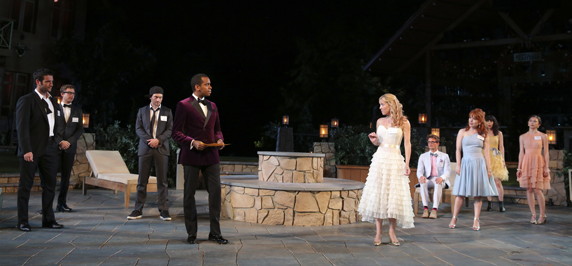
Love's Labour's Lost Public Theater/Delacorte Theater
The nutty secondary comic plot actually sizzles because of Caesar Samayoa’s brave and funny turn as Don Armado, with a lot of help from his Jacquenetta (Rebecca Naomi Jones, late of Murder Ballad) and the band (musical director Justin Levine jumps in and out of the action playing Moth). The cast is full of newly minted downtown stars – Daniel Breaker (Passing Strange), Colin Donnell (Anything Goes, the Encores! version of Merrily We Roll Along), Patti Murin (Lysistrata Jones), and, hello, Rachel Drach for good measure. I especially enjoyed Audrey Lynn Weston’s stoner-chick Katherine. Friedman’s songs are fiendishly witty (I think I heard the word “apothegms” fly by in one of the lyrics), and Timbers happily ladles in references to Hair, Passing Strange, and (for some reason) Einstein on the Beach. I would gladly see this show several more times. I can’t believe it’s not going to extend or move after its scheduled run in the park finishes next Sunday. It’s every bit as good as anything I’ve seen in Central Park.

MOVIES

I think I’d gotten a vague inkling that Woody Allen’s new movie Blue Jasmine somehow referenced A Streetcar Named Desire, but watching the movie I couldn’t believe how note-for-note the plot follows Tennessee Williams – one more instance of Woody Allen defying predictability. He’s been on a roll with his string of feel-good travelogue movies (Vicky Cristina Barcelona, Midnight in Paris, To Rome with Love), but Blue Jasmine breaks that cycle. Yes, it’s set in San Francisco (and the Hamptons) but it’s not a love letter to any location, and the story swerves dark. What makes the movie a must-see is Cate Blanchett, who has played Blanche DuBois onstage to rave reviews (wish I’d seen it) but here perfectly embodies Woody’s interpretation of Blanche (mixed in with Ruth Madoff) as a woman whose beauty allows her to deceive her way into powerful men’s hearts because her looks makes her vulnerability and desperation come across as strength. But the cast is full of yummy performances by terrific actors: Sally Hawkins in the Stella role, Bobby Cannavale and Andrew Dice Clay (!) as two versions of Stanley Kowalski, Louis C.K. as Karl Malden, plus Peter Saarsgard, Alec Baldwin, and Michael Stuhlbarg.

MUSIC

Amanda Palmer and the Grand Theft Orchestra headlined Friday night’s show at Lincoln Center Out of Doors in a light drizzle. AFP (as her legion of hardcore fans, including Andy, refer to Amanda Fucking Palmer) did a modified version of the concert she gave last fall at Webster Hall on the launch tour for her album Theater Is Evil – a couple of the major numbers from that release (including the hit-single-that-shoulda-been, “Do It With a Rock Star”); guest appearance by her former cohort from the Dresden Dolls, Brian Viglione; plenty of time spent off the stage moshing around with the folks standing in front of the stage; a couple of plaintive, emotional, inspiring solo numbers on ukulele; the odd cover (“Smells Like Teen Spirit”); encore of “Leeds United.” I confess that I dug the Webster Hall show a bit more, partly because the stomping crowd during the encore made the floorboards bounce, an effect not quite possible in Damrosch Park. For me the gift of the night was getting to hear the opening act, a quirky outfit known as Rosin Coven: a flame-tressed singer fronting a string trio, a vibes player, two horns, and a drummer. Andy called it “mystic Goth jazz,” not a bad summary – smart, ambitious, nutty and intriguing arrangements putting me in mind of Boston’s genius band of the mid-70s Orchestra Luna, with traces of Dan Hicks and his Hot Licks and Frank Zappa’s Mothers of Invention.

Quote of the day: MARRIAGE

August 10, 2013

MARRIAGE

It’s been said about marriage “You have to know how to fight.” And I think there’s some wisdom to that. People who live together get into arguments. When you’re younger, those arguments tend to escalate, or there’s not any wisdom that overrides the argument to keep in perspective. It tends to get out of hand. When you’re older, you realize, “Well, this argument will pass. We don’t agree, but this is not the end of the world.” Experience comes into play.

— Woody Allen, “What I’ve Learned,” Esquire

woody allen by mark mann


Quote of the day: QUESTIONS

July 30, 2013

QUESTIONS

In many shamanic societies, if you came to a medicine person complaining of being disheartened, dispirited, or depressed, they would ask one of four questions: “When did you stop dancing? When did you stop singing? When did you stop being enchanted by stories? When did you stop being comforted by the sweet territory of silence?”

— Gabrielle Roth

gabrielle-roth-500x375


Photo diary: scenes from New York City

July 28, 2013

(click photos to enlarge)

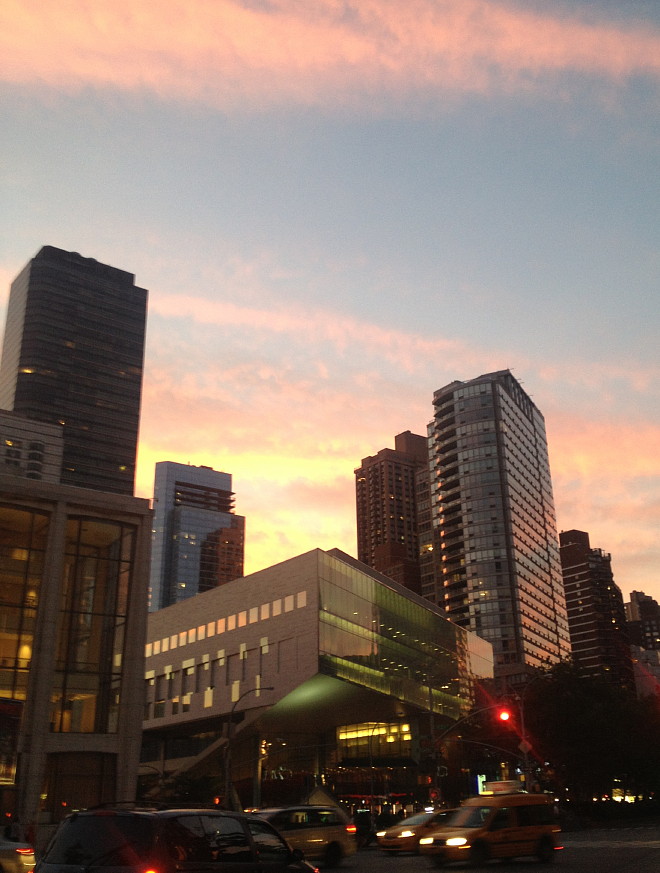
Lincoln Center sunset

Lincoln Center sunset

breakfast nook

breakfast nook

oatmeal choices

oatmeal choices

kids these days

kids these days

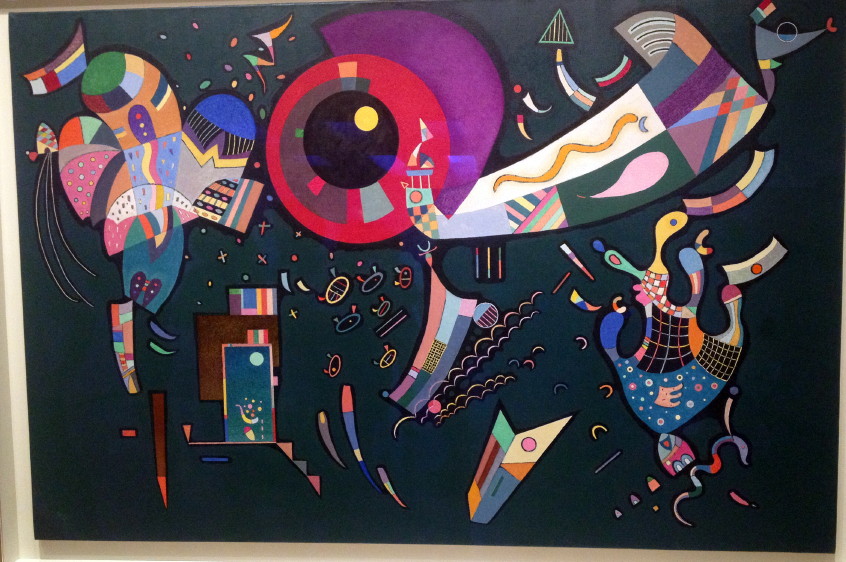
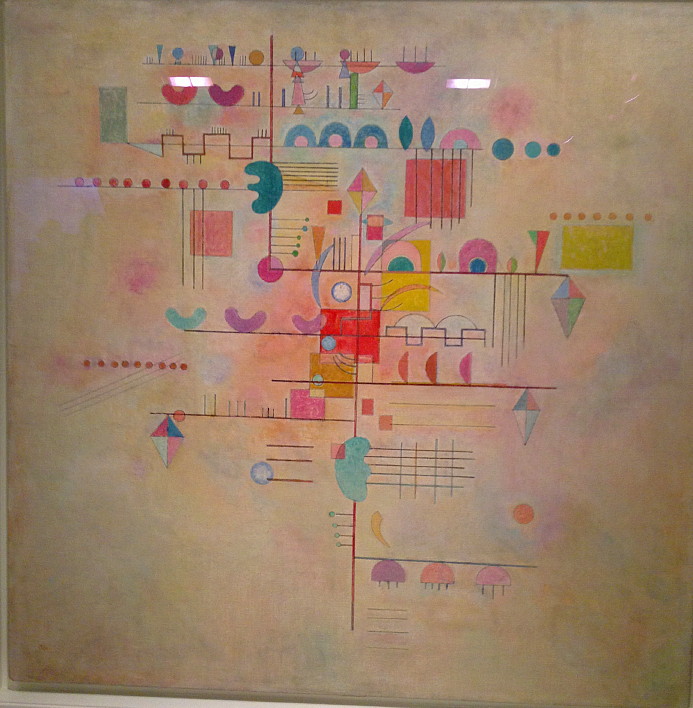
at the Guggenheim, in addition to the James Turrell show, you can see a lovely exhibition called "Kandinsky in Paris," with canvases from the artist's late period when he was clearly influenced by the likes of Klee and Miro -- here, "Around the Circle"

at the Guggenheim, in addition to the James Turrell show, you can see a lovely exhibition called “Kandinsky in Paris,” with canvases from the artist’s late period when he was clearly influenced by the likes of Klee and Miro — here, “Around the Circle”

"Graceful Ascent"

“Graceful Ascent”

Andy at his subway stop in Astoria

Andy at his subway stop in Astoria

wall of divers at Rosa Mexicano

wall of divers at Rosa Mexicano

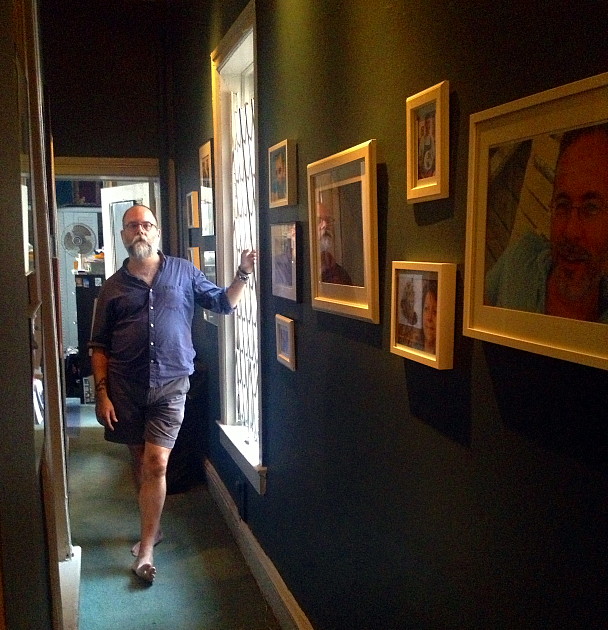
my new at-home art gallery, hung with the help of Mr. David Zinn

my new at-home art gallery, hung with the help of Mr. David Zinn

Briarwood at dusk

Briarwood at dusk

on the R train downtown

on the R train downtown

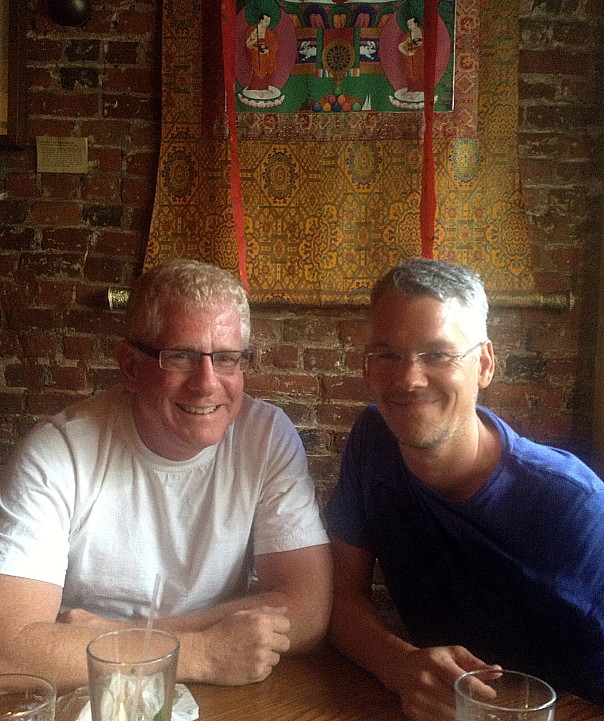
Dave Nimmons and Tim Foskett at Tsampa in the East Village, on our way to see THE DESIGNATED MOURNER at the Public Theater

Dave Nimmons and Tim Foskett at Tsampa in the East Village, on our way to see THE DESIGNATED MOURNER at the Public Theater


Performance diary: return to THE DESIGNATED MOURNER

July 28, 2013

7.27.13 — I went back to see The Designated Mourner, and I can testify that after five viewings (the David Hare film twice and three live performances) I’m still absorbing new passages and nuances from Wallace Shawn’s extraordinary play about the demise of a politically independent intelligentsia from the perspective of a fellow traveler not especially unhappy about its disappearance. Somehow I’d never paid attention to the fleeting reference by Jack, the title character (played by Shawn himself in the Andre Gregory production at the Public Theater), to the moment when “my thing started – you know, mental problems or whatever you’d call them.” Suddenly, the character’s wayward cognitive associations and gaps in simple human empathy became clearer and more comprehensible to me. Over drinks afterwards, Dave and Tim and I tried to imagine how George W. Bush would describe life in America during his pathetic presidency – what events he would highlight and which he would omit that anyone else would consider important. And we talked a lot about the performances, especially that of Deborah Eisenberg, who plays Jack’s wife Judy. I think most people who see the play will know that she and Wally Shawn are a couple offstage (they’ve been together 40-some years), but not everybody knows that Eisenberg is an exceptionally gifted fiction writer herself. Recipient of many big awards (including a MacArthur Foundation fellowship), she has published several collections of short stories, many of them actually quite long, many of them first published in the New Yorker. (You can read a long interview with her in the Paris Review’s legendary “The Art of Fiction” series here.) She’s not a trained or especially experienced actor, but her performance in The Designated Mourner is compelling for its combination of sculptural stillness and emotional fullness. We sat in the first row directly in front of the wooden chair she occupies for most of the show’s three-hour running time, which gave us a perfect vantage point to study her amazing face.

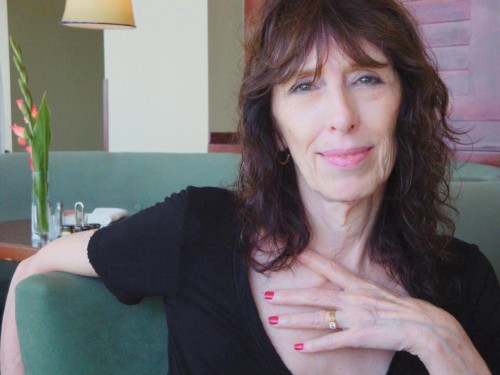
Deborah Eisenberg

When Andy and I saw the show a few weeks ago, we arrived just after curtain time (7:00! Not 7:30!)  and weren’t seated until 12 minutes into the show, when Wally departs from the script to give a brief recap to the latecomers. This time, there were about 10 spectators who arrived late, and as they were ushered in Wally gave them an entirely different spiel than I’d heard before, and apparently it was new to the other actors because Eisenberg and Larry Pine were discreetly cracking up while he was improvising about the scenes the latecomers had missed. After the show, Wally observed his tradition of standing by the exit available for conversation, and he told me this performance was the best in the run so far. “Only one sleeper,” he noted. (Since the three actors speak most of the time directly to the audience rather than each other, they have plenty of time to study the crowd.) A good chunk of the audience, maybe 20 out of 99, left at intermission, but that didn’t bother him at all: “It was better after they left.”