Archive for the 'quote of the day' Category

Quote of the day: GAMES

July 21, 2013

GAMES

My son, age 7, is intensely competitive, just like his grandfather. Our house is basically a massive theater for what he calls “the foot game” — whoever manages to step on top of another person’s foot wins. How do I get him to put on his clothes? I time him, and then he tries to beat yesterday’s time. Every walk home from school is a race. He brings games home, too, almost every day. My most recent favorite is a game called “my grandmother’s underwear.” The rules are simple. People call out phrases like “You’re favorite thing to eat is” or “What are you wearing right now?” and you have to answer “My grandmother’s underwear” without laughing. A surprisingly profound game. What makes grandmothers’ undergarments so hilarious? Children are the source of all comic genius.

— Stephen Marche

games

Quote of the day: QUEER

July 9, 2013

QUEER

I had no IDEA I could be queer as a young person. I was pretty boy crazy up until I realized that girls could be boys, too.

— Michelle Tea

michelle tea

Quote of the day: CHANGE

July 1, 2013

CHANGE

In ancient India hunters developed a proven method for catching monkeys. The monkeys were quick by nature and clever enough to dismantle all kinds of traps set for them. The trap that they couldn’t dismantle involved a simple trick that trapped them in their own nature. A big coconut would be found and hollowed out. Then a hole would be made in it, just large enough to allow a monkey’s paw to pass through. The coconut would then be pinned to the ground and some tempting, fragrant fruit would be placed inside the hollowed shell.

Inevitably, a monkey would approach the shell full of desire for the fragrant food it could smell and almost taste. As soon as the paw of the monkey had slipped through the hole and grasped the food inside the trap, the poor fellow would become caught because the fist holding the food was too large to pass back through the hole in the shell.

In order to become free of the trap all the monkey had to do was let go of the prize that it coveted so much. More often than not, the hand that held the desired fruit would not let it go. Thus, the monkey was trapped by what it desired and held onto no matter how near freedom might be. Release from the entrapment was right at hand and just within their grasp. However, most would stay trapped and imprisoned, caught by a narrow desire, but also by a fierce and blind unwillingness to simply let go of what they held to be necessary or important.

People can be just that way. Many take hold of something and refuse to let go, even when they become stuck in one place, even if they can’t taste the sweetness they first reached for in life. Some hold onto another person and refuse to let go, even when each part of the relationship becomes a trap. Others take up an idea, a political belief or a religious notion that was supposed to set them free. After a time, they become trapped inside narrowing ideas or rigid rules. Next thing you know, they are caught in a trap made of their beliefs.

Change is hard because we hold onto what keeps us from changing; because freedom feels like losing something that we are used to clinging to; because real change means that we would no longer desire what others insist upon and no longer restrict ourselves to the game at hand. Fate may be what we wish to deny when claiming that we are free; but it is also what we unconsciously cling to in order to avoid letting go of who we think we are.

— Michael Meade, Fate and Destiny: The Two Agreements of the Soul
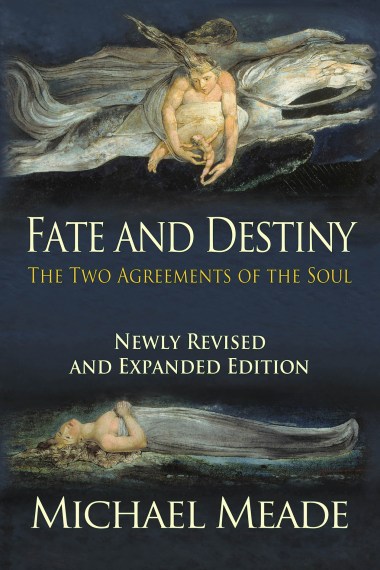
fate & destiny rev ed

Quote of the day: EXPECTATIONS

June 30, 2013

EXPECTATIONS

None of us at Twitter thought during the earthquake and ensuing tsunami in Fukushima, Japan, that our service would be a great alternative communication platform if the mobile networks in Japan were spotty in the aftermath. And certainly none of us even hoped, let alone considered, that our platform would be one of those used to organize protests across the Middle East, in Tunisia and Egypt during the Arab Spring. Here’s the amazing thing about what I’ve observed when I’ve witnessed all those things. Not only can you not plan the impact you’re going to have, you often won’t recognize it even while you’re having it. …

From here on out, you have to switch gears. You’re no longer meeting and exceeding expectations. There are no expectations. There’s no script. When you’re doing what you love to do, you become resilient, because that’s the habit you create for yourself. You create a habit of taking chances on yourself and making bold choices in service to doing what you love. If, on the other hand, you do what’s expected of you, or what you’re supposed to do, and things go poor or chaos ensues — as it surely will — you will look to external sources for what to do next, because that will be the habit you’ve created for yourself. You’ll be standing there, frozen, on the stage of your own life.

— Richard Costolo, CEO of Twitter

costolo twitter

Quote of the day: OPINIONS

June 26, 2013

OPINIONS

A friend once shared with me one of the aphorisms of 12-step recovery programs: “What other people think of you is none of your business.” Like a lot of wisdom, this sounds at first suspiciously similar to idiotic nonsense; obviously what other people think of you is your business, it’s your main job in life to try to control it, to do tireless P.R. and spin control for yourself. Every woman who ever went out with you must pine for you forever. Those who rejected you must regret it. You must be loved, respected — above all, taken seriously! They who mocked you will rue the day! The problem is that this is insane — the psychology of dictators who regard all dissent as treason, and periodically order purges to ensure unquestioning loyalty. It’s no way to run a country.

The operative fallacy here is that we believe that unconditional love means not seeing anything negative about someone, when it really means pretty much the opposite: loving someone despite their infuriating flaws and essential absurdity. “Do I want to be loved in spite of?” Donald Barthelme writes in his story “Rebecca” about a woman with green skin. “Do you? Does anyone? But aren’t we all, to some degree?”

We don’t give other people credit for the same interior complexity we take for granted in ourselves, the same capacity for holding contradictory feelings in balance, for complexly alloyed affections, for bottomless generosity of heart and petty, capricious malice. We can’t believe that anyone could be unkind to us and still be genuinely fond of us, although we do it all the time.

Years ago a friend of mine had a dream about a strange invention; a staircase you could descend deep underground, in which you heard recordings of all the things anyone had ever said about you, both good and bad. The catch was, you had to pass through all the worst things people had said before you could get to the highest compliments at the very bottom. There is no way I would ever make it more than two and a half steps down such a staircase, but I understand its terrible logic: if we want the rewards of being loved we have to submit to the mortifying ordeal of being known.

— Tim Kreider

tim kreider
