Archive for the 'quote of the day' Category

Quote of the day: GAYDAR

July 16, 2017

GAYDAR

I have a friend whose 15-year-old son seems gay to me. He doesn’t date, and my gaydar is usually on target. I hate to meddle. But this friend also has a habit of saying derogatory things about gay people, often under cover of her religious beliefs. Can I tell her about her son? It may stop her hurtful behavior.BEV

Proceed directly to the nearest phone and dial 1-800-BE-QUIET. I know you mean well. But speculating about anyone’s sexuality, particularly a child’s, can be dangerous and is none of your business. In other breaking news, great gaydar is nothing to brag about; it only means that you’re often a busybody. Of course, none of this stops you from calling out the mother on her homophobic statements. Say, “I don’t agree with you, and I’d prefer not to hear any more of it.” No need to implicate the son to stand up for human decency.

–Philip Galanes, “Social Q’s,” New York Times

Quote of the day: TOSCANINI

July 4, 2017

TOSCANINI

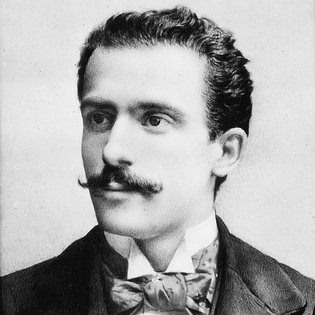
On the night of June 30, 1886, Arturo Toscanini — recently turned 19 — arrived, barely on time, at the imperial opera house in Rio de Janeiro, where the touring company for which he was the principal cellist was about to perform “Aida.” Pandemonium. The unpopular lead conductor had resigned in a huff. His unpopular replacement had been shouted off the podium by the audience. There was no one else. Toscanini, who was also assistant choral master, was thrust forward by his colleagues. “Everyone knew about my memory,” he would recall, “because the singers had all had lessons with me, and I had played the piano without ever looking at the music.” He was handed a baton and just started to conduct. A triumph! Typical of the glowing reviews: “This beardless maestro is a prodigy who communicated the sacred artistic fire to his baton and the energy and passion of a genuine artist to the orchestra.” For the remaining six weeks of the tour, Harvey Sachs tells us in his biography “Toscanini: Musician of Conscience,” the maestro led the orchestra in 26 performances of 12 operas, all from memory. No one offered him a raise, and it didn’t occur to him to ask for one.

–Robert Gottlieb, reviewing Harvey Sachs biography of Toscanini in the New York Times

Quote of the day: WRITING

June 27, 2017

WRITING

One of the few things I know about writing is this: Spend it all, shoot it, play it, lose it all, right away, every time. Do not hoard what seems good for a later place in the book, or for another book; give it, give it all, give it now. The impulse to save something good for a better place later is the signal to spend it now. Something more will arise for later, something better. These things fill from behind, from beneath, like well water. The impulse to keep to yourself what you have learned is not only shameful, it is destructive. Anything you do not give freely and abundantly becomes lost to you.

–Annie Dillard, The Writing Life

Quote of the day: WHITMAN

June 21, 2017

WHITMAN

Walt Whitman passionately adopted the garb of Soldier’s Missionary. He began to develop a routine – the essential infrastructure of any profession. He started, as he said, by “fortifying myself with previous rest, the bath, clean clothes, a good meal, and as cheerful an appearance as possible.” Before he sallied forth, he prepared a grab bag of treats, including candy, fruit, writing supplies, tobacco, socks, cookies, underwear. He would then set forth to the hospital wards and sessions of “visiting” that might last anywhere from two hours to four or five hours. He embraced his work with everything he had. “Behold,” he had written earlier in Leaves of Grass (as if foreshadowing his work in the hospitals), “I do not give lectures or a little charity. When I give I give myself.”

–Stephen Cope, The Great Work of Your Life

Quote of the day: BOOKS

June 7, 2017

BOOKS

What do you read for solace? For escape? For sheer pleasure?

I read Alice Walker for solace. I love a great deal of her writing, but I always go back to The Color Purple. When I couldn’t afford therapy, I’d read about Celie and her depressing life that was somehow still filled with hope and color. “This life soon be over. Heaven last all ways.” Just reading those two sentences would make me feel better about my own troubles.

For escape, I read David Sedaris. It feels like I’m always on a six-hour plane ride, and I love to take that time to listen to a Sedaris audiobook. His tales about his family, or living in Japan or France, or his part-time job as an elf during Christmas, whispered in my ear as I try my best to sit still and pretend I’m not smelling a million farts trapped in business class, are very soothing.

I read Zane for straight-up pleasure. She is one of my favorite writers for erotica. I’m secretly a weirdo, and I really like reading about people making panicked love to each other when they really shouldn’t. I feel like a lot of Zane’s stories are about forbidden romance, one way or another, and I live for it! Her books always have interesting titles and covers. I remember when I worked in an office as a phone sex operator, I would read her book “Gettin’ Buck Wild” on the train on the way to work while feeling embarrassed when other commuters would see the cover of the book and wink at me. But also I’d be getting some great ideas about what to say to callers once I got to work. The embarrassment was worth it. I made pretty good money on the phones.

What book might people be surprised to find on your shelves?

I have a picture book of X-rays of different household items that people have gotten stuck up their butts. That’s pretty surprising.

If you could require the president to read one book, what would it be?

The president cannot read.

–Gabourey Sidibe, “By The Book,” New York Times