Archive for the 'In this week's New Yorker' Category

In this week’s New Yorker

July 8, 2016

new yorker at the beach cover

This week’s issue (beautiful cover by Kadir Nelson) packs an extraordinary series of feature stories about music, politics, and medicine:

In his profile of hiphop producer Mike Will, “The Mixologist,” John Seabrook displays an astonishing familiarity with Atlanta’s music scene.

Quirky novelist George Saunders had the guts to attend Trump rallies all over the country and talk to people who think a Trump presidency is a good idea. The dismaying results show up in “Trump Days.”

In “Cool Runnings,” Adam Gopnik writes about the surprisingly casual presidential election in Iceland by focusing on Guðni Jóhannesson, whom he met when he was serving as tour guide on a bus tour of Thingvellir.

Larissa MacFarquhar provides a respite from the horrible news of the day with a moving portrait of the life of a hospice nurse, “The Threshold.”


In last week’s New Yorker

May 1, 2016

This week’s issue of The New Yorker, the one with the instant-turnaround purple rain cover, has two pieces I highly recommend in categories the magazine is best-known for. Ian Frazier writes deep-dive articles in a folksy voice in the department called “Our Local Correspondents,” and this week he covers an issue near and dear to my heart: “The Bag Bill,” focusing on activist Jennie Romer and her campaign to reduce the number of plastic shopping bags we use because they do substantial environmental damages. Meanwhile, Eyal Press contributes “Madness,” a wrenching expose of how mentally ill inmates in Florida are routinely tortured.
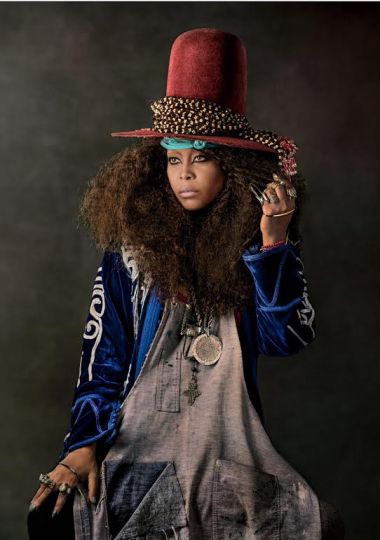
erykah badu

Last week’s “Entertainment Issue” had a few good pieces, notably Adam Gopnik on Paul McCartney, Kelefa Sanneh on Erykah Badu  (above, photographed by Amanda Demme), and Emily Nussbaum on Kenya Barris, the creator of the TV show “black-ish.” I’ve never watched the show, but Barris is smart and funny, and Nussbaum is a terrific writer — she deserves the Pulitzer Prize for criticism she just won. Here’s the way that article ends:

In April, Barris’s family went on a vacation that could be taken only by people at the pinnacle of success. During a visit to New York, they saw “Hamilton” not once but twice. They also flew to Washington for the White House Easter Egg Roll, and were part of a V.I.P. group who met the President and the First Lady. “That’s our family,” President Obama told Barris, about “black-ish.”

Not everything went smoothly. After four hours at the White House, Barris, tired, insisted that they leave. Once they were outside, Kaleigh got a text from Anthony Anderson’s son: they’d just missed Beyoncé and Jay Z. Barris’s daughters were furious at their dad; tears formed in Leyah’s eyes. When he saw those tears, Barris lost it: “You just met the President!” They apologized. Barris stayed mad. But he was also inspired. “I texted Groff and said, ‘We have to use this next season.’ ”

But the week before that was an especially good issue. Aside from Hilton Als’s piece about Maggie Nelson (which inspired me to go out and buy her book The Argonauts) and Ariel Levy on the delightful eccentric artist Niki de Saint Phalle, the issue contains one of the most important political news stories I’ve read all year. Ben Taub’s “The Assad Files” is a long, strong reporting piece about the Commission for International justice and Accountability, an independent investigative body founded in 2012 by American lawyer Chris Engels which has been collecting hundreds of thousands of top-secret documents tracing the mass torture and killings directly to Bashar Al-Assad and his regime. The first-hand accounts are horrifying and upsetting to encounter. The situation in Syria is so bad and so hopeless, who knows when and how it will ever be resolved. If there’s any good news in this story, it’s that whenever the moment comes to prosecute Assad in the International Criminal Court, there will be no lack of evidence for his responsibility.


In this week’s New Yorker

April 10, 2016

take the l train

Some fascinating articles in this week’s issue:

But mostly it’s an extraordinary issue for what the magazine calls “drawings” but readers experience as “cartoons,” starting with the great cover image (above) by Tomer Hanuka and continuing with a high number of good cartoons.


In this week’s New Yorker: food, travel, and the Queen of Soul

April 2, 2016

There’s a bunch of good stuff in this week’s Food and Travel Issue of The New Yorker. Lauren Collins’ piece on the Salon International de l’Agriculture made me wants to check out that legendary annual Parisian food fair. Dana Goodyear’s “Mezcal Sunrise” reminded me that I’ve always meant to investigate that smoky intense agave spirit, which my friend David Lida raved about to me years before it became trendy. Carolyn Kormann’s “The Tasting-Menu Initiative” gave me a peek into Bolivian food culture and almost made me want to check it out. I’m still looking forward to reading the dispatch about a Himalayan glacier by the great reporter Dexter Filkins. And I’m inspired to following Roz Chast’s disappearance down the rabbit-hole of looking at Japanese product labels printed between the two World Wars.

aretha by avedon

But nothing interested me more in this issue than “Soul Survivor,” editor-in-chief David Remnick’s article about Aretha Franklin (above, photographed by Richard Avedon), which is stuffed with fascinating tidbits. To name just a few: Miss Franklin will not go onstage to sing until she is paid in cash (“small stacks of hundred-dollar bills”), which she puts in her purse and takes onstage with her, keeping it in her sight at all times. When she goes to the theater, she buys two seats, one for her mink coat. A film exists of the gospel concert Franklin gave in Los Angeles in 1972 that she released as a live album, Amazing Grace — originally filmed by Sydney Pollack, it’s been tied up in technical and rights issues that are on the brink of being resolved and is reportedly unbelievably great. And the Queen of Soul, who sensational performance of “You Make Me Feel Like a Natural Woman” at the Kennedy Center Honors last December brought tears to President Obama’s eyes, is seventy-four years old.

In this week’s New Yorker

February 6, 2016

elif batuman illo by anna parini
You know me, I’m a huge fan of the New Yorker. But in the current anniversary issue, there’s a Personal History essay, “Cover Story” by Elif Batuman, that really captivated me so much that I’d like to convene a salon to read it aloud and discuss it. Batuman is a young (38-year-old) writer who grew up in a non-religious Turkish family. Her parents benefited from Ataturk’s establishment of a secular Turkish Republic. While living in Istanbul reporting for the New Yorker, in 2011 Batuman traveled to a rural area in southeastern Anatolia to report on an archaeological site. She found the locals unfriendly to an English-speaking non-religious woman. Then one day by chance she wore a hijab (head scarf) all day long, and her experience changed dramatically, which led her to consider a series of deep, profound, searching questions about meaning, purpose, journalism, religion, and freedom. Check it out and let me know what you think.

Elsewhere in the issue:

  • charming Talk of the Town pieces about Supreme Court justice Sonia Sotomayor and magician/collector/author Ricky Jay;
  • “The Bouvier Affair,” a long riveting report by Sam Knight about the hidden-in-plain-sight world of high-end art storage and the intersection of dealers, collectors, artists, and the people who handle framing, transporting, and storing artwork for Russian oligarchs and other one-percenters;
  • “Putin’s Dragon,” Joshua Yaffa’s piece about the ruler of Chechnya that I had to force myself to finish reading because it was important but also sickening and infuriating;
  • “Forced Out,” a sad compelling story by Matthew Desmond about eviction as a way of life in a poor Milwaukee neighborhood;
  • Hilton Als’s deft Critic at Large essay about hip-hop DJ/producer Madlib; and
  • James Wood’s intriguing review of two new novels by gay American expats in Europe, Garth Greenwell’s What Belongs to You and Darryl Pinckney’s Black Deutschland.

There are also a couple of big duds in the issue. Patricia Marx, the often-droll shopping correspondent, writes about high-tech sleep gadgets in a way that shows off her quippiness but doesn’t actually convey anything that would be helpful to someone looking for effective sleep aids. And despite his status as a fiction superstar these days, George Saunders left me cold with his story “Mother’s Day.”

I’ve been gobbling up every episode of The New Yorker Radio Hour, the hour-long podcast hosted by editor-in-chief David Remnick — nonstop good stuff. I can’t believe how much I’m looking forward to next week’s show, which focuses on Laura Poitras (the exceptional documentary filmmaker whose art show, “Astro Noise,” just opened at the Whitney Museum) and the local jazz players whom David Bowie hired to play on his final album, Blackstar.