Theater Communications Group (the service organization that, among other things, publishes American Theatre magazine) is celebrating its 50th anniversary right now. Part of that celebration is a campaign called “I Am Theatre” that centers on mini video profiles of people from all corners of the theater world. And hey — I’m this week’s poster boy! Apparently, I am theatre! Check it out and let me know what you think.
Archive for the 'good stuff online' Category
Good stuff online
August 18, 2011Good stuff online
August 14, 2011In my ongoing effort to catch up with back issues of The Sun, I’ve gotten to last month’s, July 2011, which has two extraordinary pieces to recommend.
One is a long interview by Tracy Frisch with psychologist Gail Hornstein, who challenges many accepted assumptions about psychiatric patients and encourages a more open-minded inquiry into what causes mental illness and how people get better. Hornstein wrote a beautiful biography of maverick psychiatrist Frieda Fromm-Reichmann called To Redeem One Person Is To Redeem the World, which had a big impact on me. She created the Hearing Voices Network, an international organization for people with various psychiatric diagnoses (mainly schizophrenia) in which empathy and nonhierarchical interactions supplant diagnostic labels and the traditional doctor-patient relationship. It’s a philosophy of treating that calls for tremendous patience, listening skills, and a level of mutual respect not often found in the medical profession, sad to say. You can read some of the interview online here.
Poe Ballantine, one of my favorite frequent contributors to The Sun, contributes an autobiographical essay called “Guidelines for Mountain-Lion Safety,” in which the instructions that generate the essay’s title double as life-learning for his son (and any picked-on kid) for dealing with bullies:
If you encounter a mountain lion:
• Don’t approach it.
• Never turn and run.
• Face the lion and stand upright.
• Try to make yourself look as big as possible.
• Some ways of looking bigger is [sic] to open your jacket, hold up your pack or bicycle.
• Throw rocks or sticks at the lion. Yell and make lots of noise.
• But if you are ever attacked, your best chance is to stay on your feet and fight back. These tactics will usually convince the lion that you are not prey and make it run away.
• Leave the animal an avenue of escape.
• Report any mountain lion observations.
You can read a long excerpt from the story online here.
Good stuff online
August 7, 2011After the New York Times’ paywall went up, I decided the most economical way to feed my NYT habit was the Weekender subscription (Fri-Sat-Sun). So now I’m spending way more time reading the newspaper of record than I have in years, and more time than I’d prefer. But, you know, there’s some good stuff in those pages!

Even the dullest blurb about Michael Holroyd’s new biographical volume, “A Book of Secrets: Illegitimate Daughters, Absent Fathers,” would make it sound irresistible to any self-respecting literato. Dwight Garner’s review on Friday did a great job and fanned the forest fire that Holyroyd has started to revive interest in the novels of Violet Trefusis, whose passionate-to-the-point-of-deranged love affair with Vita Sackville-West is apparently the centerpiece of the story Holyroyd tells. But Toni Bentley’s front-page rave in the Sunday Times Book Review is a whole other experience — not only makes you want to run out and buy the book pronto but makes you want to read the review aloud to whomever will listen.
Good stuff online
August 7, 2011
The lead piece in the Sunday Review section of today’s New York Times is a superb essay by Drew Westen called “What Happened to Obama’s Passion?” From beginning to end, it’s a thoughtful, reasoned, mournful yet open-eyed reflection of what most of us who voted for Obama think about our president these days. It’s long, worth reading, and gets better as it goes along, ending with these powerhouse paragraphs:
“THE real conundrum is why the president seems so compelled to take both sides of every issue, encouraging voters to project whatever they want on him, and hoping they won’t realize which hand is holding the rabbit. That a large section of the country views him as a socialist while many in his own party are concluding that he does not share their values speaks volumes — but not the volumes his advisers are selling: that if you make both the right and left mad, you must be doing something right.
As a practicing psychologist with more than 25 years of experience, I will resist the temptation to diagnose at a distance, but as a scientist and strategic consultant I will venture some hypotheses.
The most charitable explanation is that he and his advisers have succumbed to a view of electoral success to which many Democrats succumb — that “centrist” voters like “centrist” politicians. Unfortunately, reality is more complicated. Centrist voters prefer honest politicians who help them solve their problems. A second possibility is that he is simply not up to the task by virtue of his lack of experience and a character defect that might not have been so debilitating at some other time in history. Those of us who were bewitched by his eloquence on the campaign trail chose to ignore some disquieting aspects of his biography: that he had accomplished very little before he ran for president, having never run a business or a state; that he had a singularly unremarkable career as a law professor, publishing nothing in 12 years at the University of Chicago other than an autobiography; and that, before joining the United States Senate, he had voted “present” (instead of “yea” or “nay”) 130 times, sometimes dodging difficult issues.
A somewhat less charitable explanation is that we are a nation that is being held hostage not just by an extremist Republican Party but also by a president who either does not know what he believes or is willing to take whatever position he thinks will lead to his re-election. Perhaps those of us who were so enthralled with the magnificent story he told in “Dreams From My Father” appended a chapter at the end that wasn’t there — the chapter in which he resolves his identity and comes to know who he is and what he believes in.
Or perhaps, like so many politicians who come to Washington, he has already been consciously or unconsciously corrupted by a system that tests the souls even of people of tremendous integrity, by forcing them to dial for dollars — in the case of the modern presidency, for hundreds of millions of dollars. When he wants to be, the president is a brilliant and moving speaker, but his stories virtually always lack one element: the villain who caused the problem, who is always left out, described in impersonal terms, or described in passive voice, as if the cause of others’ misery has no agency and hence no culpability. Whether that reflects his aversion to conflict, an aversion to conflict with potential campaign donors that today cripples both parties’ ability to govern and threatens our democracy, or both, is unclear.
A final explanation is that he ran for president on two contradictory platforms: as a reformer who would clean up the system, and as a unity candidate who would transcend the lines of red and blue. He has pursued the one with which he is most comfortable given the constraints of his character, consistently choosing the message of bipartisanship over the message of confrontation.
But the arc of history does not bend toward justice through capitulation cast as compromise. It does not bend when 400 people control more of the wealth than 150 million of their fellow Americans. It does not bend when the average middle-class family has seen its income stagnate over the last 30 years while the richest 1 percent has seen its income rise astronomically. It does not bend when we cut the fixed incomes of our parents and grandparents so hedge fund managers can keep their 15 percent tax rates. It does not bend when only one side in negotiations between workers and their bosses is allowed representation. And it does not bend when, as political scientists have shown, it is not public opinion but the opinions of the wealthy that predict the votes of the Senate. The arc of history can bend only so far before it breaks.”
If you need even more disheartening reading to brighten your day, go on to the next article, Ezekiel J. Emanuel’s “Shortchanging Cancer Patients,” about how the pharmaceutical industry has purposely stopped manufacturing low-cost effective cancer drugs because they’re not as profitable as the gigantically expensive newer drugs whose effectiveness has not even been established.
By then you’ll be ready to run out to see Planet of the Apes or something…..
Good stuff online
August 4, 2011I’ve just been catching up on old issues of The Sun, the excellent no-advertising literary magazine published by Sy Safransky out of Chapel Hill, NC. The June 2011 issue featured a terrific interview with Peter Coyote, an actor with some Hollywood fame but whose life work has revolved around political activism, community organizing, and spiritual pursuits. His interview with David Kupfer covers a lot of territory, with a lot of honesty and soul-searching. (He’s open, for instance, about his history as a heroin addict and the chronic hepatitis C that he lives with as a consequence.)
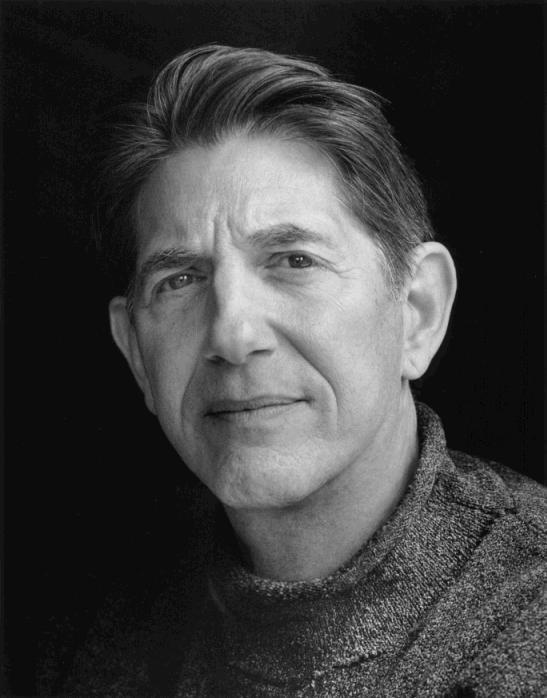
Here’s a small sample:
Kupfer: …your generation did transform the U.S. political agenda.
Coyote: No, I don’t think we did. We lost every one of our political battles: We did not stop capitalism. We did not end the war. We did not stop imperialism. I can’t point to real political victory.
Culturally, however, we’ve changed the landscape dramatically. There is no city in the United States today where there is not a women’s movement, an environmental movement, alternative medical practices, alternative spirituality, organic-food stores. That is a huge and powerful development that I think will eventually change the political system.
Kupfer: So the political system is the tail on the dog, the last thing to change in the culture?
Coyote: Politicians are not leaders; they are followers. They think that, because they can plunder the public treasury, they are leading. In fact they are terrified of the people. The people are a problem for them to manage, and when they can no longer manage them, they must follow them, or oppress them.
You can read an abridged version of the interview online here.
In the same issue, there are also excerpts from a fantastic advice column called “Dear Sugar” that runs in an online magazine called The Rumpus. Check out the except here.
 another eye opens