




Archive for the 'Culture Vulture' Category
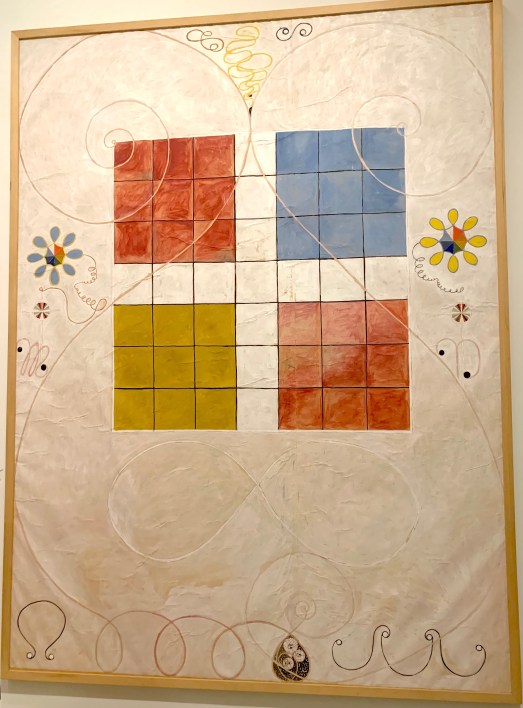
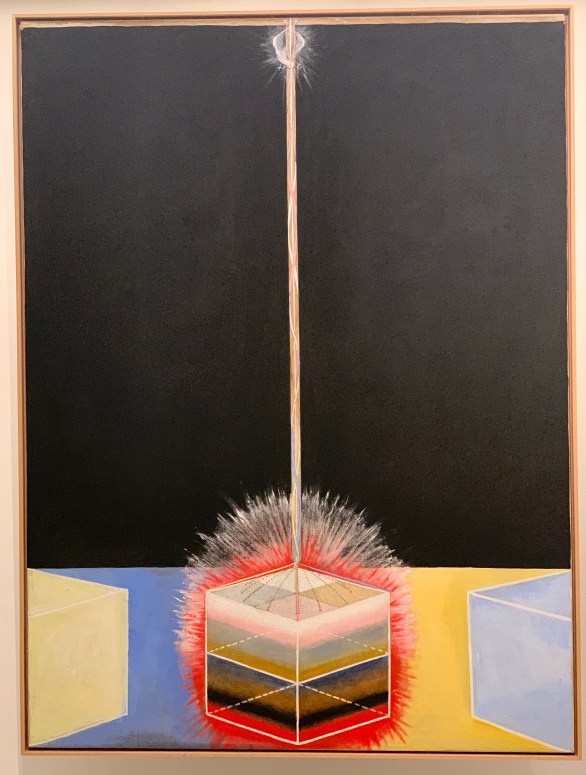
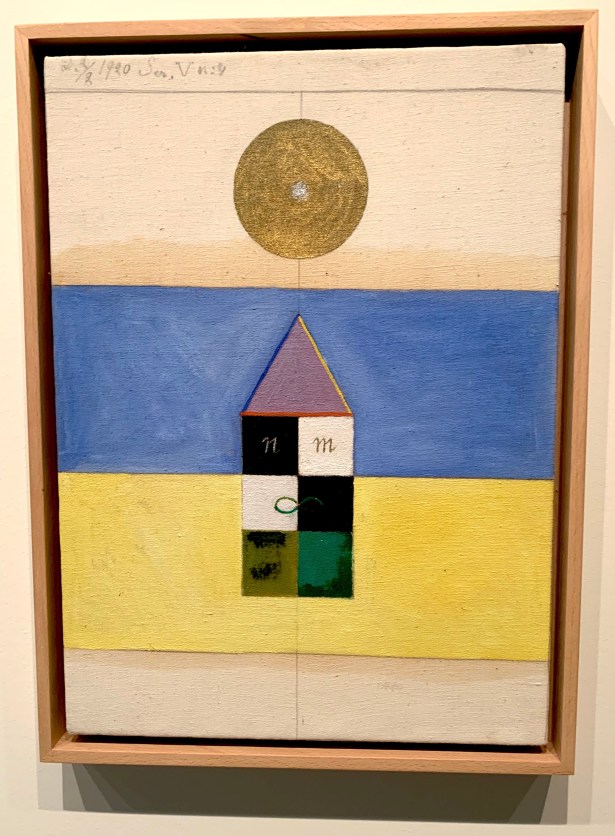
Culture Vulture/Photo Diary: “Hilma af Klint: Paintings for the Future” at the Guggenheim Museum
January 13, 2019
Culture Vulture/Photo Diary: David Wojnarowicz at the Whitney Museum
August 28, 2018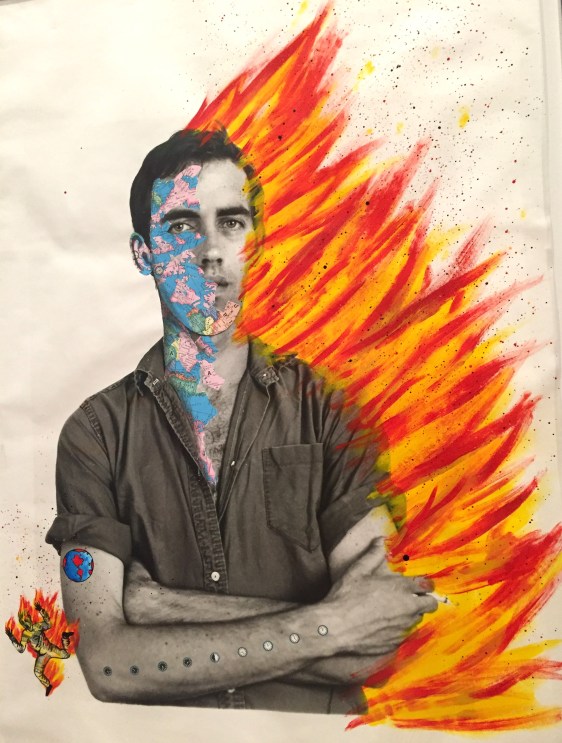
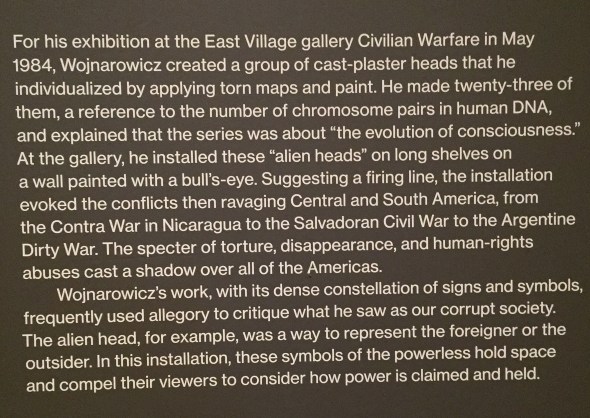
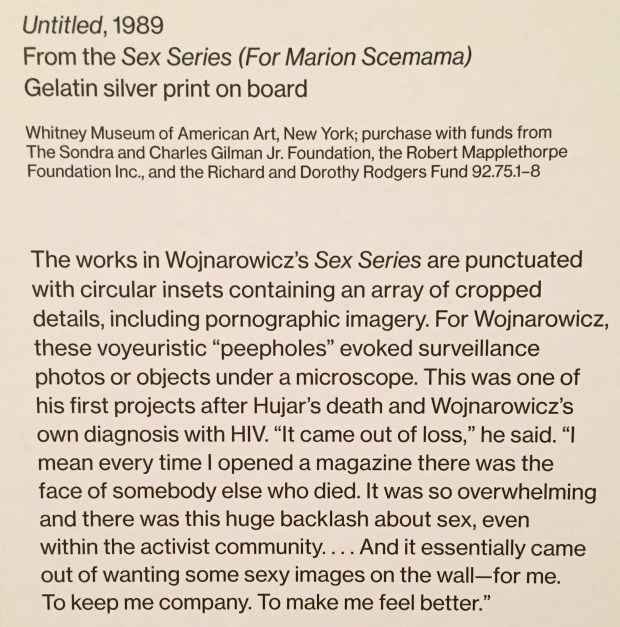
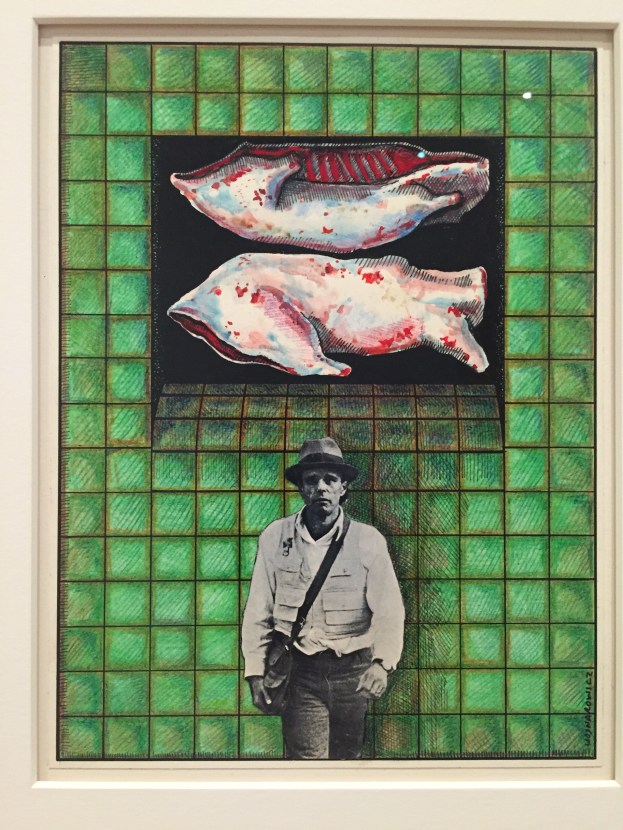
Andy and I visited the Whitney Museum to see the David Wojnarowicz retrospective, History Keeps Me Awake at Night. Here are some pieces that stuck out for me.



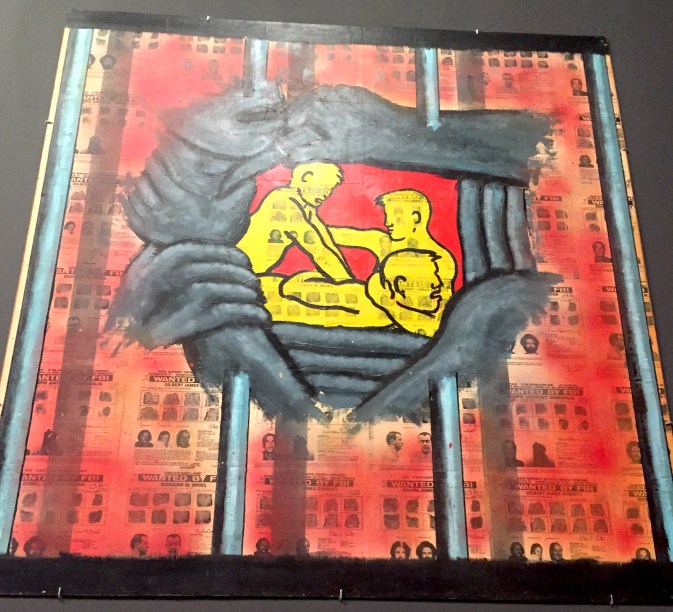
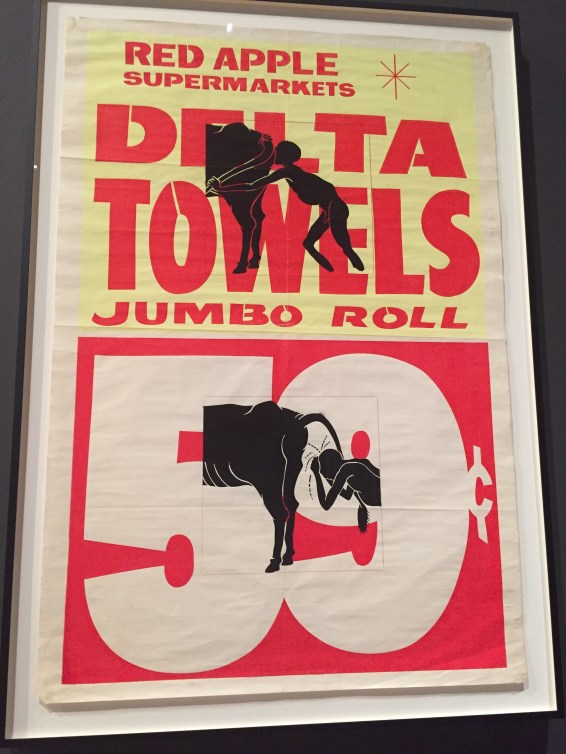
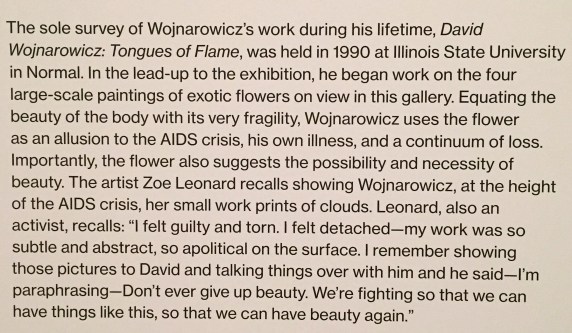

The next day I found this cardboard cry for help on the sidewalk next to my closest mailbox. It struck me as related to the experience of urban alienation and despair that runs riot through Wojnarowicz’s work.

Culture Vulture/Photo Diary: Saturday 8/18/18
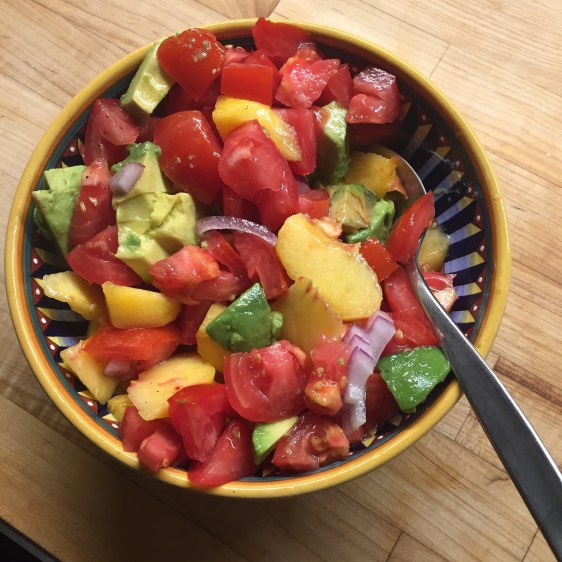
August 21, 2018On Facebook, John Leland turned me on to peach and tomato salad, and now I can’t get enough of it (sometimes with avocado, onion, and pepper, tossed with salt, olive oil, and rice vinegar).
Andy and I set out to ride bicycles to the movies but my rear tire blew out. If we hadn’t had to walk to the subway, I would have missed seeing this strange sight — a duo from Argentina called Ensamble Ferroeléctrico de Marte (you can follow them on Facebook or Instagram).

We planned to see Crazy Rich Asians at Cinépolis in Chelsea but the screening was sold out. So we took a leisurely stroll over to the Whitney Museum, which is open until 10pm on Saturdays.

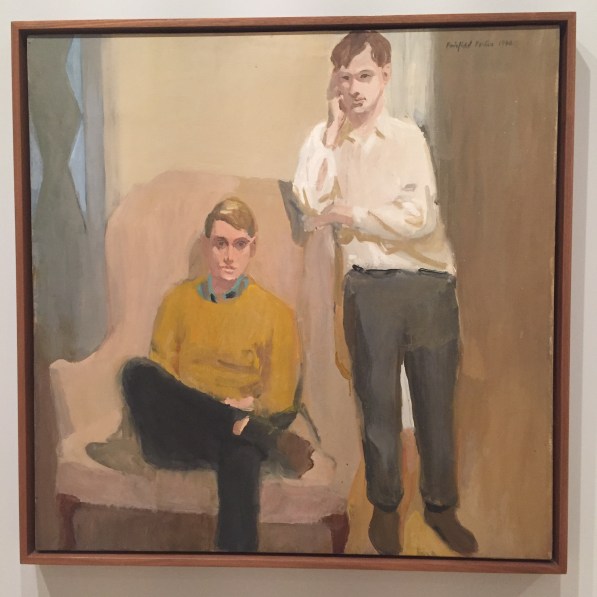
What stood out for me? Among the selections from the permanent collection, Andy Warhol’s $199 Television (1961, above) and Fairfield Porter’s double portrait Ted Carey and Andy Warhol (1960, below, pre-wig for Warhol).
We popped into The Wild Son for a cocktail and a snack. Later we had another drink and some small plates at Txikito on Ninth Avenue, including a delicious Russian potato salad with tuna and capers plus strange breadsticks that looked like fingers poking up out of the pile.

Between the two pit stops we wandered the High Line after dark, ideal time for viewing Andrea Bower’s neon sign reading “Somos 11 Millones / We Are 11 Million,” which is the number of undocumented immigrants in the U.S.

Culture Vulture/Photo diary: Taylor Mac in Philadelphia part 2
June 14, 2018Saturday June 9 —
Andy and I returned to Philadelphia for the second half of Taylor Mac’s “24-Decade History of Popular Music.” It seemed like half the crowd had seen the first part, the other half were all new people (including our friends Nick and Jimmy). Taylor said something in judy’s introduction that judy hadn’t said before, that judy undertook this epic theater piece because there’s no way it could be perfect — an exercise in managing The Anxiety of Imperfection. That’s one of many inspiring aspects of the extravaganza.
Some highlights:
Each decade’s costume was a Machine Dazzle masterpiece, some more dazzling than others, like this simulation of the Wright Brothers’ airplane wings with Machine traipsing around in a Mount Rushmore headdress.
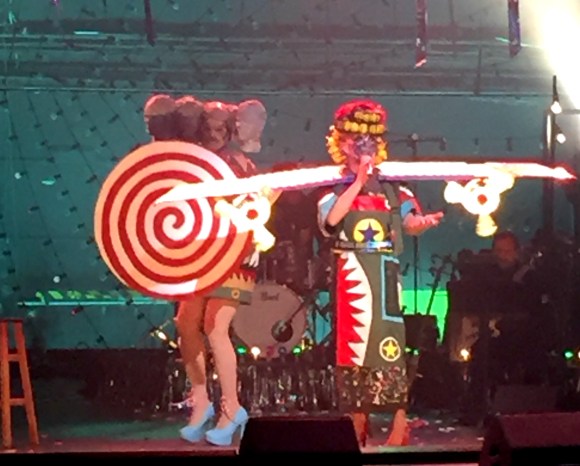
Guest artists included Philadelphia-based immigrant advocacy activist Yared Portillo, accompanied by Erick Pérez.
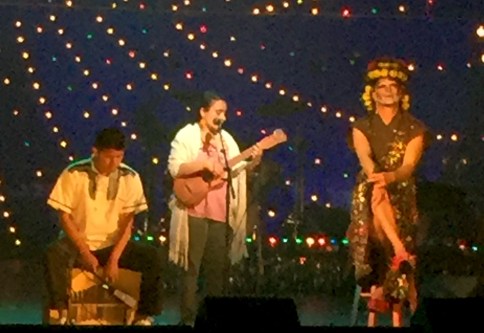
During the Depression era, the theater became a soup kitchen, as the Dandy Minions served soup to the audience. When the 1950s rolled around, Taylor’s white-picket-fence costume signalled the era of “white flight” to the suburbs. At this point in the show, Taylor had all the white people in the middle section of the orchestra “migrate” to the suburbs and invited all the people of color in the house to take seats in the center, so for the rest of the show they got to sit in the best seats in the house, soon followed by the queers.

Machine Dazzle’s costumes and Matt Ray’s musical arrangements have been widely and deservedly lauded, but I’m not sure enough praise has been heaped on set designer Mimi Lien and lighting designer John Torres, who succeeded in continually transforming the look of the show/concert using the simplest of means. Andy and I had seen the three-hour section covering the ’60s/’70s/’80s at St. Ann’s Warehouse in Brooklyn, a flexible open space. At the Merriam Theater in Philadelphia, the curtain came down as the ’60s rolled in, and it reopened with this grand entrance, to the tune of “Turn! Turn! Turn!”

In Taylor’s queer revisionist pop-song history, “Born to Run” became a Stonewall anthem, as Taylor ran around the audience in judy’s disco-ball headdress and light-up brassiere, orchestrating a simulation of Judy Garland’s funeral (with audience members recruited to play La Garland and her pallbearers, which you can see over our shoulders).

In Brooklyn, Taylor brought on a local youth marching band to signify Black America “Movin’ On Up” at the start of the ’70s. In Philadelphia it was a fantastic local youth dance troupe called Camden sophisticated Sisters/Distinguished Brothers. Notice the hefty gal in the hijab? She did a handstand that turned into a back flip!
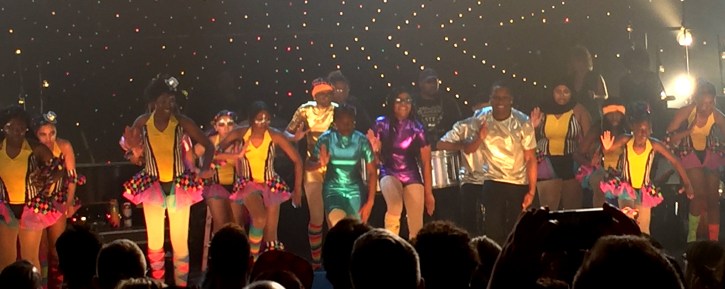
And the Dandy Minions got to represent ’70s disco.
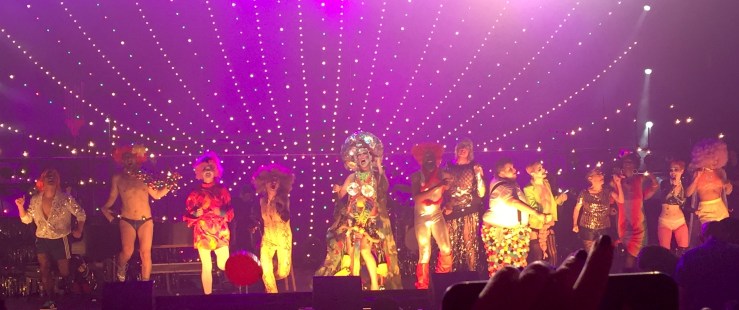
The ’80s morphed from a backroom bar into the grim specter of AIDS.
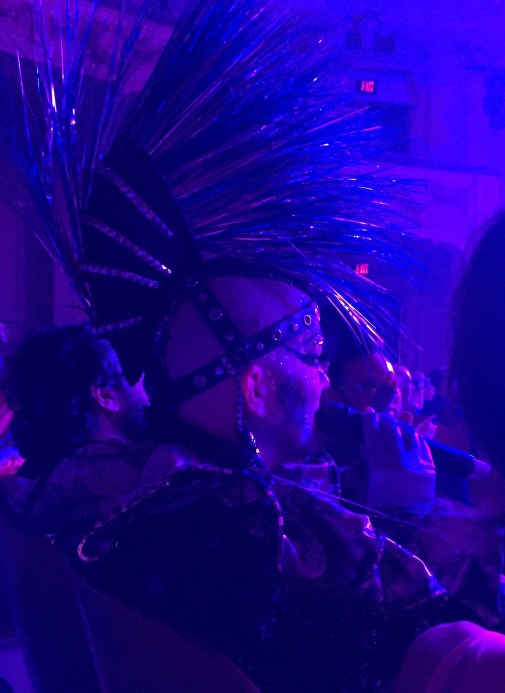

For the oughts, Taylor invited all the lesbians in the house to join him onstage for beer and snacks while judy sang an array of lesbian music (including a sweet rendition of Ferron’s “Girl on a Road,” a duet with Cynthia Hopkins) and brought on Toshi Reagon for a stellar solo.

By the end of the night (the last hour was Taylor solo, singing original songs), I was left with a few strong impressions. Fun and crazy and dazzling as the visuals and the jokes were, this was an incredibly impressive and accomplished musical event. Especially when Taylor slowed things down or stood still to sing ballads, they were overwhelmingly beautiful and emotional, along a fascinating unpredictable spectrum — the country ballad “Ghost Riders in the Sky,” Bob Dylan’s “A Hard Rain’s Gonna Fall,” Patti Smith’s “Birdland.” And I walked away blessed to have inhabited a day in the life of a Temporary Queer Utopia, which is as strong a political statement as an artist can make these days.
Culture Vulture/Photo Diary: Taylor Mac in Philadelphia
June 5, 2018Andy and I took the bus down to Philly for Part I of Taylor Mac’s “24-Decade History of Popular Music.”
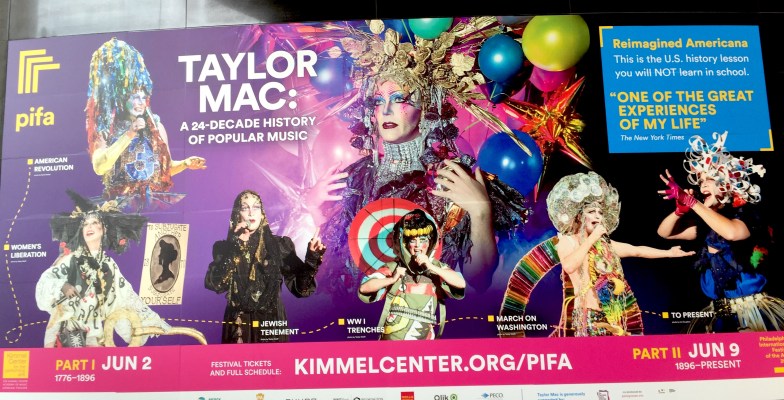
Taylor Mac is a tall bald performance artist with a phenomenal voice, an activist’s engagement with the politics of the day, and a drag queen’s ability to work the crowd. The show, which judy (Taylor Mac’s pronoun of choice) built in three-hour increments and premiered in all its glory at St. Ann’s Warehouse in Brooklyn in 2015, is a queer history of the United States in song. This gig, produced by Pomegranate Arts for the Philadelphia International Festival of the Arts, is the first time Taylor Mac has performed the show in two all-day chunks. Mac refers to the show as a “radical faerie realness ritual sacrifice.” The loose concept is that every decade gets an hour, and the band starts with 24 members, one of whom peels off every hour until there’s only Taylor Mac onstage. Besides the musicians, there are random guest artists and a squadron of body-positive gender-queer helpers known as Dandy Minions (I spotted among them my friend Chris Bartlett, moonlighting from his high-powered job as executive director of Philly’s William Way Center). But the key collaborators are musical director Matt Ray, who arranged all 246 songs in the show, and Machine Dazzle, who created all the costumes including a different staggeringly creative outfit for each of Taylor Mac’s 24 hours.
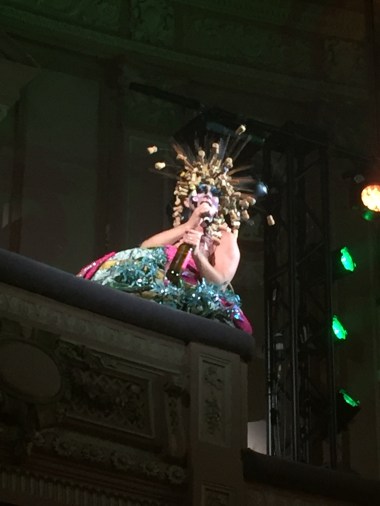
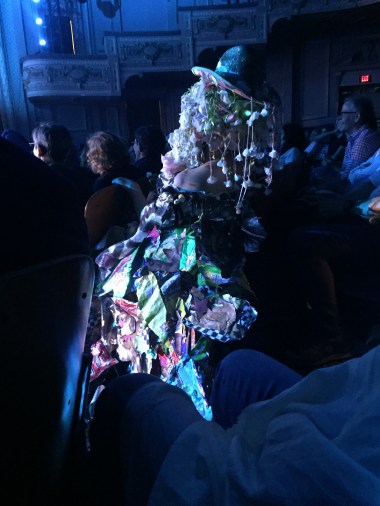

We’d seen one three-hour segment (1956-1986) at St. Ann’s, which contained songs we knew. The early decades turned out to be a hodgepodge of familiar songs queered for Taylor Mac’s purposes and obscurities dug up to illustrate judy’s intersectional historical revision. The show opened with “Amazing Grace,” for which a woman in the audience was selected to come onstage and receive a blessing from the audience. It occasioned the first of many times Taylor Mac said, “This is going to go on a lot longer than you’re going to want it to.”
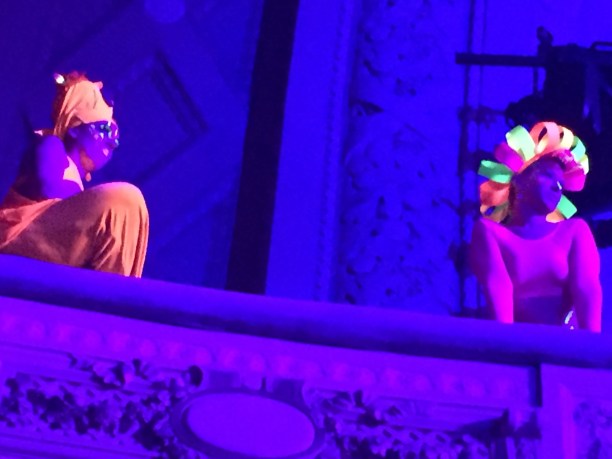
A conceptual show this long is bound to be padded and stretched thin in spots, and it was. There was the hour of drinking songs. There was the hour the audience spent blindfolded doing sensory perception exercises that required intimate interaction with your neighbors. Apples, beer, and ping pong balls were freely distributed. Large swaths of the show involved audience members dragged onstage to perform crucial tasks. Most of it was fun and engaging, but the real highlight of the first 12 hours came around the 9th hour when Taylor Mac rescued Gilbert and Sullivan from cultural appropriation jail by performing The Mikado on Mars, through vocoders, mostly to a reggae beat, with the crucial role of Yum-Yum played by a game young guy from the audience following instructions through a headset. It was one of the craziest and most fun things I’ve seen in the theater in years.


that’s Matt Ray at the keyboard
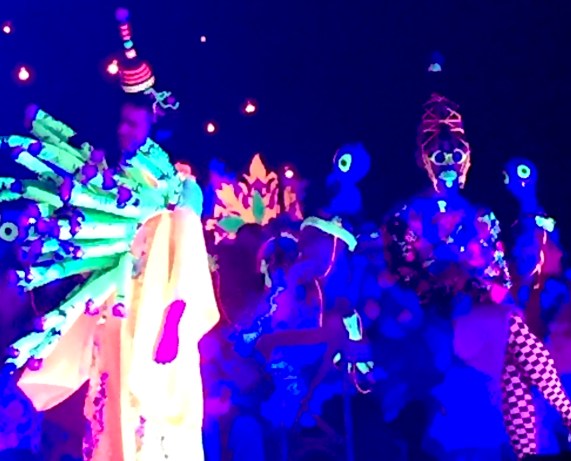
that’s Machine Dazzle on the right in checkered stockings
The 12-hour show wrapped up an hour early, to no one’s complaint, since it was a pretty intense day. We’ll be back next Saturday for the second half of the show. We got to hang out later with our friends Nick and Jimmy.
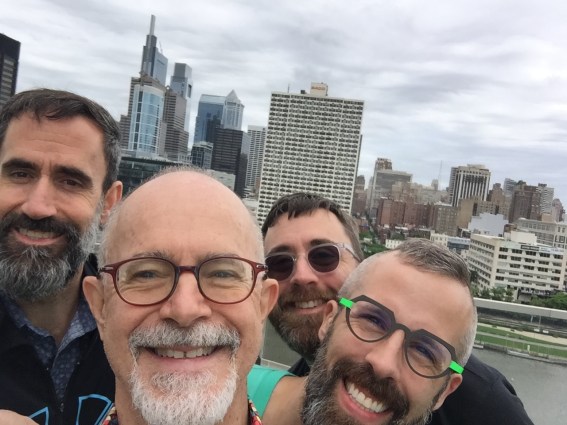

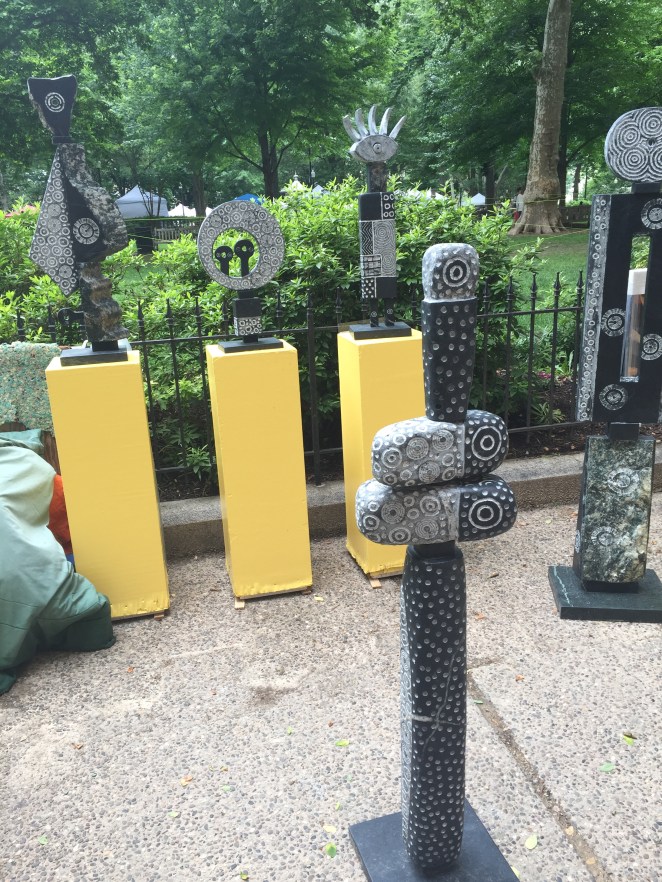
We met Jimmy’s adorable ancient kitty Scarlett, and after brunch walked through the sidewalk art fair in Rittenhouse Square. I admired some stone sculptures by Paul E. Braun.
And I was impressed by the Basquiat-esque paintings on wood by Senegalese artist Michel Delgado.
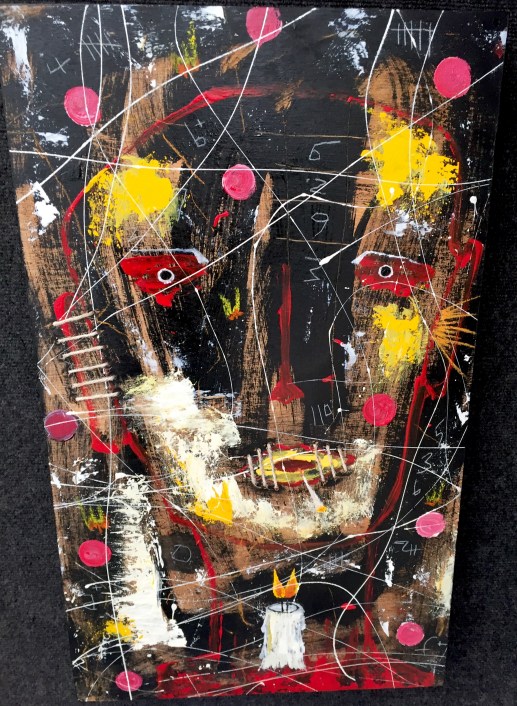
 another eye opens