Archive for the 'Culture Vulture' Category

Culture Vulture: Loudon Wainwright III, the Gossip, and Actress

May 25, 2012

I’ve been under the headphones the last couple of days, listening to some great new music in VERY different genres:

Loudon Wainwright III, Older Than My Old Man Now. Loudon’s songs have always been smart and funny and tuneful, but this batch of songs about aging drop to a new level of depth and honesty.

The Gossip, A Joyful Noise. Beth Ditto continues to emerge as a powerhouse singer — it’s like hearing Madonna or Adele sing with a real rock band, and the muscular production by Brian Higgins showcases them brilliantly.

Actress, R.I.P. Actress is the nom de studio of Darren Cunningham, who churns out a set of steamy atmospheric stoner/sex/rave music — not for every mood or every setting, but I’m liking it a lot.

Culture vulture: THE STEINS COLLECT at the Met, Wu Tsang’s WILDNESS at the Whitney Biennial, and the Dessoff Choirs

May 15, 2012


May 11 –
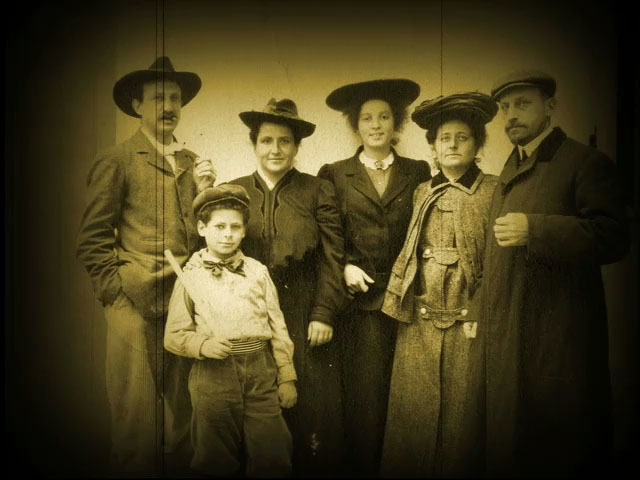
I finally got around to checking out the 2012 Whitney Biennial. I arrived before the museum opened, though, so I had half an hour to kill, which motivated me to bicycle over to the Met to see another show on my must-see list: “The Steins Collect: Matisse, Picasso, and the Parisian Avant-Garde.” Gertrude Stein has been a lifelong culture hero of mine, and I’ve read all the major biographies, yet this show succinctly and powerfully made me understand certain crucial things about her and her family (above) for the first time. For one thing, they were rich kids whose European adventures were bankrolled by their family’s successful real estate and manufacturing businesses. I just recently watched the fascinating documentary Herb and Dorothy, which depicts the Vogels, a retired librarian and postal worker who have spent their entire adult lives and earnings buying contemporary art from emerging artists they’d befriended, one $100 piece after another, carrying them in their hands or in taxis to their rent-controlled Upper East Side one-bedroom apartment. They amassed a collection of pieces which they have now donated – not sold – to the National Gallery in Washington, DC. Gertrude and Leo were a little like those two. They had more money to start with but not vast fortunes, so they started buying work by artists of their generation and inviting friends and strangers to their apartment in Paris to view work that was not otherwise on display. Ten of the first 19 paintings they bought circa 1904 pictured naked women, which tells me that Leo, unmarried at age 32, was a horny lad. When Leo moved out of the apartment – largely because he couldn’t stand Gertrude’s grandiosity, ambition, or writing (he thought she and Picasso were frauds) – they divvied up the artists they loved: Leo got Renoir and Gertrude got Picasso. Meanwhile, their older financially savvy banker brother Mike and his wife Sarah (called Sally) cultivated Matisse. How these personalities meshed is beautifully and clearly articulated in this terrific exhibition, full of great familiar and unfamiliar paintings (such as Picasso’s Melancholy Woman, below) as well as tons of family photos. Kudos to curator Rebecca Rabinow!

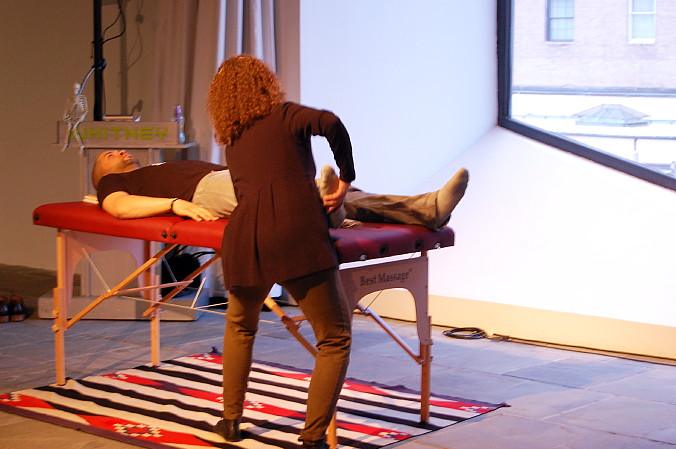
I went back to the Whitney, where I found the Biennial somewhat less exciting than I thought it would be. There is a large performance element to this Biennial – the entire fourth floor is given over to Alicia Hall Moran and Jason Moran’s mini-festival BLEED. When I walked through, though, the performance happening was a demonstration of Alexander technique on massage tables at either end of the room (with the Morans serving as demo models for practitioners Gwen Ellison and Jessica Wolf — see below), not especially interesting to observe. There was an installation elsewhere on the fourth floor with a recorded text by Dennis Cooper that I would like to have heard, but it was switched off during the performances.


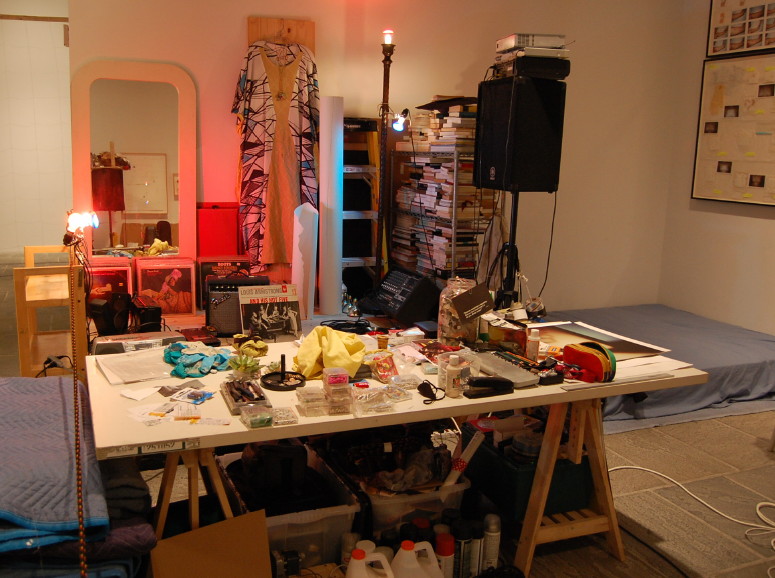
I had heard about Dawn Kasper’s installation, This Could Be Something if I Let It, which consists of everything in her home/studio packed up and moved to a gallery at the Whitney. She wasn’t on the premises when I walked by, but I got a kick out of having permission to peer at her stuff.


Otherwise, I was surprised at how little of the work grabbed me. I peeked into the screening room on the second floor, where Wu Tsang’s Wildness was just beginning. At first glance, I took it to be an ethnographic documentary about Latino neighborhoods and I was about to leave when the narrator said something about having being involved in the queer punk scene in Chicago before moving to L.A. That piqued my interest enough to sit down and watch, and it turned out to be a phenomenally engrossing film.


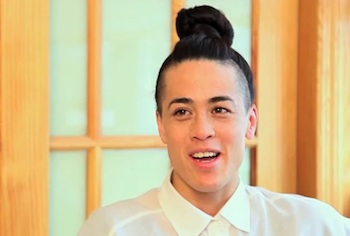
Wu Tsang (above) is a 30-year-old Chinese-American transgendered artist who stumbled upon the Silver Platter, a historic gay bar in the predominantly Latino community of MacArthur Park. The bar was owned by Gonzalo Rodriguez and his sister Rosa, who inherited it from their brother Rogelio, who founded the bar and then died (AIDS is implied), and they ran the place with help from Gonzalo’s ex-boyfriend Koky and his current boyfriend Javier. The Silver Platter mostly catered to discreetly gay Latino guys in Tejano hats and work boots but Friday nights was a drag show that made the bar a haven for trans gals, many of them immigrants. Wu and several club-kid/DJ friends  proposed a Tuesday night party called Wildness that caught on and quickly became a dynamic crossroads and de facto community center for transpeople. (It reminded me of San Francisco’s legendary Trannyshack, of which this film makes no mention.) The film, shot over the course of two years, traces the excitement and challenges that met this kind of collaboration/clash of races, cultures, and classes in a very smart and self-questioning way. (Among the lessons learned: for all the club’s efforts to create “safe space” for transpeople, the biggest danger came from the straight white hipster who wrote up the club for the L.A. Weekly as if it were a sleazy south-of-the-border stand-up brothel.)

The film is formally inventive and very honest. You can watch the trailer online (above), but it only hints at the complexity and quality of the overall film, which I highly recommend. It screened three times a day for one week during the Biennial; there may be a theatrical run at some point and the inevitable DVD release. This was the highlight of the Biennial for me, though I intend to go back and revisit. There’s also a recreation of the Silver Platter upstairs on the fourth floor with two-channel video of excerpts from the film.

May 12 —  Andy sings with the Dessoff Choirs, who gave their annual spring concert at the Church of the Epiphany on the Upper East Side. The program of music for choir and organ (well-played by guest artist Sean Jackson), titled “Lux Aeterna,” included two works by that name, Elgar’s and Morten Lauridsen’s, as well as five anthems by Henry Purcell and three pieces by Frank Lewin. The concert was beautifully sung. My single favorite piece was the a cappella hymn “O nata Lux” from Lauridsen’s suite, but I also loved the three Benjamin Britten pieces they performed: the gorgeous “Jubilate Deo” and “Festival Te Deum” and the weird, exhilarating “Rejoice in the Lamb.” The latter was a 1943 setting of a poem written by Christopher Smart (1722-71, pictured below) in an insane asylum. As music director Christopher Shepard understates in his program note, “The text is brilliant though fantastic; it is a song of praise to God that relies heavily on animal imagery.” You can read the whole poem here – refreshingly nutty.


We went out for dinner afterwards to Malaga, a tapas and wine bar on E. 73rd Street – yummy food and good wine, reasonably priced.

My life as a Culture Vulture: week of February 19

February 25, 2012

Busy fun culture week.

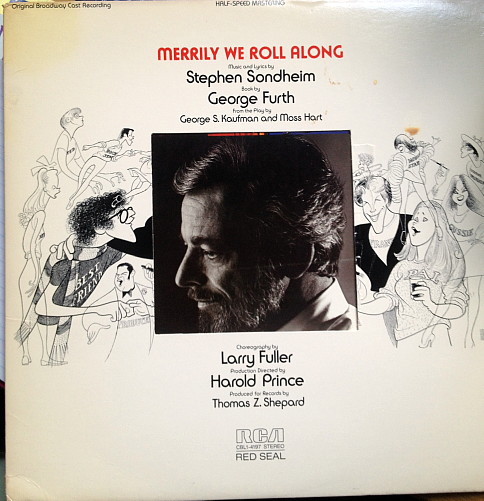
SUNDAY: I got to see the penultimate performance at the Encores! series of Merrily We Roll Along at City Center. It’s always been one of my favorite Sondheim musicals, if not my very favorite. This is the adaptation of a Kaufman and Hart show-biz drama that moves backwards in time, starting from the present when the central character, Frank Shepard, is a super-successful Broadway composer who’s sold out to Hollywood and then moving back through the pivotal experiences and relationships that made him who he is.  I’m not even that much of a musical theater geek, but I saw the short-lived original Hal Prince production in 1981 and loved the show and the music and the emotional sweep of the show, despite the ridiculous costumes and production design. As with many Sondheim shows, it was impeccably recorded (by Thomas Z. Shepard for RCA Records), and it’s through the original cast recording that many, many people grew to love this show. It’s great theater for the ear and a fantastic score. To my taste, there’s never been a better Charley Kringas than Lonny Price (especially his version of “Franklin Shepard, Inc.”), and I’m very partial to Ann Morrison’s performance as Mary (for me, she kinda owns “Like It Was” and “Now You Know”) — plus Jason Alexander’s finest moment, as Joe.


I’d go see any production of Merrily that comes down the pike. I did see the pretty mediocre York Theater production (directed by Susan H. Schulman, starring Malcolm Gets) but the gold standard has always been James Lapine’s staging at the La Jolla Playhouse in 1985 with John Rubinstein, Chip Zien, and Heather McRae. Encores! tapped Lapine to mount the concert version at City Center, and he did a great job — not quite obliterating my fondness for the La Jolla version, partly because the full staging made that production more forceful. But it was pretty damn good at City Center. The show is such a moving, intense, bittersweet, super-ambivalent slice of adult wisdom — rueful in suggesting that we inevitably lose significant shards of our integrity as we age, upsetting in its honesty about the light and shadow aspects of friendship,  and yet inspiring in the way it captures youthful idealism. It’s a deep show, and it’s hard not to be moved to tears by the kids at the end claiming “It’s our time!” At City Center, I couldn’t help thinking that today’s versions of the twentysomething Frank and Charlie and Mary would be Occupying Wall Street.


Lovely performances by Celia Keenan-Bolger and Lin-Manuel Miranda as Mary and Charley, but for me two other performances by non-hyphenated actors were revelations: Colin Donnell as Frank and Elizabeth Stanley as Gussie (above). Donnell is so good I may have to go see Anything Goes, and Stanley is definitely star material — she got to do the new number that Sondheim cooked up for this production, the act-two opener that gives us an excerpt of Frank and Charlie’s hit show, Musical Husbands.

MONDAY: I’m a big fan of Edmund White and will read anything he writes. I enjoyed Jack Holmes and His Friend a lot while reading it, so I was surprised to feel a little letdown by the very ending. It seemed weightless and inconsequential. But the form of the novel, which centers on a gay man who is in love with a straight friend, is somewhat experimental, so it works on you after the fact. The four sections alternate between third-person omniscient narrative and first-person narrative by Will, the straight guy — I think this is White’s first attempt to write in the voice of a heterosexual male, and at times it seems strained and somewhat cliched, though I can’t be sure if that’s intentional on White’s part. Ultimately, it’s an intriguingly detailed, characteristically sexually explicit take on how the advent of AIDS affected the kind of straight people who were just starting to explore the sexual freedom gay men claimed for themselves in the 1960s and ’70s.


I was alarmed to read an interview with White in the Gay and Lesbian Review, where he mentioned that he recently had a stroke. Nevertheless, his writing here is strong, and many passages dazzled me and made me laugh, such as this description of two women working as personnel directors for a literary magazine: “They’d been sitting in the same small office, with its dust and snake plants, for thirty years. Every surface was covered with files. They wore hats perched incongruously above their wide, bloated faces, like flowers taped to livestock.” And: “He’d never thought of his grandmother as a woman before — more as a matron with a firm, molded mono-bosom and a diamond brooch and a low, Southern twang than as a woman with soft white breasts like warm dachshunds in constant motion, dogs with huge brown noses.”

TUESDAY: Anthology Film Archives in the East Village is running a fantastic and comprehensive film series devoted to the Wooster Group, including a 10-program retrospective of film and video documentation of their glorious stage productions. When I ran into Cynthia Hedstrom at St. Ann’s Warehouse last week, she urged me to show up for the video reconstruction of Rumstick Road, and I’m so glad I did. The middle piece of the group’s Three Places in Rhode Island, Rumstick Road was really the work that launched Spalding Gray’s career as a solo performer and storyteller. At the center of the piece is Spalding telling the story of his mother’s suicide, using tape-recorded recollections by his father, his grandmother, and a psychiatrist who’d treated his mother. And Elizabeth LeCompte was just beginning to hone the tools that have made her the legendary genius director she is: having the actors lip-synch the recordings and developing with her three outrageously talented and fearless performers (Gray, Ron Vawter, and Libby Howe) and kindred-spirit techies (Jim Clayburgh and Bruce Porter) a variety of physical actions and visual images to complement the verbal material.


The piece was first shown in 1977 and performed periodically through 1980 (I saw it, weirdly enough, when it had a brief uptown run at the American Place Theater), back when the Wooster Group was called The Performance Group and were virtually unknown and barely scraping by. Various bits and pieces of Rumstick Road were captured on video, film, and audiotape but never a complete documented performance. Recently, LeCompte and filmmaker Ken Kobland sat down with the hodgepodge of chunks and ingeniously reconstructed the entire performance. It’s very rough and sometimes crude, which is of course perfect for LeCompte’s aesthetic. And looking back at the piece now, it’s astonishing to see how original and strong a work of art it is. The reconstruction includes a number of close-up shots that enhance the viewing experience (I hadn’t retained a clear memory of the crazy moment when Ron Vawter, wearing a latex old-lady mask, examined Spalding’s mouth at length, pulling out and stroking his tongue with his fingers). It was thrilling to re-experience the show, but also sad recalling those wonderful young actors lost to AIDS (Vawter), suicide (Gray), and mental illness (Howe).

WEDNESDAY: Rehearsal with Gamelan Kusuma Laras. I’m excited that I’m slowly, slowly starting to learn how to play a new instrument, bonang panerus (below), with lots of help and coaching from more experienced players (thanks, Carla! thanks, Dylan! thanks, Oki!).


THURSDAY: I finally finished reading Electric Eden, British music critic Rob Young’s dense, ambitious, obsessive, and impressive history of a certain stripe of British pop-folk music. He originally set out to focus on a specific set of quirky, seminal bands and performers who bridged the gap between traditional English folk music, rock and roll, and post-Dylan singer-songwriters — the likes of Fairport Convention (whose members included Richard Thompson and the late Sandy Denny), the Incredible String Band, Pentangle, Steeleye Span, Donovan, and Nick Drake. But his research led him to deep thinking about the British history and culture and geography that music emerged from, and he also found himself tracking the artists forward through the tributaries of psychedelia, art-rock, glam-rock, punk, and other sound experiments. It’s one of the most impressive, intelligent books about pop music I’ve ever encountered, extremely well-written, scrupulously factual, and free of cheap, stupid generalizations.

I learned lots about music that was near and dear to me as a precocious teenage listener, and he writes about tons of artists I’ve never heard of before who sound fascinating (Mighty Baby? Comus?). His discography alone provides a graduate-level study guide to some beautiful and curious musical byroads. I never knew, for instance, that the Beatles created a 15-minute sound collage called “Carnival of Light” around the time of Sgt. Pepper! Here’s his succinct description of the tipping point, when the hippie-dippy pastoral rootsiness of acts like the Incredible String Band began to be eclipsed by the dark urban edginess of David Bowie: “If folk, folk-rock and its tributaries were, however subconsciously, believed to spring from collective, stable racial memory, glam tipped music into a wilderness of masks and mirrors, divided selves refracted through a succession of grotesque invented facades.”

FRIDAY: I was asked to give a nine-minute talk introducing the Wim Wenders/Sam Shepard film Paris, Texas at the Rubin Museum‘s Cabaret Cinema series, which prompted me to read this informative interview with Wenders and also gave me the delightful opportunity to watch the film again. I hadn’t seen it since it opened at the New York Film Festival in 1984. Man, Robby Muller’s cinematography is spectacular, starting from the opening shots of Harry Dean Stanton striding with absurd purposefulness through the lunar landscape of the Grand Canyon. And Ry Cooder’s music has never been more beautifully matached with a film. I will admit that I slipped out early, so as to avoid watching Nastassia Kinski, whose performance I recall as acutely embarrassing. The Rubin is a great museum, the people who work there are super-nice, the place was packed and buzzing on a Friday night, and I look forward to using my gift membership to view their always-engrossing exhibitions, starting with a show I know Andy will want to see: “Hero, Villain, Yeti: Tibet in Comics.”

Culture vulture: January 2011

February 1, 2011

ART

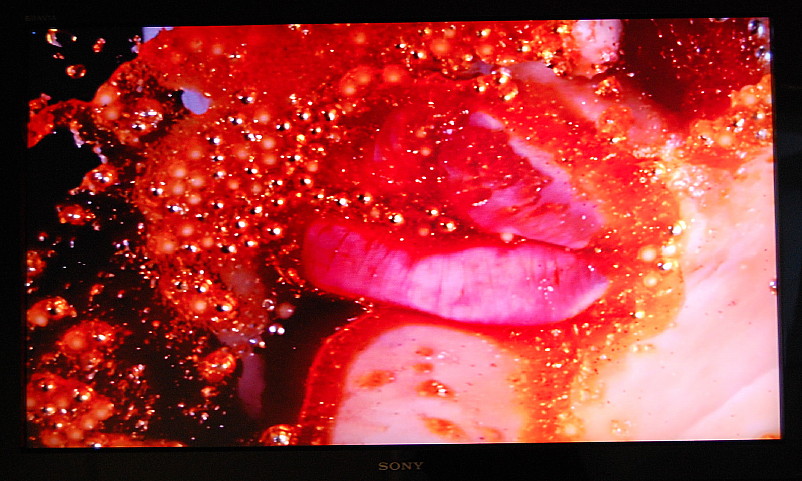
I get wildly overstimulated at museums, so I can only tolerate being there for about an hour. I’ve been overdue for a visit to “On Line: Drawing Through the Twentieth Century” at MOMA, so I went for a spin this morning when the crowds were thin – only a few clumps of adolescent students clutching study guides and making notes. I usually head straight up the stairs to the second floor but a video caught my eye at the foot of the escalators. It turned out to be Marilyn Minter’s Green Pink Caviar (above), a hilarious, luscious, and colorful seven-minute video of someone (the artist, I assume) licking caviar off a glass plate – all lips and tongue and lipstick and food and saliva. On my way to the “On Line” show, I got sidetracked elsewhere on the sixth floor by “Andy Warhol: Motion Pictures,” a beautiful gallery mounting of the famous Warhol portraits of Factory denizens (Dennis Hopper laughing and singing to himself, Lou Reed looking grave and still, Jane Holzer brushing her teeth – stay away, Michael Mele! – Nico from many angles, Edie Sedgwick looking preternaturally bright-eyed). Warhol often gives me that “hey! I can do that!” inspiration – I’ve taken similar portraits of my sisters and would like to do more action portraits of beloved friends and acquaintances. Also showing in the adjacent gallery are the famous long slow movies Empire (eight hours of the Empire State Building), Sleep (John Giorno sleeping), Kiss (couples kissing at length), and Blow Job (just the face of the recipient for 42 minutes). I can’t watch a blowjob very long without wanting to join in, so I didn’t stay long in that gallery.

“On Line” is a huge, ambitious, very interesting survey of how 20th century artists took the line from two dimensions into space and time. I was especially delighted by the inclusion of a number of dance films: loved watching William Forsyth’s “Solo” and Anna Teresa de Keersmaker in a witty film by Thierry de Mey called “Top Shot,” with ATDK doing one of her classic minimalist dances (with lots of loose arms and swishing skirt) drawing a perfect circle in the dirt. A simple Picasso paper guitar and a related collage drew me in – so simple and yet so riveting. (MOMA is opening a whole show of Picasso guitars February 9.) I encountered other intriguing works by artists I’d never heard of before: Gego (aka Gertrude Goldschmidt), a Venezuelan artist who made lovely strange wire “drawings without paper,” and Atsuko Tanaka, a Japanese performance artist whose drawings of her “Electric Dress” piece made me want to see that garment live and in person.

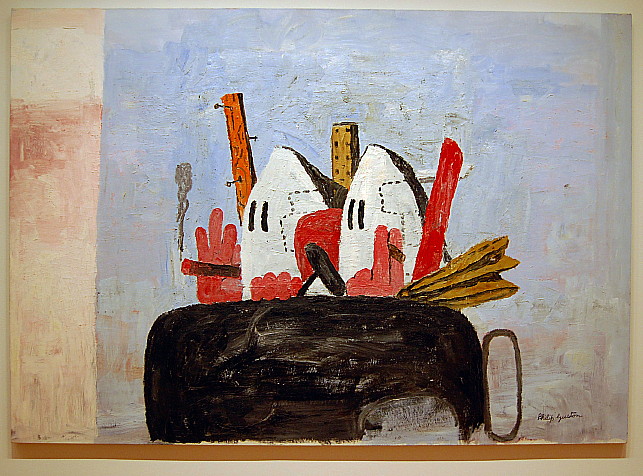
On my way out, I spun through the Abstract Expressionist show to revisit some favorites – the Mark Rothko room, Lee Krasner’s dense “Untitled,” and Philip Guston’s fun, ominous, self-implicating “Edge of Town” (above).

BOOKS
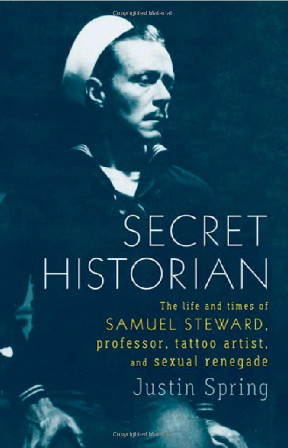
The best Christmas present I got this year was Justin Spring’s Secret Historian: The life and times of Samuel Steward, professor, tattoo artist, and sexual renegade. As a young man, Steward befriended Gertrude Stein and Alice Toklas, who encouraged his writing and introduced him to their charmed circle. I knew that much, and also knew that he wrote pornography under the pseudonym Phil Andros. The biography reveals Steward’s long and important association with Alfred Kinsey. After the first Kinsey Report came out in 1949, Steward contacted Kinsey because he himself had always kept detailed notes of his sexual encounters in his Stud File (one of the first was a hotel room blowjob that he gave Rudolph Valentino, who gifted him with a lock of his pubic hair, which Steward kept as a sacred relic all his life). Steward became a close and trusted collaborator with Kinsey on his sex research, cluing the good doctor into the many and varied subcultures of man-on-man sex. He was fond of throwing sex parties in his apartment and taking pictures of cocksucking daisy chains, and he arranged on numerous occasions for Kinsey and his intrepid team to film these orgies, once even submitting to being flogged and fucked by a rough sadistic top. Steward was a lifelong sexual masochist as well as an extremely erudite English professor who tired of academia and took up the art of tattooing, the better to spend his waking hours touching and attending to hypermasculine men. He was also way ahead of his time in being openly gay and militating for public acceptance of homosexuals and the representation of gay life in literature. For instance, he was an early and ardent admirer of Genet and collected his work even when it was considered too obscene to be imported to the U.S. Spring had access to almost all Steward’s papers and doesn’t stint on either the sexual details or the social connections in a long and poignant existence.

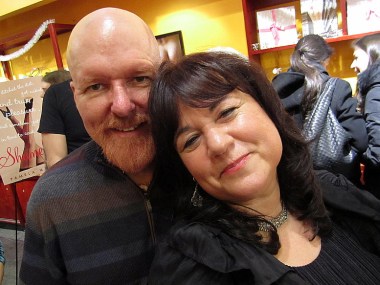
January 18 I attended the book launch for Pamela Madsen’s Shameless: How I Ditched the Diet, Got Naked, Found True Pleasure…and Somehow Got Home in Time To Cook Dinner. The book is a brave, funny, and articulate memoir about how the author, a suburban wife and mom pushing 40, experienced a mid-life sexual awakening by working with a series of gay male sacred intimates. It’s both an entertaining read and a friendly guidebook for women who want to follow in her footsteps. (I read the manuscript in bits and pieces while she was writing it and so receive a warm acknowledgement.) Considering the robust and sex-positive content of the book, it made perfect sense for the book party to take place at Babeland in Soho, surrounded by all manner of sex toys and pleasure objects. Pamela read an excerpt from the book to a crowd that included friends, strangers, her mother Roz, and her husband Kai (below).
THEATER

The night of the first big blizzard of the season, the Sunday after Christmas, Adam Bock invited me to a preview of his new play A Small Fire at Playwrights Horizons. The theater knew it would be a smallish audience because of the weather, so the cast and crew got busy papering the house with their friends. (It was the first time I’ve ever received a printed ticket that listed the price as “paper”!) Just watching people stagger into the lobby of the theater from West 42nd Street, where the howling wind was blowing snow horizontally, was a show in itself. Adam introduced me to his director Trip Cullman, whose work I have admired for years. And I got to meet the super-handsome actor Romain Frugé in person, although he politely declined to shake my hand because he was nursing a cold.
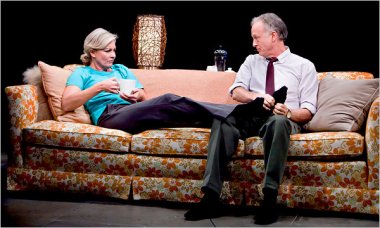
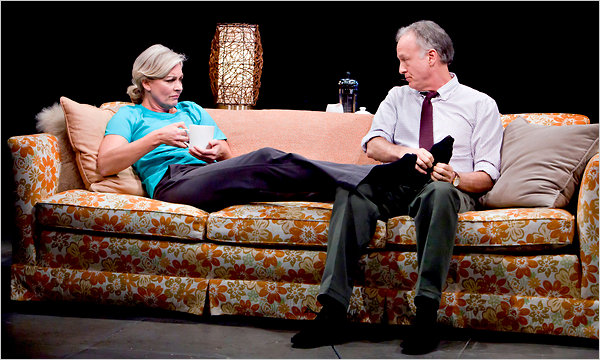
Michelle Pawk and Reed Birney in "A Small Fire" (photo by Sara Krulwich)

I met Bock when we were both at Yaddo on artists’ residencies. He was recently out of Brown and writing what would become his first produced play, Swimming with the Sharks (which Cullman directed). His work is crazy, funny, highly original, heartful, and beautifully written. A Small Fire may be his tamest play so far, almost a TV Movie of the Week about a woman with a mysterious health ailment. Its saving grace and a hallmark of Bock’s plays is that you never know where the play is going to go next. From a construction site to a doctor’s office to a wedding to…middle-aged people naked in bed fucking – and blackout, end of play! Excellent performances by all four actors: Reed Birney, Celia Keenan-Bolger, Victor Williams, and especially the phenomenal Michele Pawk. The play got deservedly warm reviews from the New York Times and the New Yorker.

Early January became an insane vortex of downtown theater festivals, scheduled to coincide with APAP, the annual conferences of Arts Producers and Presenters, who book dance, theater, and music performances for the next year or two based on what they see in this 7-to-10-day period. I was preparing for and teaching a workshop at this exact time so I hardly got to see anything. But Keith Hennessy was staying with me so of course I went to see the return of his Bessie Award-winning Crotch (all the Joseph Beuys references in the world could not heal the pain, confusion, regret, cruelty, betrayal or trauma…). It opened American Realness, a crunchy series of encore performances curated by smart young producer Ben Pryor at the Abrons Arts Center at the Henry Street Settlement. The piece fit more awkwardly into the Abrons than it did at Dance Theater Workshop, where Keith created an almost seamless continuum between audience space and stage space. But it was still clever and beguiling the way it merged the two – starting in the lobby, bringing the audience onstage to inspect the props (while a masked Keith flogged a suspended teddy bear), engaging them all along during the mid-section of the show and then bringing them back onstage for the finale. People have often applied the word “shaman” to Keith as a performer; he disdains the word for the same reason that I do – it’s overused and too often misused. But at the end of Crotch (see below), when Keith was sitting naked in a chair, lard packed into his groin, red thread sewn through his skin and then through the garments of three audience members sitting in front of him, with big gross fake rotten teeth in his mouth, and he sprinkled himself with glitter from a jar and looked intently into the faces around him….I’ve known this man for 20 years and yet when I looked into that face I didn’t recognize the vulnerable, transported, transpersonal creature looking back at me.

I take a small bit of pride in contributing to the performance because Keith uses a mix CD I gave him as the soundtrack. He makes especially brilliant use of Teddy Thompson’s “Shine So Bright” and “Wake Up in New York,” sung by Evan Dando on Craig Armstrong’s album As If to Nothing. This was Andy’s first chance to see a real piece by Keith – and as a newcomer to performance art, with no file whatsoever on Joseph Beuys, he found the show almost completely incomprehensible. So there’s always that possible response….

MOVIES

Over the Christmas holidays I caught up on a bunch of movies. I like having friends who get screeners, so we can watch the big movies at home on DVD. For the record: I liked The Social Network very much. I thought The King’s Speech was well-done but very very predictable. I liked The Kids Are Alright, especially Mark Ruffalo’s performance. I’ll even admit that my heart sank as I realized how much Annette Bening’s character reminded me of myself. Yikes. Andy and I actually went to the movie theater to see The Tempest – I loved Helen Mirren and all the magical effects, and I found everything having to do with the conspirators and the comic relief quite tedious: the fault of Shakespeare, I think, not so much Julie Taymor. Don’t ask me about Black Swan, I haven’t seen it yet. I thought I’d avoid it entirely, because I suspect that I won’t care for it (one distinguished movie critic I know called it “a bunch of misogynistic bullshit”), but I do plan to see it soon, just to have my own opinion.

Andy and I caught up with Moon, the sci-fi movie starring Sam Rockwell as an astronaut who turns out to be a clone. Very fascinating movie. Only afterwards did I learn that the director, Duncan Jones, is the son of David Bowie – yes, he’s the kid whom his parents named Zowie Bowie! No wonder the movie was produced by Trudi Styler, aka Mrs. Sting. Thanks to Tom Dennison, our monthly video salon caught up with Kickass, which totally surprised me by being a fun and smart little sleeper of a teen comedy movie that even managed to make me like Nicolas Cage, and that’s saying a lot.

MUSIC
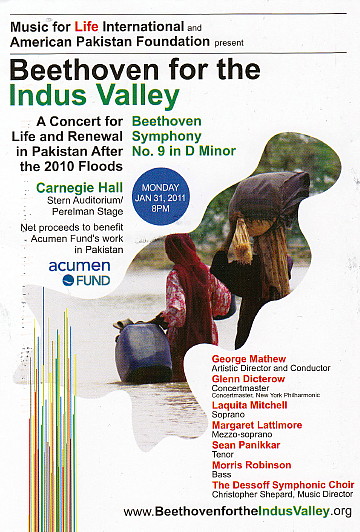
I am woefully uneducated when it comes to classical music. I honestly don’t know how to appreciate symphonic music. Andy got me a ticket for the January 31 performance of Beethoven’s Symphony No. 9 in D Minor at Carnegie Hall, because he sang with the Dessoff Symphonic Choir behind the Beethoven for the Indus Valley Orchestra, conducted by George Mathew. I wish I could say something knowledgeable about Beethoven, but all I can say is that I liked the slow movement best. The “Ode to Joy” sounded like a particularly stiff German drinking song. And even though I was sitting in the third to the last row in the uppermost balcony, I could hear all the musicians perfectly, which is never the case at amplified pop concerts at Carnegie Hall. I was able to disguise what a classical nincompoop I am over drinks and late supper with a bunch of the singers at Red 58, my favorite after-show lounge in upper midtown. But really, this is what I listen to when my iPod is on shuffle:

“You’re All I See,” the Four Freshmen
“Fantasy Man,” the Swell Season
“Anyone Who Had a Heart,” Barbara Dickson
“I’m Hers and She’s Mine,” Peter Salett
“Fish in the Sea,” Karen Alexander
“Pocket Calculator,” Kraftwerk
“Finishing the Hat,” Tom Wopat (Sondheim on Sondheim OCR)
“Comes Love,” Helen Merrill
“Flamingos,” Bit Crushers
“Rock Star,” Bloody Bloody Andrew Jackson OCR
“Fix You,” Straight No Chaser
“Cheerleader,” Grizzly Bear
“You’ll Be Coming Down,” Bruce Springsteen
“El Grito,” Alberto Iglesias (Talk to her OST)
“Original Oddstep,” Vert
“Today You’re Mine,” Janis Ian
“I Thought About You,” Daryl Sherman
“Un Canto a Mi Terra,” Quantic and His Combo Barbaro
“The Anchor Song,” Bjork
“Stornelli Amorisi,” Claudio Villa (Big Night OST)
“Turbulent Indigo,” Joni Mitchell
“Beat Dat Beat,” DJ Pauly D (Jersey Shore OST)
“So Many People,” Norm Lewis (Sondheim on Sondheim OCR)
“Alcinha,” Liza Minnelli
“Brown Eyes,” Lady GaGa
“Hold Me, Thrill Me, Kiss Me, Kill Me,” U2
“The Future of the Future,” Everything but the Girl
“A Love That Will Never Grown Old,” Emmylou Harris (Brokeback Mountain OST)
“Shampoo Suicide,” Broken Social Scene
“Grapes of Roth,” Sean Hayes (Promises Promises OCR)
“Damned Ladies,” Audra McDonald
“In the Deep Shade,” the Frames
“Freedom (Fila Brazillia Remix),” DJ Food
“Great Desolations,” David Byrne
“Difficult by Design,” Kylie Minogue
“Look Away,” Van Dyke Parks
“Blush (Only You),” Plumb
“Shark’s Tooth,” Archie Benson Outfit
“Like a Star,” Corinne Bailey Rae
“Hold Still,” Grizzly Bear
“Kiss My Name,” Antony & the Johnsons
“Hotel Fire,” Hem
“You’re My Thrill,” Joni Mitchell
“Blue Eyes,” Cary Brothers
“How It Feels,” Duncan Sheik
“Mongrel Heart,” Broken Bells
“That’s Just What You Are,” Aimee Mann
“J’avance,” Rollercone
“Gung Ho,” the Roches
“I Remember, I Believe,” Lizz Wright
“All for Myself,” Sufjan Stevens
“Honey and the Moon,” Phil Roy
“Glittering Clouds,” Imogen Heap
“Pop,” ‘NSYNC
“Tea Leaf Prophecy,” Joni Mitchell

Culture Vulture: Best theater of 2010

December 26, 2010

YEAR IN THEATER

A strong year in theater, I would say. Here’s my pick of a dozen top productions:


1. Bloody Bloody Andrew Jackson – Les Freres Corbusier’s smart/stupid rock musical, my first exposure to excellent writer/director Alex Timbers and his fearless crew, including rock-star caliber lead performance by Benjamin Walker. As the subway ads put it, “History just got all sexypants!”


2. The Myopia – David Greenspan in a spectacular solo performance of his own crazy play

Lily Rabe, Al Pacino, and Byron Jennings in "The Merchant of Venice"

3. The Merchant of VeniceDaniel Sullivan’s deep, upsetting staging of Shakespeare’s play in which Al Pacino’s Shylock and Lily Rabe’s Portia were 2 out of 20 strong performances

Scarlett Johansson and Liev Schreiber in "A View from the Bridge"

4. A View from the Bridge – direction by Gregory Mosher, with terrific performances by Liev Schreiber, Jessica Hecht, Scarlett Johansson, Michael Cristofer, and Corey Stoll

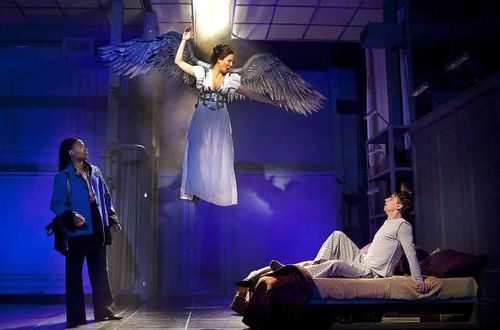
Billy Porter, Robin Weigert, and Christian Borle in "Angels in America"

5. Angels in America – Michael Greif’s revival of Tony Kushner’s play with extra-fine performances by Christian Borle, Zachary Quinto, Bill Heck, Robin Bartlett, and Robin Weigert

Danielle Skraastad, Susan Pourfar, Marin Ireland, Miriam F. Glover and Michael Chernus in "In The Wake"

6. In the Wake – Lisa Kron’s play (lynchpin of the Public Theater’s admirable political-theater season) with superlative performances by Michael Chernus and Deidre O’Connell
Alessandro Nivola and Karen Young in "A Lie of the Mind"

7. A Lie of the Mind – Ethan Hawke’s surprisingly beautiful re-imagining of Sam Shepard’s play, with a revelatory central performance by Alessandro Nivola

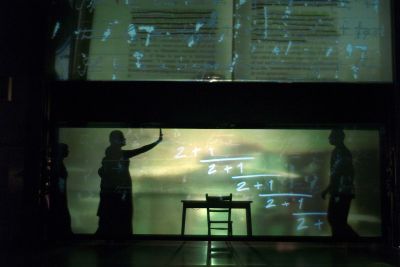
8. A Disappearing Number – fine smart new work from Complicite directed by Simon McBurney with a dazzling production design by Michael Levine

9. The Kid – the smart and tuneful musical adaptation of Dan Savage’s memoir with a good cast well-directed by Scott Elliott, most notably Christopher Sieber, Susan Blackwell, and Jeannine Frumess

Jeffrey Wright in "A Free Man of Color"

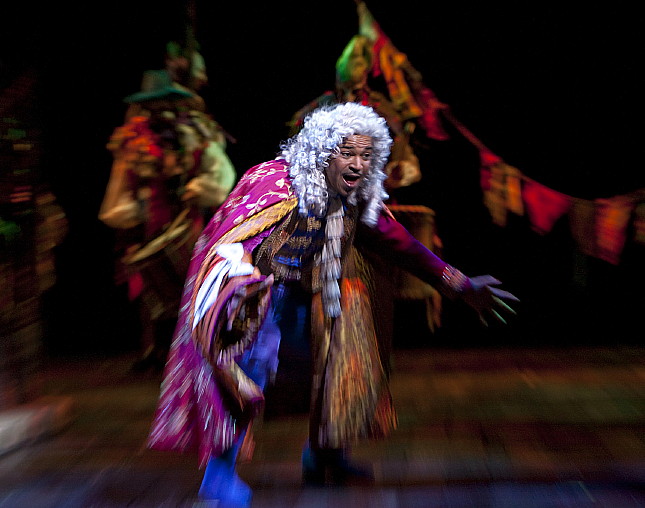
10. A Free Man of Color – John Guare’s ambitious stylized epic staged in high style by George C. Wolfe with a huge cast in which standouts included Jeffrey Wright, mos, and Veanne Cox

11. Another American: Asking and Telling – perfect timing for Marc Wolf (above) to bring back his Anna Deveare Smith-like solo performance surveying the topic of gays in the military

Zoe Kazan, Christopher Walken, and Anthony Mackie in "A Behanding in Spokane"

12. A Behanding in Spokane – Martin McDonagh’s hilarious new play with knockout performances by Christopher Walken and Sam Rockwell and a superbly seedy set by Scott Pask


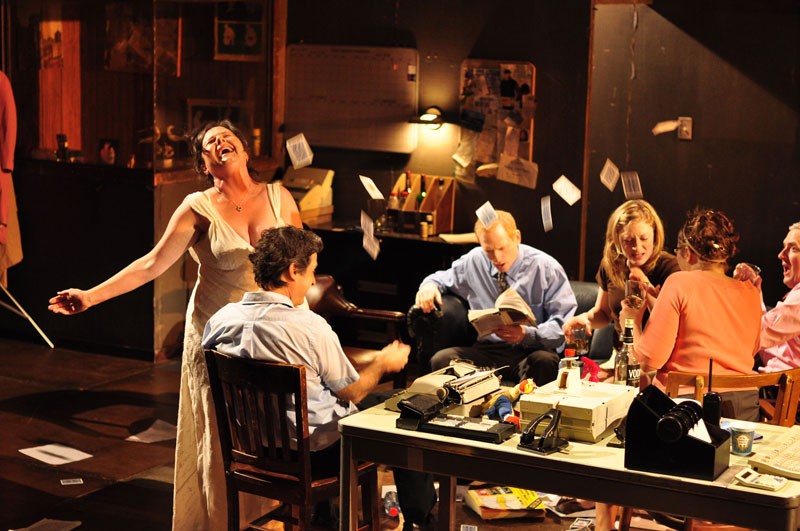
I’m not quite sure where to put three shows I’d seen before but were still high-water marks for 2010: Fela! (last year’s #1, which I saw twice again this year), Gatz (above, which made my top 10 in 2007), and the Wooster Group’s North Atlantic (the third revival, with a great new cast including Ari Fliakos, Kate Valk, Steve Cuiffo and Zachary Oberzan).

Miscellaneous highlights:

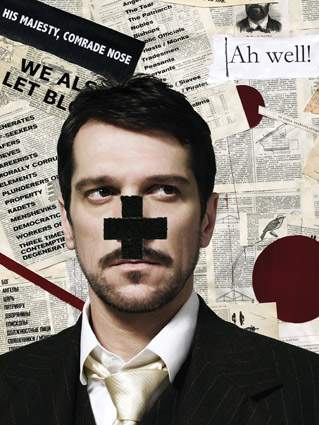
— William Kentridge’s dense and dazzling production of Shostakovich’s The Nose at the Metropolitan Opera and his equally theatrical retrospective at the Museum of Modern Art

— Norm Lewis singing “Being Alive” in Sondheim on Sondheim at the Roundabout

— Christine Jones’ set (above) and Michael Mayer’s direction for American Idiot
— Mark Rylance’s justly acclaimed performance in La Bete

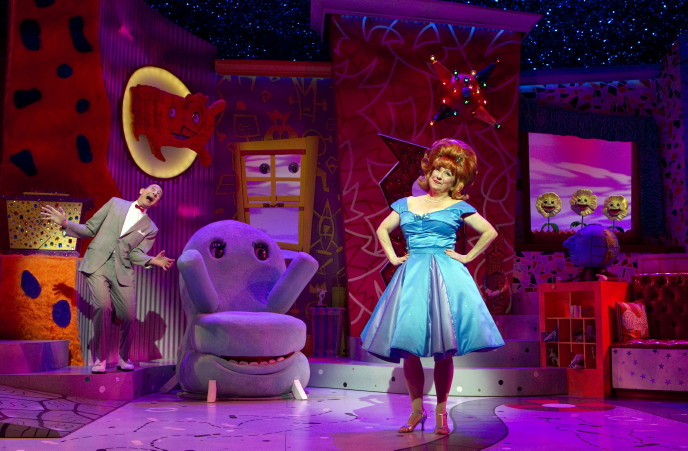
The Pee-Wee Herman Show on Broadway – sheer fun!

— Most Valuable Player (male): Scott Shepherd (above) for North Atlantic and Gatz

— Most Valuable Player (female): Bonnie Thunders, Gotham Girls Roller Derby (above)