Archive for February, 2013

Culture Vulture: February 2013

February 18, 2013

2/2-9:

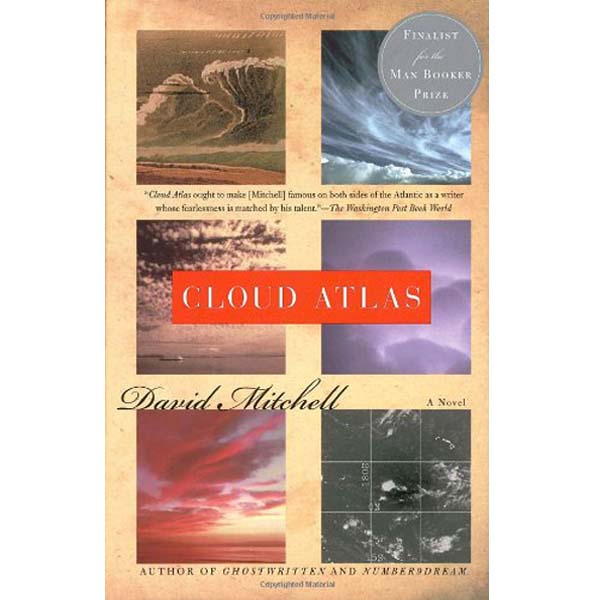
Books: during my week-long vacation in Vieques, I hunkered down with David Mitchell’s Cloud Atlas, a novel friends have been raving about for years. I wanted to read it before seeing the movie.
cloud-atlas-book-cover-01
Because six different stories travel back and forth in time, it takes a certain amount of concentration, perfect for lounging poolside in the sun in February. I liked the book and appreciated Mitchell’s clever narrative structure and imagination, though afterwards it occurred to me that almost all the stories boil down to one chase scene after another. I do look forward to seeing how it translates into a film.

DVD: the week in Vieques also gave me a chance to catch up with a bunch of screeners I’d borrowed from a movie-critic friend:

Brief Reunion – a good small psychological thriller, with a key performance by the great downtown stage actor Scott Shepherd (his first major role, I believe, and an excellent film debut — below with the movie’s central character, played by Joel de la Fuente);

brief reunion

Fairhaven – another small John Sayles-like movie about a bunch of post-collegiate friends drifting through their twenties. Curiously, an actress new to me – Alexie Gilmore – played the lead in both this and Brief Reunion;

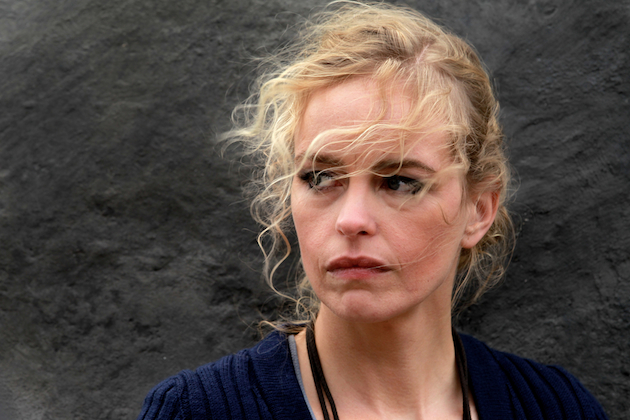
Barbara – really smart beautiful film set in East Germany before the wall came down, with an excellent performance in the title role by Nina Hoss, even though she looks quite a bit too glamorous to be playing a small-town doctor (you can’t help seeing her as a young Jeanne Moreau — see below);
BARBARA  Regie Christian Petzold
Marley – Kevin Macdonald’s documentary gives an impressive overview of Jamaican superstar Bob Marley’s short, eventful life, with a special emphasis on his extremely poor childhood. But there are lots of holes in the narratives, which is one disadvantage to the choice of relying exclusively on talking heads. There are important pieces of Marley’s story that certain people didn’t live to tell or are not willing to tell on camera;

Seven Psychopaths – I saw Martin McDonagh’s second film in the movie theater but it was interesting to watch it on DVD with a group of friends, one of whom bailed out after 15 minutes because he couldn’t handle the violence. Too bad, because the movie doubles back on itself, critiquing itself as it goes along. It’s McDonagh’s philosophical meditation on his simultaneous attraction to and revulsion against violent stories, with game comic performances by Colin Farrell, Christopher Walken, and the fearless Sam Rockwell;

Pitch Perfect – I ordered this from Netflix because Andy’s a capella singer friends recommended it, but after 15 minutes he insisted we take it off because its portrayal of college singing groups was so fake it was fingernails on the chalkboard;

Not Fade Away – David Chase’s debut as film director resonates as a highly autobiographical film about a kid who plays in a rock band in New Jersey just out of high school in the late ‘60s. That era was my childhood, too, and I loved it that all the musical references were spot-on. The movie is quirky and aggressively minor-key, with a key misstep having the main character’s younger sister provide a voiceover narration – we don’t know enough about her to trust her perspective, and it feels kinda tacked on to ward off criticism that the movie is too male-centered.

2.13.13:

TV: Girls. After watching Lena Dunham’s film Tiny Furniture a few weeks ago, I needed to satisfy my curiosity about her TV show. After two marathon evenings with the first season on DVD, I’m hooked. She’s really something – brave, quirky, real, and unafraid to expose herself, her neuroses, her imperfect body, and her generation’s peculiarly tortured dance around intimacy, romance, and casual sex. It’s a mistake to think of Girls only as the antithesis of Sex and the City just because there are four central female characters. Dunham clearly models herself on Woody Allen as writer/director/performer, with a big hit of Louis C.K. It helps to have Judd Apatow as fearless producer. The writing is pretty amazing, the dialogue is super-fast, I could barely keep up. I know we’re supposed to think that Hannah’s boyfriend Adam (played by Adam Driver, just out of Juillard

(he's on the phone with his sister)

(he’s on the phone with his sister)

with great big ears and a Marine’s washboard abs) is a dick because he pees on her in the shower and jerks off in front of her, but I think he’s an awesome boyfriend. I love any opportunity to watch Chris O’Dowd. And I love seeing David Mamet’s daughter Zosia play the super-young motormouth Shoshonah, especially the episode where she gets high at a party in Williamsburg. “I smoked crack?? Don’t tell my mother! Don’t even tell me!” One advantage to watching the show via Netflix is to gobble up the DVD extras — commentary on three different episodes and a hilarious and illuminating conversation between Dunham and Apatow. Oh, how I love hearing a successful Hollywood writer/director/producer say the word “butthole” aloud in casual conversation!

good person playbill2.16.13
Theater:
Good Person of Szechwan is another triumphant production by Melanie Joseph’s Foundry Theatre in collaboration with La Mama ETC. It’s one of Brecht’s essential texts, in which he repeatedly sets up genuine moral dilemmas – good people making bad choices and then trying to manage the consequences – and never gives definitive solutions, throwing back on the audience the responsibility to “Change the world, it needs it!” Lear DeBessonet’s lively production is Brechtian in the best sense: fun, funky, sly, surprising, shot through with music (performed live by a local skiffle band called the Lisps) and excellent comic performances. The title character is a prostitute, Shen Te, who does a kind deed for a trio of Diogenes-like gods passing through town looking for one good person. Her reward is enough money to start a little shop, which brings everyone in town to her doorstep for a handout. She’s too kind-hearted to say no, but she has enough sense to invent a male cousin, Shui Ta, who comes in and establishes order. This role is usually played by a woman who eventually dons male attire. One driving force in this production was the casting of Taylor Mac in the title role, who brings a whole other beautifully theatrical element to the gender-bending. Mac plays Shen Te with his customary bald pate and glittery eye shadow, in a red dress with hairy chest poking through (shout out to Charles Ludlam’s Camille); as Shui Ta, he wears a pinstripe suit, bowler hat, and stick-on handlebar mustache, sometimes changing in front of our eyes. (Clint Ramos’s costumes rock, as does Matt Saunders’s set, a study in the magic of cardboard.) The cast is full of downtown luminaries — Mia Katigbak, Annie Golden, and Vinnie Burrows as the gods, Lisa Kron in two contrasting roles – surrounded by a bunch of excellent game team players (I was especially impressed with David Turner as the improv-ready MC/water-seller, Kate Benson as Mrs. Shin, and Brooke Ishibashi and Darryl Winslow as utility players).
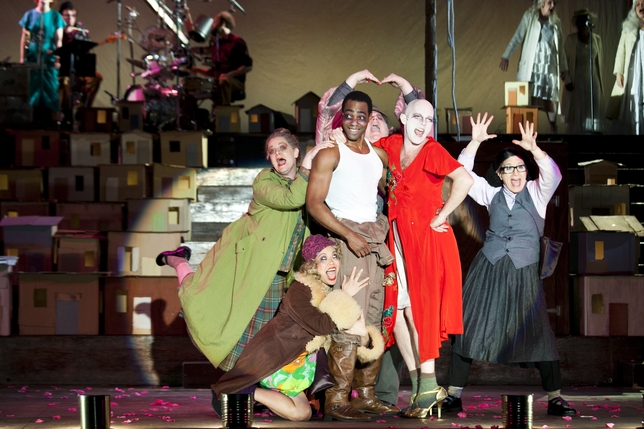
good person prodshot

The show got a rave review from Charles Isherwood in the New York Times, so the short run sold out quickly. Luckily, the Foundry added two matinees, which is how I got in. It was nice to see a heavy-duty downtown theater crowd in the audience: Jennifer Miller, Jessica Hagedorn, Mary Louise Wilson, Mac Wellman, Marc Robinson and Erika Rundle. We were handed programs leaving the theater, and my appreciation for the production extended to reading the program notes later. In the spirit of Brecht’s frank matter-of-factness about economics, the program includes a detailed production budget – first time I’ve ever seen that! Melanie Joseph is an amazing producer. Also, this was one of the rare productions where I found myself wondering who the dramaturg was who wrangled this translation (by John Willett) and helped the director keep everything fresh — the answer is Anne Erbe. Good work, Anne!

good person budget

2.17.13

Film: I guess because I once wrote an admiring article about Christopher Shinn’s first produced play Four, I got multiple invitations to the screening of the film version at BAM’s Rose Cinema, as part of the 3rd Annual New Voices in Black Cinema Festival, from the first-time director Joshua Sanchez and the producer Allen Frame (an old friend and associate from Soho News days).  Four tells two parallel stories – on a steamy Fourth of July night, a middle-aged black man named Joe hooks up with June, a white teenaged boy he met online, and his daughter Abigayle slips out from taking care of her sickly mother for a tryst with Dexter, a jivey jock who wishes he were black. The play is a yearning young man’s tale about that time (those times) in your life when people keep asking “What do you want? Where do you want to go?” and the only honest answer is a desolate howl of “I don’t knoooooooooow!” The movie captures all that yearning and awkwardness, with an especially good understated performance by Wendell Pierce in the trickiest part of Joe, the father. The movie felt a little slower and more ponderous than it needed to be. And I have strong memories of the original stage production, in which Dexter was played by a skinny white redhead; E. J. Bonilla in the role doesn’t really read as white, so his wannabe status is muted. Those are small points, though. It’s a nervy little art film that has the courage to zero in on a couple of heated pockets of psycho-sexual ambivalence.

Four-Joshua-Sanchez


Quote of the day: MATING HABITS

February 18, 2013

MATING HABITS

A number of articles have been written that tried to attribute promiscuity or adultery in men to a brain disorder. I find this questionable for a number of reasons.

First, it’s worrying to me that a group of psychiatrists is trying to determine how much sexual activity and how many encounters we can want or fantasize about before we’re considered “mentally ill.” Given the embarrassing history of the DSM revisions and all the shoddy science informing them, why should we trust the APA to dictate yet another norm to us, much less accept its judgment about something so personal and intimate? People have markedly different appetites for sexual experiences. I’m uncomfortable with the idea that the APA would determine implicit guidelines, even quotas, for sexual activity, with a view to pathologizing behavior that is, in its estimation, “excessive.”

Even if you were in favor of creating such a disorder should the parameters for young adults be the same as for retirees with, most likely, much lower sex drives? Would the standard for “excessive” sexual activity be identical for a newly formed relationship and one that’s lasted decades? Why should we see a man’s cheating on his wife with multiple women as a result of brain chemistry rather than, say, marital unhappiness or personal recklessness? Personally I think expecting lifelong fidelity to one partner may be asking too much of certain people who are ill-suited to it, or who simply don’t believe monogamy is the best way to achieve emotional and sexual happiness. That’s surely up to them, isn’t it? Yet there’s an expectation, even a kind of demand, in our culture that one person will meet all of our needs – emotional and sexual. That can happen, and it’s great when it satisfies both parties, but those choices don’t work for everyone, and an organization seeking to pathologize “excessive” sexual activity needs to recognize that. We need broader public discussion of this complex issue rather than the kind of psychiatric judgment and ritualized shaming that goes on right now for those who prefer to remain non-monogamous. Good for them if that’s what they want.

— Christopher Lane, interviewed in The Sun

Lane-Chris

Culture Vulture: January 2013

February 18, 2013

1.29.13 –

Theater: Nature Theater of Oklahoma, founded by Pavol Liska and Kelly Cooper, is definitely one of the most compelling downtown theater ensembles these days. I saw their first two productions (a very condensed Three Sisters at CSC and the four-hour No Dice, produced by Soho Rep), and I find their mission statement extremely beguiling. “NTOK has been devoted to making the work we don’t know how to make, putting ourselves in impossible situations, and working from out of our own ignorance and unease. We strive to create an unsettling live situation that demands total presence from everyone in the room. We use the readymade material around us, found space, overheard speech, and observed gesture, and through extreme formal manipulation, and superhuman effort, we affect in our work a shift in the perception of everyday reality that extends beyond the site of performance and into the world in which we live.”

life and times

I knew I didn’t have the stamina for all ten hours of their most recent four-part show, Life and Times, produced at the Public Theater’s Under the Radar Festival in conjunction with Soho Rep, but I thought I could deal with at least the four hours of Episode 1. Alas, I only made it through half. I saw what they were doing – got the Gertrude Steinian continuous present, locating the world in mundane speech (the text is based on a lengthy interview with a woman telling the story of her extremely ordinary life in great excruciating detail); got the Brechtian staging; got the Jan Fabre-like concept of putting performers through a boot-camp-like physical ordeal. But setting the banal text to music – every ah, um, you know – was deadly.

Restaurant: Decamping at intermission provided the occasion to check out Aroma Wine Bar around the corner on East Fourth Street, where I had a delicious bowl of unusual pasta (strascinati with wild mushroom sofritto and spicy lamb sausage) and a glass or two of a rugged Pugliese red wine new to me.

puglia wine
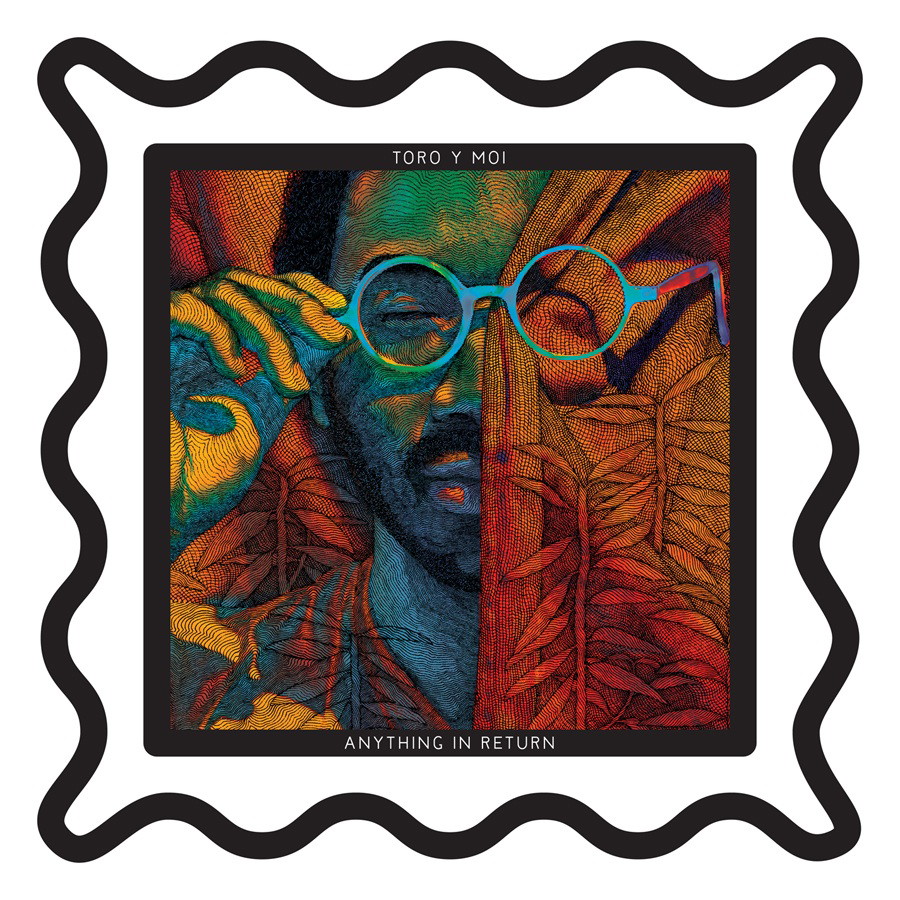
Music: While I was in the neighborhood, I exercised my nostalgia for record stores and stopped into Other Music, still going strong after all these years, and found myself buying the latest album by Toro y Moi (aka Chaz Bundick), Anything in Return. Fun, sonically rich pop tracks with the kind of lovely vocal harmonies that always get labeled Brian Wilson-esque. The lyrics don’t stand up to close scrutiny but I can attest the album supplies an excellent soundtrack for getting stoned and having sex.
AIR_cover1.30.13

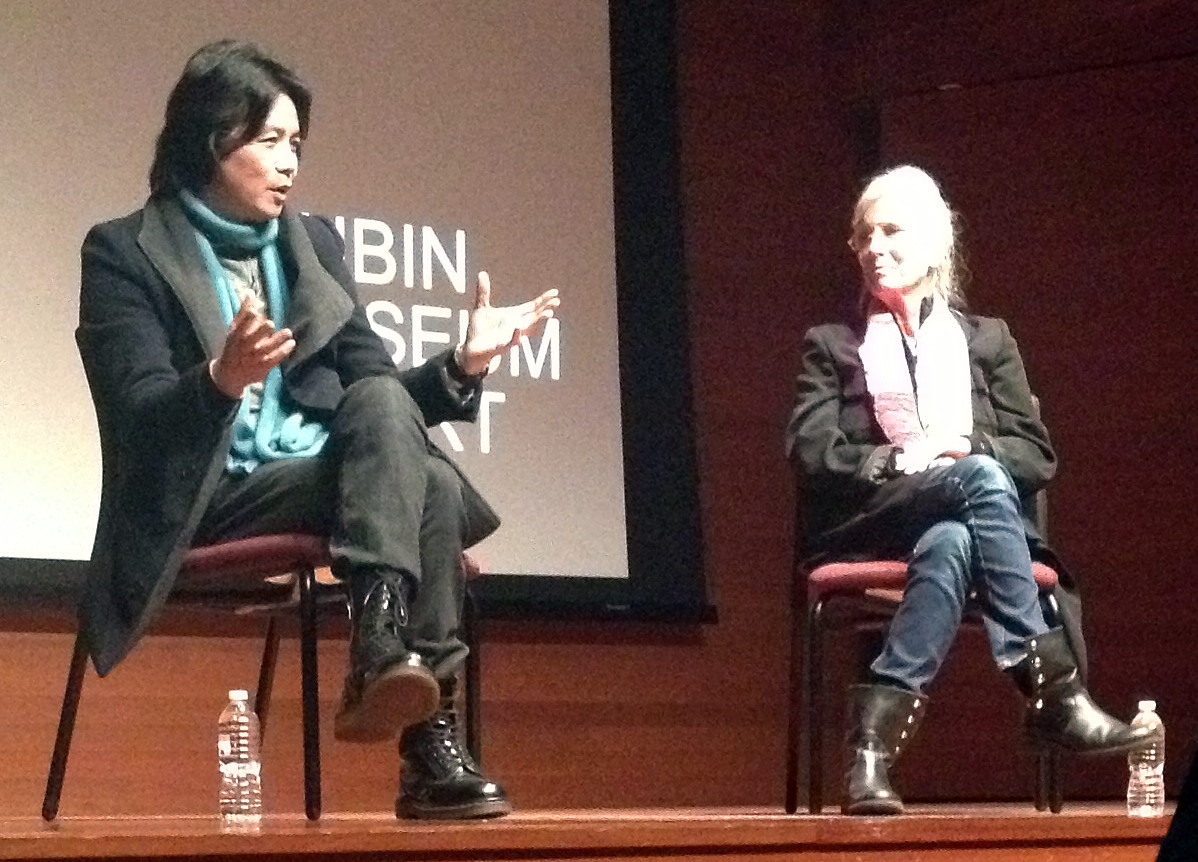
Film: The Rubin Museum presented a special screening of Sherwood Hu’s film adaptation of Hamlet, Prince of the Himalayas. I took a special interest because the Rubin’s whip-smart curator Tim McHenry booked the Wooster Group’s Elizabeth LeCompte to have a conversation with the director after the screening. I had the thrill of sitting between Hu and LeCompte (below), who was there with her own Hamlet, Scott Shepherd. The movie was fantastic, provocative and revelatory – Hu drew out interpretations of the story no one else ever has. Most notably: the reason Gertrude married Claudius so quickly after her husband’s death is that they’d been lovers before Gertrude’s marriage, and Claudius killed him because he was abusive to Gertrude. And Ophelia dies in the river (here a lake) giving birth to Hamlet’s son, who turns out to the title character. Set in ancient Tibet and shot on location mostly outdoors, the film is ravishingly beautiful and very well-performed. In the interview afterwards, though, the director came off badly. LeCompte kept asking him excellent questions, and he kept giving generic, bland blah-blah-blah answers; she was very persistent and kept asking him again, to no avail. And of course in her modest but unerring way, she noted that the child might have received a very different reception had it been a girl.

hu and lecompte1.31.13

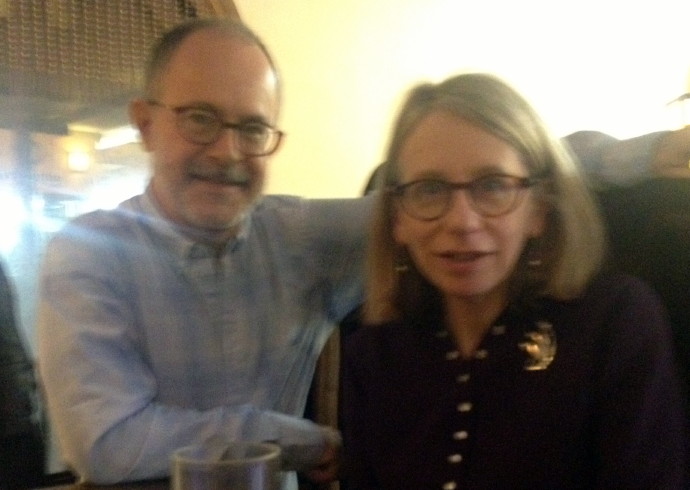
Restaurant: I had a lovely dinner with New Yorker cartoonist Roz Chast, whom I’ve known since I did a cover story for Soho News about her in 1980. I was happy to turn her on to one of my favorite restaurants in my neighborhood, Radiance Tea House on West 55th Street, with its yummy dumplings, rice bowls, and spectacular menu of Chinese teas.

me and roz

Theater: I’d never seen or heard any version of Fiorello! so was delighted to accept a friend’s invitation to the Encores revival at City Center. Unfortunately, we arrived a little before 8 and the show had started at 7:30, so we missed a few scenes. For all its reputation as Pulitzer Prize-winning musical, I found Jerome Weidman and George Abbott’s book pretty thin and the Bock and Harnick score only medium. Danny Rutigliano made a strong impression as the Little Flower hisself, Kate Baldwin did a lovely rendition of the sweetest ballad (“When Did I Fall in Love?”), and Erin Dilly and Jenn Gambatese stood out among the rest of the ensemble.

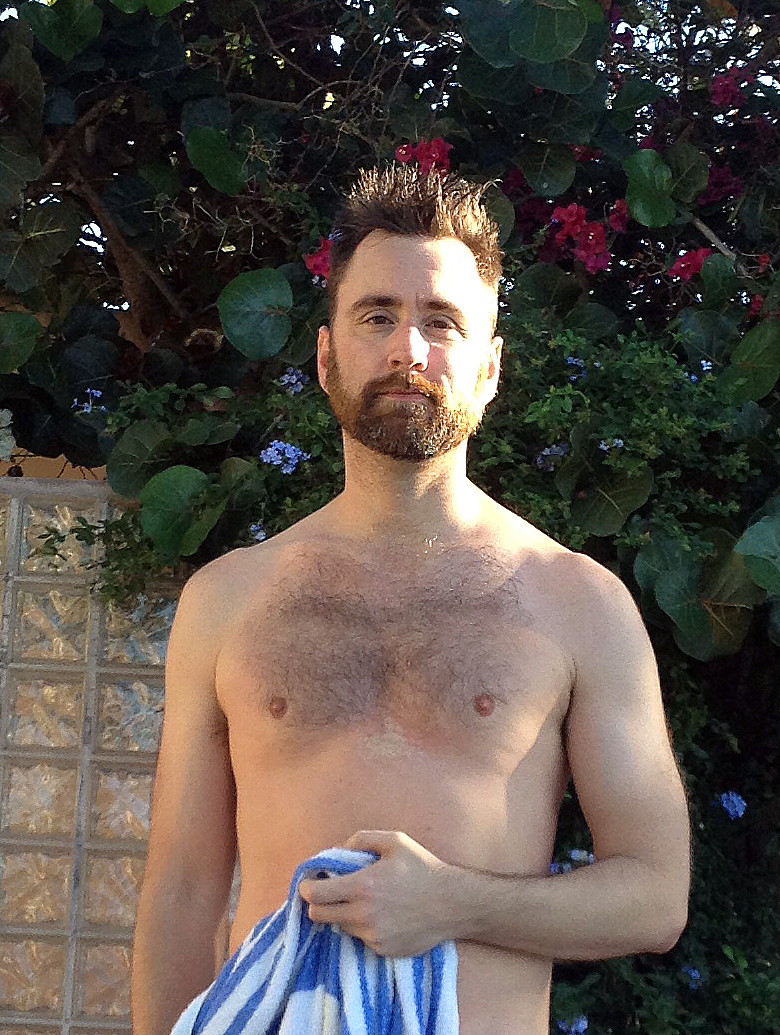
Photo diary: Vieques 2

February 11, 2013

2-7 bluesky self-portrait

As previously mentioned, the week began with fire just down the hill that blazed all afternoon

As previously mentioned, the week began with fire just down the hill that blazed all afternoon

here's the view from the roof of the house in the previous shot, overlooking our friends Rick (above) and Peter's house -- the fire went right up to their property line

here’s the view from the roof of the house in the previous shot, overlooking our friends Rick (above) and Peter’s house — the fire went right up to their property line

this field has burned numerous times -- luckily, no casualties to the nearby houses -- even the horses survived

this field has burned numerous times — luckily, no casualties to the nearby houses — even the horses survived

2-3 hummingbird

Andy by the pool

Andy by the pool

front door at Vista Dos Mares

front door at Vista Dos Mares

Eric (above right) came for cocktails with his partner Greg -- turns out his college best friend is the next-door neighbor of Andy Holtzman (above left)

Eric (above right) came for cocktails with his partner Greg — turns out his college best friend is the next-door neighbor of Andy Holtzman (above left)

dinner at Villa Venti -- aka the private home of Greg and Alex, who live in a classic Hicks house

dinner at Villa Venti — aka the private home of Greg and Alex, who live in a classic Hicks house

2-8 bourganvillea

it was hard to tear ourselves away from this

it was hard to tear ourselves away from this

what a difference a day makes/24 little hours...

what a difference a day makes/24 little hours…

In this week’s New Yorker

February 7, 2013

photo
Some good stuff:

* Ian Frazier on the aftermath of Hurricane Sandy — a story called “The Toll,” with Frazier’s characteristic love of lists and place names;

* Susan Orlean’s Onward and Upward with the Arts piece on Brendan O’Connell, who paints pictures based on photos he’s taken at Walmart stores;

* Patrick Radden Keefe’s “A Loaded Gun,” a long engrossing Reporter at Large story about Amy Bishop, one of the rare women who suddenly snapped and killed a bunch of people — colleagues at the school in Alabama where she was a professor — with a gun she had in her purse; and

* Zadie Smith’s fiction piece, “The Embassy of Cambodia.”

Plus, an abundance of hilarious cartoons…

photo(1)
photo

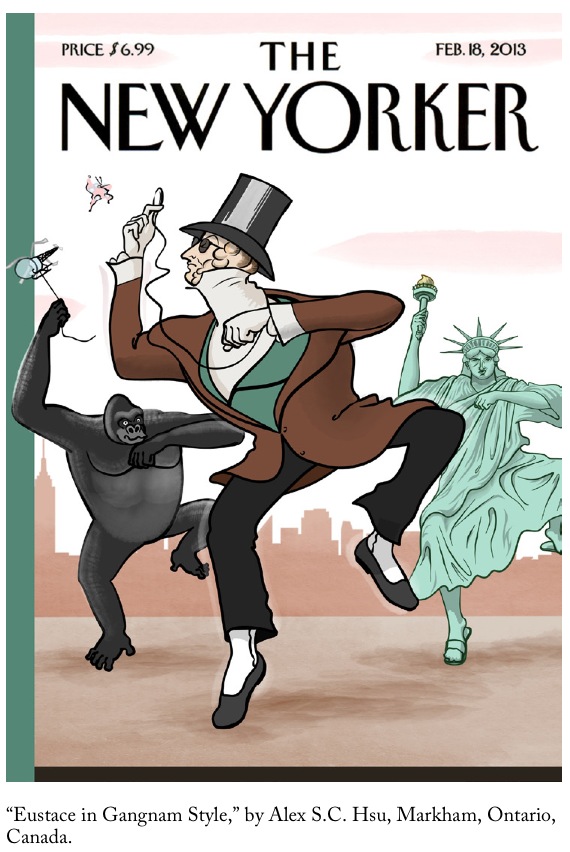
…and since this is the anniversary issue, what has become a tradition of sharing some of the near-winners in the competition for cover illustration. This is my favorite runner-up:

photo(2)