Posts Tagged ‘sam shepard’

Performance diary: SHUN-KIN and SAVAGE/LOVE

July 14, 2013

7. 13.13 — Shun-kin at the Lincoln Center Festival, co-produced by Tokyo’s Setagaya Public Theatre with London’s Complicite under the direction of Simon McBurney, has the theatrical stretch and narrative multidimensionality we’ve come to expect from McBurney, best-known in New York for Mnemonic (2001) and A Disappearing Number (2010). Never too many layers in a Complicite production. McBurney’s leaping-off point for this collaboration with a Japanese theater company was his admiration for the writing of Jun’ichiro Tanizaki  (1886-1965), especially his 1933 essay “In Praise of Shadows.” Finding it difficult to create a theater piece from an essay on Japanese aesthetics, he shifted his attention to Tanizaki’s story “A Portrait of Shunkin,” which purports to tell the true story of a blind female shamisen master and her intricate, erotic, even kinky relationship with her servant/pupil/lover Sasuke.

shun-kin by krulwich
Actually, Tanizaki’s story is a sort of faux-documentary – a little like Borges, he enjoyed creating fictions that read like factual accounts. Perfect cue for McBurney to proliferate multiple narrative layers – the show opens with a prologue in which the longtime Peter Brook actor Yoshi Oida telling a personal story about his relationship to the material, and the play is framed as the recording of an audiobook or radio version of the story performed in a sound studio by a narrator (Ryoko Tateishi). Tanizaki’s story itself begins and ends with the author searching in a cemetery for the gravesites of Shunkin and Sasuke, and the chronicle is staged in classical Japanese style with the main character played as a bunraku puppet (wittily, after two child puppets have grown up, the adult Shunkin is played by an actress still manipulated by two black-clad puppeteers), while all the music the characters play is written and performed (exquisitely) by a master musician, Honjoh Hidetaro, who sits on his own separate platform. Stitching all these pieces together is the audience’s job and our pleasure – with of course the added layer of English surtitles projected on a screen unusually high up above the stage. It’s a beautiful and elegantly sculpted piece of theater, though not nearly as spectacular or affecting as Mnemonic or A Disappearing Number. You’re not really aware of how hushed and dimly lit the staging is until the final moments of the show, when the rear curtain rises to shine blazing white light into the audience, coupled with a roar of contemporary ambient sound – the roar of contemporary urban life.

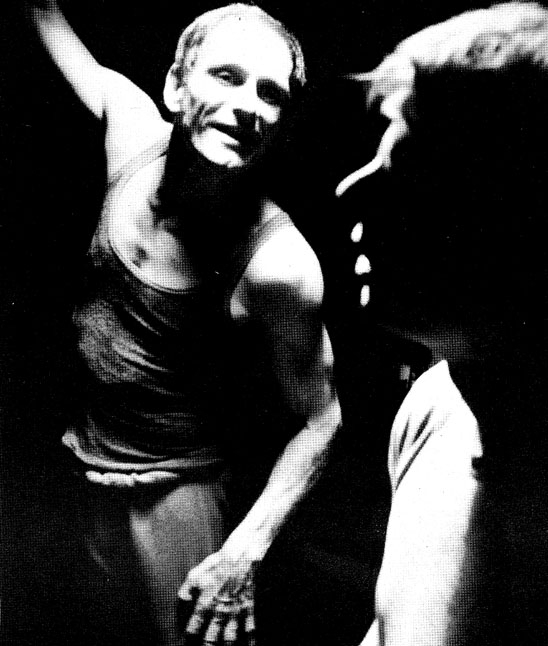
One of the major pleasures of the production is reading the program notes, especially McBurney’s essay, “Searching for Shun-kin,” which begins with him in a portable toilet: “In Japan, sometimes it’s hard to know what you are looking at. I gaze at the symbols beside me, my underwear still around my ankles…” Oh, that Simon McBurney! He’s very comfortable in his body. (He played the central role in Mnemonic, largely in the nude, see below.) You can read the whole essay and all the program notes online here.

mcburney

7.14.13 — My friend George Russell has been working for several months on a production of Sam Shepard and Joseph Chaikin’s Savage/Love with his company De Facto Dance. I’ve been consulting with George about the production, so I went to the first of three performances at HERE and was pleased to note that the program credits me as dramaturgy consultant, along with Wayne Maugans, a longtime Chaikin actor who also gives a strong performance in the show. It’s an absolute hybrid of dance and theater, an unusual but not crazy approach to the open-ended poetic text, originally performed as a solo by Chaikin.

7-14 savage love

7-14 savage love 2

7-14 savage love program

Theater review: Sam Shepard’s HEARTLESS

September 23, 2012


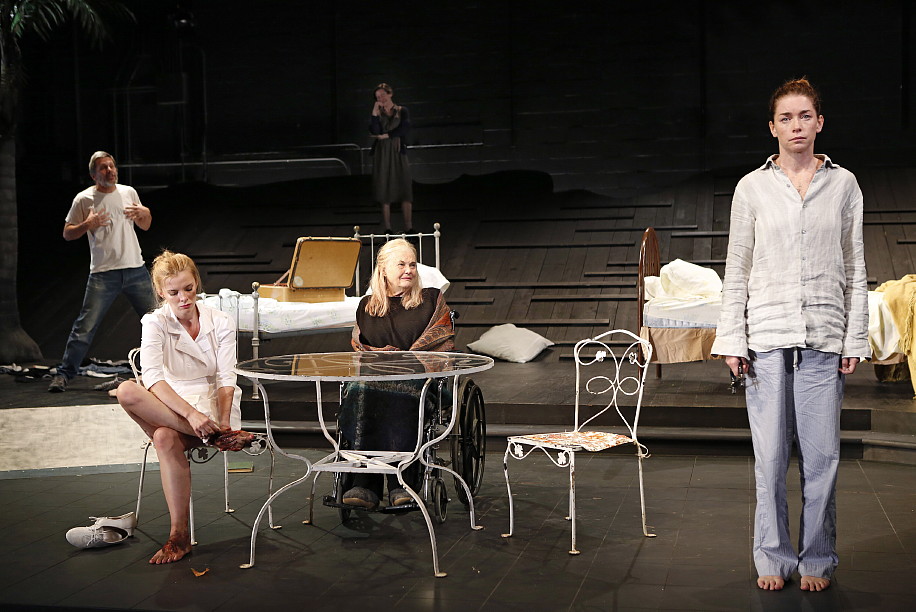
My (somewhat belated) review of Sam Shepard’s new play Heartless at Signature Theater, featuring a terrific cast headed by Lois Smith (above center), has just been posted on CultureVulture.net. Check it out here and let me know what you think. It’s quite an unusual play for Shepard, harkening back to his early, very wild and free plays — not to everybody’s taste but definitely to mine. The show runs only one more week, so if you’re inclined to go, don’t wait.

From the deep archives: Performance Diary 9/2/84

June 13, 2012

September 2 – Last night Stephen and I went to see Jeff Weiss at the Performing Garage. Harry Kondoleon joined us, along with Patricia Benoit and her German boyfriend Mark. I gave Harry a tape I’d just finished making for him with many songs he’d requested (Sheila E’s “The Glamorous Life,” Cyndi Lauper’s “She-Bop,” “99 ½,” etc. – he ever so casually asked for things to be in a certain order, which I always take to be firm requests, Harry knows exactly the way he wants things but is a little embarrassed by the force of his will and tries to disguise or downplay it). The running refrain on the tape is Bette Davis saying “She liked it,” from Baby Jane. I called the tape “Labor Day Request Concert.” Harry told me that once he was listening to one of my tapes are rehearsal for The Fairy Garden and John Glover grabbed the Walkman and said, “What are you listening to?” It was just then that the tape was going from the Butthole Surfers (“There’s a time to shit and a time to pray…”) to Frank Sinatra singing with children. John Glover gave it back with a look of horror – Harry was secretly glad to counter Glover’s aggressiveness with something shocking, but he realized the weirdness of him sitting in rehearsal placidly listening to these insane juxtapositions.

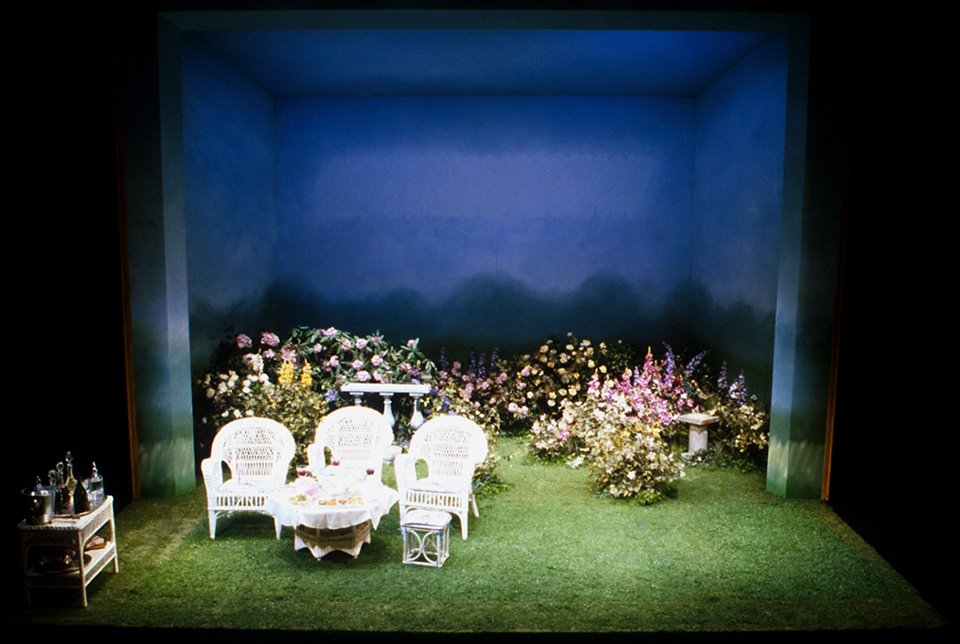
Andy Jackness’s set for Harry Kondoleon’s play THE FAIRY GARDEN at the Second Stage Theatre

Jeff Weiss’s show was pretty crazy, too – another version of And That’s How the Rent Gets Paid, this time acted out by a full cast (the first time we saw this, he did all the parts himself – I remember that night vividly, also at the Garage, Tom Waits was there looking autistic), including several Wooster Group people, plus a bunch of really hunky actors, including an amazingly tall (possibly seven-foot) actor named Sturgis Warner who made me dizzy just to look at him, gorgeous, muscular, handsome in a Peter Evans sort of way. The show was a sort of detective caper, with Ron Vawter as a detective tracking down the Finnish gymnast who’s been killing people – of course it’s Connie Gerhardt (Jeff Weiss) imitating a Finnish gymnast. The sick thing about the story is that everyone starts imitating Connie’s pickup lines – the detective acts them out with his teenage songs in grab-ass sessions in the garage. (More kissing, wrestling, and groping – all gay – in this show that any I can remember.) The underlying story was the pathology and tragedy of real actors, with so many personalities trapped inside them – also the personal tragedy for Jeff Weiss of aging, of having worshiped youthful physique and maintaining it unnaturally into his 50s, now crumbling and sweating out time. The most moving, chilling, also bathetic moment was a scene on a bus after a wrestling match when Connie is thinking aloud to a young wrestler (actually his own son, long ago conceived with a lesbian so they could get welfare, named Narcissus) and begging him to run away with him and love him.

Jeff Weiss and Sturgis Warner

At intermission we stood out on the street. A rather bizarre homely straight couple stood against the wall making out and playfully imitating the pickup lines from the play. Three people passing by picked their way through the crowd on the sidewalk and one guy said, “This is like theater in the live.” We chatted a little with Patrick Merla, who was in the audience. He has crossed eyes, very disconcerting to deal with, and an incredibly queeny voice but in some ways he looks very charismatic with his leonine mane and grand manner. While talking to us, he waved at someone and imperiously called, “Come over here.” It was Keith McDermott, a former boyfriend of Edmund White’s who was in the show.

Jeff Weiss reminded me a little of James Leo Herlihy, whom I finally met when Stephen and I went to dinner with him, Joe Frazier, and John Tveit (Joe’s organist friend) in San Francisco. I was surprised to find that I liked Jamie a lot – perhaps because unlike most famous people he didn’t simply grab center stage and hold forth – he was very solicitous and personable. We quickly got into a conversation about altering sex habits to avoid AIDS. He confided that what he loved doing more than anything in the world was sucking cocks, and he’d decided not to do it so often and not to swallow cum anymore. He said whenever the possibility of sex arises, he always finds an excuse to go to the bathroom or be alone for a few minutes to ask himself if this encounter is really worth it – worth the emotional effort as well as possible health risk, or is it just a meaningless impulse – and he finds himself deciding against it more often than in the past. He recently sat by and watched his mother died from cancer, and his roommate/boyfriend in LA has AIDS.

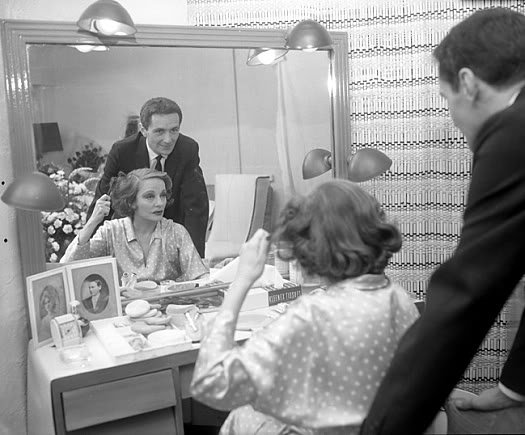
Tallulah Bankhead and James Leo Herlihy

Jamie had a little notebook which he kept taking out to jot down felicitous phrases, even though Stephen says he’s given up writing. He was very impressed (and a little envious) to hear that I’d written my Shepard biography in six weeks while recovering from hepatitis. He loves Sam Shepard, loves movie-star bios. I told him the story Bill Kleb told me about Shepard peeing in a prop toilet during class, and Jamie insisted that I put it in the book – otherwise I would be doing a disservice. “This book is in part a love letter,” he said, “telling Sam Shepard you’re fascinating, you’re talented, you’re pretty, and so on. But it’s also a mirror – you have to say ‘And then there’s this!’ Stars want you to do that.” He said it’s demeaning to be “nice” in one’s writing. He quoted Tolstoy saying “The two things a writer needs are a dirty mind and a good sense of gossip.” He was very encouraging and flirtatious without being overbearing. He described his ass as looking like “a pair of used tea bags.” His second play Crazy October, which he ended up directing, starred Tallulah Bankhead, Estelle Winwood, and Joan Blondell – how unimaginable!

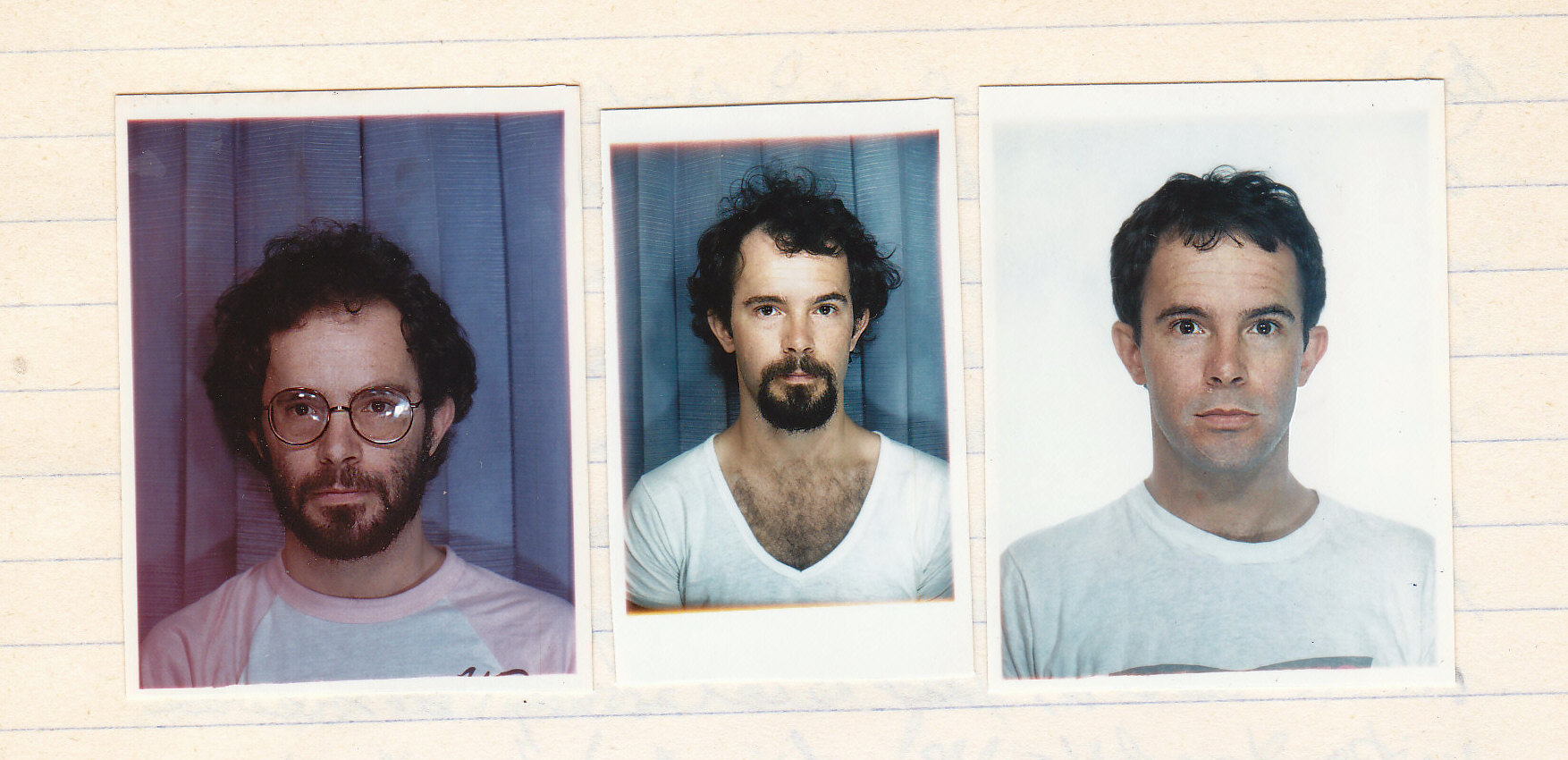
Three pictures of me taken within the space of three weeks in 1984

Events: PARIS, TEXAS at the Rubin Museum next Friday, February 24

February 17, 2012

The Rubin Museum of Art, one of New York City’s finest small museums, specializes in Himalayan arts and culture, and its multimedia programming, curated by Tim McHenry, is extraordinarily inventive and delicious. Every Friday night there’s a Cabaret Cinema, movie night with cocktails. Next Friday, February 24, the series will feature Wim Wenders’ 1984 Paris, Texas, whose screenplay came from Sam Shepard. As a Shepard scholar, I’ve been asked to introduce the film (i.e., talk about the film beforehand for nine minutes — and ONLY nine!). Feel free to join me for the occasion.


Quote of the day: LEARN

June 1, 2010

LEARN

“Things You Learn from Others”

How to stop tucking your T-shirt into your underpants. How to drink from a cup without drooling. How to eat with a fork and not your hands. How to dry yourself off inside the shower so you don’t get the floor wet. How to tie a half-hitch. How to make sure the disc plow overlaps the tire tread. How to tell when a colt is back at the knee. How to drive with one eye shut when you’re skunk drunk. How to sleep all night in a ditch. How to sharpen a knife with a stone. How to gut a deer. How to read the flight of hawks and owls. How to release a greyhound in tall grass when you see the seed heads move in a silken wave. How to blindfold a spooky horse with burlap. How to do nothing but listen when someone wants to do nothing but talk.

What you don’t learn, though, is how to protect others from your own manifestations of cruelty and malice which you’ve learned so insidiously through skin and blood and find impossible to shake free from no matter how much you’d like to be thought of as a decent, wholesome person.

— Sam Shepard