The Beautiful Lady – Anne Bogart’s triumphant staging at La Mama brought Elizabeth Swados and Paul Schmidt’s 1984 cabaret musical about the Russian revolutionary poets to fiery life with across-the-board fine performances.
S T A R R Busby in The Beautiful Lady
2. Stereophonic – David Adjmi’s play meticulously reproduced the creativity and tension of life in a recording studio, focusing on a Fleetwood Mac-like band, with an excellent cast who play and sing songs by Will Butler (of Arcade Fire) beautifully directed by Daniel Aukin on David Zinn’s astonishing set.
Eli Gelb and Andrew R. Butler and the cast of Stereophonic
3. Buena Vista Social Club – This thrilling new musical at Atlantic Theater Company, developed and directed by Saheem Ali, wove together the histories of five Cuban musicians featured on the 1996 album (and the Wim Wenders documentary). The hot band, excellent singers, and exciting dancers combined to blast the audience with joy.
4. Infinite Life – Annie Baker’s characteristically spare and profound play about pain, time, and health used six superb actors masterfully directed by James Macdonald to cast a spell at Atlantic Theatre Company.
Kristine Nielsen, Brenda Pressley, Christina Kirk, Marylouise Burke, and Mia Katigbak in Infinite Life
5. Jaja’s African Hair Braiding – playwright Jocelyn Bioh knows her characters (the staff and clientele of a Harlem hair salon) and director Whitney White knows her audience – together with an exciting and hilarious cast, they blew the roof off of the Samuel Friedman Theatre on another dazzling David Zinn set.
Lakisha May (in chair) and Nana Mensah in JaJa’s African Hair Braiding
6. Sad Boys in Harpyland — Alexandra Tatarsky’s demonic cabaret/existential clownshow transformed the tiny upstairs space at Playwrights Horizons into a hilarious, theatrical, and dangerous hellscape, abetted by sound generator Shane Riley and director Irish McCloughan.
7. True West – I’ve seen many stagings of Sam Shepard’s famous play but this one stood out for its innovative all-Asian cast directed by Mei Ann Teo at People’s Light in Pennsylvania.
8. Days of Wine and Roses – Brian d’Arcy James and Kelli O’Hara dived deep into this intense chamber opera about a couple’s descent into alcoholism by Adam Guettel and Craig Lucas, directed by Michael Greif at Atlantic Theater Company.
9. Helen. – Violeta Picayo’s production at La Mama of Caitlin George’s play for En Garde Arts rang many surprising twists on familiar figures from Greek mythology.
10. (tie) Ecosex and the City – Annie Sprinkle and Beth Stephens created a luscious three-day festival of panels, films, and live shenanigans at Performance Space New York “exploring the earth as lover.”
Bob Dylan’s Philosophy of Modern Song – always-inventive filmmaker Michael Almereyda staged this one-night-only tribute to Dylan’s quirky survey of 20th century pop led by the great Meshell Ndegeocello and her band with the legendary André De Shields as magisterial master of ceremonies.
Best Music: boygenius, The Record; Romy, Midair; Everything but the Girl, Fuse; the National, First Two Pages of Frankenstein; Fred again… Tiny Desk Concert
Best TV:The Bear (great cast of rising stars – Jeremy Alan White, Ayo Edebiri, Ebon Moss-Bachrach, Liza Colon-Zayas – and phenomenal guest stars like Jamie Lee Curtis, below), Somebody Somewhere, Reservation Dogs.
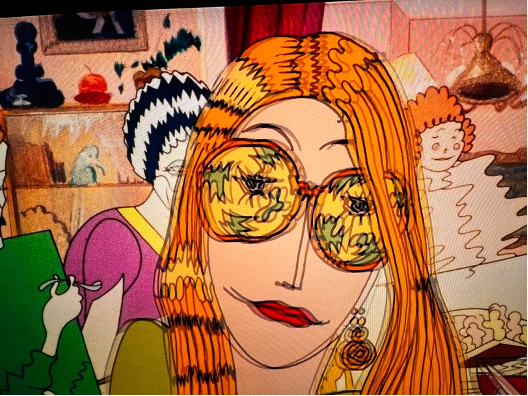
Best Films: I didn’t see a lot of blockbusters. Barbie, of course, and Oppenheimer, but neither of them blew me away as much as the wildly underrated Spider-Man: Across the Spider-Verse. I admired documentaries galore: The Disappearance of Shere Hite, All the Beauty and the Bloodshed, Navalny, Leaning into the Wind – Andy Goldsworthy, 32 Sounds.But my movie-watching this year largely revolved around my MUBI subscription, which got me to see tons of quirky vintage foreign films (the 1980 Hungarian animated feature Bubble Bath, below) and fascinating indie gems I otherwise would have missed, many of them international films directed by women. Some favorites: Rotting in the Sun, Kokomo City, The Five Devils, The Sweet East, Ava, Fremont, Amanda, Joyland, Tori and Lokita.
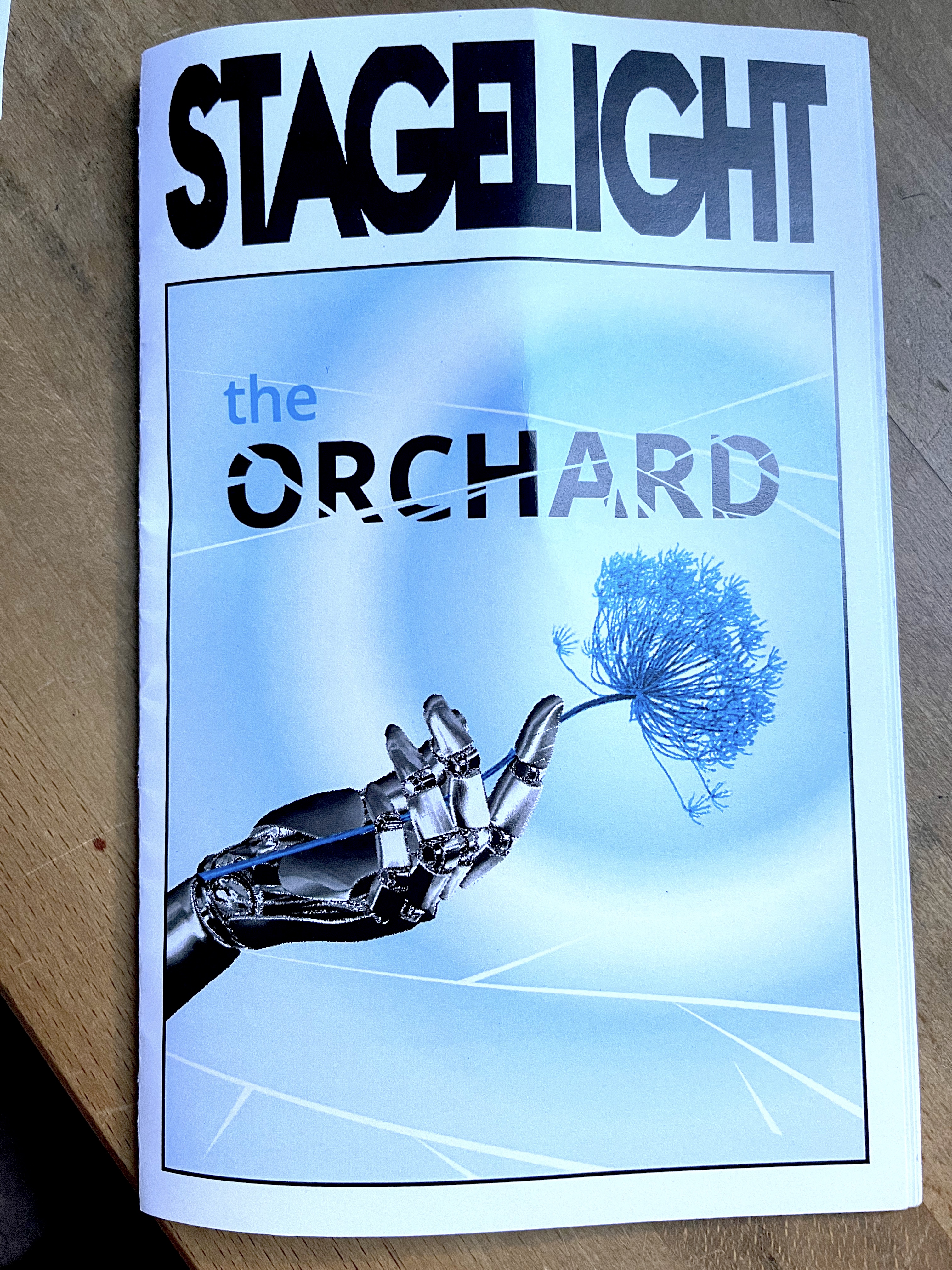
Produced under the auspices of the annual Russian-flavored Cherry Orchard Festival in association with a few other producers, The Orchard is an extremely ambitious, experimental adaptation of Chekhov’s The Cherry Orchard conceived and directed by Igor Golyak with a whole raft of crucial collaborators. How often do you see these credits on the title page of a playbill: Emerging Technologies, Robotics Design, Interactivity Design, Virtual Sound Design? The show was devised to be experienced in two ways, live onstage at BAC and online, accessible from anywhere worldwide but timed so that you’re exploring online at the same time as a live performance. I haven’t done the online experience (yet), but I attended the live performance that New York Times critic Laura Collins-Hughes watched online (after seeing the matinee live), and I had a very different experience than she did.
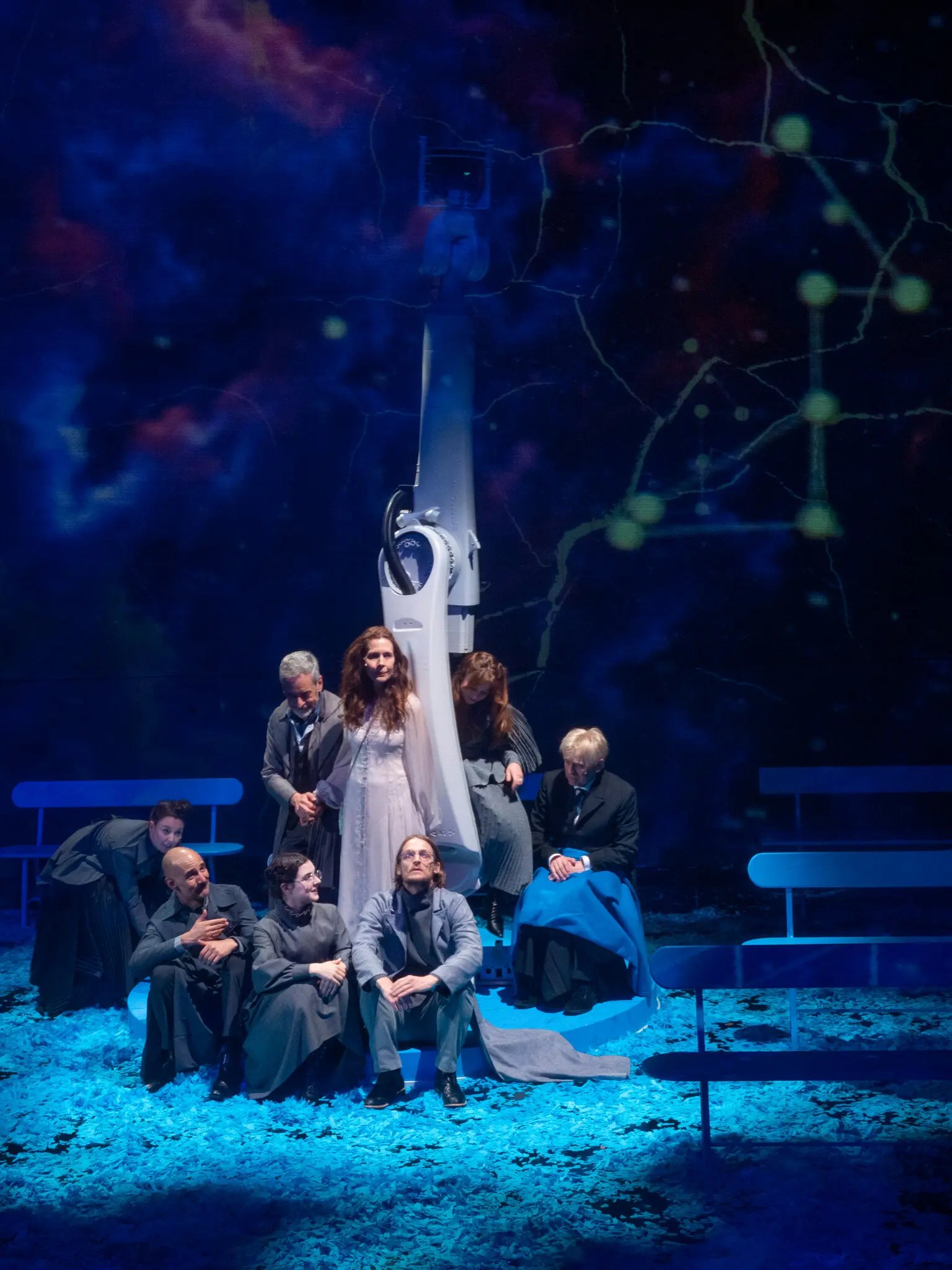
I can’t imagine anyone seeing this show who wasn’t familiar with Chekhov’s play; otherwise, they’d be completely lost. Nothing is straightforward. The stage space is behind a scrim, onto which are projected snippets of the playscript (translation by Carol Rocamora), snowfall, and random images that presumably play a larger role in the virtual production. The stage floor is covered with cherry blossoms which are, like all the furniture and most of the objects onstage, colored blue. All four acts of Chekhov’s play are condensed into an intermissionless two hours, and the gist of the drama remains intact: aristocratic Lyubov Ranevskaya’s estate has fallen into disrepair, and her land with its distinctive cherry orchard is being auctioned off to pay the mortgage. The cast is terrific, with excellent performances by Jessica Hecht as Ranevskaya, Mark Nelson as her brother Gaev, and especially Nael Nacer, a Boston-based actor making his New York debut as Lopakhin, the wealthy merchant who buys the property that his father and grandfather worked on as serfs. Nacer is a kind of sexy nerd – bald, handsome, mustachioed — not the blustery boor we usually see as Lopakhin. Wordless bits of business convey his unrequited crush on Ranevskaya, who is determined that he should marry her adopted daughter Varya, who struggles to keep the estate running; his awkward, ultimate non-proposal to Varya is quietly devastating. Baryshnikov plays Firs, the estate’s dotty old hard-of-hearing manservant, and perhaps you could say the most impressive thing about his performance is that it is so unimpressive – he manages to suppress the charisma and magnetism he has evinced onstage for decades in order to play a character who rattles around in the background barely noticed. (Online, apparently, he plays Chekhov and has more to do.)
photo by Maria Baranova
The weirdest and most original thing about the production is the gigantic mechanical device at the center of the stage, which is never named or described or explained in the program. It’s a ten-foot-tall object with a long arm that wheels around, spins, holds a tray of tea cups, serves sometimes as a light source, as a tree, as a camera that picks up the images projected onto the scrim (and I’m guessing all over the online version). I guess you could call it a robot; there’s also a robot dog that skitters around the stage adorably. I’m told by the publicist that the robot is named Ronin and is considered non-binary by Kuka, the company who created it. If I were going to speculate, I would say this robot represents technology, a phenomenon that is so inextricably bound up with our lives that we barely notice it, it’s part of the family, for better (the smartphones we can’t bear to be out of our reach) and for worse (the surveillance cameras that track our every move).
photo by Pavel Antonov
Halfway through the show, the character Chekhov refers to as “Stranger” who intrudes upon the estate appears in the form of a loud, drunken Russian soldier with a walkie-talkie, who rounds up the household, paws the women, and terrorizes all of them before stumbling away into the dark. I took this jarring episode to be the director’s small way of referring to the situation in Ukraine – an example of finding a way to connect the heart of a classic play to the state of the world right now.
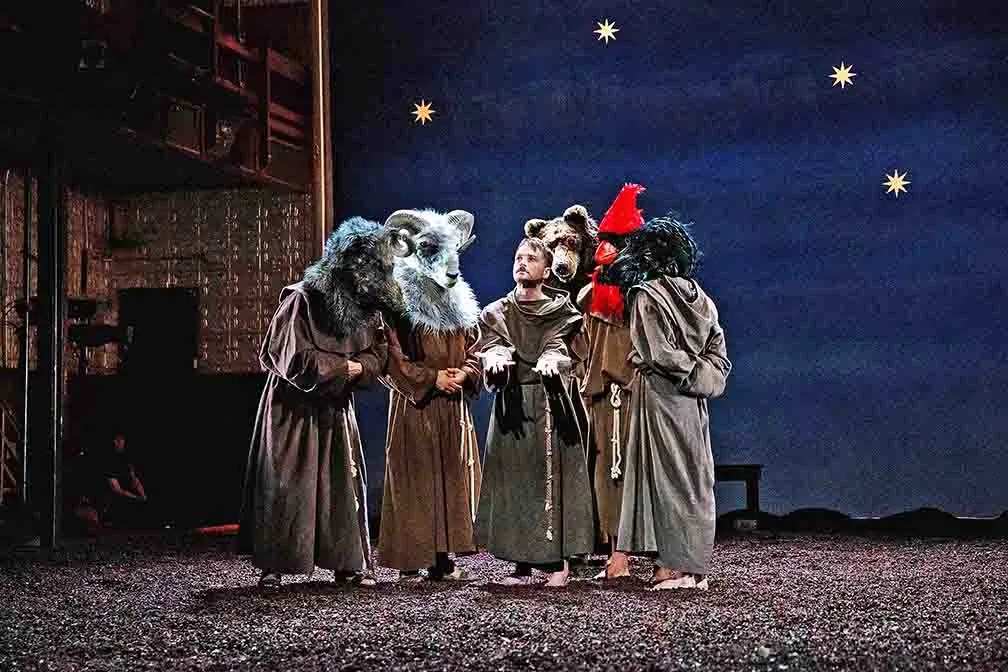
6.16.22 –God’s Fool is a company-created piece about St. Francis of Assisi. Like almost all of Martha Clarke’s work, it is a kind of exquisite performance collage using dance, music, text, masks, and visual elements without ever solidifying into something that could be called a play, or a musical, or a dance piece (although I notice that the Times sent a dance critic to cover it). I love that about Clarke’s work, and this piece is beautiful. Fanny Howe’s elliptical text captures many aspects of Francis’s personality, his spiritual ties as much to nature and animals as to anything having to do with the church of Rome. The superb cast of 8 (led by Patrick Andrews, who’s fantastic as Francis, and John Kelly as The Devil) creates sublimely gorgeous music, most of it a cappella, selected and arranged by Arthur Solari.
The simple evocative set and the animal masks were designed by the legendary Robert Israel, a longtime Clarke collaborator.
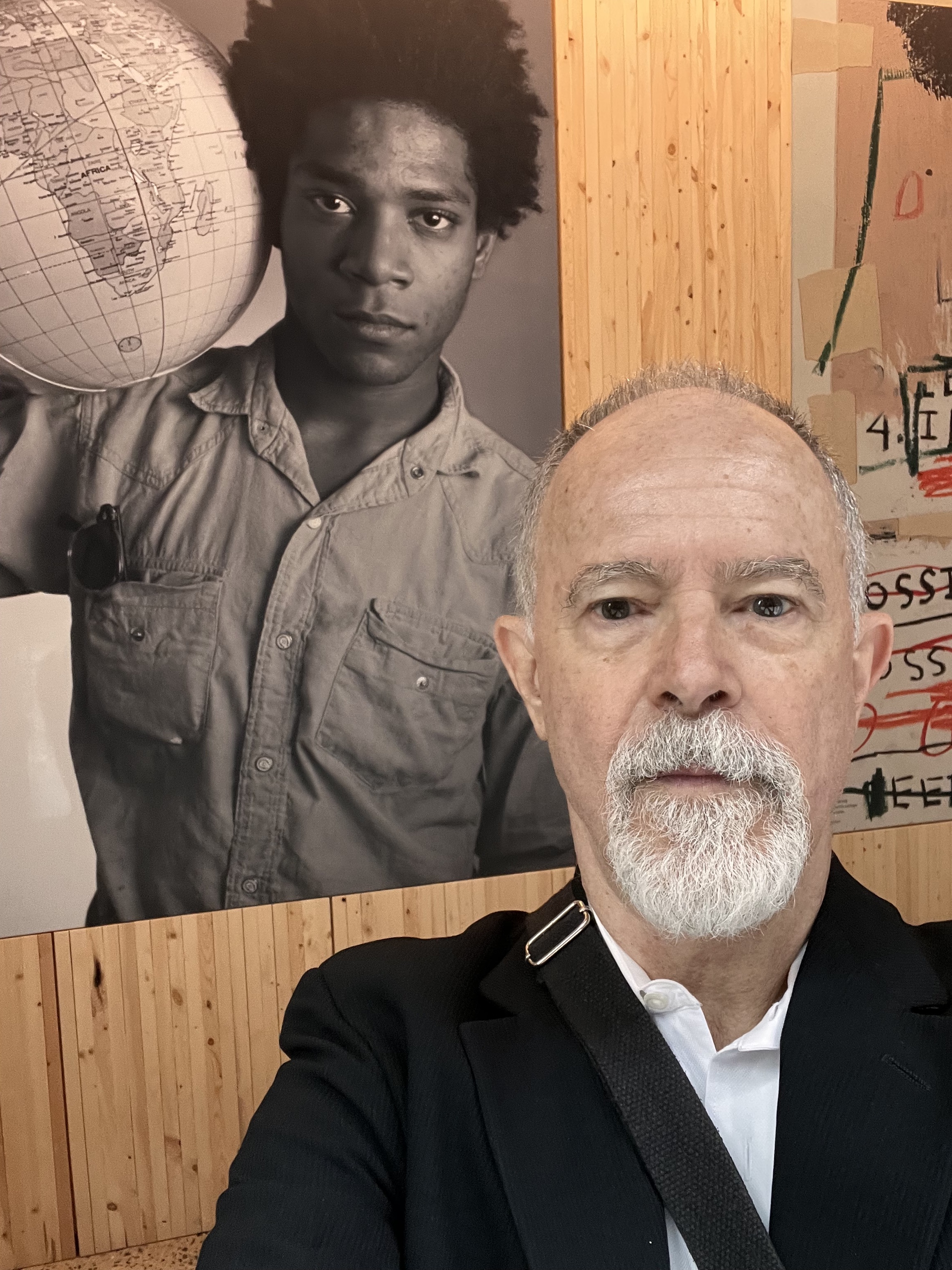
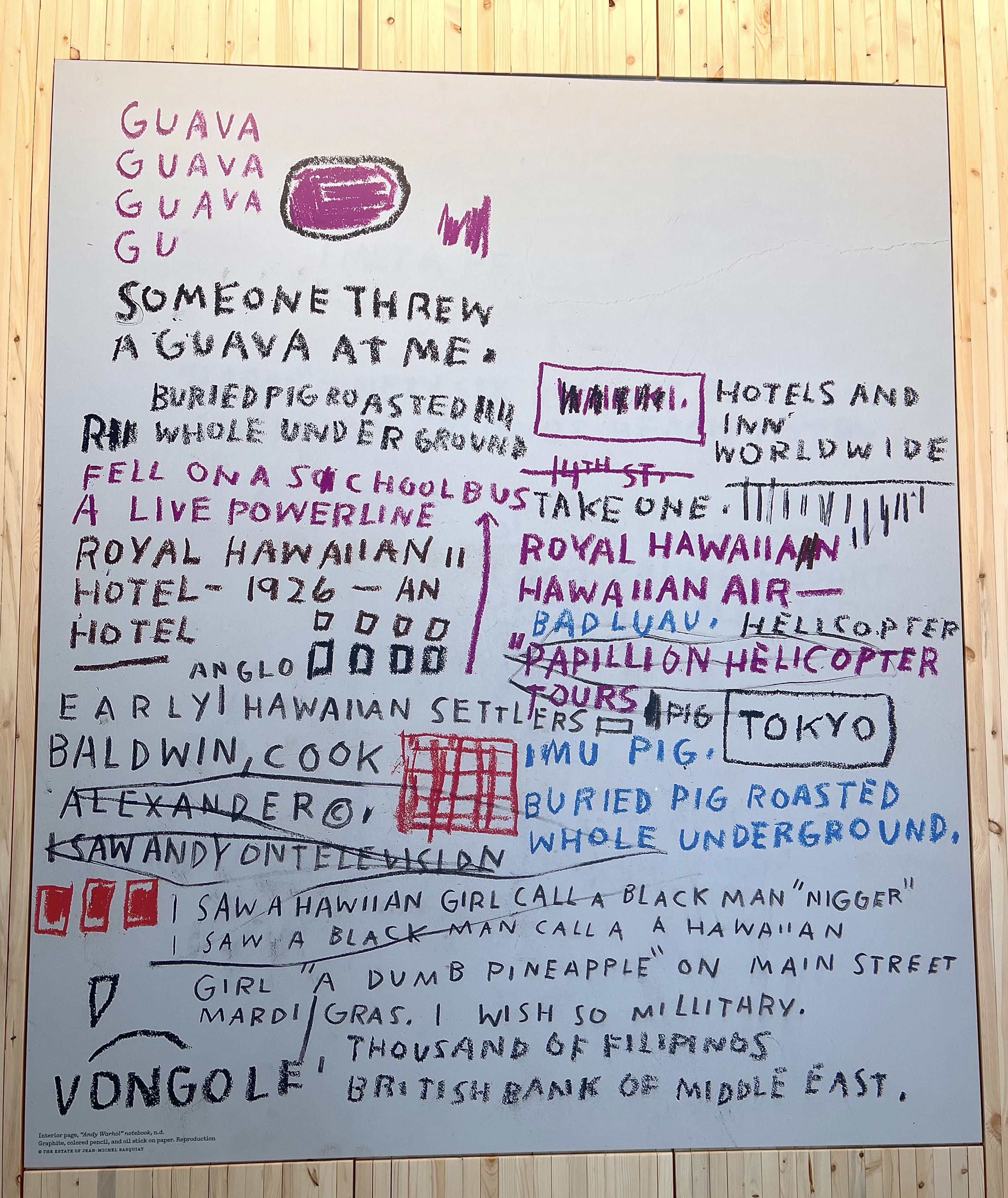
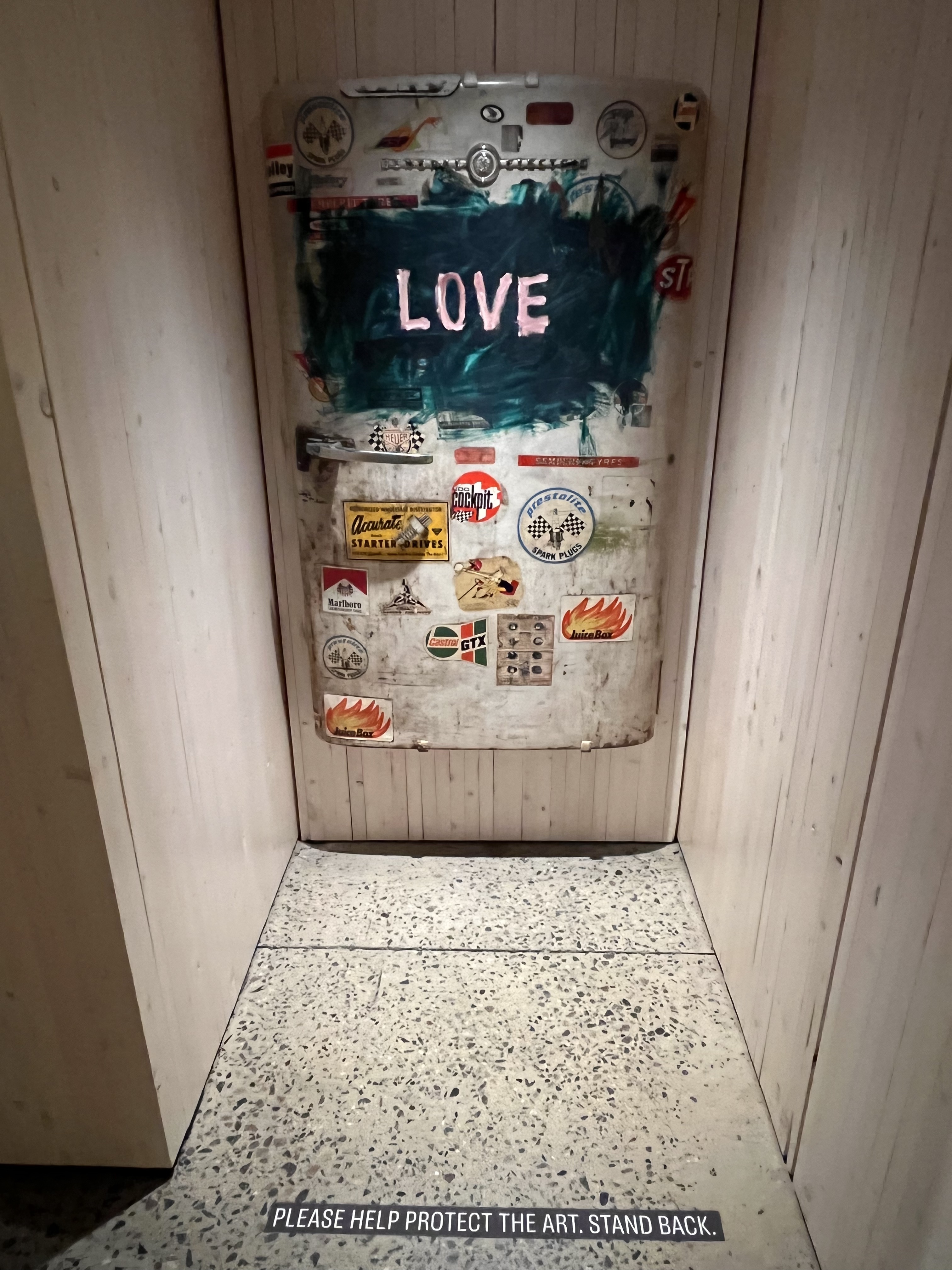
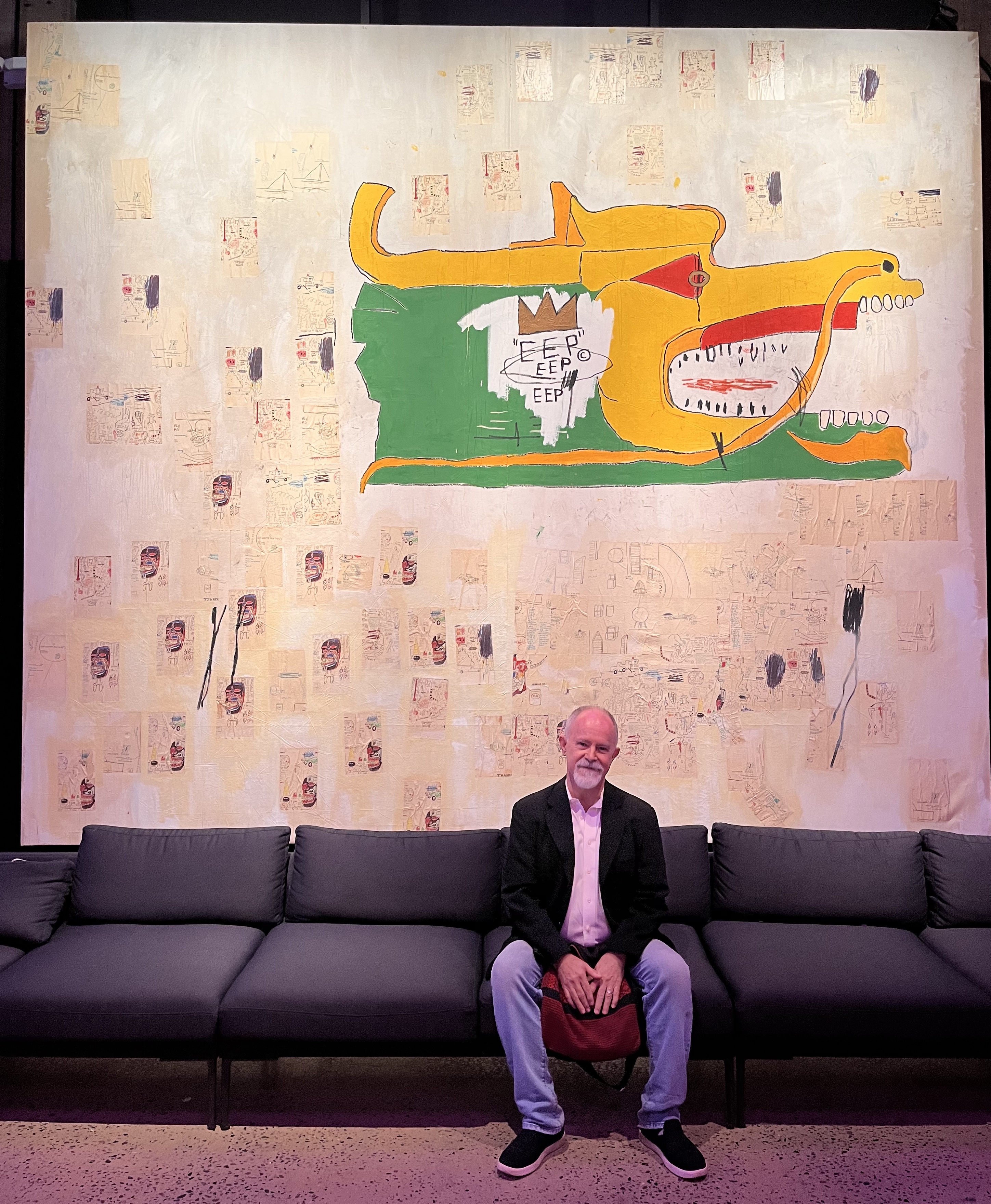
6.18.22 — Out-of-town guests provided the perfect occasion to book tickets for Jean-Michel Basquiat: King Pleasure, the immersive art show put together by Basquiat’s sisters, Jeanine and Lisane. The exhibition, which includes over 200 artworks, many of which have never been shown before, takes place throughout a sprawling 15,000-foot space designed by the remarkable Ghanaian-British architect David Adjaye, who created (among other things) the National Museum of African American History and Culture in Washington, D.C.
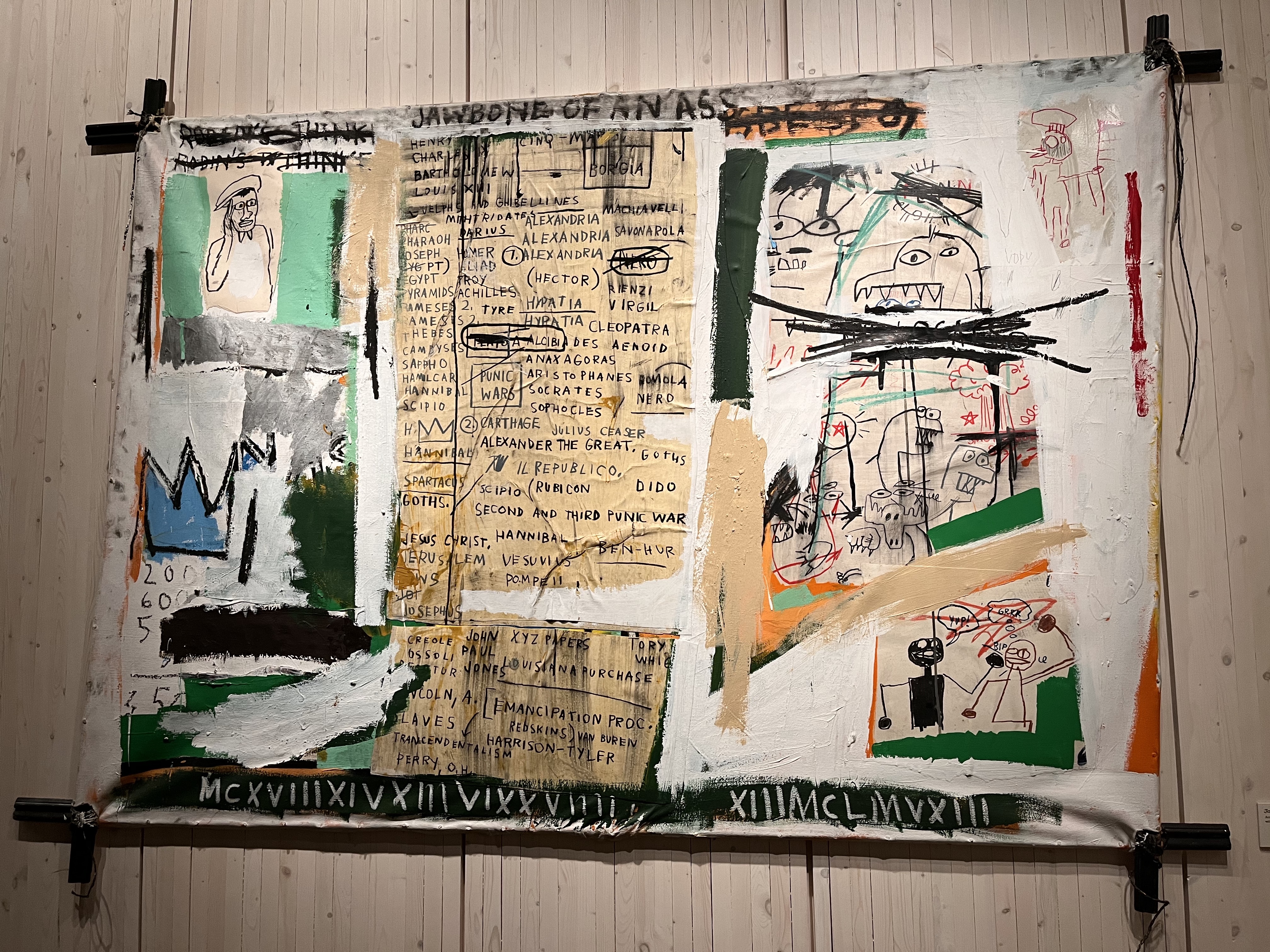
It’s a touchingly personal and informative survey of an insanely prolific, fertile, original artist whose star continues to rise 34 years after his death at the age of 27. I have not yet gotten my fill of his work. It speaks so deeply to me of an artistic intelligence alive in the world, taking in everything, spilling over with thoughts and connections and reflections.
Cabeza (1982; acrylic and oil stick on blanket mounted on tied wood supports)Jawbone of an Ass
Adjaye’s installation collects paintings and objects in many thematic galleries, and it also includes three special environments: a replication of the Basquiat family home, very much the tidy middle-class refuge of an immigrant family, with a shelf of the World Book Encyclopedia; a recreation of Basquiat’s studio on Great Jones Street (above), scattered with books and records and a gigantic pile of VHS movies on tape along with works both finished and unfinished; and then a replica of the Mike Todd Room where VIPs at the Palladium, a hip Manhattan nightclub, could lounge beneath a couple of gigantic spectacular Basquiat murals.
I found myself surprisingly emotional walking through the show, starting with the map of Basquiat’s New York, which completely overlaps with my first years in New York, 1980-88: Area! The Mudd Club! Tower Records! Tony Shafrazi Gallery! Pearl Paint! Club 57! Yup, all there…and all gone.
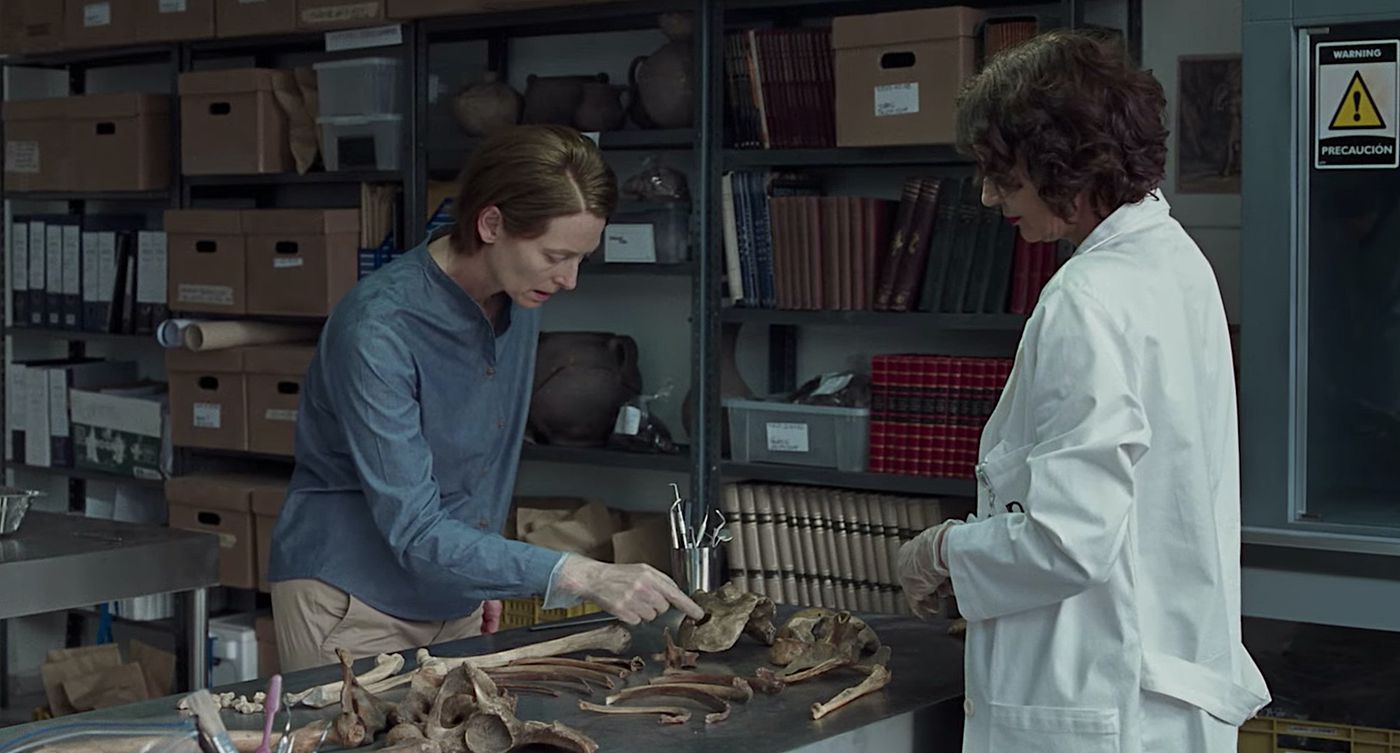
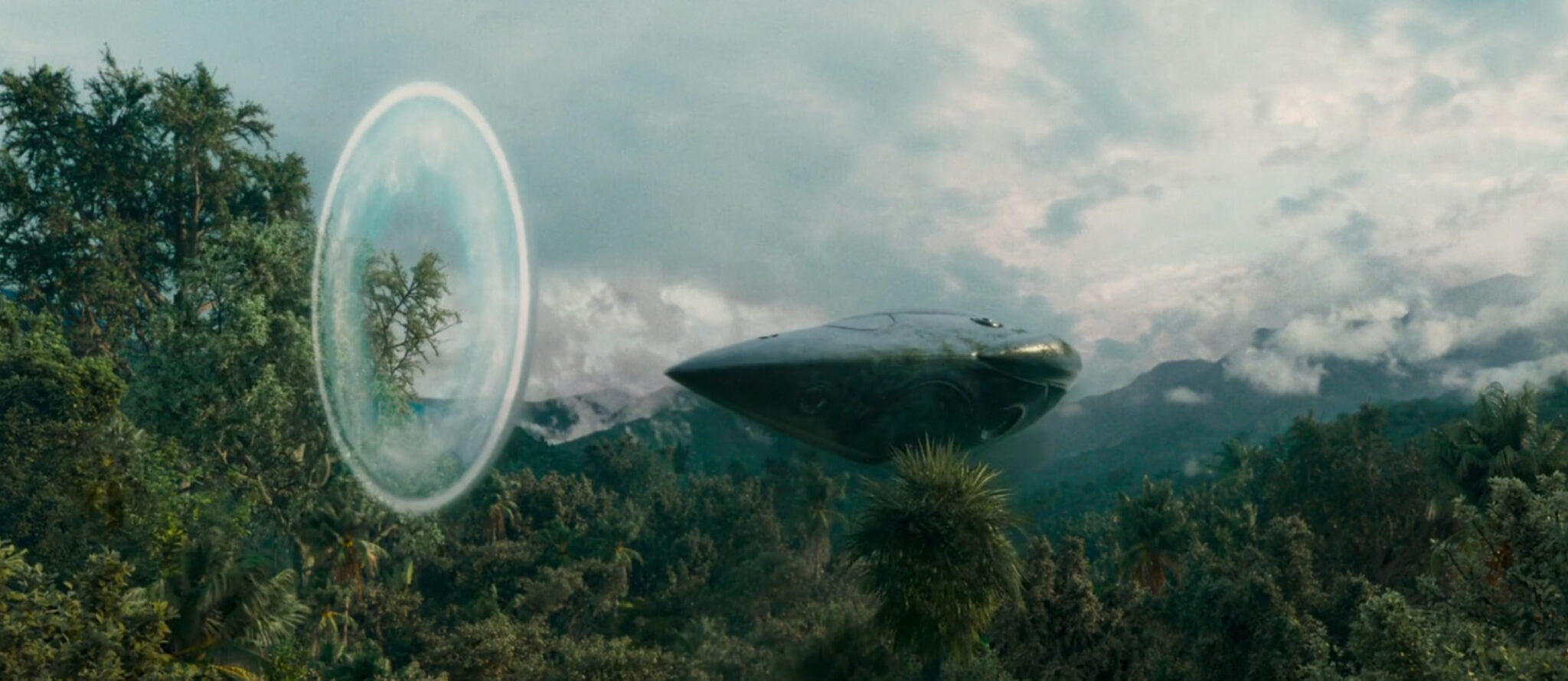
Later that day, I took in an entirely different kind of immersive art experience. Memoria, the latest film by the amazing, eccentric Thai director Apichatpong Weerasethakul, stars Tilda Swinton as a Scottish botanist living in Colombia who starts hearing at odd intervals a loud bang and sets out to understand what’s going on. The movie is an experiment conducted in several different dimensions – it’s the director’s first full-length film not shot in Thailand, with a leading actor who’s not Thai, with dialogue primarily in Spanish, and it centers so specifically on sound that the film is only playing a day or two at a time in theaters whose sound systems have been reconfigured to accommodate the film. (I saw it at Lincoln Center.) Like all of Weerasethakul’s work, the film operates as a dreamscape. Odd images come and go without explication. The scenes unfurl in long takes, sometimes with very little action.
In their audience talkback after the New York Film Festival screening, the director (who encourages everyone to call him Joe) and Swinton talked about waiting 17 years for this collaboration to come about. The person she plays is named Jessica, said Weerasethakul, after a character in the movie I Walked With A Zombie. Swinton herself said, “Jessica isn’t a character but a predicament.”
Early in the film she consults a young sound engineer named Hernán who sits with her in the studio meticulously trying to recreate the sound in her head. (Weerasethakul has for some time suffered from a malaise known as “exploding head syndrome.”) Later in the film she encounters another Hernán, who both is and isn’t the same person – same name, different actor, and this guy lives out in the woods, has never seen movies or TV, and stores all his memories in stones. Jessica consults a doctor she hopes will prescribe Xanax to make the noise go away; the doctor tells her that Xanax takes away your empathy and instead hands her a pamphlet about Jesus. Jessica’s sister is an anthropologist studying 6000-year-old bones uncovered by a construction crew that may be exerting some kind of malicious spell over her; there is talk of uncontacted indigenous people in the Amazon jungle, and there is a crazy moment that suggests supernatural involvement.
Memoria is very poetic, enigmatic, rapturously beautiful, weird, scary, puzzling. Not for everyone, but very much for me.











 another eye opens