Posts Tagged ‘jill lepore’

In this week’s New Yorker

July 4, 2013

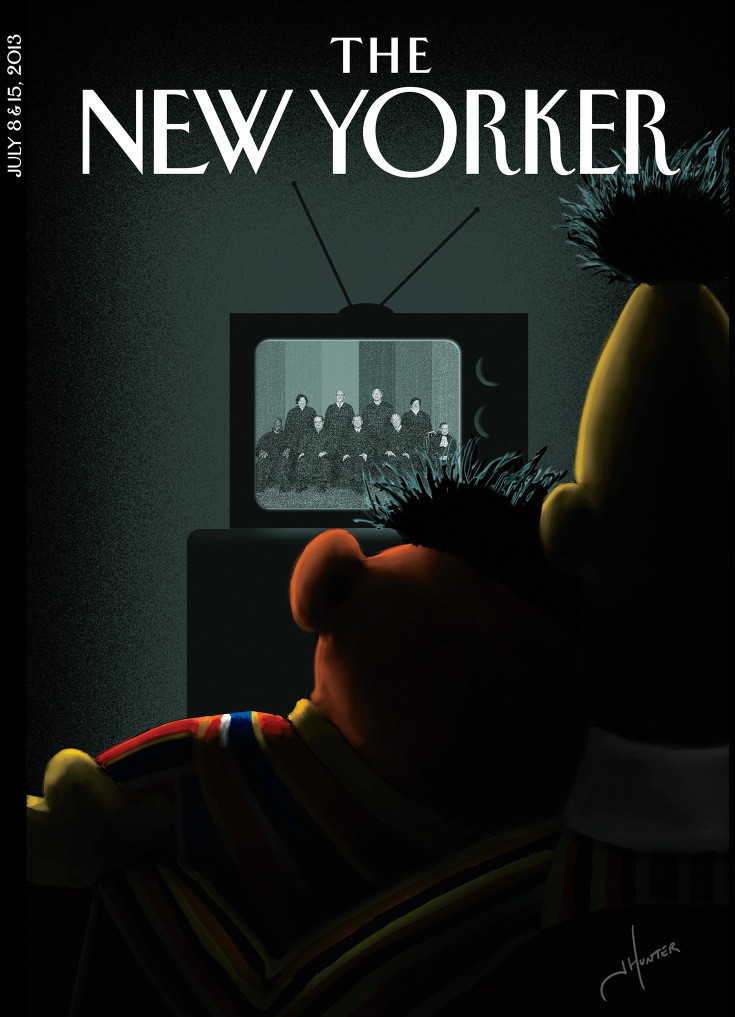
moment of joy
In addition to the heart-tugging cover image (Jack Hunter’s “Moment of Joy”), lots of substance:

* Patrick Radden Keefe’s Reporter at Large piece on mining and corruption in Guinea, focusing on an Israeli billionaire named Beny Steinmetz;

* Jeffrey Bartholet’s Letter from Dharamsala contemplating the legacy and spreading of Tibet’s self-immolation protests;
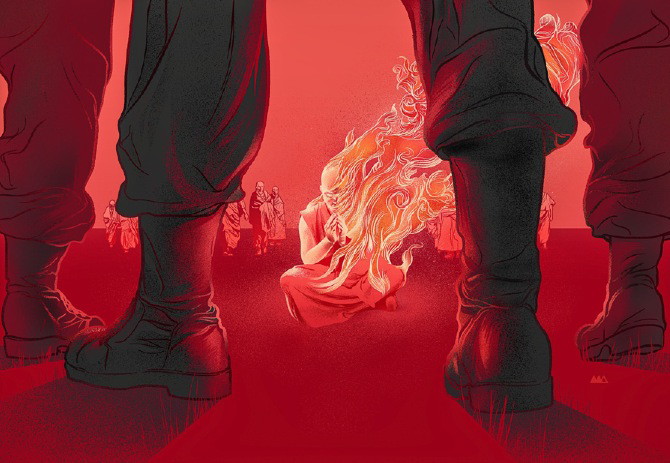
aflame

* “The Prodigal Daughter,” a beautifully written piece by Jill Lepore about her life as a writer, her mother’s aspirations for her, and the life of Benjamin Franklin’s sister, Jane;

* Louis Menand’s vividly detailed summary of the Voting Rights Act of 1965 — how it evolved, its importance, what the Supreme Court’s ruling last week means; and

* an Annals of Technology piece by Nicholson Baker, who memorably described the iPad as a “slip-sliding rectangle of joy” and in this article travels to Korea on a pilgrimage to the world’s center of manufacturing liquid-crystal display (LCD) products, another beautifully written piece. Sample: “In a Best Buy one Sunday afternoon, standing in front of the wall of TVs in the back, I thought, Just look at all these incredible screens. We take for granted that we can drive to a nearby chain store and buy a thin, luminous, elegant, unflickering dispenser of imagery that will make the world seem newly hosed clean and polyurethaned, that will melt the finely fringed nerve endings of our pleasure centers, all for several hundred dollars.”

In this week’s New Yorker

May 30, 2013

Three very interesting complicated narratives dominate the issue:

* Nicholas Schmidle’s “In the Crosshairs” tells the compelling story of  Chris Kyle, the highly decorated military killing machine and co-author of the best-seller American Sniper, whose well-intentioned efforts to help Iraqi veterans suffering from PTSD brought him in contact with Eddie Ray Routh, with disastrous results.

* In “The Manic Mountain,” Nick Paumgarten writes about an intense fight on Mt. Everest between elite white European climbers and the local sherpas who make the slopes safe for commercial tourism.

* Jill Lepore’s sharply negative review of Neil Thompson’s new biography A Curious Man: The Strange and Brilliant Life of Robert “Believe It Or Not!” Ripley manages to achieve a capsule portrait of not only Ripley but also Goeffrey T. Hellman, who wrote many in-depth New Yorker profiles, including one of Ripley that ran in two successive issues in 1940.

I enjoyed reading Alex Halberstadt’s profile of Kim Gordon, even though I have never managed to get anything out of listening to Sonic Youth’s music. And I have to admit that I loved Emily Nussbaum’s review of Steven Soderbergh’s Liberace biopic, Behind the CandelabraI pretty much agree with everything she says about the movie.

Oh, and great timely cover by Marcellus Hall:

bicycle cover

In this week’s New Yorker

November 21, 2012

Some great stuff:

* Adam Gopnik’s lead editorial, “Military Secrets,” which includes this brilliantly succinct comment: “Benghazi is a tragedy in search of a scandal; the Petraeus affair is a scandal in search of a tragedy”;

* Victor Zapana’s sad, brave “Personal History” story about his mother, who was famously convicted in a notorious/controversial instance of “shaken baby syndrome”;


* Nick Paumgarten (above) totally geeking out, at considerable length, about being a “Deadhead” — since he’s an editor at the best magazine in the world, he gets incredible access to cool stuff, and online he posts a list of his thirteen favorite live recordings available for free streaming or downloading from an amazing website I never knew about, archive.org;

* “Queer Eyes, Full Heart,” Emily Nussbaum’s detailed mash note to Ryan Murphy, creator of Glee, Nip/TuckAmerican Horror Story, and other TV shows (who knew Nussbaum could be so gay-savvy?); and

* Jill Lepore “Tax Time,” which takes one of the most boring subjects on earth and gives it her diligent reporter’s all, ending with this eloquent take-home:

“Taxes are what we pay for civilized society, for modernity, and for prosperity. The wealthy pay more because they have benefited more. Taxes, well laid and well spent, insure domestic tranquility, provide for the common defense, and promote the general welfare. Taxes protect property and the environment; taxes make business possible. Taxes pay for roads and schools and bridges and police and teachers. Taxes pay for doctors and nursing homes and medicine. During an emergency, like an earthquake or a hurricane, taxes pay for rescue workers, shelters, and services. For people whose lives are devastated by other kinds of disaster, like the disaster of poverty, taxes pay, even, for food.

“What’s surprising, given how much money and passion have been spent to defeat a broad-based, progressive income tax over the past century, and how poorly it has been defended, is that it has endured – testimony, perhaps, to American’s abiding sense of fairness. Taxes are a pact. That pact needs renewing.”


In this week’s New Yorker

September 20, 2012


A weird thing about the New Yorker’s annual Cartoon Issue is that it pretty much always creates high expectations and doesn’t live up to them. This week, as in the past, the cartoons don’t seem as good as many regular issues, even though there are twice as many.


The best thing about this issue is “The Lie Factory,” Jill Lepore’s American Chronicles piece about the two individuals who created the whole industry of political lobbying . Clem Whitaker and Leone Baxter, a couple of right-wing conservative,  created Campaigns Inc. in 1933. They started out in newspapers and then figured out how to run political campaigns in favor of businesses by smudging the line between advertising, advocacy, and journalism. They were the ones who first undertook to persuade the American public that universal health care was “socialized medicine” and therefore unspeakably evil. It’s a fascinating and disheartening chapter of American political history.

Key quote from William Gavin, an advisor to Richard Nixon who wrote in a memo: “Voters are basically lazy, basically uninterested in making an effort to understand what we’re talking about…Reason requires a higher degree of discipline, of concentration; impression is easier. Reason pushes the viewer back, it assaults him, it demands that he agree or disagree; impression can envelop him, invite him in, without making an intellectual demand. . . . When we argue with him we demand that he make the effort of replying. We seek to engage his intellect, and for most people this is the most difficult work of all. The emotions are more easily roused, closer to the surface, more malleable.”

I did also love this amazing photo by Martin Roemers that accompanied Mohsin Hamid’s short story “The Third-Born”:


Last week’s issue, by the way, had a terrific profile of Elizabeth Warren by Jeffrey Toobin, an excerpt from Salman Rushdie’s new book about his life under the fatwa that made him a target for assassination by Muslim fanatics, and a good piece by Hilton Als on Robert Wilson and the evolution of Einstein on the Beach.

In this week’s New Yorker

June 19, 2012


Top stories this week for me start with Ezra Klein’s “Unpopular Mandate,” which traces all the ways that former Republican legislative policies have gotten demonized and trashed as soon as bipartisan support for them showed up, thereby making it entirely likely that Obama’s Affordable Health Care legislation will be reversed by the Supreme Court. Pretty sickening.

I have almost no interest in television or Hollywood movies, yet I often find myself reading every word of New Yorker profiles, such as Tad Friend’s long story about Ben Stiller (or last week’s long report on Seth McFarlane, creator of Family Guy). It shocks me that Stiller is seen as the world’s biggest comedic movie stars simply because he has acted in three billion-dollar “franchises” (movies and their sequels). Madagascar? Night at the Museum? Meet the Parents? This is what sells? Okay….

Among the reviews, James Wood writes about an intriguing young Canadian writer named Sheila Heti and Jill Lepore digests some choice chaotic biographical details David Maraniss unearthed in his book on Barack Obama.  Sasha Frere-Jones makes new albums by Norah Jones and Fiona Apple sound mouth-watering. Plus, you know, Gayle Kabaker’s sweet cover illustration (see above).

Before the moment passes, I want to tag as recommended reading the always-scrupulous Jane Mayer’s terrific “Letter from Tupelo” about Bryan Fischer, a raving lunatic radio preacher from Mississippi who represents the kind of crackpots that Mitt Romney Republicans cater to these days. Fischer was the one whose homophobic railings about Romney hiring an openly gay press secretary, driven by insane 1950s stereotypes about homosexual blackmail, hounded the guy out of his job. One more creep to keep an eye on this electoral season. It will be full-time work to keep calling a creep a creep as the money of the Koch Brothers continues to steamroll the American public with lies and propaganda.