WRITING
A writer is someone for whom writing is more difficult than it is for other people.
— Thomas Mann

cultural commentary from the desk of Don Shewey
WRITING
A writer is someone for whom writing is more difficult than it is for other people.
— Thomas Mann
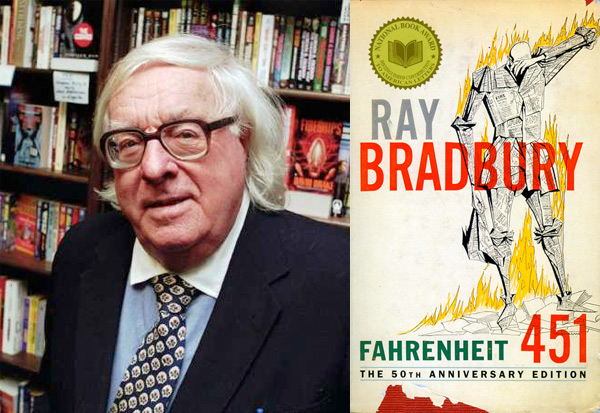
Thinking about Ray Bradbury takes me back to my adolescence, when my reading was omnivorous and included lots of Bradbury’s books, which ranged from science-fiction classics (Fahrenheit 451) to sentimental fiction perfectly suited to dreamy teenagers like me (Dandelion Wine). Then at Rice University I got to act in a sweet little one-act play of his, The Wonderful Ice Cream Suit. I think I played a character named Villanazul.
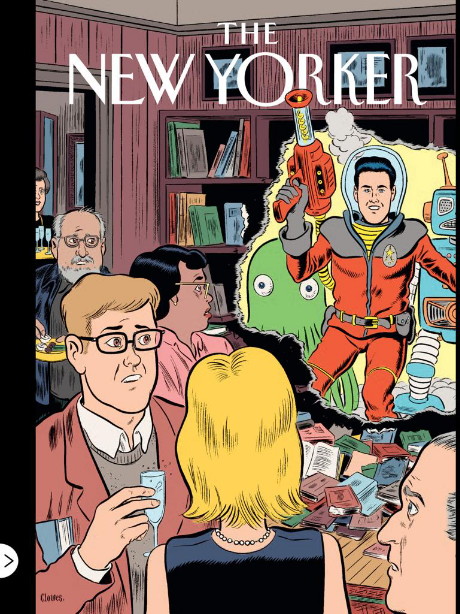
A very fine double issue on the theme of Science Fiction, starting with the Daniel Clowes cover. Some excellent fiction by Sam Lipsyte, Jennifer Egan, and Junot Diaz, a long fascinating “Personal History” piece by Colson Whitehead about his childhood fixation on B-movies, and several excellent short essays on sci-fi by famous writers (Ray Bradbury, who just died today, Ursula LeGuin, China Mieville, Margaret Atwood, William Gibson, and — my favorite — Karen Russell). Also a good piece about “Doctor Who” and “Community” by television critic Emily Nussbaum.
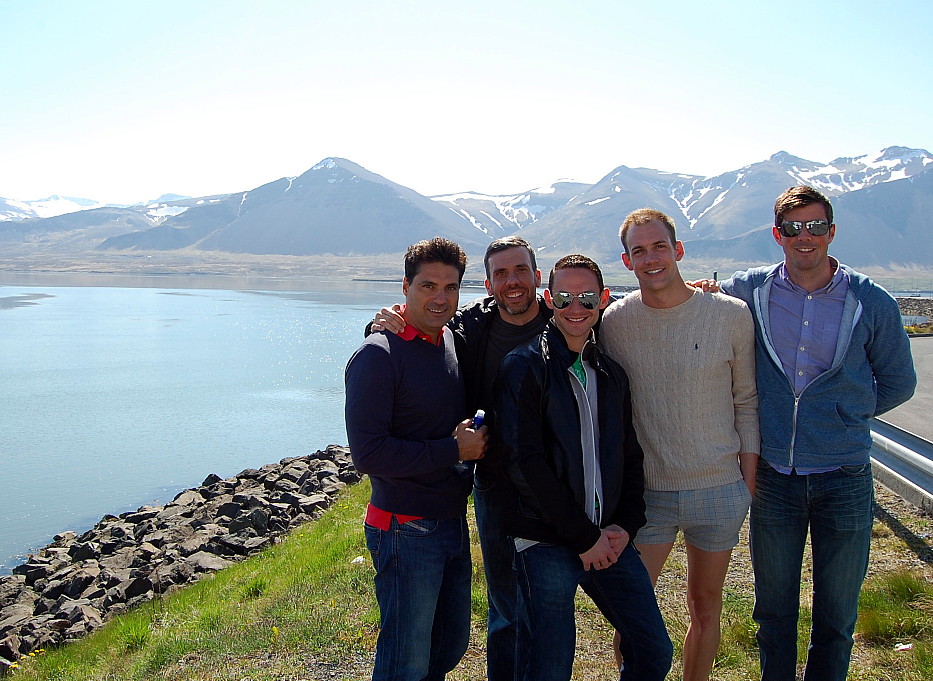
On my second day in Iceland, I took a road trip with five handsome swimmers — Fede, Jim, Michael, Ryan, and John.
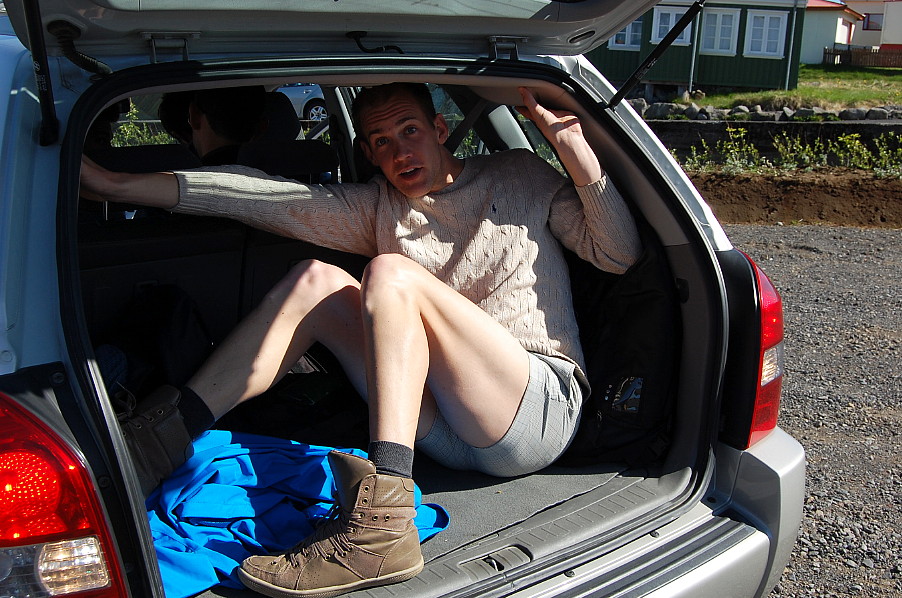
We loaded into a 4×4. I drove most of the way, and the others took turns sitting in “the way-back.”
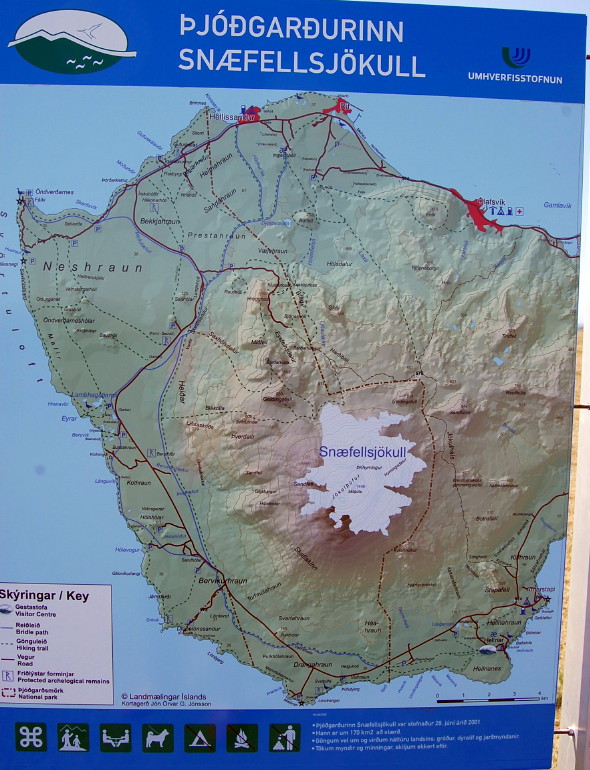
Our destination: Snæfellsnes, a peninsula 2 1/2 hours northwest of Reykjavik
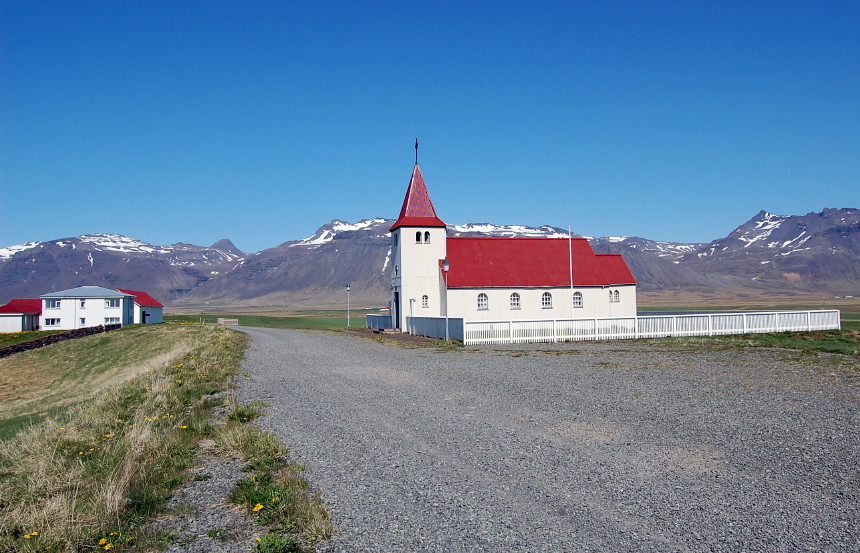
The terrain along the way was beautiful and austere. Every so often, some dwelling would pop up, like this Lutheran chapel.
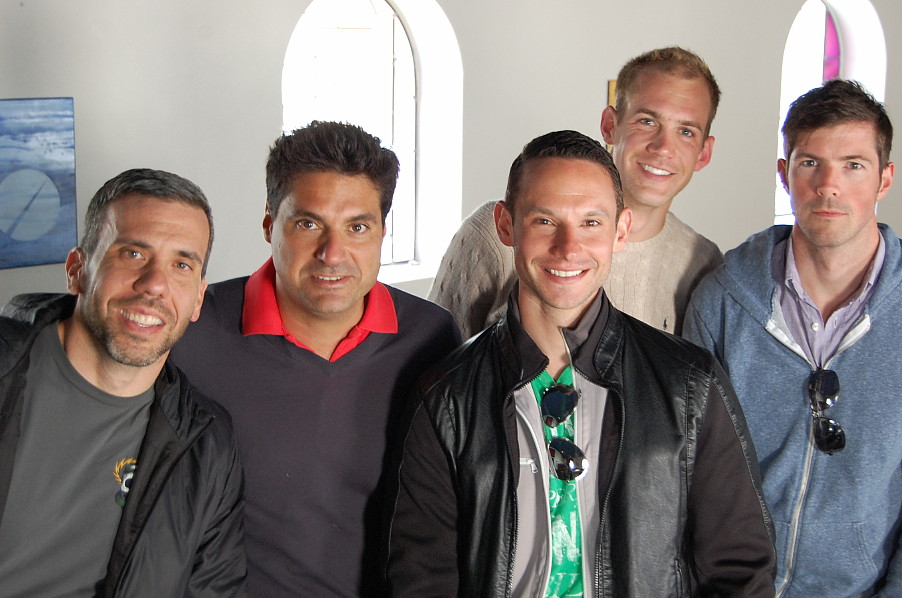
No one was around but we inspected the place, and the light through the stained glass windows made for radiant portraits.
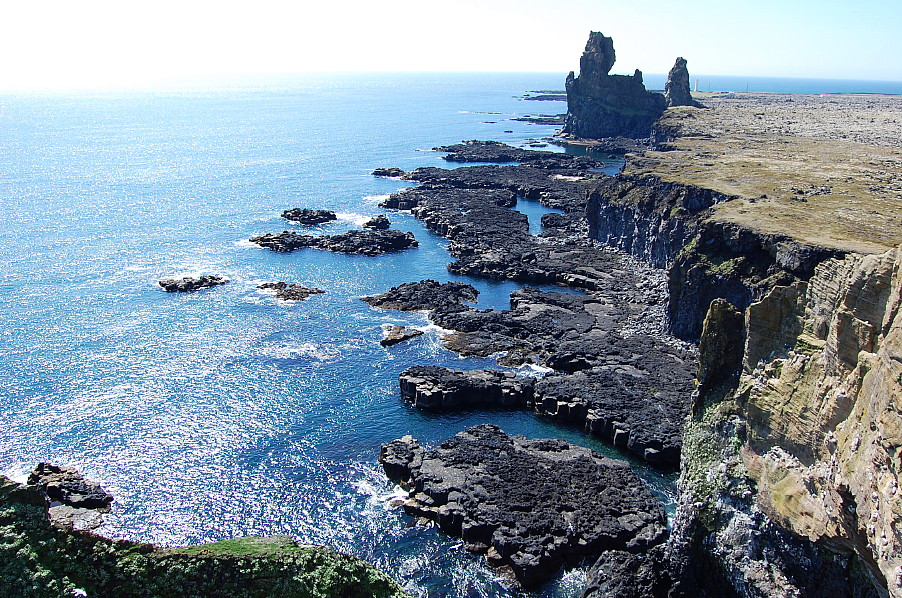
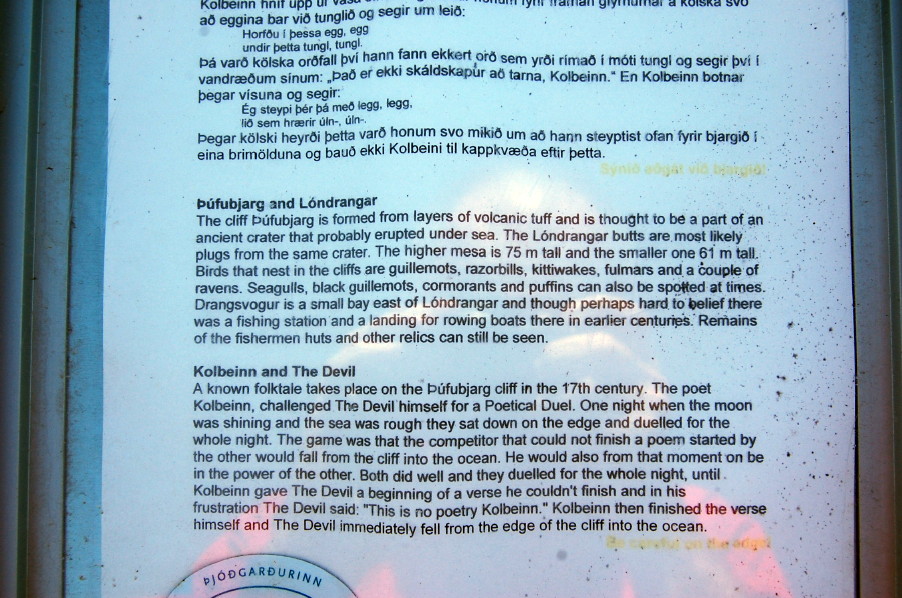
This was the best place we saw all day — an astonishing cliff with gigantic volcanic rock formations — notice the contrast to the lighthouse at rear.
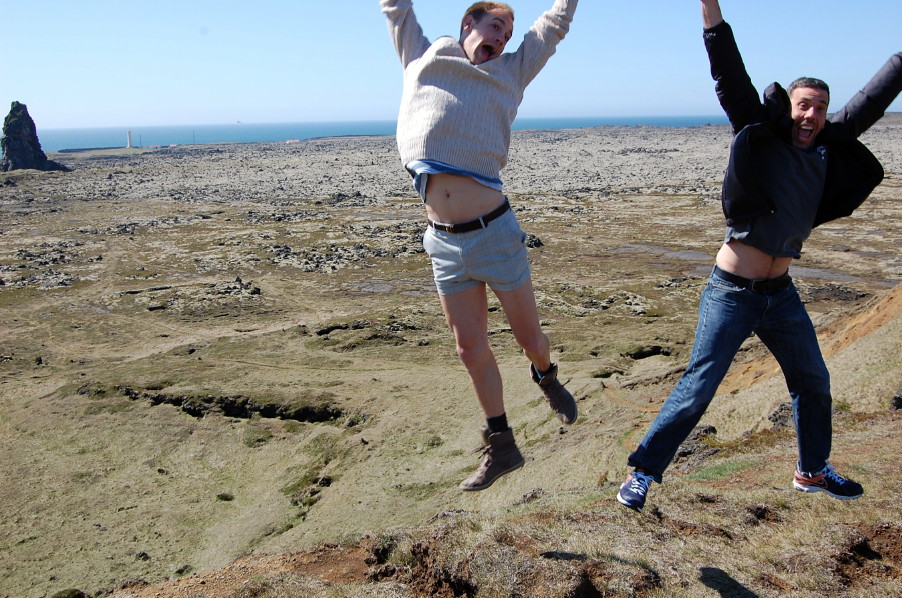
beautiful place for stretching and frolicking
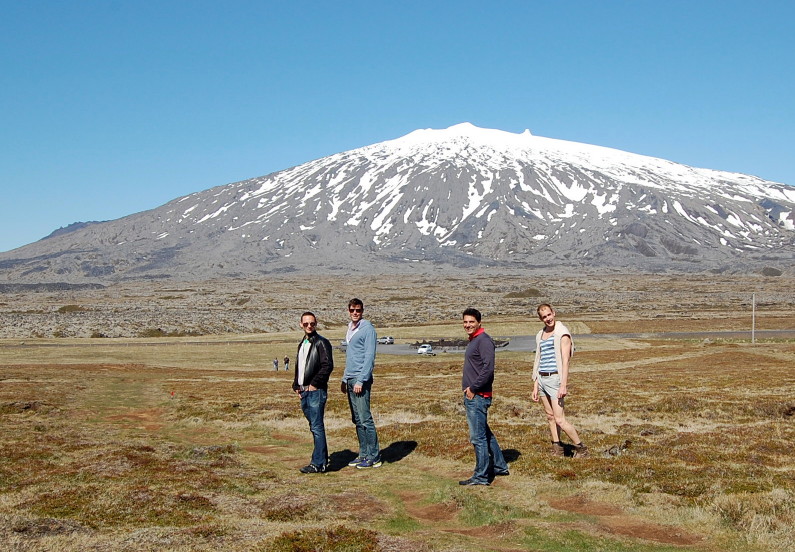
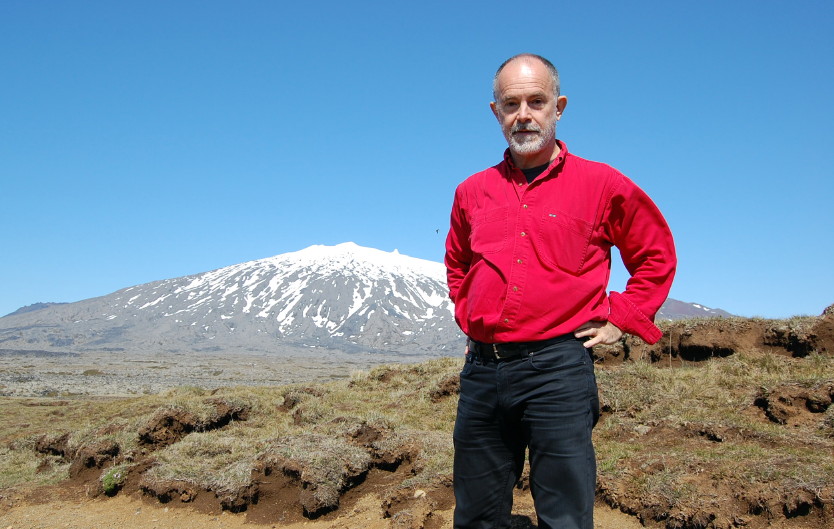
We drove all the way around the peninsula, around the volcano in the center, which Jules Verne used as the beginning of his classic “Journey to the Center of the Earth”
We stopped for lunch in Olafsvik at a lovely cafe/restaurant called Gilith, which was deserted at 2:30. Jim asked if they were still serving lunch. The young woman behind the counter said yes, they had two choices: pig and fish. The fish was ling, served with a very tasty beet sauce.
SCIENCE FICTION

Last month, you humped around a water-stained copy of Pride and Prejudice and nobody said boo to you. In that book, some British sisters vie to get their dance cards punched. In the Shannara books [by Terry Brooks], a nuclear holocaust has wiped out almost every living thing. And “now” — two thousand years in the future — the Ohmsford siblings have rediscovered a burning green magic, germinating under the world, the past waiting to be reborn as future.
The Elfstones is so much better than Pride and Prejudice. Yet it has been made clear to you that the Austen book is a classic, while Terry Brooks is “a hack.” For school, you’ve read Where the Red Fern Grows and On the Banks of Plum Creek, books that start with prepositions and end in cornfields. They, too, are classics, and your class gets frog-marched through them single file, on a path worn smooth by a million schoolkids’ sneakers before you. English class sometimes reminds you of your field trips to Florida’s Historic Sties. “Look at that lovely imagery!” Mrs. Sicius commands, mapping a sentence about dogs on the blackboard. Every step of the way through these books is chaperoned. At the end, you write a report….
Years later, watch a new generation of children beam stories about wizards and eloquent unicorns directly onto their Kindles. They sit on the bus blabbing openly to one another about hippogriffs, pixies. Watch them walking down the sidewalk with their Quidditch brooms knocking and their shadows in the open, their spell books downloaded onto flat gray brains, these magic lovers, these children of the future.
— Karen Russell
 another eye opens