“What we Americans go through to pick a president is not only crazy and unnecessary but genuinely abusive.” Thank you, Matt Taibbi! Read the complete blog post by Rolling Stone‘s excellent political reporter online here.

cultural commentary from the desk of Don Shewey
“What we Americans go through to pick a president is not only crazy and unnecessary but genuinely abusive.” Thank you, Matt Taibbi! Read the complete blog post by Rolling Stone‘s excellent political reporter online here.
DIANE ACKERMAN
Poet and author Diane Ackerman was born Diane Fink in Waukegan, Illinois, on October 7, 1948. She has a knack for blending science and literary art; she wrote her first book of poetry entirely about astronomy. It was called The Planets: A Cosmic Pastoral, and it was published in 1976, while she was working on her doctorate at Cornell. Carl Sagan served as a technical advisor for the book, and he was also on her dissertation committee. Her most widely read book is 1990’s A Natural History of the Senses, which inspired a five-part Nova miniseries, Mystery of the Senses, which she hosted. She even has a molecule named after her: dianeackerone.
In 1970, she married novelist and poet Paul West. They shared a playful obsession with words that was central to their expressions of love for each other. In 2005, Paul suffered a stroke and, as Ackerman wrote, “In the cruelest of ironies for a man whose life revolved around words, with one of the largest working English vocabularies on earth, he had suffered immense damage to the key language areas of his brain and could no longer process language in any form.” His vast vocabulary was reduced to a single syllable: mem.
Even when he recovered the ability to speak, his brain kept substituting wrong words for the right ones, but she encouraged him not to fight his brain, but to just go with it, to say what it was giving him to say. As a result, the hundred little pet names he used to have for her before the stroke have been replaced with non-sequiturs like “my little spice owl,” “my little bucket of hair,” and “blithe sickness of Araby.” Ackerman wrote about the stroke and Paul’s journey back to language in her most recent memoir, One Hundred Words for Love (2011).
Diane Ackerman wrote, “It began in mystery, and it will end in mystery, but what a savage and beautiful country lies in between.”
— The Writer’s Almanac

Diane Ackerman and Paul West
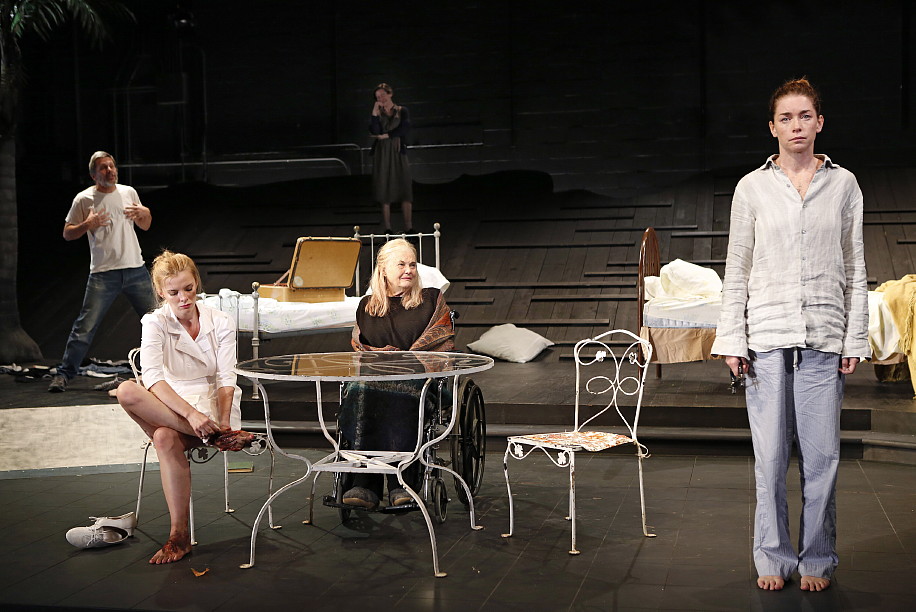
My (somewhat belated) review of Sam Shepard’s new play Heartless at Signature Theater, featuring a terrific cast headed by Lois Smith (above center), has just been posted on CultureVulture.net. Check it out here and let me know what you think. It’s quite an unusual play for Shepard, harkening back to his early, very wild and free plays — not to everybody’s taste but definitely to mine. The show runs only one more week, so if you’re inclined to go, don’t wait.
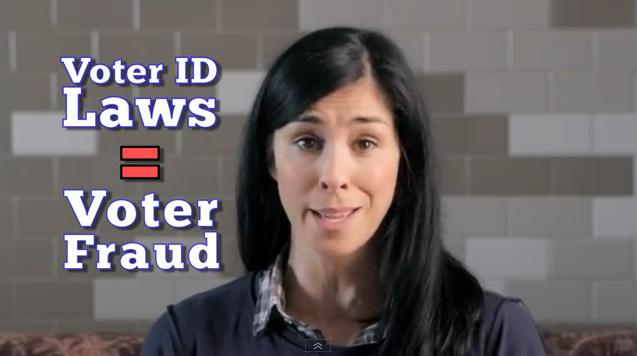
If you haven’t seen it yet, don’t hesitate to check out Sarah Silverman’s PSA about the Voter ID requirements that have been cooked up this year by nefarious anti-democratic forces. That Sarah Silverman has a mouth on her, but she’s really smart, really informed, and hilarious every step of the way.
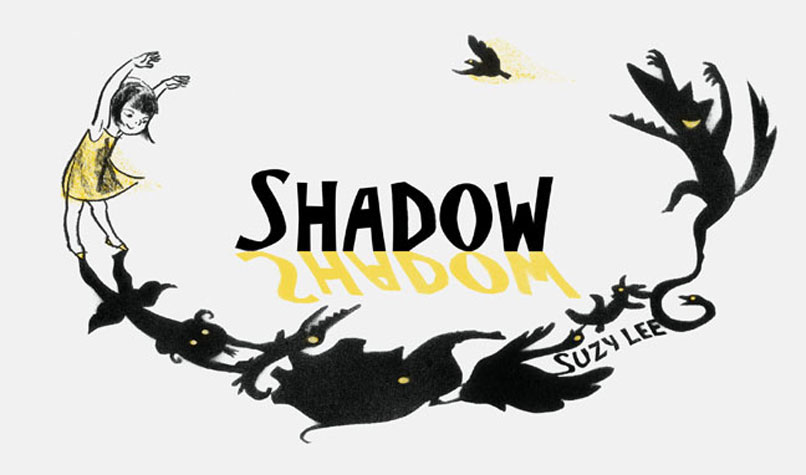
To proceed toward wholeness and manifest the promise only you can bring to the world, you must investigate your shadow. It contains values and perspectives needed to round out your conscious personality. It contains personal powers you’ll need when you befriend or wrestle with the inner and outer dragons and angels encountered on your soul journey.
In the encounter with shadow, your conscious personality will sometimes be overwhelmed or shattered. Your ego might experience a death, but it will thereby be enabled to later rise from the ashes like a phoenix endowed with new powers….
Before being reclaimed, the negative elements of the shadow appear to the ego as disagreeable and frightening. They show up as scary dreamworld characters and as dayworld people onto whom we project our own negative qualities, such as greediness, cowardice, rage, weakness, arrogance, or cruelty. We project our negative shadow onto nature, too: hairy beasts, dark forests, swamps, tornadoes, bats, snakes, and volcanoes. Yet the negative shadow possesses beneficial attributes we need in order to mature. Without these qualities, our personalities remain unbalanced, fragmented, or otherwise incomplete….
The positive qualities of our shadow – qualities we would consider virtuous, elevated, or otherwise exemplary – are also projected onto others. These are the exemplary traits we see in others but can hardly imagine for ourselves.
Often we discover our shadow holds something sacred: our deepest passion. This may be a longing to dance, to create magic, to sing in public, or to love with abandon. Donna Medeiros, a teacher at an alternative high school, says that when we are young, we name our passion something else — so we can suppress it. We name it foolish, selfish, odd, crazy, or evil. This misnaming protects us from social injury, from being rejected or marginalized by our family or peers. Donna knows this not only from her own story but also from her daily classroom experience with teenagers whom she guides through the process of self-reclamation. When awareness of their passion begins to return, they don’t recognize it at first because it had been mislabeled.
— Bill Plotkin, Soulcraft
 another eye opens