Archive for the 'quote of the day' Category

Quote of the day: ROETHKE

May 25, 2012

ROETHKE

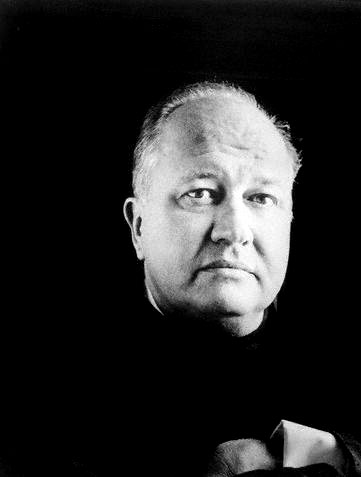
Theodore Roethke was a big man, 225 pounds. He was fascinated by gangsters, and he even talked like one — he had a deep voice, a growl. He was manic-depressive, and he often drank too much. He wore fur coats and drove big cars. As a teacher, he was persuasive and emotional. When he wanted his students to write a description of a physical action, he told them to describe what he was about to do, then climbed out the window onto a narrow ledge and inched his way around the whole classroom, making faces at every window. He insisted students memorize poems so that they would have something to call on when they were going through a tough period in life.

— The Writer’s Almanac
[this is the poem of his I know best — I heard it read several times by Michael Meade and/or Robert Bly at mythopoetic men’s gatherings in the early 1990s]

In A Dark Time

In a dark time, the eye begins to see,
I meet my shadow in the deepening shade;
I hear my echo in the echoing wood—
A lord of nature weeping to a tree.
I live between the heron and the wren,
Beasts of the hill and serpents of the den.
What’s madness but nobility of soul
At odds with circumstance? The day’s on fire!
I know the purity of pure despair,
My shadow pinned against a sweating wall.
That place among the rocks—is it a cave,
Or a winding path? The edge is what I have.

A steady storm of correspondences!
A night flowing with birds, a ragged moon,
And in broad day the midnight come again!
A man goes far to find out what he is—
Death of the self in a long, tearless night,
All natural shapes blazing unnatural light.

Dark, dark my light, and darker my desire.
My soul, like some heat-maddened summer fly,
Keeps buzzing at the sill. Which I is I?
A fallen man, I climb out of my fear.
The mind enters itself, and God the mind,
And one is One, free in the tearing wind.

Quote of the day: PRESENCE

May 24, 2012

PRESENCE

Compared with generations past, theatre artists today are more likely to commute to rehearsal with earphones on, listening to the soundtracks of our lives instead of the voices around us. We send quick, pithy texts instead of calling even our best friends. Many of us actors keep our cell phones in our dressing rooms and text throughout the play, unable to relinquish “connectedness” for a two-hour stretch even while we act – the one thing that purportedly makes us feel the most connected.

This isn’t to point a finger. Our generation is accustomed to communicating with multiple people simultaneously. We experience it as being hyperconnected to a world community, part of the buzz we get from being a Generation Without Borders. And it is wildly attractive. To be connected across state lines, time zones, and continents is an achievement we should make use of.

But there is a flip-side. As connected as we are globally, we are increasingly cut off from our own communities. Our iPod drowns out the person sitting next to us on our commute. We don’t know the name of our neighbor on the other side of the wall. We text with our friend across the country rather than notice the distinctive way the stranger in front of us holds his cane. While some borders have dissolved, new, perhaps subtler, borders have emerged all around us. My call to action for the artists of Generation Without Borders is to strengthen our communities.

To be present. To take the buds out of our ears and listen. To witness and relate to the plights of strangers we see in the street. To be moved by a play and share our thoughts with our fellow audience members before immediately posting a status update. To look out. To offer up. To volunteer in our communities and know who our neighbors are. Let’s embrace what’s best about our new connectedness and reject what threatens to make us self-absorbed, distracted and myopic.

— Amanda Quaid

Quote of the day: ICELANDIC CUISINE

May 22, 2012

ICELANDIC CUISINE


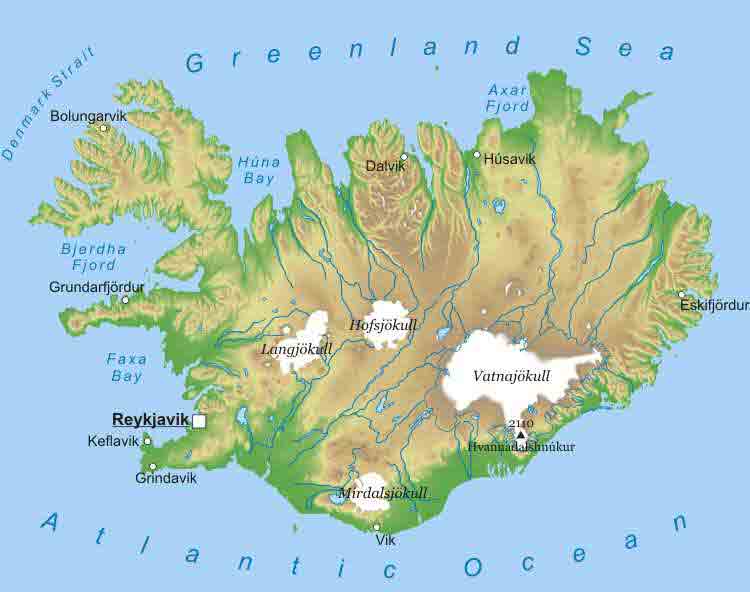
Hákarl means shark in Icelandic, but in Iceland it means so much more – almost an edible national medal of honour. The shark in reference is the Greenland shark (Somniosus microcephalus, above), the northernmost shark species in the world. The fish is toxic to eat because its felsh is laced with heavy doses of trimethylamine oxide and urea, a cocktail that works like antifreeze in the shark’s body, allowing it to swim in Arctic waters as cold as -2 degrees C. To render it edible, Icelandic tradition advises burying the shark for at least two months to let it decompose. This releases the urea and the flesh begins to break down, after which the meat is hung up to cure for another four months. The half-year process makes the shark safe to eat, though safe does not mean good. Eating hákarl tastes like a lump of chewy, pungent blue cheese chased with a shot of ammonia….

Iceland’s national liquor is Brennivin which derives from the Icelandic verb “to burn.” Known as svarti dauđi (“black death”), the liquor is distilled from potatoes and caraway seeds, and is utterly repulsive.

— Andrew Evans, Iceland

Iceland’s marketing gurus may enjoy painting the nation’s traditional cuisine as replete with pickled ram’s testicles, sheep’s heads, putrefied shark, and spiced innards, but there is food originating from this little island that is delicious, flavour-packed, and cheap. And I don’t just mean hot dogs. Skyr is the quintessential Iceland dairy product. Some describe it as thick yoghurt, others as sour curds. It is high in protein and calcium and very low in fat (though some add a lot of sugar. Skyr has been mentioned from as early as the 11th century…[and] has found its uses into the 20th century. The last death sentence ever handed down by the Icelandic courts was in 1914 to a woman who was convicted of killing her brother by feeding him poisoned skyr.

— Eliza Reid, ibid.


                                     map by Daniel Freher of freeworldmaps.net

Quote of the day: YOUR DANCE

May 20, 2012

YOUR DANCE


Harley Swift Deer, a Native American teacher, says that each of us has a survival dance and a sacred dance, but the survival dance must come first. Our survival dance, a foundational component of self-reliance, is what we do for a living – our way of supporting ourselves physically and economically. For most people, this means a paid job. For members of a religious community like a monastery, it means social or spiritual labors that contribute to the community’s well-being. For others, it means creating a home and raising children, finding a patron for one’s art, or living as a hunter or gatherer. Everybody has to have a survival dance. Finding or creating one is our first task upon leaving our parents’ or guardians’ home.

Once you have your survival dance established, you can wander, inwardly and outwardly, searching for clues to your sacred dance, the work you were born to do. This work may have no relation to your job. Your sacred dance sparks your greatest fulfillment and extends your truest service to others. You know you’ve found it when there’s little else you’d rather be doing. Getting paid for it is superfluous. You would gladly pay others, if necessary, for the opportunity.

Hence, the importance of self-reliance, not merely of the economic kind implied by a survival dance but also of the social, psychological, and spiritual kinds. To find your sacred dance, after all, you will need to take significant risks. You might need to move against the grain of your family and friends. By honing psychological self-reliance, you will find it easier to keep focused on your goals in the face of resistance or incomprehension, initial failure or setbacks, or economic or organizational obstacles. And spiritual self-reliance will maintain your connection with deeper truths and what you’ve learned about how the world works.

— Bill Plotkin, Soulcraft

Quote of the day: GENTRIFICATION

May 14, 2012

“The Gentrification of AIDS” (excerpt)

I am talking about the Plague…the years from 1981 to 1996, when there was a mass death experience of young people. Where folks my age watched in horror as our friends, their lovers, cultural heroes, influences, buddies, the people who witnessed our lives as we witnessed theirs, as these folks sickened and died consistently for fifteen years. Have you heard about it?

Amazingly, there is almost no conversation in public about these events or their consequences. Every gay person walking around who lived in New York or San Francisco in the 1980s and early 1990s is a survivor of devastation and carries with them the faces, fading names, and corpses of the otherwise forgotten dead. When you meet a queer New Yorker over the age of forty, this should be your first thought, just as entire male generations were assumed to have fought in World War II or Korea or Vietnam….

81,542 people have died of AIDS in New York City as of August 16, 2008. These people, our friends, are rarely mentioned. Their absence is not computed and the meaning of their loss is not considered.

2,752 people died in New York City on 9/11. These human beings have been highly individuated. The recognition of their loss and suffering is a national ritual, and the consequences of their aborted potential are assessed annually in public. They have been commemorated with memorials, organized international gestures, plaques on many fire and police stations, and a proposed new construction on the site of the World Trade Center, all designed to make their memory permanent. Money has been paid to some of their survivors. Their deaths were avenged with a brutal, bloody, and unjustified war against Iraq that has now caused at least 94,000 civilian deaths and 4,144 military deaths.

The deaths of these 81,542 New Yorkers, who were despised and abandoned, who did not have rights or representation, who died because of the neglect of their government and families, has been ignored. This gaping hole of silence has been filled by the deaths of 2,752 people murdered by outside forces. The disallowed grief of twenty years of AIDS deaths was replaced by ritualized and institutionalized mourning of the acceptable dead. In this way, 9/11 is the gentrification of AIDS. The replacement of deaths that don’t matter with deaths that do. It is the centerpiece of supremacy ideology, the idea that one person’s life is more important than another’s. That one person deserves rights that another does not deserve. That one person deserves representation that the other cannot be allowed to access. That one person’s death is negligible if he or she was poor a person of color, a homosexual living in a state of oppositional sexual disobedience, while another death matters because that person was a trader, cop, or office worker presumed to be performing the job of Capital.

— Sarah Schulman, The Gentrification of the Mind: Witness to a Lost Imagination