BEAUTY
People who are very beautiful make their own laws.
— Tennessee Williams, The Roman Spring of Mrs. Stone

cultural commentary from the desk of Don Shewey
BEAUTY
People who are very beautiful make their own laws.
— Tennessee Williams, The Roman Spring of Mrs. Stone
UNDERPARENTING
The helicopter parent is taking ever-heavier fire. American mothers and fathers, at once too involved in their children’s development and too lenient in dispensing discipline, stand accused of creating some of “the most indulged young people in the history of the world,” as Elizabeth Kolbert put it in The New Yorker earlier this month. Resources for Infant Educarers (RIE), a burgeoning hands-off parenting movement with California roots and classes at two Manhattan locations, offers a kind of corrective therapy. Here, five things I learned not to do in my underparenting course:
1. Underestimate my daughter’s ability to sit still when she’s got a banana in her sights. RIE classes consist largely of uninterrupted, self-directed play for the children and anxious onlooking by their parents. Instructors often conclude sessions by serving the children a snack of banana and water, requiring them to sit still on the floor (unrestrained!) before getting their share. As my daughter spends most of her meals climbing in and out of her high chair, smearing her chicken nuggets all over my clothing, I’m shocked to see her wait her turn while two other kids get their food ahead of her.
2. Tell my daughter to share the plastic hair curler that a little boy is trying to take from her and to which she is now clinging maniacally. RIE calls for letting kids resolve their own disputes (barring physical violence). “If every time adults jump in and bring in their version of what is right, the children learn either to depend on them or defy them,” writes RIE founder Magda Gerber. While I sometimes worry my daughter will grow to be a selfish, friendless 5-year-old, it’s a relief to skip explaining the concept of sharing to a baffled toddler. At least during the classes—out in the world, I get dirty looks from parents for ignoring such a widely held social norm.
3. Rush to comfort my daughter when an older child pushes a plastic milk crate into her face. RIE advises parents to give their kids a moment to recover on their own before swooping in with kisses and cuddles. It also discourages parents from saying “You’re okay” or distracting children from their pain—my preferred technique is to grab a shiny toy and jiggle it in front of her—lest they learn that experiencing emotions is a bad thing.
4. Let my daughter use me as a jungle gym, even though she really, really wants to. The RIE approach to discipline is simple: Set reasonable, consistent rules and stick to them even if they’re unpopular with those expected to abide by them. “It is not the best thing to try to keep your children happy all the time,” writes Gerber. “That is not the way life is.”
5. Rescue my daughter from a stair-climbing toy when she realizes that crawling down the stairs is harder than crawling up them. RIE teaches that giving children the chance to solve their own problems makes them feel confident and competent. (Gerber: “The more often we have mastered a minute difficulty, the more capable we feel the next time.”) It’s both tedious and scary to watch my daughter attempt fifteen different methods of descent from the contraption she is now sitting precariously atop, but an RIE associate cuts me off when I reflexively move to intervene. My daughter, for her part, looks awfully proud of herself when she finally finds her own way down.
— Dwyer Gunn, “Sit. Stay. Good Mom!” in New York magazine

ORBIT
July 5 is the aphelion, the point in the year when the Earth is at its farthest distance from the Sun. The Earth and all the other planets have orbits that are “eccentric,” a slightly squashed circle, and the Sun is slightly closer to one end of the ellipse. The perihelion — the point in the orbit when we’re closest to the Sun — occurs in January, and at that time we’re about 5 million kilometers closer than we are at aphelion in July.
— The Writer’s Almanac


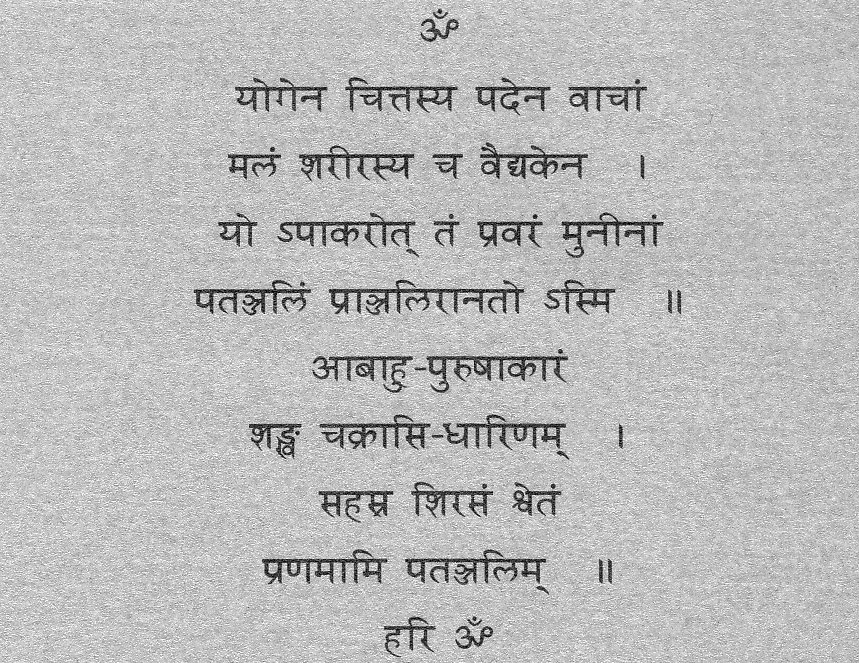
This invocation is a prayer honoring and expressing respect to Patanjali, the Indian sage and author of The Yoga Sutras. The Sutras are the text that first presented the art of yoga.
yogena cittasya padena vacam
malam sarirasya ca vaidyakena
yopakarottam pravaram muninam
patanjalim pranjaliranato’smi
abahu-purusakaram
sankha cakrasi dharinam
sahasra sirasam svetam
pranamami patanjalim
hari om
To the noblest of sages, Patanjali,
Who gave Yoga for serenity of mind,
Grammar for purity of speech,
and Medicine for perfection of the body, I bow,
I prostrate before Patanjali,
Whose upper body has a human form,
Whose arms hold a conch and disc,
Who is crowned by a thousand-headed cobra,
O incarnation of Adisesa,
my salutations to Thee.
(so THAT’s what Patanjali looks like….)
LIFE-CHANGING HANDJOB
[James] Joyce’s favorite writer was Dante, another exile, who created a verbal universe that he populated with old Florentine comrades and enemies, each caricatured with exquisite precision for all time, and who placed at the center of his imaginary cosmos a woman he had fallen in love with after seeing her on the street, Beatrice Portinari.
Joyce’s Beatrice, of course, was Nora [Barnacle]. She came from Galway, and was working as a chambermaid at Finn’s Hotel, in Dublin, when he saw her walking along Nassau Street in a manner suggesting that she was approachable. “Sauntering” is how Joyce later described it. He duly approached, and asked her for a date. She agreed, but stood him up. He sent her a note. “I went home quite dejected,” it said. “I would like to make an appointment but it might not suit you. I hope you will be kind enough to make one with me—if you have not forgotten me!” This time, they did meet. They walked to Ringsend, on the south bank of the Liffey, where (and here we can drop the Dante analogy) she put her hand inside his trousers and masturbated him. It was June 16, 1904, the day on which Joyce set “Ulysses.” When people celebrate Bloomsday, that is what they are celebrating.

 another eye opens