Archive for the 'quote of the day' Category

Quote of the day: JUNK FOOD

February 26, 2013

Steven Witherly, a food scientist, wrote a fascinating guide for industry insiders titled, “Why Humans Like Junk Food.” I brought him two shopping bags filled with a variety of chips to taste. He zeroed right in on the Cheetos. “This,” Witherly said, “is one of the most marvelously constructed foods on the planet, in terms of pure pleasure.” He ticked off a dozen attributes of the Cheetos that make the brain say more. But the one he focused on most was the puff’s uncanny ability to melt in the mouth. “It’s called vanishing caloric density,” Witherly said. “If something melts down quickly, your brain thinks that there’s no calories in it . . . you can just keep eating it forever.”

— Michael Moss, “The Extraordinary Science of Junk Food,” New York Times Magazine
cheetos

Quote of the day: VOWS

February 20, 2013

The holiday season is over, but these are still pretty good intentions to take in daily life (click to enlarge):

7vows

Quote of the day: MATING HABITS

February 18, 2013

MATING HABITS

A number of articles have been written that tried to attribute promiscuity or adultery in men to a brain disorder. I find this questionable for a number of reasons.

First, it’s worrying to me that a group of psychiatrists is trying to determine how much sexual activity and how many encounters we can want or fantasize about before we’re considered “mentally ill.” Given the embarrassing history of the DSM revisions and all the shoddy science informing them, why should we trust the APA to dictate yet another norm to us, much less accept its judgment about something so personal and intimate? People have markedly different appetites for sexual experiences. I’m uncomfortable with the idea that the APA would determine implicit guidelines, even quotas, for sexual activity, with a view to pathologizing behavior that is, in its estimation, “excessive.”

Even if you were in favor of creating such a disorder should the parameters for young adults be the same as for retirees with, most likely, much lower sex drives? Would the standard for “excessive” sexual activity be identical for a newly formed relationship and one that’s lasted decades? Why should we see a man’s cheating on his wife with multiple women as a result of brain chemistry rather than, say, marital unhappiness or personal recklessness? Personally I think expecting lifelong fidelity to one partner may be asking too much of certain people who are ill-suited to it, or who simply don’t believe monogamy is the best way to achieve emotional and sexual happiness. That’s surely up to them, isn’t it? Yet there’s an expectation, even a kind of demand, in our culture that one person will meet all of our needs – emotional and sexual. That can happen, and it’s great when it satisfies both parties, but those choices don’t work for everyone, and an organization seeking to pathologize “excessive” sexual activity needs to recognize that. We need broader public discussion of this complex issue rather than the kind of psychiatric judgment and ritualized shaming that goes on right now for those who prefer to remain non-monogamous. Good for them if that’s what they want.

— Christopher Lane, interviewed in The Sun

Lane-Chris

Quote of the day: SODERBERGH

February 7, 2013

SODERBERGH

I’m always curious to hear how something was made—though I have no interest in why an artist did something, or what his work means. Like with Jackson Pollock: I’m always interested in what kind of paint and canvas he used, I just don’t want to know what he meant. You’re supposed to expand your mind to fit the art, you’re not supposed to chop the art down to fit your mind…

One thing I do know from making art is that ideology is the enemy of problem-solving. Nobody sits on a film set and says, “No, you can’t use green-screen VFX to solve that because I’m Catholic.” There’s no place for that, and that’s why I’ve stopped being embarrassed about being in the entertainment industry, because I’m surrounded by intelligent people who solve problems quickly and efficiently, primarily because issues of ideology don’t enter into the conversation.

After making a lot more films, I realized that the movie and TV business is, for all its inefficiencies, one of the best-run big businesses we have. It’s very transparent, financially, and the only business I know of that successfully employs trickle-down economics: When movies and shows make money, the profits go right back into making more movies and shows, because the stock price is all about market share. And these people excel at problem-solving—that’s 99 percent of the job. I look at Hurricane Katrina, and I think if four days before landfall you gave a movie studio autonomy and a 100th of the billions the government spent on that disaster, and told them, “Lock this place down and get everyone taken care of,” we wouldn’t be using that disaster as an example of what not to do. A big movie involves clothing, feeding, and moving thousands of people around the world on a tight schedule. Problems are solved creatively and efficiently within a budget, or your ass is out of work. So when I look at what’s going on in the government, the gridlock, I think, Wow, that’s a really inefficient way to run a railroad. The government can’t solve problems because the two parties are so wedded to their opposing ideas that they can’t move. The very idea that someone from Congress can’t take something from the other side because they’ll be punished by their own party? That’s stupid. If I were running for office, I would be poaching ideas from everywhere. That’s how art works. You steal from everything….

There are lots of things that America does really well.

Like what?
Comedy. We have the best comedy in the world, hands down. I’m very proud, for example, that we have Chris Rock.

Are you a Louis C.K. fan?
I love his show. He seems like someone who would be fun to know. Seems like. And we do sports entertainment better than anyone. It’s phenomenal—the production values, the computer graphics, the commentators …

What teams do you follow?
I followed the Jets, simply because they were such a train wreck this season. But I follow stories more than teams—stories like Robert Griffin III or Colin Kaepernick.

Do you watch basketball?
I was going to say that the only thing I don’t really watch is basketball. It has to do with my personality, how I’m wired. You can’t make a play in the first quarter of a basketball game that will determine the ultimate outcome the way you can in baseball or football—like if a touchdown is scored in the first quarter, that could conceivably be the only big play of the game. So I can never figure out why I’m supposed to watch the first half of a basketball game.

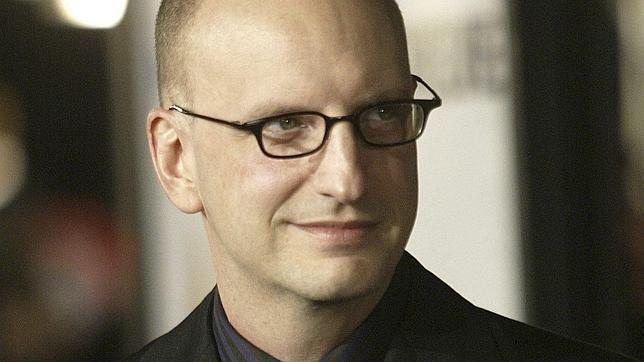
— Steven Soderbergh, interviewed in New York magazine

steven-soderbergh

Quote of the day: VAMPIRES

February 5, 2013

Disappointing, overrated, just not good: what was the last book you hated? Do you remember the last book you put down without finishing?

I’m not a big fan of the “Twilight” series. I can’t get past the premise, which is that a group of wealthy, sophisticated, educated, highly intelligent, centuries-old vampires, who can do pretty much whatever they want, have chosen to be . . . high school students. I simply cannot picture such beings sitting in a classroom listening to a geometry teacher drone on about the cosine. I have more respect for vampires than that.

— Dave Barry in the NY Times Book Review

barry_headshot-s6-c10