Archive for the 'quote of the day' Category

Quote of the day: SACRED SITES

June 25, 2013

SACRED SITES

People cannot maintain their spiritual roots and their connections to the past if the physical world they live in does not also sustain these roots. Informal experiments in our communities have led us to believe that people agree, to an astonishing extent, about the sites which do embody people’s relation to the land and to the past. It seems, in other words, as though “the” sacred sites for an area exist as objective communal realities. If this is so, it is then of course essential that these specific sites be preserved and made important. Destruction of sites which have come part of the communal consciousness, in an agreed and widespread sense, must inevitably create gaping wounds in the communal body.

Traditional societies have always recognized the importance of these sites. Mountains are marked as places of special pilgrimage; rivers and bridges become holy; a building or a tree, or rock or stone, takes on the power through which people can connect themselves to their own past. But modern society often ignores the psychological importance of these sites. They are bulldozed, developed, changed, for political and economic reasons, without regard for these simple but fundamental emotional matters; or they are simply ignored.

We suggest the following two steps.

1. In any geographic area – large or small – ask a large number of people which sites and which places make them feel the most contact with the area; which sites stand most for the important values of the past, and which ones embody their connection to the land. Then insist that these sites be actively preserved.

2. Once the sites are chosen and preserved, embellish them in a way which intensifies their public meaning. We believe that the best way to intensify a site is through a progression of areas which people pass through as they approach the site. This is the principle of “nested precincts”….

A garden which can be reached only by passing through a series of outer gardens keeps its secrecy. A temple which can be reached only by passing through a sequence of approach courts is able to be a special thing in a man’s heart. The magnificence of a mountain peak is increased by the difficulty of reaching the upper valleys from which it can be seen; the beauty of a woman is intensified by the slowness of her unveiling; the great beauty of a river bank – its rushes, water rats, small fish, wild flowers – are violated by a too direct approach; even the ecology cannot stand up to the too direct approach – the thing will simply be devoured.

We must therefore build around a sacred site a series of spaces which gradually intensity and converge on the site. The site itself becomes a kind of inner sanctum, at the core. And if the site is very large – a mountain – the same approach can be taken with special places from which it can be seen – an inner sanctum, reached past many levels, which is not the mountain, but a garden, say, from which the mountain can be seen in special beauty…Give every sacred site a place, or a sequence of places, where people can relax, enjoy themselves, and feel the presence of the place…And above all, shield the approach to the site, so that it can only be approached on foot, and through a series of gateways and thresholds which reveal it gradually.

— Christopher Alexander et al., A Pattern Language
sacred sites

Quote of the day: TECHNOLOGY

June 22, 2013

TECHNOLOGY

All the hype about how connected you are has contributed to a counternarrative — that, in fact, your generation is increasingly disconnected from the things that matter. The arguments go something like this: Instead of spending time with friends, you spend it alone, collecting friend requests. Rather than savoring your food, you take pictures of it and post them on Facebook.

I want to encourage you to reject the cynics who say technology is flattening your experience of the world. … Technology is just a tool. It’s a powerful tool, but it’s just a tool. Deep human connection is very different. It’s not a tool. It’s not a means to an end. It is the end — the purpose and the result of a meaningful life — and it will inspire the most amazing acts of love, generosity and humanity. …

I want you to connect because I believe it will inspire you to do something, to make a difference in the world. Humanity in the abstract will never inspire you in the same way as the human beings you meet. Poverty is not going to motivate you. But people will motivate you.

— Melinda Gates, 2013 commencement address at Duke University

Melinda-Gates-006

Quote of the day: QUEEN

June 20, 2013

QUEEN

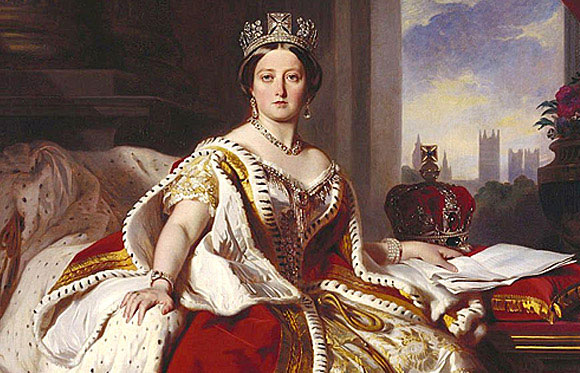
Eighteen-year-old Alexandrina Victoria became Queen of England on June 20, 1837. “Drina,” as she was known to her family, had a fairly quiet childhood. She kept a diary, so we know a lot about her private life. She was a lively and sometimes mischievous child, and she was well educated, but her mother was overprotective and kept her isolated at Kensington Palace in London.

When she was born, she was fifth in line for the throne behind her uncles and her father, and no one expected her to become a monarch. But one by one, her uncles and their heirs died, and by 1830, she was heiress presumptive, next in line for the crown. The dawn hours of June 20, 1837, brought the news her uncle King William the Fourth died, and she was now a queen. Her first demand was that she be given a room of her own and stop having to share with her mother.

She remains Britain’s longest-ruling monarch, having reigned for 63 years, seven months, and two days.

— The Writer’s Almanac

QVcoronation

Quote of the day: READING

June 2, 2013

READING

What were your favorite books as a child?

I know that as a working writer I should answer this question in such a way as to make me seem intelligent; maybe Twain or Dickens, even Hesse or Conrad. I should say that I read intelligent books far beyond my years. This I believe would give intelligent readers the confidence to go out and lay down hard cash for my newest, and the one after that.

But the truth is that the most beloved and the most formative books of my childhood were comic books, specifically Marvel Comics. “Fantastic Four” and “Spider-Man,” “The Mighty Thor” and “The Invincible Iron Man”; later came “Daredevil” and many others. These combinations of art and writing presented to me the complexities of character and the pure joy of imagining adventure. They taught me about writing dialect and how a monster can also be a hero. They lauded science and fostered the understanding that the world was more complex than any one mind, or indeed the history of all human minds, could comprehend.

— Walter Mosley, “By the Book,”  New York Times Book Review

walter mosley

Quote of the day: LIBERACE

May 30, 2013

LIBERACE

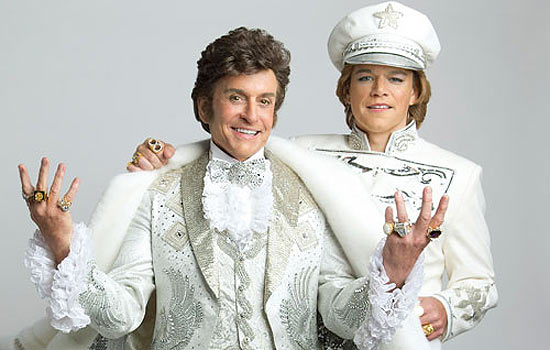
There’s been a long, headache-inducing debate about the question of straight male actors “playing gay”—whether it’ll ruin careers, whether audiences will find the actor hot, and on and on. It’s a nonsense issue that social progress has begun to render irrelevant, and Michael Douglas’s spectacular performance as Liberace demonstrates a rarely discussed benefit. Freed from his trademark macho sulk, Douglas gains all sorts of unexpected charisma—he’s genuinely funny and surprisingly sexy, even with his toupee off, looking like an unshelled tortoise. His eyes lit with amused intelligence, Douglas’s Liberace is your classic “bossy bottom,” a gleeful narcissist who treats his hangers-on as a mirror (sometimes literally: he pressures Scott [Thorson, his boyfriend] to get plastic surgery to look like a younger version of him). And yet the man’s a charmer. He’s playful, even when he’s selling the world a line. In bed, the two have loving, affectionate exchanges, candid about their histories. Liberace jokes with Scott about the rumors—ones he encourages, of course—that he’s engaged to the Olympic champion Sonja Henie. “As if I would marry an ice skater,” he scoffs. “Please. I mean, those thighs!”

behind-the-candelabra-hbo

The movie is frank, and often very funny, about Liberace’s sexual appetites, which he pursued without seeing any contradiction between them and his devout Catholicism. He has a penis implant, likes porn, and late in their relationship he pressures Scott to take risks that seem crazy for a closeted star, like sneaking into a sex store in ankle-length matching furs. When the camera captures Liberace peeking over a booth with a grin, the movie doesn’t pathologize his good time—from one perspective, he’s a sex addict; from another, a madcap adventurer. During an argument about what Scott will and won’t do in bed, Liberace does a hilariously profane imitation of the couple as a gay Ricky and Lucy. “Why am I the Lucy?” Scott complains. “Because I’m the bandleader,” Liberace explains, with impeccable logic. “With the night-club act.

— Emily Nussbaum, reviewing Steven Soderbergh’s Behind the Candelabra for The New Yorker