Archive for the 'quote of the day' Category

Quote of the day: NEW YEAR’S EVE

December 31, 2013

NEW YEAR’S EVE

The Times Square celebration dates back to 1904, when The New York Times opened its headquarters on Longacre Square. The newspaper convinced the city to rename the area “Times Square,” and they hosted a big party, complete with fireworks, on New Year’s Eve. Some 200,000 people attended, but the paper’s owner, Adolph Ochs, wanted the next celebration to be even splashier. In 1907, the paper’s head electrician constructed a giant lighted ball that was lowered from the building’s flagpole. The first Times Square Ball was made of wood and iron, weighed 700 pounds, and was lit by a hundred 25-watt bulbs. Now, it’s made of Waterford crystal, weighs almost six tons, and is lit by more than 32,000 LED lights. The party in Times Square is attended by up to a million people every year.

— The Writer’s Almanac

times-square-ball-2014

Quote of the day: LIBERATION THEOLOGY

December 19, 2013

LIBERATION THEOLOGY

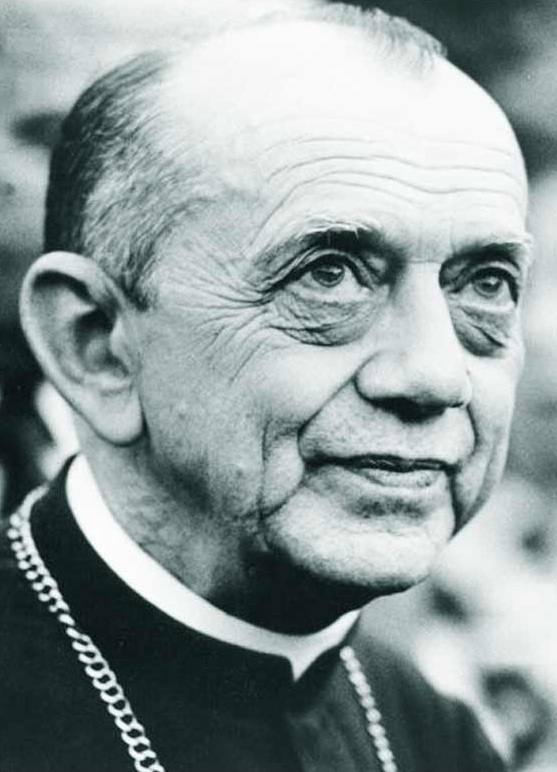
When I give food to the poor, they call me a saint. When I ask why the poor have no food, they call me a Communist.

— Brazilian Archbishop Hélder Câmara

archbishop_helder_camara

Quote of the day: THEATER

December 8, 2013

THEATER

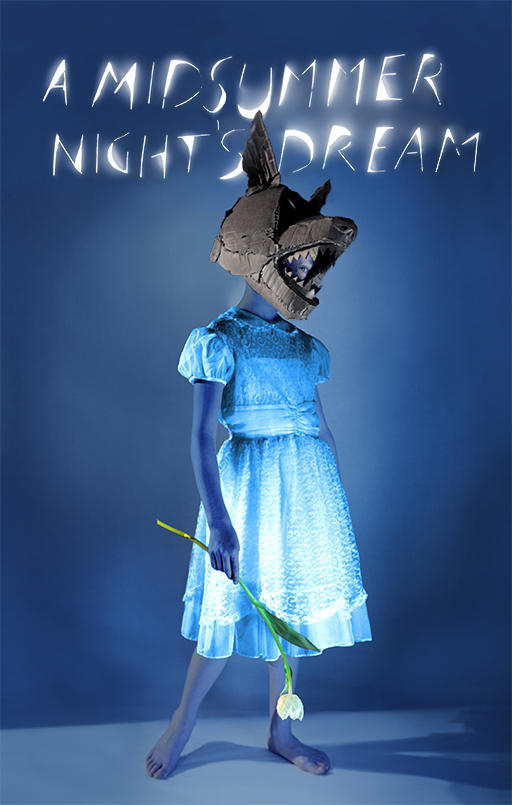
Alisa Solomon: You’re using children as the Fairies — right? — or the Elementals, as you are calling them.

Julie Taymor: Yes, there are 20 prepubescent kids. They not only play the Fairies, as written, but also play the forest. They’re the trees, the creatures, dogs, does, snakes, bats, moths. They are the wind, they’re your mind. They’re Puck’s posse, who terrorize the Mechanicals when Bottom changes. They’re an incarnation of the emotions of the lovers. They’re the nightmare of Hermia. They are the elements.

Solomon: Were you jumping off of the scholarly conjecture that historically, in the original production, the Fairies were indeed played by children?

Taymor: No, I don’t care what other productions did, though I would imagine that they would have been children. I think it works better with children, just the idea of it, the energy. Most initiation ceremonies all over the world are when you’re 13 or so, when you finally start to have sexuality that is recognizable and separates boys from girls, and they have to control their nature. That’s what we call it: our nature. So I wanted that feeling. What has been amazing in the rehearsals with these kids is the sheer joy they get out of a trap opening, or a line coming down. I mean, seriously, the unfettered, sheer, pure, direct emotion.

Solomon: Isn’t that the thrilling thing that theater lets all of us do — I mean, don’t we get to have that sort of childlike wonder?

Taymor: Well, that’s what I hope. It goes to a DNA part of us that relates to the first shadows on the wall that were made into foxes and rabbits. Where we suspended our disbelief and we said: “Oh yes, I know it’s a hand with a light behind it casting a shadow; but no it’s not, it’s a fox, it’s a rabbit.”

— Julie Taymor interviewed by Alisa Solomon about her production of A Midsummer Night’s Dream
MIDSUMMER-art-website

Quote of the day: FANTASIES

December 2, 2013

FANTASIES

Some erotic fantasies people want to enact, some they just want to talk about, and some they only want to think about. Knowledge is finite; imagination is endless. If we don’t want to act on a fantasy, the question is: Are we really not interested in its materializing, or are we ashamed of it? Sometimes our sexual fantasies baffle us. We can’t believe we’d actually be turned on by that. What does it say about us? We’re weird. But, like dreams, fantasies are symbolic scripts for our deepest emotional needs. They rarely mean what they appear to mean on the surface and must be decoded. What does being tied up mean to you? One person might say, “It helps me realize that I have no choice but to receive. I don’t have to feel guilty about receiving, because it’s the other person who decides to give.” As psychologist Michael Bader so beautifully says, a good fantasy both states the problem and offers the solution. I always ask: What need does this fantasy serve? I might fantasize about spreading peanut butter on my skin because I never thought someone could delight in licking me. It could be a redemptive experience: I can be delicious.

fantasies
If you want to know the deepest feelings a person brings to sex, ask about her fantasies. The gestures involved, the physicality of it, are like words for a poet. You need the words, but the poem has another meaning beneath the words. Octavio Paz says, “Eroticism is the poetry of the body, the way poetry is the eroticism of the word.”

— Esther Perel interviewed in The Sun

Quote of the day: PARENTING

December 1, 2013

PARENTING

You’ve said that couples focus too much on children in the United States, elevating their position in the family.

I’d say it’s an issue in the West in general, not just in the U.S. Never have children been so central to a marriage or so sentimentalized as they are today. Children used to provide us with their labor; now they give us meaning. They used to be an economic asset; now they’re an economic drain. Parents feel a need to participate in the child’s every activity, so there’s no space for the adults. Why can’t the children go to their sports practice alone? Does every parent have to stand on the sidelines and applaud each time the little Smurf touches the ball?

            I’m convinced this overwhelming focus on the children hurts the parents’ relationship. Fifteen years ago I wasn’t hearing couples say that they hadn’t gone out on a date in three years. This nonstop child-rearing sucks energy from the union. Women have long known that parental responsibilities decrease the erotic charge. Some couples can re-create that space for themselves when the kids leave home, but some cannot. So at this point we have three marriages: one before kids, one with kids, and one after kids. It’s not possible to have a model in which parents are available to their children to the degree we demand they be today and be emotionally available to each other in a romantic way. There needs to be a balance.

Moms and dads fear they’ll be bad parents if they don’t do every last thing they can for their children.

Yes, and God forbid my kid would feel bad or frustrated. What I’m seeing already in the younger generation of couples is that they are losing their desire for each other earlier and earlier – because if you haven’t known frustration, it’s harder to know desire. You need to not have in order to know what it’s like tow ant. We are raising a generation that has been protected from feeling bad. We used to believe frustration was part of growing up, that it built character. Now no one is left out of anything. Everybody gets a trophy at the end of the game.

            I’d be the last one to say that the previous generation was glorious, but we can see that certain child-rearing practices have their consequences – for the children and for the parents. Many couples with children aren’t closing the bedroom door. They’re expecting the kids to walk in. They have monitors so they can hear the little ones in their cribs at all times. Parents shouldn’t be afraid to say no to their kids; they shouldn’t be afraid of tantrums. Kids should be allowed to feel bad. it’s how children learn to be healthy adults. And parents shouldn’t feel guilty, thinking that every time kids feel bad it compromises their self-esteem.

— Esther Perel, interviewed by Mark Leviton in The Sun

perel2