Archive for the 'quote of the day' Category

Quote of the day: GUNS

June 24, 2016

GUNS

On March 17, 2000, [President Bill] Clinton and [Secretary of Housing and Urban Development Andrew] Cuomo announced the deal: among other things, Smith & Wesson agreed to develop a smart gun and take steps to prevent dealers from selling to criminals. Cuomo declared, “We are finally on the road to a safer, more peaceful America.” But on the day the deal went public the N.R.A. denounced Smith & Wesson as “the first gun maker to run up the white flag of surrender.” It released [smith & Wesson CEO Ed] Shultz’s phone number, and encouraged members to complain. He received many threats. One caller said, “I’m a dead-on shot, Mr. Shultz.” Another executive took to wearing a bulletproof vest, according to “Outgunned,” a history of gun-control politics, by Peter Harry Brown and Daniel G. Abel. Online, a boycott took hold, and sales of Smith & Wesson guns fell so sharply that two factories temporarily shut down. In ten months, the stock lost ninety-five per cent of its value, and the company was sold the next year for a fraction of its former worth.

–Evan Osnos, “Making a Killing,” The New Yorker, June 27, 2016
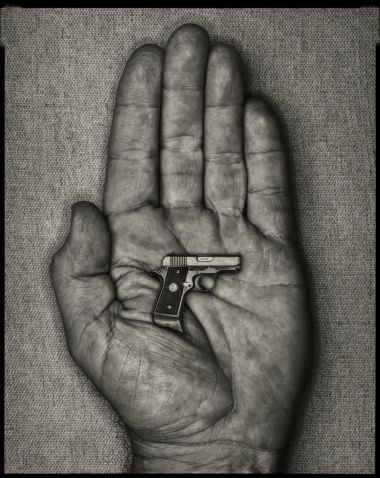
photo by Dan Winters

                                 (photo by Dan Winters)

Quote of the day: FORGIVENESS

June 5, 2016

FORGIVENESS

In Christianity, I believe, one is supposed to forgive others whether or not they know they did something wrong, whether or not they stop doing it. Jewish forgiveness is not this way. Maimonides wrote in the late twelfth century:

Repentance and Yom Kippur only atone for sins between Man and God. Sins between one man and his fellow are never forgiven until one pays up his debt and appeases his fellow. Even if he returns the money he owes he must still ask for forgiveness. He must appease and beseech until he is forgiven. If his fellow refuses to forgive him then he must bring a group of three of his friends (presumably the injured party’s friends) and go to him and ask him [for forgiveness]. If he still does not forgive him he must go to him a second and third time (with a different group of three people). If he still refuses to forgive him he may cease and the other is the sinner. If [the injured party] is his teacher (rebbe) he must go to him even a thousand times until he is forgiven. It is forbidden to be cruel and difficult to appease, rather, a person must be quick to forgive and difficult to anger and when the sinner asks for forgiveness he should forgive him willingly and wholeheartedly.

In other words, justice requires that the person causing the pain say that he caused it, take actions to undo it, and start an amends process. He must directly ask the harmed person for forgiveness three times. Like a lot of things in traditional Jewish culture, justice requires frank, truthful acknowledgement, recognition, and overt accountability on the part of the person who caused the pain. This is in strong contrast to a culture of passive forgiveness. “Father, they know not what they do,” Jesus said. The desire to “let things go and move on” because accountability is uncomfortable, troublesome, and difficult is very goyishe. This stark contrast proves, yet again, that the idea of “Judeo-Christian culture” is a fantasy. Jewish and Christian cultures are distinct, and they are motivated by very different value systems.

–Sarah Schulman, Israel/Palestine and the Queer International
Schulman_IsrealPalestine.jpg

Quote of the day: WYOMING

June 2, 2016

WYOMING

Wyoming is geographically huge—you could fit all of New England inside it, then throw in Hawaii and Maryland for good measure—but it is the least populous state in the Union; under six hundred thousand people live there, fewer than in Louisville, Kentucky…

The rest of the state could be daunting, with its successive mountain chains rising like crests on a flash-frozen ocean. But at least it had grandeur, and verdure. In the east, by contrast, you could travel five hundred miles and not see a tree. Precipitation was similarly scarce. The Homestead Act offered Western settlers a hundred and sixty acres—not enough, in that landscape, to keep five cows alive. In winter, the mercury could plunge to fifty degrees below zero. People froze to death in blizzards in May. Frontier Texas, the saying goes, was paradise for men and dogs, hell on women and horses. Frontier Wyoming was hell on everyone.

Perhaps because it so desperately needed people, Wyoming was, from the outset, unusually egalitarian. Beginning in 1869, women in the territory could vote, serve on juries, and, in some instances, enjoy a guarantee of equal pay for equal work—making it, Susan B. Anthony said, “the first place on God’s green earth which could consistently claim to be the land of the free.” Despite resistance from the U.S. Congress, Wyoming insisted on retaining those rights when petitioning for statehood; in 1890, when it became the forty-fourth state in the Union, it also became the first where women could vote. On the spot, it acquired its nickname: the Equality State.

–Kathryn Schulz in the New Yorker

IMG_0007

Quote of the day: BOWS

May 19, 2016

BOWS

Dee Hoty, my mother in Bright Star, said, “Can I just give you some suggestions on your bow?” My curtsy was kind of apologetic and subdued; it may have come from spending 14 years in Great Britain, where there’s a vibe of: “Bowing! We shouldn’t have to do this. It’s about art, and no one should have to clap at us.” Dee said: “You don’t need to be embarrassed by your bow. Go out there as the leading lady that you are, take in the audience, look at them and smile in a way that says, ‘Didn’t we all have a good time?’ So now I stand there for a moment and smile and do a proper waist bow with my hands interlaced.

–Carmen Cusack (photo by Sara Krulwich for the New York Times)

carmen cusack curtain call

Quote of the day: PMS

May 7, 2016

PMS

I’ve had two abortions and given birth to two children, and I suspect I had a miscarriage once. And of course I have had more periods than I can count. What I can tell you is that nature is bloody and brutal, and creation goes hand in hand with death. Saying goodbye to a fertilized egg can be a heart-wrenching experience – but so can saying goodbye to an unfertilized egg sometimes. The ovum is by far the largest human cell, and I believe that some of them have such a powerful longing to become alive that their “death” can be devastating. What we call PMS feels to me like a grief that sets in when an unfertilized egg gives up its quest for life. It’s as if a part of you has just died, and you feel anger and sadness, and you see darkness everywhere. There’s a lot of death involved in living, and I think women experience that intuitively in a way men don’t. An abortion is a death, yes, but so is a period. Because women are forces of nature, and subject to all the dark forces, they also represent choice, playing God every time they give birth or don’t. Damn it, you have to trust your individual choices.

–Ani DiFranco, interviewed in The Sun

ani difranco