Archive for the 'quote of the day' Category

Quote of the day: UNIQUE

October 20, 2017

UNIQUE

So much time has gone by! Napoleon’s house—
He never came—still stands in the Quarter.
Time ends all the good living that
Louis the Sixteenth, after the trouble, never
Experienced, all the sights Andrew
Jackson never saw in Pirate’s Alley.
Ask the alligators about heat and history.

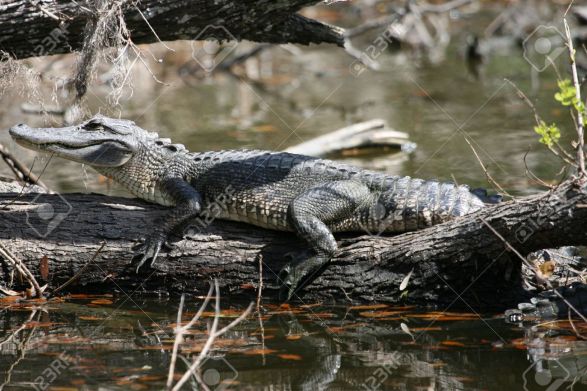
Out in the bayous we met a small alligator
Named Elvis. When we stroked his throat, he waved
His left claw at the world. It makes you think.
Alligators enjoy a world before the alphabet.

I don’t want to be who you are! I want
To be myself, someone playing with language.
Let us each be a sensualist
Of the imponderable! Let’s each do
What we want. I thread my way
Down alphabets to the place where Elvis is.

–Robert Bly, “The Day We Visited New Orleans”

Quote of the day: AWAKE

October 16, 2017

AWAKE

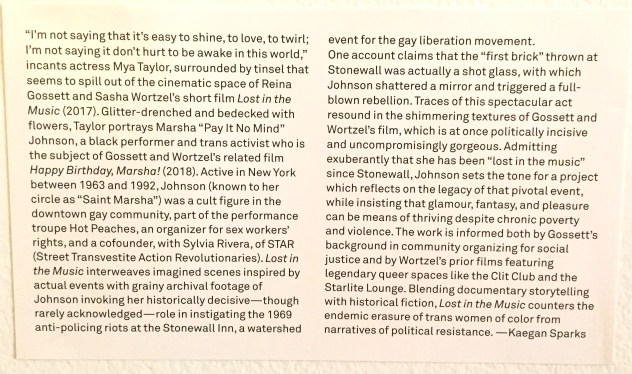
I’m not saying that it’s easy to shine, to love, to twirl
I’m not saying it don’t hurt to be awake in this world

–Marsha P. Johnson

Quote of the day: TENSION OF THE OPPOSITES

September 26, 2017

TENSION OF THE OPPOSITES

Holding an inner or outer conflict quietly instead of attempting to resolve it quickly is a difficult idea to entertain. It is even more challenging to experience. However, as Carl Jung believed, if we held the tension between the two opposing forces, there would emerge a third way, which would unite and transcend the two. Indeed, he believed that this transcendent force was crucial to individuation. Whatever the third way is, it usually comes as a surprise, because it has not penetrated our defenses until now. A hasty move to resolve tension can abort growth of the new. If we can hold conflict in psychic utero long enough we can give birth to something new in ourselves.

–Marion Woodman

Quote of the day: FEATHERS

September 22, 2017

FEATHERS

“Have you ever examined the feather of a bird?” Alfred Russel Wallace, the co-founder of evolutionary theory, once wrote. “No man in the world could make such a thing.” Feathers are even harder to fake than fur, their structure being vastly more complex and varied. Falcon feathers are stiff, like jet-fighter wings, for stability at high altitudes; owl feathers are soft and barbed, to muffle their descent on prey; sandgrouse feathers soak up water, so their chicks can sip them in the desert. The range of designs would put any wilderness outfitter to shame. Bald-eagle feathers zip up to keep out moisture; mourning-dove feathers rotate individually to control flight; golden-crowned-kinglet feathers keep the bird’s body so insulated that it may be a hundred and forty degrees warmer than the air. “If human hair were similarly diverse,” Thor Hanson writes, “a person might combine a neatly trimmed Van Dyke beard with a teased hairdo taller than the Statue of Liberty.”

Yet none of this compares to the complexity of bird color. The leaf green of a quetzal’s tail, the cerulean blue of a tree swallow’s back, the golden-eyed wings of a great argus are the work of an infinitely patient genetic process—mutation upon mutation, like paint layered on canvas. Some feathers are pigmented. Others have structural color: nanoscopic bubbles, lattices, and granules that scatter and refract light. Still others have both, the ornithologist Richard Prum, a professor at Yale, told me. The green broadbill of Sumatra and Borneo, for instance, has feathers that blend prismatic blue with pigmentatious yellow. Add to this the ultraviolet hues that birds can see and we can’t, and you can start to imagine how bedazzling a Himalayan monal truly is—how nearly hallucinatory to the female watching him dance. “All the beauty is in the feathers,” Wallace wrote. “I almost think a feather is the masterpiece of nature.”

–Burkhard Bilger, “Feathered Glory,” The New Yorker

Quote of the day: VALUE

September 12, 2017

VALUE

Human beings are prone to learn early in life to associate vulnerability with powerlessness and to associate the adrenalin rush of anger with personal power. The problem is that states of vulnerability are more often triggered by the diminishment of self-value rather than by the loss of power. When people feel devalued, they try to feel superior by exerting power over others overtly through aggression or by mentally devaluing them. Naturally, this tendency backfires: most of the emotional distress that clients suffer—indeed, much of the psychological dysfunction in the world in general—comes from substituting power for value. Temporarily feeling more powerful by driving aggressively or shouting at your spouse is unlikely to make you feel more valuable. In fact, it usually does the opposite. It subverts the motivational function of devalued states, which is to get us to enhance the value of our experience. Substituting power for value is like eating when your body tells you to urinate, sleeping when it tells you to eat, or taking an amphetamine when it tells you to sleep.

Steven Stosny, Psychotherapy Networker