Archive for the 'quote of the day' Category

Quote of the Day: WITNESS

March 10, 2019

WITNESS

To witness is to ignore as little as possible. Because a judgment so often impairs the ability to notice what doesn’t conform with it, the witness chooses for the time being to keep judgment at a distance.

If she watches a documentary about a singer’s alleged history of child abuse, she doesn’t fall back on the clichéd excuse that she couldn’t look away from it. She admits that she chose to look. Having chosen, she has a responsibility to herself to notice what she sees — the changing colors of the singer’s umbrellas as he goes each day into court, the leather chair in which the accuser sits before the camera.

It’s the thoughtless stare — agape, gawking, able to absorb only the most salacious aspects of the story — that leads to the quick high and nauseating crash of outrage. But the witness, by maintaining her sensitivity to these neutral details, and not only to the fraught allegations, breaks the habit of shaming and allows herself to fashion her own moral response.

Too often we may feel ourselves trapped in the jury box, but we put ourselves there, and we can choose instead to sit in the chair of the witness. Freed from the responsibility to deliver a verdict, our new role is to separate assumption from knowledge. Watching this way, whether on the page or on the street, releases us from the tyranny of our own estimations, even regarding people who have behaved in ways we might otherwise consider wicked.

It is a no less morally awake response than holding a person in judgment.

–Salvatore Scibona

illustration by Sarah Mazzetti
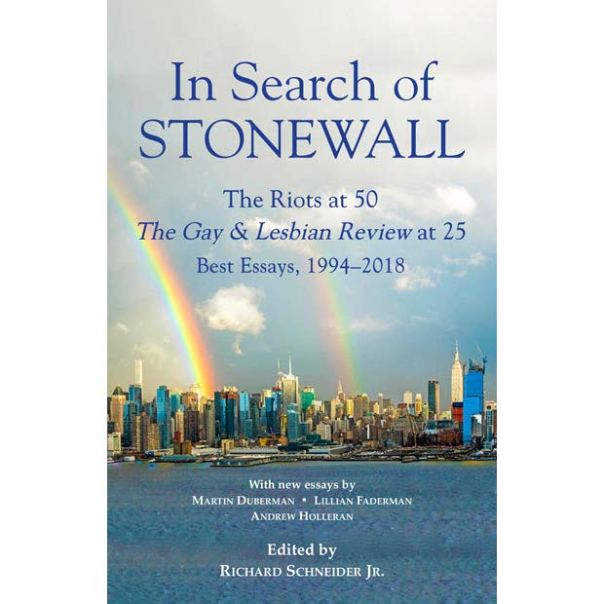
Quote of the Day: HUMAN RIGHTS CAMPAIGN

March 9, 2019

HUMAN RIGHTS CAMPAIGN

To live in Washington is to learn the technique of avoidance. My office sits at the corner of 22nd and I Streets NW, an intersection at the heart of George Washington University, frequented by nonprofit canvassers. Colleagues and I avoid walking by these people if possible, which it rarely is, or at least avoid engaging with them as we rush by, not listening to whatever cause they’re selling. The Human Rights Campaign (HRC) keeps a steady stream of “fundraising associates” at this intersection, mostly young gay men who think working for the HRC buys some credibility, and young women who look like they were dressed by their gay male colleagues.

Recently a cute guy asked if I wanted to become an HRC member as I walked from office to Metro. “No, sorry,” I said, but he jogged to catch up: “Do you not care about gay rights?” I stopped and in no uncertain terms, barked a treatise on why the HRC does not represent my political interests or those of a queer politic writ large. Their politicking for most of the past decade has centered primarily on three issues: 1) the overturning of “Don’t Ask, Don’t Tell,” thus allowing gays to serve openly in the U.S. military, i.e., an intrinsically homophobic war machine whose very existence should be open to debate; 2) the expansion of state-sanctioned marriage to gay and lesbian couples on both the state and national level, which invites the government to enter into their relationships with the promise of certain benefits such as health care and tax breaks, which should be available to everyone; and 3) the ranking of companies as “gay friendly” on an annual “Corporate Equality Index.”

This last project drives me bat-shit crazy, as it labels otherwise horrible multinational corporations as stellar places for gays to work. The HRC’s 2015 list includes oil companies that are wreaking havoc on the environment (Chevron, Exxon-Mobil); pharmaceutical companies more concerned with inflated profits than providing essential medicines to the sick and suffering (GlaxoSmithKline, Pfizer); defense companies developing weapons that allow the U.S. and its allies to take over countries and their resources (Lockheed Martin, Northrop Grumman); financial conglomerates that caused the 2008 global economic crisis and used subsequent public bailouts to pay bonuses to already overcompensated executives (Goldman Sachs, JPMorgan Chase); and finally, because of its political maneuvering and takeover of the world’s farming and food, the one that many regard as the most evil corporation on the face of the earth: Monsanto. And yet, because these companies train employees in diversity, or give partner benefits, or financially support the gay rights lobby, they are deemed the best places for us to work.

–D. Gilson, “‘Homonormativity’ and Its Discontents,” Gay and Lesbian Review (reprinted in the essay anthology In Search of Stonewall )

Quote of the day: KNOWLEDGE

February 22, 2019

KNOWLEDGE

It is dangerous to be right in matters on which the established authorities are wrong.

–François-Marie Arouet, better known as Voltaire

Quote of the day: SMARTPHONES

February 10, 2019

SMARTPHONES

I cannot get used to seeing myriads of people in the street peering into little boxes or holding them in front of their faces, walking blithely in the path of moving traffic, totally out of touch with their surroundings. I am most alarmed by such distraction and inattention when I see young parents staring at their cell phones and ignoring their own babies as they walk or wheel them along. Such children, unable to attract their parents’ attention, must feel neglected, and they will surely show the effects of this in the years to come…

These gadgets, already ominous in 2007, have now immersed us in a virtual reality far denser, more absorbing, and even more dehumanizing. I am confronted every day with the complete disappearance of the old civilities. Social life, street life, and attention to people and things around one have largely disappeared, at least in big cities, where a majority of the population is now glued almost without pause to phones or other devices—jabbering, texting, playing games, turning more and more to virtual reality of every sort.

Everything is public now, potentially: one’s thoughts, one’s photos, one’s movements, one’s purchases. There is no privacy and apparently little desire for it in a world devoted to non-stop use of social media. Every minute, every second, has to be spent with one’s device clutched in one’s hand. Those trapped in this virtual world are never alone, never able to concentrate and appreciate in their own way, silently. They have given up, to a great extent, the amenities and achievements of civilization: solitude and leisure, the sanction to be oneself, truly absorbed, whether in contemplating a work of art, a scientific theory, a sunset, or the face of one’s beloved.

A few years ago, I was invited to join a panel discussion about information and communication in the twenty-first century. One of the panelists, an Internet pioneer, said proudly that his young daughter surfed the Web twelve hours a day and had access to a breadth and range of information that no one from a previous generation could have imagined. I asked whether she had read any of Jane Austen’s novels, or any classic novel. When he said that she hadn’t, I wondered aloud whether she would then have a solid understanding of human nature or of society, and suggested that while she might be stocked with wide-ranging information, that was different from knowledge. Half the audience cheered; the other half booed.

–Oliver Sacks, “The Machine Stops”

Illustration by Seb Agresti

Quote of the Day: SILENCE

January 25, 2019

SILENCE

In interviews, silence is the weapon, silence and people’s need to fill it—as long as the person isn’t you, the interviewer. Two of fiction’s greatest interviewers—Georges Simenon’s Inspector Maigret and John le Carré’s George Smiley—have little devices they use to keep themselves from talking and to let silence do its work. Maigret cleans his ever-present pipe, tapping it gently on his desk and then scraping it out until the witness breaks down and talks. Smiley takes off his eyeglasses and polishes them with the thick end of his necktie. As for me, I have less class. When I’m waiting for the person I’m interviewing to break a silence by giving me a piece of information I want, I write “SU” (for Shut Up!) in my notebook. If anyone were ever to look through my notebooks, he would find a lot of “SU”s.

–Robert A. Caro

December 11th 2017: author Robert Caro inside his offices in New York City USA. Photo by Phil Penman