Archive for the 'In this week's New Yorker' Category

In this week’s New Yorker

September 8, 2013

weirded out by fruit cartoon
I didn’t read everything, but I did read Rachel Aviv’s long, long, long profile of NYU president John Sexton, David Finkel’s very moving report on psychiatric treatment for traumatized veterans, and Jill Lepore’s essay on Woodrow Wilson, which told me a lot of things I never knew about our 28th president. Namely: he spent the last seventeen months of his presidency almost entirely confined to his bed [after a massive stroke], the state of his health unknown to the public and little known even to his own cabinet. He could see only out of a tiny corner of his right eye….He could not use his left arm. He could barely walk.” Wilson was president of Princeton University and governor of New Jersey before occupying the White House, and he’s only U.S. president who earned a Ph.D.

exercity cover
Eagle-eyed copy editor that he is, Andy pointed out the curious contradiction in the sign on the building on Bruce McCall’s cover (above) — intentional or not?


dog genie cartoonanteaters cartoon

In this week’s New Yorker

August 18, 2013

The one must-read article is “Taken,” Sarah Stillman’s shocking article on the outrageous misuse of civil forfeiture laws to strip American citizens of their belongings without charging them with any crime. Just when you think you’ve heard it all, along comes another insane way for police departments to harass poor and non-white Americans.

I haven’t gotten around to reading Zadie Smith’s story, “Meet the President!” But I will.

meet the president

Former editor-in-chief Robert Gottlieb, as plugged-in a publishing insider as there is, in his review gently spanks Boris Kachka for “Hothouse,” his somewhat credulous, gossipy history of the famed Farrar Straus & Giroux. And in “Compositions in Black and White,” Paige Williams profiles Bill Arnett, a collector of outsider art by black Southerners, in such a way as to manifest both his good-hearted championing of artists who would otherwise never be seen AND his obnoxious grandstanding.

My favorite cartoon:

picture of my crotch cartoon

In this week’s New Yorker

July 28, 2013

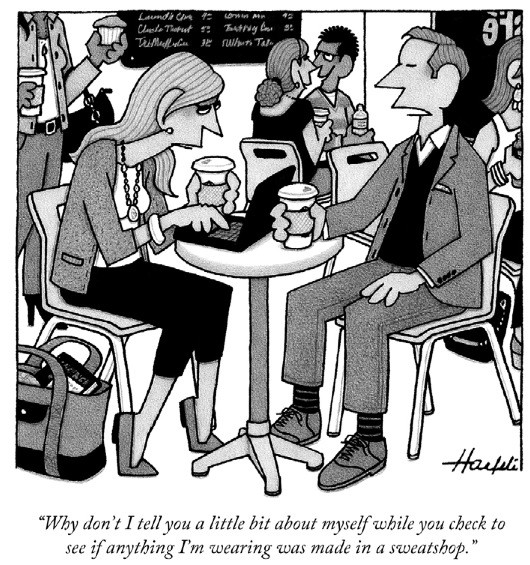
sweatshop cartoon
The most interesting read is Atul Gawunde’s Annals of Medicine piece called “Slow Ideas,” which painstakingly lays out the evidence of how changes in medical practice (and profound social interaction) actually take place and what impedes them. The fascinating example he uses focuses on efforts to reduce infant mortality in Uttar Padesh, one of India’s poorest states. Nurses are taught a checklist of steps to take in the course of childbirth. They’re simple and commonsensical (wash your hands, keep the newborn warm by having the mother hold it against her own skin) but were often overlooked by harried, undertrained nurses.

“In the era of the iPhone, Facebook, and Twitter, we’ve become enamored of ideas that spread as effortlessly as ether. We want frictionless, ‘turnkey’ solutions to the major difficulties of the world—hunger, disease, poverty. We prefer instructional videos to teachers, drones to troops, incentives to institutions. People and institutions can feel messy and anachronistic. They introduce, as the engineers put it, uncontrolled variability.

“But technology and incentive programs are not enough. ‘Diffusion is essentially a social process through which people talking to people spread an innovation,’ wrote Everett Rogers, the great scholar of how new ideas are communicated and spread. Mass media can introduce a new idea to people. But, Rogers showed, people follow the lead of other people they know and trust when they decide whether to take it up. Every change requires effort, and the decision to make that effort is a social process.”

aldridges

I also read with interest Alex Ross’s essay on Ira Aldridge, America’s first Shakespearean leading actor, and his daughter Luranah, one of the first non-white singers to appear in European productions of Wagner’s operas.

In this week’s New Yorker

July 20, 2013

new yorker 7-22 cover
Three major reporting stories dominate: Rachel Louise Snyder’s very detailed, very upsetting, very informative article, “A Raised Hand,” about domestic violence and a tool that social service agencies have developed to successfully gauge the level of risk for lethal attacks by deranged partners (mostly husbands); “The Beach Builders,” John Seabrook’s fascinating story about how the Jersey Shore has been repeatedly repaired after storm damage, most recently after Hurricane Sandy; and Peter Hessler’s Letter from Cairo, which really helped me figure out how to understand the ouster of President Morsi and the current state of affairs in Egypt and educated me about Tamarrod, the inspiring ad hoc grass-roots political movement that managed to oust Morsi with phenomenal speed. Hessler’s lengthy report capitalizes on little glimpses I’ve absorbed — reading in an email recently about how the Muslim Brotherhood attempted to shut down Egypt’s opera houses and ballet companies — and accompanies George Packer’s lead editorial, which succinctly encapsulates the existential crisis that Egyptian politics faces. “The core political problem in Egypt,” writes Packer, “is one that almost always arises from years of dictatorship: a culture of suspicion and confrontation, a mentality of winner-take-all. Islamists and secular-minded Egyptians regard one another as obstacles to power, not as legitimate players in a complex game that requires inclusion and consensus…Nothing good will come of the overthrow of Morsi’s bad government if Egypt’s next transition doesn’t find a place for all of the country’s legitimate factions.”


In this week’s New Yorker

July 4, 2013

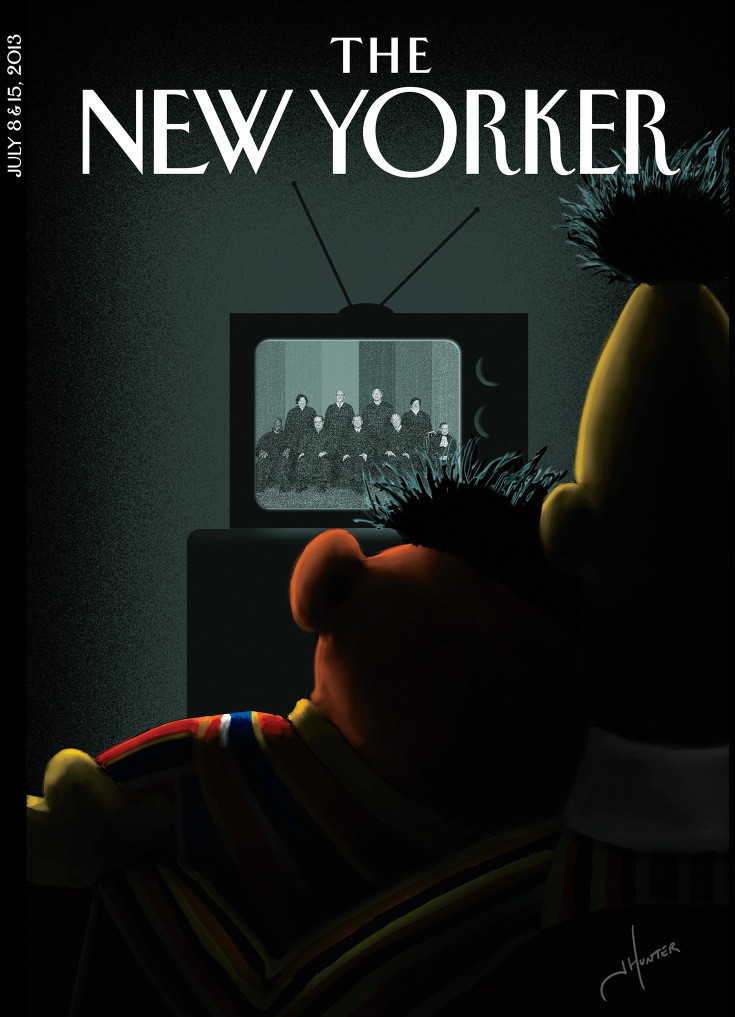
moment of joy
In addition to the heart-tugging cover image (Jack Hunter’s “Moment of Joy”), lots of substance:

* Patrick Radden Keefe’s Reporter at Large piece on mining and corruption in Guinea, focusing on an Israeli billionaire named Beny Steinmetz;

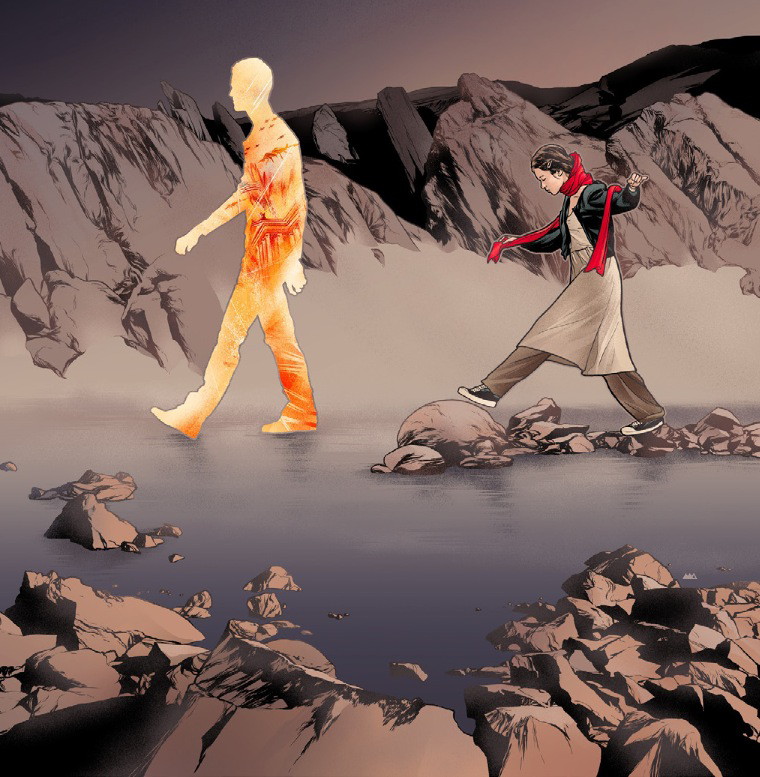
* Jeffrey Bartholet’s Letter from Dharamsala contemplating the legacy and spreading of Tibet’s self-immolation protests;

aflame

* “The Prodigal Daughter,” a beautifully written piece by Jill Lepore about her life as a writer, her mother’s aspirations for her, and the life of Benjamin Franklin’s sister, Jane;

* Louis Menand’s vividly detailed summary of the Voting Rights Act of 1965 — how it evolved, its importance, what the Supreme Court’s ruling last week means; and

* an Annals of Technology piece by Nicholson Baker, who memorably described the iPad as a “slip-sliding rectangle of joy” and in this article travels to Korea on a pilgrimage to the world’s center of manufacturing liquid-crystal display (LCD) products, another beautifully written piece. Sample: “In a Best Buy one Sunday afternoon, standing in front of the wall of TVs in the back, I thought, Just look at all these incredible screens. We take for granted that we can drive to a nearby chain store and buy a thin, luminous, elegant, unflickering dispenser of imagery that will make the world seem newly hosed clean and polyurethaned, that will melt the finely fringed nerve endings of our pleasure centers, all for several hundred dollars.”