Out of the blue someone e-mailed me wanting the bibliographical reference for a review I did in 1980 for the Soho News of two Canadian films, Montreal Main and The Rubber Gun. Both terrific queer films. I haven’t thought about them in years. So I thought I’d post the piece, just for the record, here and in my writing archive.
LIVES MORE INTERESTING THAN MOVIES
Montreal Main
Directed by Frank Vitale
Screenplay by the cast
The Rubber Gun
Directed by Allan Moyle
Screenplay by Steve Lack with Allan Moyle and John Laing
Both Montreal Main and The Rubber Gun focus on a fascinating bunch of Canadian artists/ personalities/street people who play themselves in fictionalized accounts of their everyday lives – like Andy Warhol’s “superstars,” but with a crucial difference. The Warhol movies glamorized the deluded Hollywood fantasies and decadent behavior; the Canadians use documentary as a form of self-criticism.
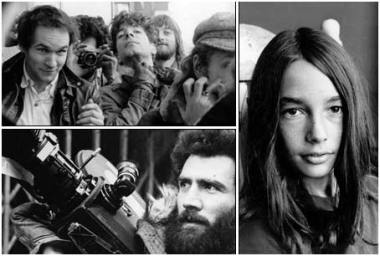
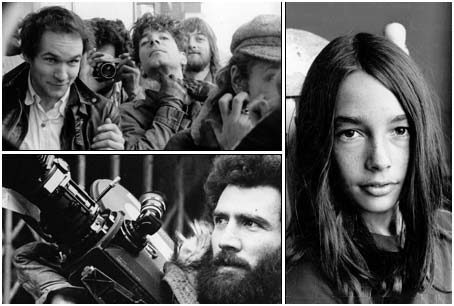
Montreal Main roughly chronicles director Frank Vitale’s brooding infatuation with the darkly androgynous 13-year-old son of his friends Anne and Dave. Frank’s uncertainty and pedophilic guilt, the boy’s sexual ambivalence, the hypocrisy of the supposedly hip parents who freak out at Frank’s friendship with Johnny – these situations are subtly established, examined, questioned. Though many scenes are crudely staged and the semi-improvised dialogue often seems stilted, the movie has the eerie, almost therapeutic sense of exposing conflicts in the guise of fiction that these people couldn’t face in real life. While the inarticulate, subsexual interactions between Frank and Johnny give the film a lyrical center, it takes place against the backdrop of Montreal’s bohemian underground, depicted in a freewheeling flurry of adventures that place on the Main, Montreal’s version of Times Square*, where the druggies, freaks and perverts hang out and where tantalized teens play pinball and get their first taste of sin.
Two guys who play minor roles in Montreal Main – sexy, speed-rapping Steve Lack and bumbling Bozo (Allan Moyle**) – are the stars of The Rubber Gun. On the one hand, the film is a taut, underground crime caper. Lack plays a high-energy ringleader who deals dope to support his career as a painter. A big shipment of dope is sitting in a railroad station locker, just waiting to make Steve and his gang of hangers-on rich and happy. But when the narcs start closing in, Steve backs out, leaving a bunched of hopped-up amateurs to try to pull off the deal.
On the other hand, The Rubber Gun is an ironic and extremely personal stylization of relationships within the group. Bozo plays a square sociology student who hangs out with the group to write a paper on “the drug culture” and unwittingly sets them up to be busted. His hopelessly unhip perceptions, delivered as voiceovers (“They spent so much time trying to die”), are a perfect send up of the “nice boy” who falls in with a fast crowd. And although the characters start out as an attractive, witty, fun bunch of people, they are slowly stripped of their glamor. In scenes remarkable for their self-knowledge, Lack acts out the stultifying paranoia of the drug culture and indicates his irritation with the parasitical friends who live off his energy and money and give nothing back; space cadet Pam Holmes taunts her effeminate junkie husband, Pierre, for not supporting her and her daughter Rainbow.

The original impulse for these movies was to capture on film this gaggle of zany personalities and the vibrant, hyped-up textures of their lives, and that’s what makes them fun to watch. (Steve Lack, above, in particular leaps off the screen with his sparkling blue eyes and wicked sense of humor.) But these are by no means home movies. Despite its crude surface, Montreal Main uses its jerky cross-cutting for dramatic effect, and The Rubber Gun is actually a dazzling, well-structured piece of film. There’s a scene in which Lack plays with three-year-old Rainbow – alternating between campy baby talk and drug-dealer angst – that is a tiny marvel of both innovative composition and bravura acting.
These two films played briefly this week at the Bleecker Street Cinema as part of Altermedia’s Gay Film Festival – no doubt because their sophisticated handling of sexual subtexts is a lesson for filmmakers everywhere – but they ought to be shown around New York more often.
Soho News, June 18, 1980
* Perhaps needless to say, this was written back when Times Square was a sleazy paradise, rather than the suburban mall it’s turned into now.
**The writer/director of Times Square and Pump Up the Volume, among others.



 another eye opens