Archive for the 'Culture Vulture' Category

Culture Vulture: OF MONTREAL, VANYA AND SONIA AND MASHA AND SPIKE, AMOUR, FOOTNOTES IN GAZA, and SINISTER POP

December 26, 2012

MUSIC: I’m a relatively newbie among fans of the wacky art-rock outfit who call themselves Of Montreal (yet hail not from Canada but from Athens, GA)(of course). Themselves is actually Kevin Barnes, the lead singer and songwriter, although he has a hardy crew of regular musicians, and their stage shows include four dancer-mime-acrobats who run around changing costumes for every number, often appearing inside big pieces of stretchy fabric. (Check out their zesty website here.)
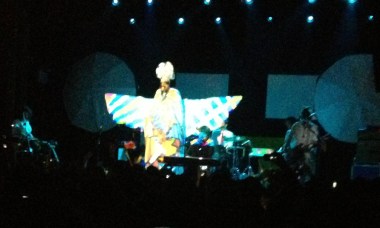
12-11 of montreal bestThey first entered my world when they were peaking in popularity, playing Radio City Music Hall (with Janelle Monae as opening act). After a couple of medium albums, they’re back to playing places like Webster Hall, where I happily caught up with them December 11. They pleased the crowd with some of the most popular tunes from their dozen albums, including “Gronlandic Edit,” “Oslo in the Summertime,” “Suffer for Fashion,” and “Wraiths Pinned to the Mist and Other Games.” As these titles suggest, Barnes’ lyrics mix the language of everyday romance with erudite literary references – not tossed about glibly but seriously digested, if delivered with insouciance. His androgynous persona and falsetto singing conjure Prince and David Bowie, although the combination of propulsive dance rhythms, blue-eyed soul singing, and nonstop psychedelic theatrics suggest Hall and Oates meet Mummenschanz on mushrooms. Me like.

THEATER: Christopher Durang’s new play Vanya and Sonia and Masha and Spike at Lincoln Center Theater sold out quickly (undoubtedly because the cast includes Durang’s longtime partner-in-comedy Sigourney Weaver) so I had to pull strings to get tickets. I’m such a fan of Durang’s deranged plays, wickedly fun yet deeply melancholic and unnervingly close to the bone at times. A subset of his plays parody famous playwrights – most of them are brief, jokey sketches, but this one is a full two-act and very satisfying free-standing play that simultaneously tweaks Chekhov and absorbs elements of Three Sisters, The Seagull, and Uncle Vanya. Vanya (David Hyde Pierce) and his adopted sister Sonia (the divine Kristine Nielsen) live in the house left to them by their late parents in Bucks County, Pennsylvania, although the mortgage and upkeep have been maintained by their famous-actress sister Masha (Weaver, who plays shallow with more wit and depth than anyone else I can think of), who breezes in for a visit with her hunka-hunka wannabe-actor boyfriend Spike (Billy Magnusen, good and game for stripping down to his briefs for much of the show), who excites the heartstrings of Vanya’s young neighbor Nina (Genevieve Angelson) and the suspicion of his voodoo-psychic house-cleaner Cassandra (Shalita Grant).
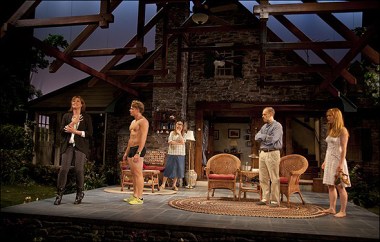
VanyaSonia06These actors turn in pitch-perfect performances thanks to the guidance of Nicholas Martin, the director most adept at managing Durang’s wild swings from pathos to outrageous farce to naturalistic drama to meta-vaudeville. The scene in which spinster Sonia talks on the phone to Joe, a widower she’s just met at a neighbor’s party, is a bravura one-act play in itself, all the more miraculous because Nielsen’s mad mugging nevertheless stays within range of the scene’s delicate emotion. (It reminded me of the Gentleman Caller scene in The Glass Menagerie, although it’s a monologue, so more like the letter scene in Martin McDonagh’s The Beauty Queen of Leenane, as I remember it performed by the great Brian O’Byrne.) My least favorite thing about the play was Vanya’s second-act rant against modern technology and social media – I suppose it’s a reasonable contemporary depiction of Chekhov’s Vanya to have him sentimentalize “the good old days” of licking stamps, but it veers a little too close to easy pandering to stodgy Twitter-hating change-resisters (“You kids get off my lawn!”). Since The Seagull is pretty much my favorite play in the world, I loved the weird experimental play that Vanya has written and (like Treplev) gets Nina and Cassandra to perform. There’s a moment where Nina, given a gentle acting suggestion by Vanya, wonders out loud about which kind of actress she should be, that pretty much sums up what The Seagull is about in 90 seconds. Great fun. You can read the issue of the Lincoln Center Theater Review devoted to this how online here.

MOVIES: The end of the year gets to a movie-watching frenzy, especially because my social circle includes several people with access to “For Your Consideration” DVDs of the big Oscar hopeful movies. I haven’t seen everything, and there are certain blockbusters and critic’s favorites I’m actively avoiding (Les Miserables, Silver Linings Playbook), but I did get to see Amour, Michael Haneke’s intense, elliptical portrait of an aging couple’s dance with mortality, performed with incredible depth and courage by Emmanuelle Riva and Jean-Louis Trintignant. On Christmas Day at Stephen Holden’s house, we watched Leos Carax’s crazy Holy Motors, a very interesting existential-futuristic meditation on life as performance, reminiscent I suppose of Lars von Trier’s films but much more interesting to me, because visually rich and surprising (David Lynch-y), with a great central performance by Denis Lavant. Fascinating conceit: he leaves home in the morning and gets into a stretch limo whose driver, Celine, takes him around to nine different appointments, for each of which he undergoes a costume-and-makeup transformation. Is he a commercial actor hired for these fleet gigs, or is this an allegory about the journey of life, or compartmentalized contemporary existences?
pasolini arabian nights
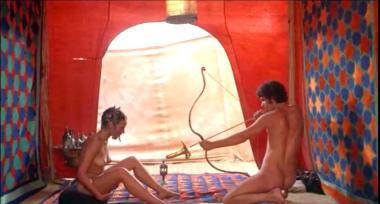
Alongside the holiday movie glut, the Museum of Modern Art has been conducting a retrospective of the complete films of Pier Paolo Pasolini, including some short films you’re not going to find on Netflix. I was fascinated by the form and content of Appunti per un’Orestiade Africana (Notes for an African Oresteia), even as Pasolini’s interactions with African scholars, actors, and reg’lar people veered from naïve to condescending to earnestly ideological – until we got to the section where he has Gato Barbieri in a recording studio trying out an excruciating free-jazz score for two singers and saxophone. Le Mura di Sana’a (The Walls of Sana’a) is a brief, beautiful anthropological document preserving on film an ancient town in Yemen that probably by now has been completely overtaken by crappy new apartment buildings. This town becomes one of several stunning locations for Il Fiore delle Mille e Una Notte (Arabian Nights), my favorite of the films I’ve seen in this series – sexy, beautiful, and extremely weird, in that sense faithful, I suppose, to the erotic fairy tales from the original. (You can, if you’re so inclined, watch the whole thing on YouTube here.) I could barely believe my eyes during the sequence when a demon picks up our main protagonist in Yemen and flies through the air with him to Nepal, where he turns him into a monkey. O, Pasolini! His ideas and his visual sweep are rich and compelling, and I love his taste for the amazing faces of ordinary people, but he’s perfectly content with untrained actors who aren’t very good. Case in point: his Oedipus Rex, in which the title role is played by Franco Citti, a rough hyper-masculine molto-Italiano guy Pasolini cast in many of his films but whose performance just becomes tedious shouting after a while. I’m looking forward to seeing Pasolini’s Medea, starring Maria Callas, and (if I can stomach sitting through it again) his provocative, upsetting Salo, or the 120 Days of Sodom.angelhead
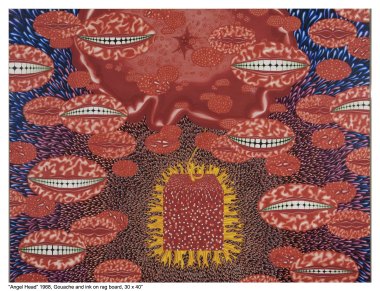
ART: Speaking of museums, I made a special trip to the Whitney Museum to check out the new show called “Sinister Pop,” the latest show built from rummaging around in the museum’s permanent collection. I liked the sound of it, but it’s quite small and unimpressive – not nearly as sinister or dark as we’re led to believe. I came across only one painting that intrigued me, Ching Ho Cheng’s “Angelhead” (above) and I was mildly interested to overhear an official tour guide in front of the Andy Warhol canvas Before and After mention that Warhol got a nose job when he was 21. Otherwise, I would say the show is skippable. While I was there, on a snowy afternoon, I spun through the floor devoted to Richard Artschwager, whose work does nothing for me, and also the show by Wade Guyton, whose work isn’t especially beautiful but I found it to be conceptually inspiring and made me want to go home and spend some time making my own work by printing over pages ripped out of books and magazines.
sacco-footnotes-in-gaza

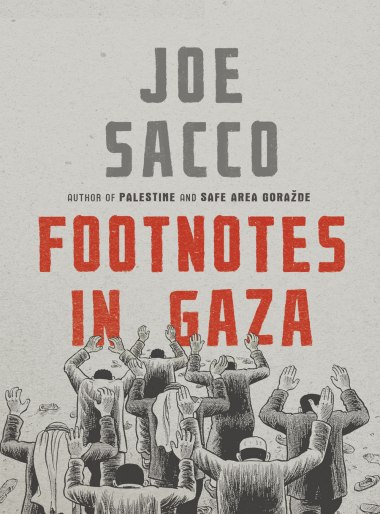
BOOKS: What do we call Joe Sacco? He’s not exactly a graphic novelist but a journalist who works in graphic-novel format, although his publisher goes ahead and calls him a cartoonist on the jacket copy for his latest book, Footnotes in Gaza, which was published in 2009. He works somewhere at the crossroads of Art Spiegelman, R. Crumb, and Harvey Pekar, cartoonists whose stories have humor but aren’t exactly “comic books.”  I intensely admired Sacco’s Safe Area Gorazde, which was based on the four months he spent in Bosnia is 1995-96. In that book (you can download a PDF excerpt here), he did an amazing job of untangling and explaining to readers the complex history, unfolding enmities, and chaotic everyday life in the Muslim enclave of Gorazde during the time when Bosnian Serbs made the world acutely aware of the activity we now call “ethnic cleansing.” Sacco brings the same dogged attachment to first-hand reporting, multi-source fact-checking, willingness to probe beyond official sources, and exquisite attunement to the complicated emotions of a population under siege to Footnotes in Gaza. The new book centers its gaze on one particularly horrendous chapter of Israeli-Palestinian history in 1956, when Israeli soldiers conducted raids of two towns in the Gaza strip looking for guerrilla fighters (fedayeen), along the way murdering hundreds of Palestinian refugees living there. Reporting this story today (little-known by most people but vividly remembered by the survivors who still live in Rafah and Khan Younis) gives Sacco the ability to place that history in the context of the ongoing brutalizing of Palestinian citizens by the Israeli military, which many people (including Israelis) consider shameful. It’s a spectacular piece of storytelling in the Ugly Truths Department. You can see a ten-minute presentation about the book by the author on YouTube here.
Culture Vulture: Ann Hamilton’s THE EVENT OF A THREAD at Park Avenue Armory

December 9, 2012
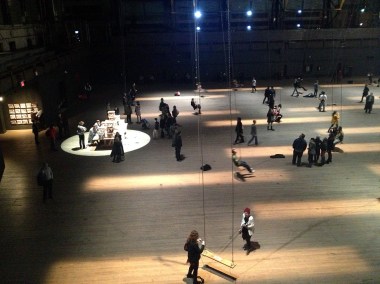
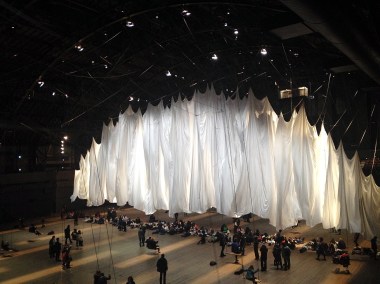
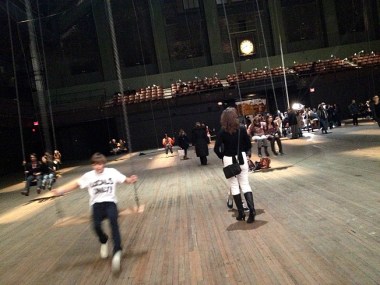
Ann Hamilton's art installation "the event of a thread" has taken over the Park Avenue Armory between now and January 6. A gigantic white curtain bisects the space, rising and falling and billowing in response to the movements of audience members swinging on 42 swings hung from the ceiling.

Ann Hamilton’s art installation “the event of a thread” has taken over the Park Avenue Armory between now and January 6. A gigantic white curtain bisects the space.

The curtain rises and falls and billows in response to the movements of audience members swinging on 42 swings hung from the ceiling.

The curtain rises and falls and billows in response to the movements of audience members swinging on 42 swings hung from the ceiling.

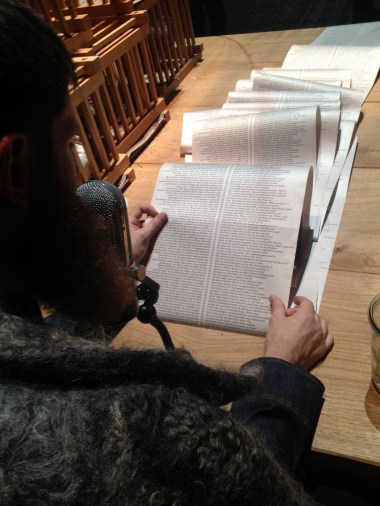
Just inside the entrance, two actors from Anne Bogart's SITI company sit at a table reading to carrier pigeons in cages.

Just inside the entrance, two actors from Anne Bogart’s SITI company sit at a table reading to carrier pigeons in cages.

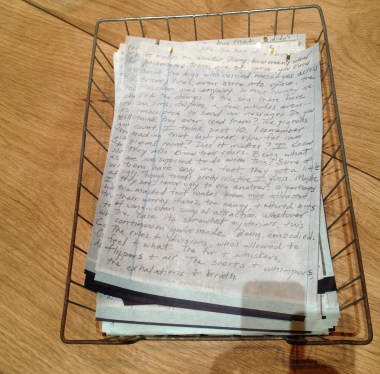
The two performers are reading different philosophical Gertrude Steinian texts, both printed out on long scrolls. (click on the picture to enlarge and read it for yourself)

The two performers are reading different philosophical Gertrude Steinian texts, both printed out on long scrolls. (click on the picture to enlarge and read it for yourself)

What they're reading into the microphones is broadcast to 42 transistor radios inside paper bags that the audience can carry anywhere in the space.

What they’re reading into the microphones is broadcast to 42 transistor radios inside paper bags that the audience can carry anywhere in the space.

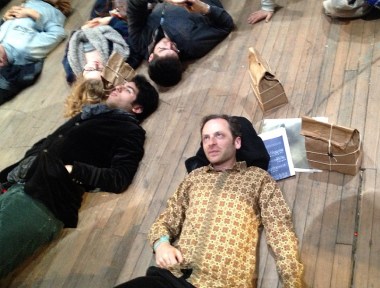
A popular activity is to lie on the floor looking up at the curtain with the murmuring radio/bag nearby. This is my friend David Haiman -- he's the one who suggested we check out the show between dress rehearsal and our gamelan concert at the Indonesian Consulate on E. 68th Street.

A popular activity is to lie on the floor looking up at the curtain with the murmuring radio/bag nearby. This is my friend David Haiman — he’s the one who suggested we check out the show between dress rehearsal and our gamelan concert at the Indonesian Consulate on E. 68th Street.

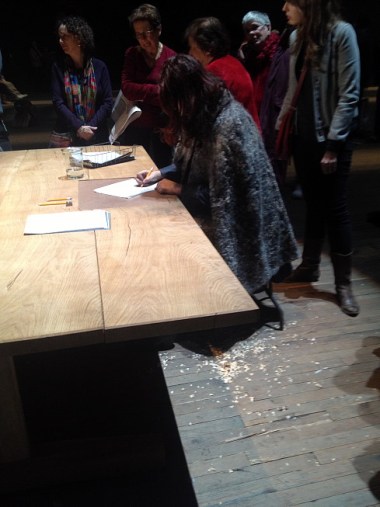
At the other end of the space, another performer is sitting with her back to the curtain writing nonstop, reflecting on what's happening and free-associating. The sound of her pencil scratching can also be heard over the radio broadcast.

At the other end of the space, another performer is sitting with her back to the curtain writing nonstop, reflecting on what’s happening and free-associating. The sound of her pencil scratching can also be heard over the radio broadcast.

No such thing as writer's block for her!

No such thing as writer’s block for her!

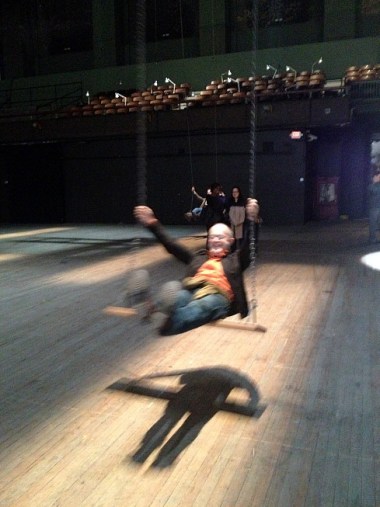
Of course I took a turn on a swing!

Of course I took a turn on a swing!

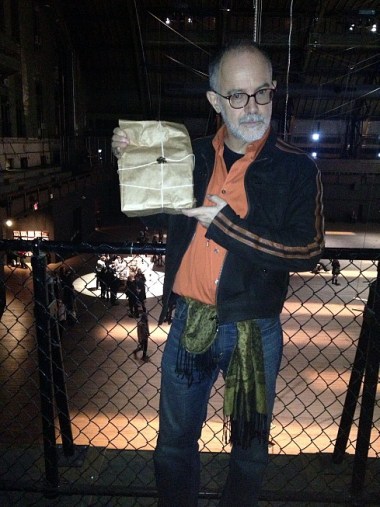
Twenty minutes before the show ends every day, a soprano comes out onto a balcony over the entrance and sings a song composed for the occasion by David Lang. Beautiful show! More fun that "Discovering Columbus" and right up there with the best audience-participation installations in MOMA's atrium.

Twenty minutes before the show ends every day, a soprano comes out onto a balcony over the entrance and sings a song composed for the occasion by David Lang. Beautiful show! More fun than “Discovering Columbus” and right up there with the best audience-participation installations in MOMA’s atrium.

Culture Vulture: new movies, music, and books

September 6, 2012

Film

AI WEIWEI: Never Sorry – Alison Klayman’s documentary is a must-see. The Chinese artist-activist may be equally well-known for designing the “Bird’s Nest” stadium for the 2008 Beijing Olympics and for being held under house arrest incommunicato by the Chinese government for eight months. The film tracks his courageous commitment to the subversion of oppression and his deep humanity. The film, and his artistic career, pivots on the Chinese government’s reprehensibly stonewalling response to an earthquake in Sichuan where badly built school buildings collapsed and killed hundreds of children. The artist not only made art work in several media documenting the names of those who died (more than the government did) – he also created a beautiful and heartbreaking art installation on the outside wall of a museum in Munich: brightly colored children’s backpacks spelling out, in Chinese, “She lived happily for seven years.”

I WANT YOUR LOVE Travis Mathews’s debut as writer-director mashes up gay mumblecore drama with explicit sex scenes shot not like porn but with all the fumbling, ambient lighting, imperfect bodies, and squirtation of real-life sex. The ambition somewhat outweighs the execution – your reaction will depend on how interesting you find the central character, a drifting thirtysomething performance artist on his last day in San Francisco before moving back in with his parents in Columbus, Ohio.

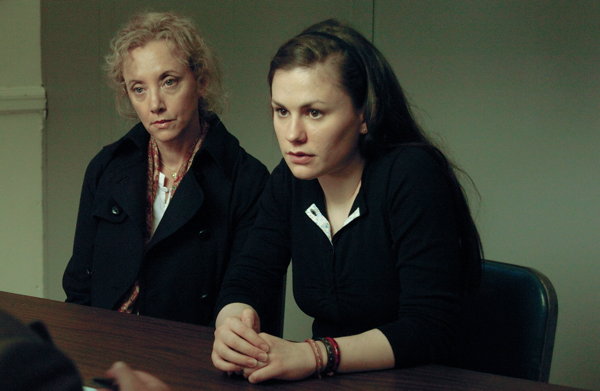
MARGARET – Playwright and filmmaker Kenneth Lonergan (best known for This Is Our Youth onstage and the screenplay of You Can Count on Me) had a lot of support and good intention behind his first feature as director, but after four years in the making it limped into movie theaters for a week and then went straight to DVD. It’s a fascinating film – not a triumph but not a failure, either, although it seems indulgently long and pokey at 2 hours 40 minutes, what could it possibly have looked like at its original four-hour length? The story grapples with a teenage girl’s struggle to place herself in a moral universe after witnessing a fatal bus accident that she was partly responsible for. The philosophical and emotional concerns are honest, and they’re played out with the recognizable detail of an Alice Munro story or one of Woody Allen’s more somber New York dramas (Interiors or Crimes and Misdemeanors). Many striking performances, most notably by J. Smith-Cameron (Lonergan’s spouse, below left), Jeannie Berlin, and Anna Paquin (below right) as the main character, whose name is not Margaret – you’ll have to watch the film to grasp the significance of the title, and I hope you will.

NEIGHBORING SOUNDS — Kleber Mendonça Filho’s first film is a knockout debut. Set in Recife (where I’ll be visiting next month!), the film tracks several overlapping stories with an unusual, supernaturally confident ability to court yet dodge genre expectations, boggling between comedy and menace, beautifully shot, full of large and small surprises. Very satisfying. Seeing it gave me an opportunity to check out the new Elinor Bunin Monroe Film Center at Lincoln Center, which is spiffy and comfortable, with unusual tasty snacks for sale.

JACK SMITH AND THE DESTRUCTION OF ATLANTIS Mary Jordan’s ambitious documentary of the influential yet elusive queer-theater legend Jack Smith (forever associated with his then-racy, now rather tame first major film, Flaming Creatures) rounds up great talking heads and archival footage, putting it all together in a somewhat demanding collage format that suits its subject.

Music

Dead Can Dance, Anastasis – wow, just when it seemed Lisa Gerrard had disappeared into the land of making eerie movie soundtracks forever, a new Dead Can Dance album. With lush orchestral arrangements, even, some of which suggest North African Arab orchestras. The plush sound really adds something. Often this group wears me out fast – a little bit of Gerrard’s keening vocals in her made-up language and Brendan Perry’s leaden earnestness can go a long way. But there are only two tracks that drag here (“Kiko” and “Opium”), otherwise it’s a welcome return to form.

Justin Vivian Bond, Silver Wells – I’m not always a fan of La Bond’s singing when it gets shrieky and histrionic, but damn, V has excellent taste in songs. Reclaiming Ronee Blakley’s “Dues,” the climactic ballad from Robert Altman’s Nashville, already wins my heart, but Bond’s second solo album also includes good choices by Kate Bush, Tracy Chapman, Joni Mitchell, and Leonard Cohen (“Famous Blue Raincoat,” one of my all-time favorite songs, frequently performed, but rarely with the same attentiveness to the gender-slipperiness of the lyric’s love triangle). Aside from “Dues,” my favorite track is Joni’s “Let the Wind Carry Me,” in which the songwriter recalls her stormy teenage relationship with her parents. Bond’s deep personal engagement with the lyric justifies shifting a couple of key words. “She don’t like my kick pleat skirt/She don’t like my eyelids painted green /She don’t like me staying up late/In my high-heeled shoes/Living for that Rock’n’Roll dancing scene/Papa says “Leave the boy alone, Mother/he’s looking like a Movie Queen…”

Books

Edmund White, SACRED MONSTERS – The great novelist’s anthology of essays about artists (most but not all of them gay) shows off all his best traits: staggering erudition (he happens to know that a close friend of Ford Madox Ford was Lewis Carroll’s cousin), generosity to other artists, relish of gossip, and disarming self-effacement. “In those  days I was a resentful young man,” he says in one essay, and he describes himself as “one of the duller bulbs” in the orbit of poet James Merrill, which I doubt. He writes about Martin Amis and Nabokov as well as he does big names like Tennessee Williams and Christopher Isherwood and nearly forgotten folks like Glenway Wescott and Howard Sturgis. He expands my vocabulary (“mute” is the word for a falcon’s shit, and the French expression en secondes noces is marvelously precise and useful). And he tosses off great lines with satisfying regularity: “I learned from that experience that you can say someone is the best poet since Dante but if you mention in passing that he should stop dying his hair or lose ten pounds he will never ever forgive you.

Julie Salamon, WENDY AND THE LOST BOYS – I confess that I put off reading Julie Salamon’s biography of Wendy Wasserstein for a long time because I assumed the title to be an insulting infantilization of the gay men who formed the center of the late playwright’s social circle. After starting and then happily, avidly consuming the book, I realize that the author meant something else completely. It’s not that playwrights Christopher Durang and Terrence McNally, producer Andre Bishop, director Gerald Gutierrez, and designer William Ivey Long were aimless lads stuck somewhere between adolescence and adulthood. It’s that however much time each of these guys spent being the love of Wendy’s life, they were lost to her by virtue of sexual preference. (In an earlier, more closeted era, she might have wed one of them and created a perfectly satisfying mariage blanc. That she and McNally did indeed conduct a clandestine sexual relationship is one of the book’s more gossipy tidbits.) There’s more to be written about the particulars of Wasserstein’s theatrical achievements, but this volume thoroughly documents Wasserstein’s extraordinary birth family and the ins and outs of her professional associations. Wendy was someone I knew slightly and liked very much — but then she was like Nora Ephron that way, a famous and accomplished woman who was such a down-to-earth New Yorker that it was easy to feel like the story of her life is also the story of yours.

Culture Vulture: Woody Allen, Scissor Sisters, Frank Langella, ACT UP documentary, Louis C.K.

July 8, 2012

TO ROME WITH LOVE– I’ve always been a big Woody Allen fan. When I first moved to New York, I would line up to see his movies on opening day. I treasured the many years when I got invited to advance press screenings, so I got to sit in the plush seats at the Broadway Screening Room (Manhattan’s finest) and see the movie before anyone knew anything about it. Somewhere in the early 21st century, that interest took a dip, as Woody’s movies got pretty thin and bad. I actually skipped eight of them, starting with The Curse of the Jade Scorpion. I only saw one of his London movies, Match Point. But his other European films have been a cut above the recent crap – Vicky Cristina Barcelona, Midnight in Paris, and now To Rome with Love, in which Woody gives himself a huge canvas, a large cast, and a Fellini-esque freedom to wander back and forth between surrealism and living-room naturalism. The several stories don’t interlock, and they don’t even take place in the same time frame or the same language. One subplot rather wittily comments on reality TV and another is equally clever in reflecting the banal absurdism of shows like “American Idol” and the unlikely stardom of Susan Boyle. As a travelogue, it’s strictly lowest-common-denominator, but it’s fun to spy Piazza Navona, the Spanish Steps, Piazza Venezia, etc. The one booboo I caught was when Jesse Eisenberg and Ellen Page stroll through a produce market handling the veggies themselves, which is just not done, as this sign from a Bologna vendor attests:


MAGIC HOUR – The new Scissor Sisters CD didn’t really kick in for me until I jacked into my super-fine bass-boosting Klipsch headphones. Now I’m so addicted to it I can’t get certain fun, trashy dance tracks out of my head – namely, “Shady Love,” “F*** Yeah,” and the instant gay classic “Let’s Have a Kiki,” with one of those Anna Matronic spoken-word raps that you can’t help memorizing and repeating until the people around you have to beg you to stop. The pop triumph of the summer so far.

DROPPED NAMES – Frank Langella’s memoir, subtitled “Famous Men and Women As I Knew Them,” is a fascinating mixture of humility and arrogance, compassion and snarkery, shrewd observation and self-protection, radical honesty and annoying coyness. There are 65 chapters, one per famous name, each one seen through the lens of Langella’s particular fixations: how theater and film colleagues view the acting profession, how showbiz celebs handle their drinking, how nimbly they stroke the author’s ego, and sex sex sex sex sex. Often adoring, often admiring from a distance, sometimes petty and competitive, Langella (above) writes only about dead people (with the exception of Bunny Mellon, who’s 102 and gave her blessing. I found myself annoyed a lot by Langella’s tone – he describes his two dates with Elizabeth Taylor in great detail, emphasizing that they never had sex; but then he’s very coy about Jackie Kennedy Onassis, implying that they had a sexual relationship without actually stating it. He never admits to any homosexual liaisons himself but lectures Dominick Dunne on his deathbed for not coming out to his children. Nevertheless, he reveals a lot about both himself and his subjects. I’m haunted by his description of Ida Lupino, fired after four days’ work on a film version of Tennessee Williams’ Eccentricities of a Nightingale because the director couldn’t answer her keenly intelligent questions, and his account of meeting Bette Davis very briefly in a hotel lobby, watching her tell her young female assistant “Get the car” in a tone of voice that implied “…or I’ll kill you.” I love that he chatted with Jessica Tandy about sex in Broadway dressing rooms and that he asked Brooke Astor how she lost her virginity. All in all, a quirky and artful (and compulsively readable) survey of a rich, full life.

UNITED IN ANGER – Jim Hubbard’s documentary film at the Quad Cinema culls 90 minutes from the vast archive that he and Sarah Schulman have created with the ACT UP Oral History project. The film distils the important story of how a grass-roots community activist movement changed the American medical establishment’s approach to AIDS forever and leaves it to viewers to extrapolate the rest – how that example has and hasn’t affected medical treatment, government policy, world health initiatives, and the perception of gay and lesbian people since then. For me, watching the film was deeply personal and unavoidably emotional – this was the story of my life from 1987, when I attended the first ACT UP demonstration on Wall Street, through 1992, when ACT UP responded to the first Gulf War by taking over Grand Central Station declaring a “Day of Desperation” and demanding “Money for AIDS, Not for War.” I took part in “Storm the NIH” and spent the night in jail in Albany as a footsoldier in ACT UP’s army of lovers, friends, sick and dying warriors. The story is told both through contemporary footage (shot by video activists, many of them very young lesbians) and talking heads – people like Ann Northrup, Jim Eigo, Ron Goldberg, Mark Harrington, Gregg Bordowitz. These people were the heroes of Monday night ACT UP meetings at the Center because of their intelligence, courage, passion, political savvy, and commitment to direct action, all of which the film conveys. Like the best AIDS documentation, it’s sad, infuriating, and inspiring. This film limits its ambition to telling the history of ACT UP – I would have been happy to watch an hour more, and for the sake of Andy or others of his younger generation I might have wanted some way of stepping back and placing ACT UP in the context of gay culture, its relationship to Gay Men’s Health Crisis (the world’s first community-based AIDS health organization) and spin-offs such as Queer Nation, Lesbian Avengers, and (you could say) Occupy Wall Street. Nevertheless, it’s a good honest piece of work. Go see it. It will eventually be available digitally and on DVD, but seeing it in the movie theater, as a community experience, is the best way.

LOUIE – I’m chewing my way through the second season of Louis C.K.’s astonishing comedy series on Netflix. It’s so weird, so strangely paced, so original, so nakedly honest about race and parenting and the horrendous awkwardness of middle-aged dating that I can’t help feeling like Pavlov’s dog: when one episode is over, the only think to do is click the button, continue to next episode….

Culture vulture: a week in New York

June 24, 2012

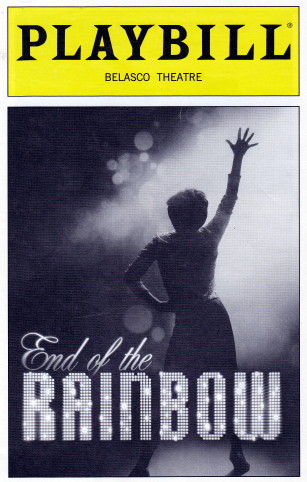
June 15 – I wasn’t planning to see End of the Rainbow, Peter Quilter’s play about Judy Garland, but Kai invited me to go with him, so I figured why not? Well, it turned out to be everything I’d suspected – a mediocre play, an unnecessary theatrical event. I thought I might at least admire Tracie Bennett’s much-ballyhooed performance as La Garland, but I didn’t see any of the extreme desperation or corrosive self-hatred others reported. I’m told Bennett has scaled her performance back since the show opened on Broadway. Understandable, but no fun for latecomers like me.

June 16 – Andy and I stood in line for two and a half hours to get free tickets to see Daniel Sullivan’s production of As You Like It at the Delacorte Theater in Central Park, largely on the basis of having admired his Merchant of Venice on Broadway. Both productions featured Lily Rabe in the central female role. But the production was so unengaging that we ended up leaving at intermission. John Lee Beatty’s set design was drab, and although Rabe was lively enough, most of the performances seemed stiff, distant, and/or unintelligible. I felt most sorry for poor Stephen Spinella, playing a nearly static Jacques in a bad wig and scraggly beard. The one pleasure of the evening came from Steve Martin’s surprisingly fresh bluegrass-scented score, beautifully played by an onstage band (Jordan Rice, Tony Trischka, Tashina Clarridge, Skip Ward).

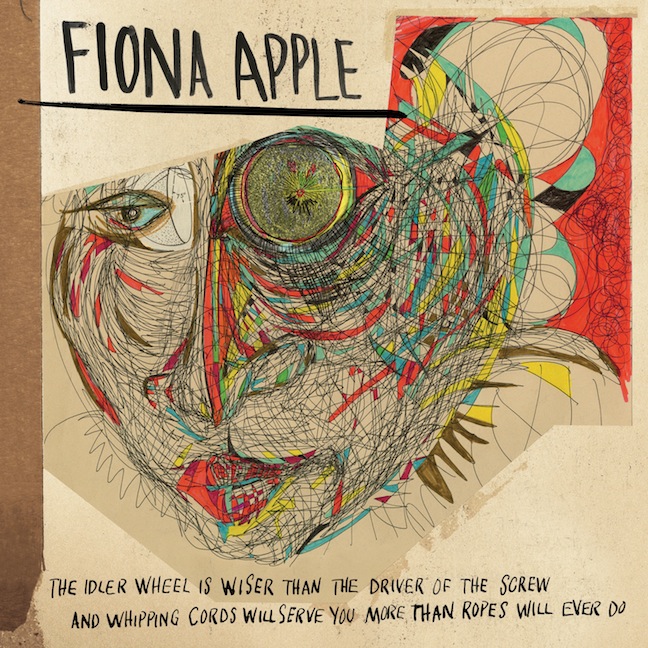
June 18 – I’m very much liking Fiona Apple’s new album, another one with an unwieldy title that most commentators have consented to just call The Idler Wheel…. I was tripped out by Dan P. Lee’s profile of Apple in New York magazine – fascinating and yet disturbingly intimate. I guess if you’re going to stay up all night getting “very stoned” and drunk several times with the subject you’re writing about, you might as well include it in the story. But it ended up seeming creepily exhibitionistic, and I wondered if Apple really consented to Lee’s hyper-exposure.

June 20 – Andy and Jonathan accompanied me to see the Keith Haring show at the Brooklyn Museum. Both of them enjoyed it very much – the show focuses on very early, pre-stardom Keith Haring (essentially 1978-1982), before either of them lived in New York or were aware of Haring’s work. Since I was living in NYC and working for the Soho Weekly News during much of that time, I was around when the wunderkind was making his chalk drawings on subway posters, and one aspect I loved about the show was its time-capsule flavor (all praises to the late Tseng Kwong Chi, who documented all this stuff at the time, because his photos preserve ephemeral work for posterity). I also liked getting a look at Haring’s art-school notebooks, the unexpectedly academic working-out of what became iconic images, the room-sized painting The Matrix (above), and his early inconsequential videos. But ultimately I was unsatisfied with the narrow range of the work on exhibit because I couldn’t help holding it up against the vast range of what came later, the stuff he showed at the Tony Shafrazi Gallery and the increasingly ambitious multimedia collaborative stuff that MOMA beautifully showcased in the retrospective that happened before Haring left us way way way way way too soon.

We toodled around a couple of other exhibits at the museum, checking out the small but intriguing display of newspaper articles written by Djuna Barnes, quirky intrepid gal-reporter pieces from the lesbian novelist best-known for Nightwood. (The show is installed in the corridor next to Judy Chicago’s iconic The Dinner Party.) We also walked through the “American Identities: A New Look” show, a potpourri of stuff from the permanent collection, including an early figurative painting by Mark Rothko (Subway, above; I never knew he did anything but the color-field paintings for which he’s famous), some striking neo-icons by Kehinde Wiley (below), and John Koch’s titillating painting The Sculptor.

June 20 – Andy had never seen Bonnie Raitt live, so it was doubly joyous for us to see her opening night at the Beacon Theater. The temperature had soared to the high nineties, and Bonnie gave thanks that the concert wasn’t outdoors, like some of the shows on her tour. The concert was terrific. She looks amazing, she led a smoking hot band, and she sang her heart out. She did almost her entire new album, Slipstream, but my favorites were two great ballads radically re-arranged: John Prine’s “Angel from Montgomery,” and then her own “I Can’t Make You Love Me,” which I didn’t dream of hoping she would even be willing to sing nowadays. It was actually the first encore because she said she didn’t know where else to put it in the show. I found it a little strange that she seemed to apologize for doing ballads and felt like she had to immediately do a bunch of peppy songs right afterwards so the audience didn’t get depressed or bored. Her ballads are the best part of her repertoire – they’re beautiful, deep, and true, and she could sing them all night as far as I’m concerned, whereas I could care less about hearing songs like “Real Man” or some of the medium material on the new album. But, still. Love me some Bonnie Raitt. Mavis Staples opened the show, and it was fun to see her bask in the glow of legendhood. Bonnie’s keyboardist Mike Finnigan got to do a solo number called “I Got Some News,” which had some funny lyrics: “You came in smiling/With your lipstick a mess/I didn’t understand that….”

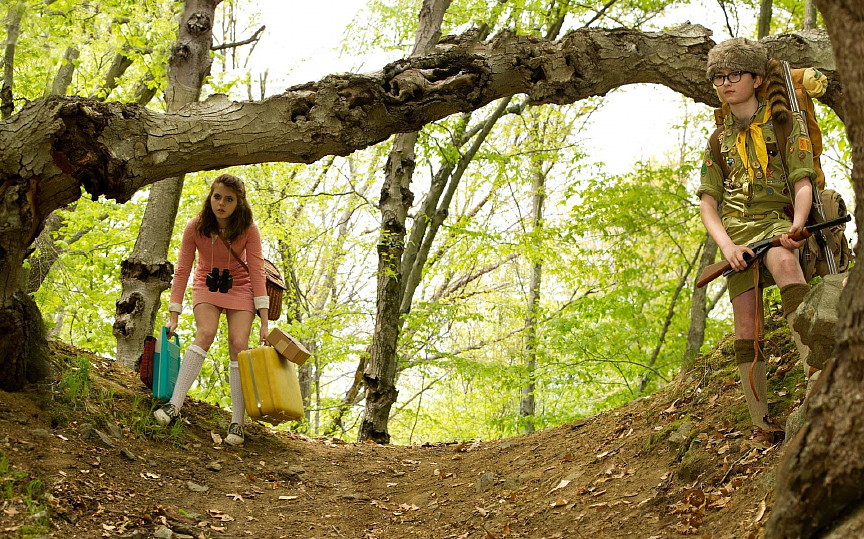
June 21 – I blow hot and cold on Wes Anderson, but having been dazzled by the visual sweep and crazy ensemble cast of The Life Aquatic with Steve Zissou, I figured I’d better see the similar-sounding Moonrise Kingdom in the movie theater rather than on home video. I’m glad I did. As usual with a Wes Anderson film, the word that keeps coming up to describe it is “twee,” cute to the point of precious in a curdling sense, and yet I totally admire its quirkiness and originality. It’s not copying anything, and in fact as a crazy young adult saga I love that it presents the romantic heroic journey of two unlikely nerdy kids (played by Kara Hayward and Jared Gilman, above). I want there to be more non-conforming quirky nerdy heroic kids in the world. That the soundtrack toggles back and forth between Benjamin Britten and Hank Williams becomes its own running joke. And the assortment of amazing actors running around in mostly small, nutty parts (Edward Norton, Bill Murray, Frances McDormand, Tilda Swinton, Harvey Keitel, Bob Balaban) makes the movie fun and never boring. Not to everyone’s taste, but surprisingly satisfying to mine.

June 22 – George Harrison: Living in the Material World is one more in an unbroken string of Martin Scorsese’s phenomenal rock-music documentaries. I’m not a completist fanatic like Allan Kozinn, but I’m a hardcore Beatlemaniac and I thought I’d hoovered up everything there is to know about the Fab Four, but this two-disc, nearly four-hour documentary uses no familiar material and rounds up tons of odd scraps of film and video from the full history of the Beatles. Focusing on George makes for a very different retelling of the familiar Beatles saga, because he was in some ways the most enigmatic of the four. I learned a bunch of stuff I didn’t know – mostly trivia, but fun facts. After totally giving George credit for the classic guitar riff of “And I Love Her,” Paul McCartney talks about another recording session (only four years later) when George kept playing guitar solos on every line of “Hey Jude” and Paul asked him not to. This, in its own way, signaled the beginning of the end of the Beatles. I love seeing recent interviews of Paul and Ringo talking about the Beatles. You can’t help noting that, for all his eloquence and humor, Paul is kind of a dick — bossy, self-satisfied, pompous even when he’s trying not to be. Even so, he has made some great solo records, which can’t be said of George. The documentary never says so explicitly but watching it you can’t avoid the plain fact that George’s songwriting after the Beatles was never that good – his rhythms often plodding, his melodies banal, his sentiments kinda preachy. But it’s fun to see and hear about the origins of his best songs, “Something” and “Here Comes the Sun,” and his extraordinary range of friendships, including Eric Clapton (even after Clapton fell in love and then married George’s first wife, Pattie Boyd). Two very fleeting references are made to serious drug problems – someone says “George did everything all the way, whether it was cocaine or meditation” – though we do see him performing “What Is Life” totally wasted, his voice a wreck. Tom Petty is another compelling commentator, talking about the Travelling Willburys. But a key moment I’ll take away is Ringo talking about his last encounter with George, who was being treated for his cancer in Switzerland. Ringo mentioned that he was on his way to Boston because his daughter was being treated there for a brain tumor, and George, who was in terrible pain and could barely sit up, said, “Would you like me to go with you?” And then, wiping away a tear, Ringo says, “I feel like I’m on  Barbara Walters….”

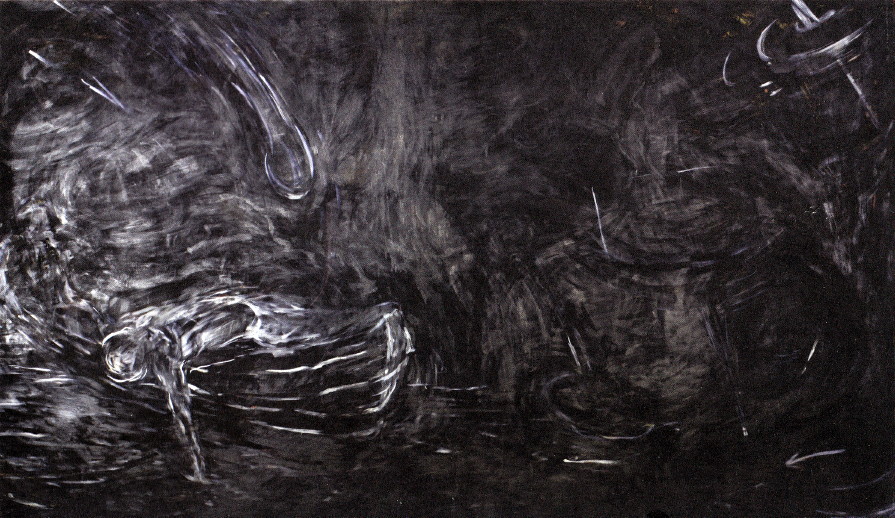
June 23 – On the last day of the show, I got to see “Boat,” Laurie Anderson’s show of paintings at Vito Schnabel’s pop-up gallery on Leroy Street. Wow! I’m so glad I did. They’re monumental. I’ve been seeing Laurie’s work since the year I got to New York (1980) and have admired to varying degrees her experiments in music, performance art, video, film, photography, book-making, sculpture, storytelling, and political commentary. I’ve written about her a lot over the years, and we’ve gotten to be friends. She hasn’t ever had a show of just paintings before – she’s often evinced mixed feelings about the official Art World – but then these aren’t just paintings. The strongest feeling I had walking into the gallery was that of witnessing grief. The centerpiece of the show is “Lolabelle in the Bardo,” a series of ten charcoal-on-paper drawings imagining her beloved rat terrier in the state of being that The Tibetan Book of the Dead suggests the soul inhabits for the 49 days after it leaves the body. (Lolabelle died April 17, 2011.) These large canvases swirl with movement and recurring images (diamonds, spinning tops, and of course dogs), and they’re not without humor (Osama Bin Laden died May 2, and the artist imagines him cohabiting the bardo with Lolabelle). But a sense of loss and mourning, and the disorientation that goes with those experiences, pervades the whole show, which includes some paintings on fabric, some canvases so dark they look like sketches on blackboards (such as the painting that gives the show its title, with its mythological references to Cerberus and Styx), and a hologram of Laurie and Lolabelle sitting in armchairs while Laurie tells a story called “From the Air.”

In the evening, Andy and I trekked to a movie theater in Astoria we’d never been to (Kaufman Astoria Stadium) to see Brave. Andy’s a huge fan of Pixar and has been keen to see this movie since it was first announced that the studio famous for Toy Story, Up, Finding Nemo, and Wall-E was finally doing a movie with a girl as the heroic lead. As is so often the case, the trailer gives you the best part of the movie in two and a half minutes – the rest of it is a rambling fairy tale that gets vague and mushy at the end. Mostly, it’s a movie about hair. Merida does have an amazing mane of blazing red hair, depicted like no hair has ever been seen in animated film before. Not enough for me, though.