I was sad to hear that the fine actor Edward Herrmann died on New Year’s Eve at the age of 71. He was one of the 55 men featured in Caught in the Act: New York Actors Face to Face, my collaboration with photographer Susan Shacter that was published by New American Library in 1986. Susan’s Kennedy-esque portrait of Herrmann was one of my favorites in the book; a print of it has hung in my home for decades.
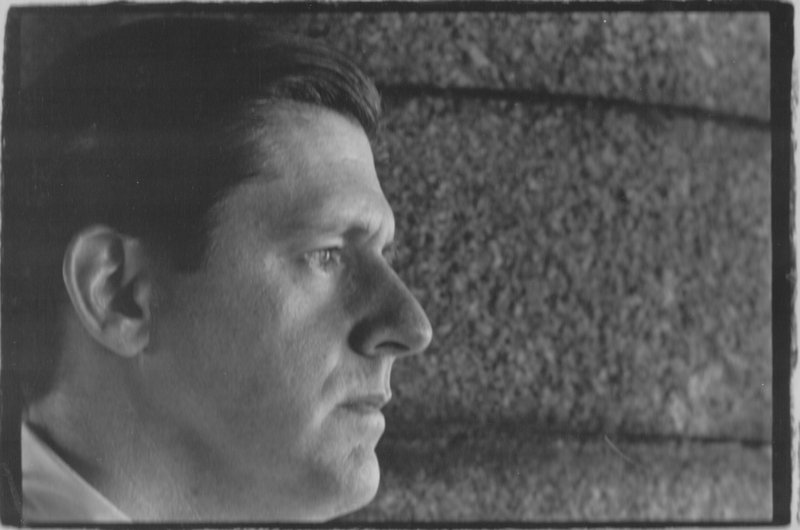
When I interviewed him for the book, he was quite thoughtful, candid, opinionated, and funny. Here’s an excerpt:
Why did you want to act in the first place?
To act out feelings too intense to articulate. To release pain or elation by acting it out. In high school, I emulated my athlete brother — I was a trainer. I stayed away from the theater crowd. Everybody thought they were pansies, and weird. I’m glad I stayed away from them — they were pansies, and weird. If you go too soon into the hothouse, you develop attitudes that make you unfit for other things. The best actors are inclusive of experience, not the ones who are overly specialized in theater.
When you’re an actor, you tend to draw parts to you that are essential to working something out in your life. There’s something crucial in that character’s dilemma that you can apply to yourself. It’s the most creative therapy under the sun. But it’s not just therapy. I’ve often found parts allowed me to experience things I didn’t have to go through in life.
I did The Great Waldo Pepper with Robert Redford in which I had this relationship with this megastar where I had to put him down all the time and call him an asshole. I didn’t do it very well; I was obsequious. We mythologize other actors. They don’t need it. When we were doing The Betsy, Olivier found out I was from Michigan, and he came over and asked, “How’s the accent?”
How do you get over being starstruck?
You don’t get over it; you learn to control it. The first thing to recognize is that it’s something we do — it comes from us. Stars are primary psychological images. Actors forget that the profession depends on the tribe mythologizing us into the image they need in order to be healed. Fonda’s a healer. Duke Wayne, Stewart — they express something that needs to be expressed. Right now, unfortunately, it’s Rambo. It may be horrible, but it’s a fact.
But the profession doesn’t recognize it. All those towers on Sixth Avenue, those solid edifices, are built on nothing. They’re built on what happens between one actor and another, an energy that passes through performers from a writer, a series of ideas with no substance that draws the interest and need of a community. If television executives knew how those images affect the community, they’d become monks. They’re responsible for the psychic health of the world, and they turn out images of lust, cruelty, greed, violence, and meanness twenty-four hours a day. It amazes me that people still talk to one another.
You can read the complete interview from Caught in the Act online here. Check it out and let me know what you think.

 another eye opens