What’s the difference between fear and anxiety? Fear is a normal emotional response to a clear and present danger. Anxiety is the persistent experience of fear in the absence of threat.
I gleaned this succinct and useful distinction from Richard A. Friedman’s front-page essay in the New York Times Sunday Review called “Why Teenagers Act Crazy.” Friedman, a psychiatrist and professor who directs the psychopharmacology clinic at the Weill Cornell Medical College in New York City, summarizes recent research, suggesting that, “Largely because of a quirk of brain development, adolescents, on average, experience more anxiety and fear and have a harder time learning how not to be afraid than either children or adults.”
Friedman notes that “the brain circuit for processing fear — the amygdala — is precocious and develops way ahead of the prefrontal cortex, the seat of reasoning and executive control. This means that adolescents have a brain that is wired with an enhanced capacity for fear and anxiety, but is relatively underdeveloped when it comes to calm reasoning.”

illustration by Gary Panter for the NY Times
This is the opening to my essay about social anxiety that was just published by the gay online newsmagazine Edge. Leaping off from the New York Times article about teenagers, I go on to address issues of social anxiety commonly experienced by gay men.
“Fear learning lies at the heart of anxiety and anxiety disorders,” Friedman writes. “This primitive form of learning allows us to form associations between events and specific cues and environments that may predict danger. Way back on the savanna, for example, we would have learned that the rustle in the grass or the sudden flight of birds might signal a predator — and taken the cue and run to safety. Without the ability to identify such danger signals, we would have been lunch long ago. But once previously threatening cues or situations become safe, we have to be able to re-evaluate them and suppress our learned fear associations. People with anxiety disorders have trouble doing this.”
Difficulty telling the difference between real and imaginary dangers isn’t confined to teenagers, though. As I read and thought about Friedman’s article, I immediately thought of two different adult gay male clients describing almost identical experiences of social anxiety. Both these men are smart, educated, attractive guys in their forties who have interesting jobs and are established in their fields (publishing and education). And yet both of them feel intensely uneasy walking into a party with other gay men.
Sandy* has been challenging himself to say yes to social invitations more often, so he forced himself to go to a friend’s party but did so with considerable dread. As soon as he arrived at the party, he “knew” it wasn’t going to be fun for him. Everyone knew everyone, he alone was the outsider. He stayed for an hour and then had to leave. At his job, he’s conscientious, organized, motivated to do well, intelligent, experienced, sympathetic, reasonable, a good collaborator. He feels 75% comfortable at work. Where’s that guy in social setting? He disappears, replaced by insecurities: How do I act, sound, look, behave? What can I say that would interest anyone? [*Names and details are changed to protect confidentiality.]
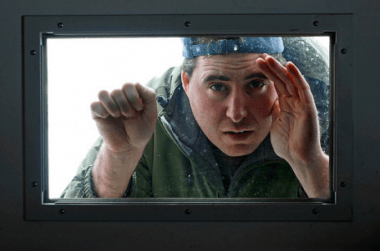
Doug* struggles with similar issues of worthiness. He will happily engage with people who approach him in social settings, but can’t bring himself to initiate contact because he can’t imagine that he has anything to offer. At a recent social event, he had the impulse to flee early on, but in contrast to Sandy he was able to leave the room and find a private space to collect his thoughts. He realized that he was acting as if there was something deeply scary going on that he had to get away from. But he had to admit that there was no danger in the next room — it was just a group of people hanging out, getting to know each other, and wanting to have a good time. By summoning his inner resources (that executive function Friedman ascribes to the prefrontal cortex) and accurately assessing the level of risk, he was able to expand his tolerance for braving the social environment longer. It takes practice, but it pays off.
We could say that both Sandy and Doug were caught in the grip of their inner teenager, highly sensitive to fear of rejection, the danger of social disapproval or scorn, and the belief that they would be unable to survive rejection or humiliation. It’s as if every social encounter were an episode of “Project Runway,” with a visible or invisible committee judging your every move and fully prepared to send packing anyone who doesn’t make the grade.
Check out the full-length article online here and let me know what you think.





















 another eye opens