CAMP
Camp is now for the masses. It’s a sensibility that has been appropriated by the mainstream, fetishized, commoditized, turned into a commodity fetish, and exploited by a hypercapitalist system, as Adorno warned. It still has many of the earmarks of “classic camp” – an emphasis on artifice and exaggeration and the unnatural, a spirit of extravagance, a kind of grand theatricality. It’s still based on a certain aestheticism and stylization. But what’s lacking is the sophistication, and especially the notion of esotericism, something shared by a group of insiders, or rather, outsiders, a secret code shared among a certain “campiscenti”. Sadly, most of it falls under the category of “Bad Straight Camp.”
What is Bad Straight Camp? Examples would include the exaggerated and stylized streetwalker/stripper style co-opted by many contemporary pop music celebrities, from Rihanna to Britney and Christina on down, a performative femininity by females filtered through drag queens that has transmogrified into an arguably more “avant-garde” style (Lady Gaga, Nikki Minaj) characterized by hyper-referentiality, extreme hyperbole, a crudely obvious, unnuanced female sexuality, and even a vaguely pornographic sensibility which, unhappily, is post-feminist to the point of misogyny: a capitulation to the male gaze and classic tropes of objectification to be found only in the worst nightmares of Laura Mulvey. (Let it be clear that I am obviously opposed neither to pornography nor to male spectatorship per se, but rather to the continued attempt to erase all autonomy of women to control their own destinies outside of their participation in these played out patriarchal institutions.) Obviously it’s not the form itself that is reactionary: strippers, street-smart drag queens, female porn stars and hookers have often evinced a radically exaggerated appearance that transcends and deflects patriarchal co-optation. The problem is its utter and complete normalization and de-contextualization away from subversive or transgressive, countercultural impulses in the service of capitalist exploitation, utterly heteronormative in practice and corporate in tone….
This new annexation and corruption of the camp sensibility now exists largely without the qualities of sophistication and secret signification that were developed out of necessity by the underground or outsider gay world, which originally created camp as a kind of gay signifying practice not unrelated to black signifying, or even black minstrelsy. It was developed as a secret language in order to identify oneself to like-minded or similarly closeted homosexuals, a shorthand of arcane and coded, almost kabbalistic references and practices developed in order to operate safely apart and without fear of detection from a conservative and conventional world that could be aggressively hostile towards homosexuals, particularly effeminate males and masculine females. In the contemporary world, in which gays have largely assimilated into the dominant order, such signifying practices have become somewhat obsolete, and the previous forms of camping and camp identification have long since been emptied of camp or gay significance, rendering them easily co-opted, commercialized, and trivialized.
This phenomenon has also led to the rise of what I call “conservative camp.” For what are Sarah Palin, Newt Gingrich, Bill O’Reilly, Donald Trump and Herman Cain other than conservative camp icons enacting a kind of reactionary burlesque on the American political stage? Wholly without substance, their views exaggerated and extremely stylized, and evincing a carefully contrived posture of “compassionate conservatism”, they function merely as a crude spectacle that mocks the unwashed masses by pretending to be one of them while simultaneously offering them policies that are directly antithetical to their authentic needs. Conservative camp has always been around – William F. Buckley, Jr. is a prime example – but it has now become an entire genre, thoroughly entrenched and consumed by the American public….
If I have expressed a rather depressing and unhopeful analysis of camp, or perhaps what might now reasonably be termed “anti-camp”, I can only offer by way of an antidote an express wish to radicalize camp once again, to harness its aesthetic and political potentialities in order to make it once more a tool of subversion and revolution. Camp itself should almost be defined as a kind of madness, a rip in the fabric of reality that we need to reclaim in order to defeat the truly inauthentic, cynical and deeply reactionary camp – or anti-camp – tendencies of the new world order.
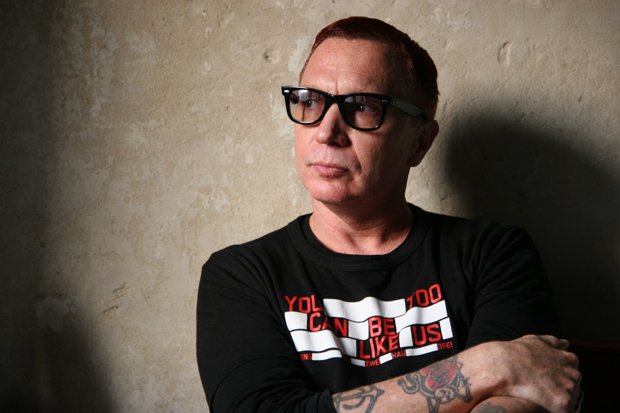
— Bruce LaBruce, “Notes on Camp – and Anti-Camp”









 another eye opens