Archive for December, 2013

Performance Diary: “THE POWER OF THE HEART: a celebration of Lou Reed”

December 19, 2013

lou reed card 212.16.13 – The invitation-only tribute to Lou Reed at the Apollo Theater was a beautiful event – a classy, intimate, surprising blend of musical performances, spoken testimonials, film and audio clips, and multi-faith spiritual expression. Welcoming music came in the form of a guitar jam between Marc Ribot and Doug Wieselman. The program officially began with Rabbi Levi Weiman-Kelman performing the funeral prayer “El Maleh Rachamim.” Laurie Anderson opened and closed the three-hour ceremony with very personal recollections of her life with Lou. She talked movingly about his final days, his last words, his last breath, his last gesture. They had immersed themselves in Buddhist meditation, so she and her community  observed the 49-day period of practices after someone dies, according to the Tibetan Book of the Dead. The memorial at the Apollo took place on Day 50, which is dedicated to the liberation of the soul of the departed. And she said they’re very clear and strict about “no tears,” weeping seen to be confusing to the soul passing through the bardo.
12-16 pre-show
Accordingly, this was an evening of much celebration and laughter, emotion and sentiment but no tears. There were lively reminiscences by Lou’s sister Meryl (aka Bunny), producer Hal Wilner, Julian Schnabel, Ingrid Sischy, the Velvet Underground’s Maureen Tucker (reading a message from John Cale), and the surgeon who performed Lou’s liver transplant, Charlie Miller, who was hilarious and touching and apparently stitched up his famous patient to the beat of “Walk on the Wild Side.” Early on, Patti Smith sang “Perfect Day” accompanied on guitar by Lenny Kaye, and she took the lead for the all-hands-on-deck finale, “Sister Ray.” Emily Haines of the band Metric sang “All Tomorrow’s Parties,” Debbie Harry did “White Light White Heat,” Jenni Muldaur sang “Jesus,” and the Persuasions (who opened for Lou’s first European tour) came out to croon a gorgeous a cappella rendition of “Turning Time Around.” John Zorn’s sax solo represented Lou at his most abrasive and improvisational. Philip Glass sat down at the piano and played while the rabbi sang and Hal Wilner translated the Kaddish. For me, the musical high point was Antony performing “Candy Says” to Marc Ribot’s simple acoustic guitar accompaniment – fitting for Lou’s song about transgender Warhol diva Candy Darling to be sung by a gender-queer performer who clearly understands its existential self-disgust from the inside (“Candy says I’ve come to hate my body/And all that it requires in this world”). It seemed curious to me that only the Persuasions sang a song written after 1973 — Lou made a lot of albums and wrote some good songs after Berlin, but I suppose it’s a recognition of how solid those early Velvet Underground songs were and still are.

12-16 white light white heat
I would guess Hal Wilner had a hand in amassing the various amazing film clips that conjured Lou’s presence, starting with an excerpt of “Waiting for the Man” (live in concert during his dyed-blond days) and including several chunks of a very funny interview in which he talked about why he lives in New York, what he hates about Long Island, what scares him about Sweden, designing his own eyeglasses, etc. I’d forgotten that Lou was in Paul Simon’s movie One Trick Pony, but we watched the whole clip, in which Lou plays a record producer imposing egregiously bad arrangements on Simon’s character’s album. Then Simon himself came out to sing “Pale Blue Eyes.” Two radically different audio clips were also highlights of the evening – Lou as a kid singing “Santa Claus Is Coming to Town” and then the unedited original studio demo of Lou strumming guitar and singing “Heroin,” still an astonishing song. Laurie remarked that Lou wrote his lyrics very fast, sometimes in the middle of the night, and never changed them, believing in “First thought, best thought.” Which, she admitted, she found infuriating, as someone who labored and worried over every single line.

As if the images of Lou Reed — Mr. Rock and Roll Animal, Mr. Street Hassle, Mr. Metal Machine Music — wearing a kippah at the Wailing Wall and practicing Tibetan Buddhism weren’t spiritually eclectic enough, we witnessed testimonials and demonstrations of t’ai chi from his teacher Ren GuangYi, his student, and his community. (It was fascinating to see how easily the 21 form t’ai chi moves could be adapted to the tune of “Sister Ray.”)
lou reed card 1
A rich full occasion. I was delighted to share it with my friend Judy Mam.

12-16 don and judy

Quote of the day: THEATER

December 8, 2013

THEATER

Alisa Solomon: You’re using children as the Fairies — right? — or the Elementals, as you are calling them.

Julie Taymor: Yes, there are 20 prepubescent kids. They not only play the Fairies, as written, but also play the forest. They’re the trees, the creatures, dogs, does, snakes, bats, moths. They are the wind, they’re your mind. They’re Puck’s posse, who terrorize the Mechanicals when Bottom changes. They’re an incarnation of the emotions of the lovers. They’re the nightmare of Hermia. They are the elements.

Solomon: Were you jumping off of the scholarly conjecture that historically, in the original production, the Fairies were indeed played by children?

Taymor: No, I don’t care what other productions did, though I would imagine that they would have been children. I think it works better with children, just the idea of it, the energy. Most initiation ceremonies all over the world are when you’re 13 or so, when you finally start to have sexuality that is recognizable and separates boys from girls, and they have to control their nature. That’s what we call it: our nature. So I wanted that feeling. What has been amazing in the rehearsals with these kids is the sheer joy they get out of a trap opening, or a line coming down. I mean, seriously, the unfettered, sheer, pure, direct emotion.

Solomon: Isn’t that the thrilling thing that theater lets all of us do — I mean, don’t we get to have that sort of childlike wonder?

Taymor: Well, that’s what I hope. It goes to a DNA part of us that relates to the first shadows on the wall that were made into foxes and rabbits. Where we suspended our disbelief and we said: “Oh yes, I know it’s a hand with a light behind it casting a shadow; but no it’s not, it’s a fox, it’s a rabbit.”

— Julie Taymor interviewed by Alisa Solomon about her production of A Midsummer Night’s Dream

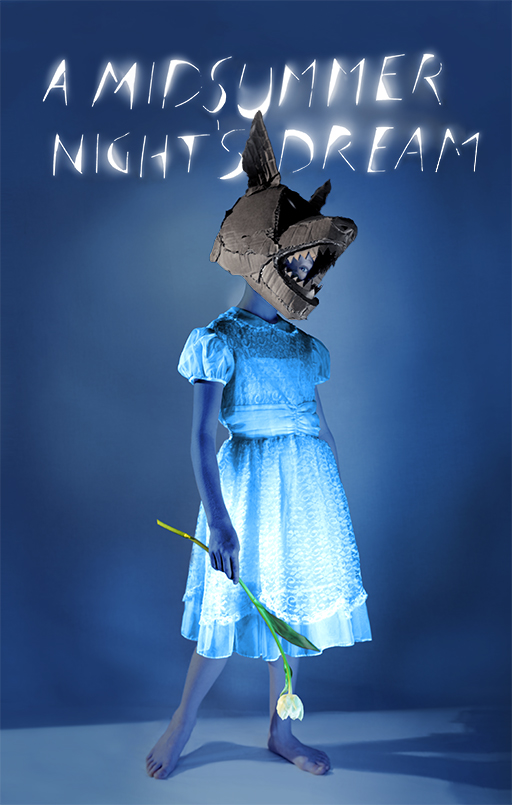
MIDSUMMER-art-website

Performance diary: THE (CURIOUS CASE OF THE) WATSON INTELLIGENCE, Taymor’s DREAM, and THE HABIT OF ART

December 8, 2013

12.5.13The (Curious Case of the) Watson Intelligence by Madeleine George at Playwrights Horizons is one of those plays with an interesting theme – the search for mechanized perfection – and a clever conceit through which to pursue it. A super-smart computer programmer named Eliza is creating a robot-helper (picture a life-sized full-bodied Siri) whom she has named Watson, and her quest is bounced off historical scenes featuring other Watsons: Sherlock Holmes’s sidekick and Alexander Graham Bell’s right-hand man, with glancing reference to the IBM computer of the same name who famously beat human contestants on Jeopardy. Ultimately, though, the play devolves into a kind of heterosexual soap opera about Eliza, her ex-husband Merrick, and the computer repair guy – also named Watson – he hires to spy on her. The clever contrivances don’t actually deliver believable human truth, though. The actors have fun playing several roles in several periods.

curious case
I found Amanda Quaid (above) appealing and persuasive, and John Ellison Conlee (above) inhabits all the Watsons beautifully, but David Costabile might have been miscast as Merrick – he’s so high-strung that there’s no way to take him as anything other than The Bad Guy, which quickly gets tedious.

12.7.13 — Julie Taymor’s Midsummer Night’s Dream, at Theater for a New Audience’s splendid new theater down the street from the BAM Opera House, is fantastic – spectacular design, hugely inventive staging, stuffed with terrific performances. I’ve seen any number of productions over the years, and by halftime I was already convinced this is the best ever. Each scene came with some original, funny, sexy, visually stunning, or otherwise delightful element. Some that stayed with me: at the very top of the show, out comes Puck – a very small androgynous creature (renowned British performer Kathryn Hunter) in clown makeup, bowler hat, and a suit that might fit an organ-grinder’s monkey made of soft rumpled gray fabric (the first of what seems like hundreds of amazing costumes designed by Constance Hoffman). The only thing onstage is a bed, Puck lies down to sleep, and the bed rises up with tree branches underneath. The guys who will later turn out to be the “rude mechanicals” come onstage, saw the tree branches loose from the bed, which flies to the ceiling and disappears behind a white sheet, on which the title of the play appears. I’ve never seen a production frame the entire play as Puck’s dream and was curious if we would come back to that at the end. Not exactly. Taymor comes up with another beautiful, quiet, unexpected image involving a sleepy girl and a dog mask, coming back to the sleepy/dreamy image but transformed. And so it is throughout the production, one transformation after another.

MIDSUMMER-art-website
The fairies are played by a rambunctious batch of 20 children (Taymor originally wanted 100), who sing, dance, do acrobatics, manipulate scenery and props, wear masks, scream like banshees, and sometimes get hauled around like real-life bunraku puppets by black-clad manipulators. David Harewood and Tina Benko, both great actors, make the most striking Oberon and Titania I’ve ever seen – he’s black black black, with spiky gold armor and gold tattoos across his chest and down his back; she’s white white white with boob-lights on antennas and transparent clamshell wings. Taymor dresses the rude mechanicals like working men and cast them with some great veteran actors who can play broad comedy without making it stoopid, most notably Max Casella (unforgettable as Timon in the original cast of Taymor’s The Lion King) as Bottom.

A-Midsummer-nights-Dream-slide-9G71-articleLarge
The whole sequence at the end of the first half is thrilling: Bottom is transformed with a donkey’s head with creepily human nose and lips which Casella manipulates with hand-held remotes; smitten Titania invites him into her hammock bed, which drapes across the entire stage; and their union is consummated with an explosion of color and light that is funny, sexy, ecstatic, and mythological all at once. The young lovers give the weakest performances in the large cast, but once they’re all in the forest in the middle of the night they wind up stripping down to their underwear and having a pillow fight, which is not a chore to watch at all (especially hunky hunky Zach Appelman as Demetrius). The puppets, masks, and constantly morphing sets are clearly a collaboration between Taymor and her designers (scenic designer Es Devlin is clearly some kind of theatrical genius himself), and Eliot Goldenthal’s music contributes numerous perfect multiflavored touches. For all of its fun, sexiness, and visual splendor, this is no dumbed-down Shakespeare for the masses but a smart and deep interaction into the dangerous fields of love, where casual cruelty often masquerades as play. I’d like to see this production two or three more times. It only runs til January 12 and I suspect there are very few tickets left. What are you waiting for?

By the way, Theater for a New Audience has made available online a free PDF of an extensive study guide to A Midsummer Night’s Dream that includes some terrific essays an an in-depth interview of Taymor by Alisa Solomon.

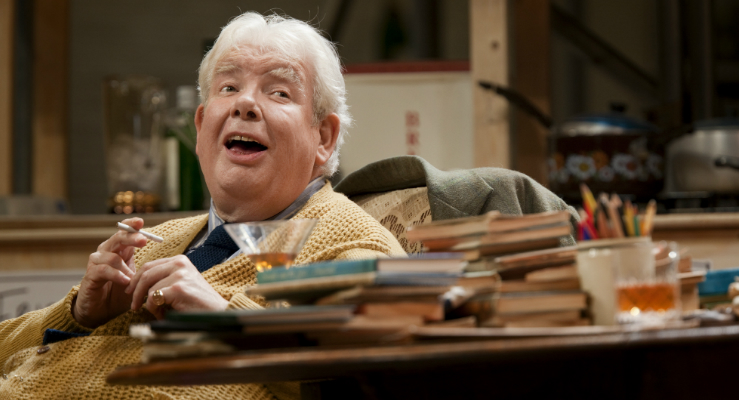
12.8.13 – The live broadcast of The Habit of Art, Alan Bennett’s play about actors rehearsing a play about W. H. Auden and Benjamin Britten at Oxford, showed up for one screening in New York as part of the National Theater’s 50th anniversary celebration. It’s one more brilliant play from the author of The History Boys, The Madness of King George, Bed Among the Lentils, and so many others. And another extraordinary production directed by Nicholas Hytner with a superb cast headed by the late great Richard Griffiths (below) as a fat, shambling, supernaturally eloquent Auden, Alex Jennings as Britten, and the amazing Frances de la Tour as the stage manager who keeps the rehearsal going. On the National Theater Live’s website, you can also download a free PDF of a lavish 33-page programme with essays about Auden and Britten as well as an introduction by Bennett.

habit of art

In this week’s New Yorker

December 5, 2013

The highlights of the issue are:

* “The Big Sleep,” Ian Parker’s long article about the workings of sleep medications, in particular Ambien;

* Rivka Galchen’s short story “The Late Novels of Gene Hackman”;

* Hilton Als’s review of the Broadway revival of Waiting for Godot, which has fresh things to say about Beckett and the play, while confirming my suspicions about the performances of Patrick Stewart and Ian McKellen;

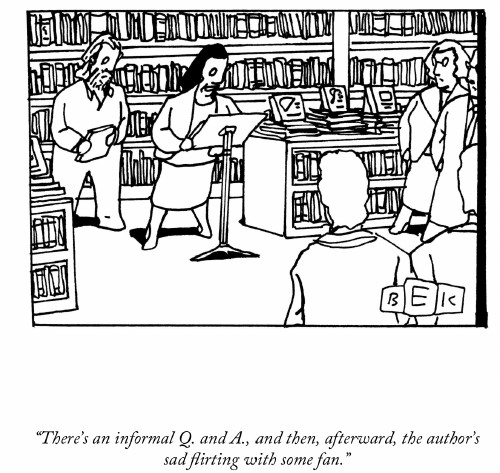
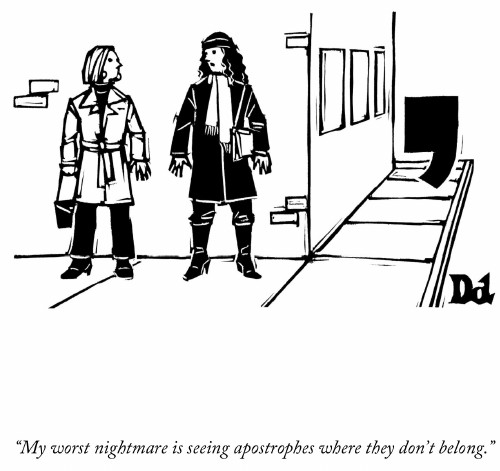
and an unusually good crop of cartoons:
photo 5 photo 2 photo 3 photo 4photo 1 (1)

Quote of the day: FANTASIES

December 2, 2013

FANTASIES

Some erotic fantasies people want to enact, some they just want to talk about, and some they only want to think about. Knowledge is finite; imagination is endless. If we don’t want to act on a fantasy, the question is: Are we really not interested in its materializing, or are we ashamed of it? Sometimes our sexual fantasies baffle us. We can’t believe we’d actually be turned on by that. What does it say about us? We’re weird. But, like dreams, fantasies are symbolic scripts for our deepest emotional needs. They rarely mean what they appear to mean on the surface and must be decoded. What does being tied up mean to you? One person might say, “It helps me realize that I have no choice but to receive. I don’t have to feel guilty about receiving, because it’s the other person who decides to give.” As psychologist Michael Bader so beautifully says, a good fantasy both states the problem and offers the solution. I always ask: What need does this fantasy serve? I might fantasize about spreading peanut butter on my skin because I never thought someone could delight in licking me. It could be a redemptive experience: I can be delicious.

fantasies
If you want to know the deepest feelings a person brings to sex, ask about her fantasies. The gestures involved, the physicality of it, are like words for a poet. You need the words, but the poem has another meaning beneath the words. Octavio Paz says, “Eroticism is the poetry of the body, the way poetry is the eroticism of the word.”

— Esther Perel interviewed in The Sun