Archive for September, 2013

Performance diary: Harry Kondoleon’s ZERO POSITIVE at the Public Theater’s New Work Now

September 13, 2013

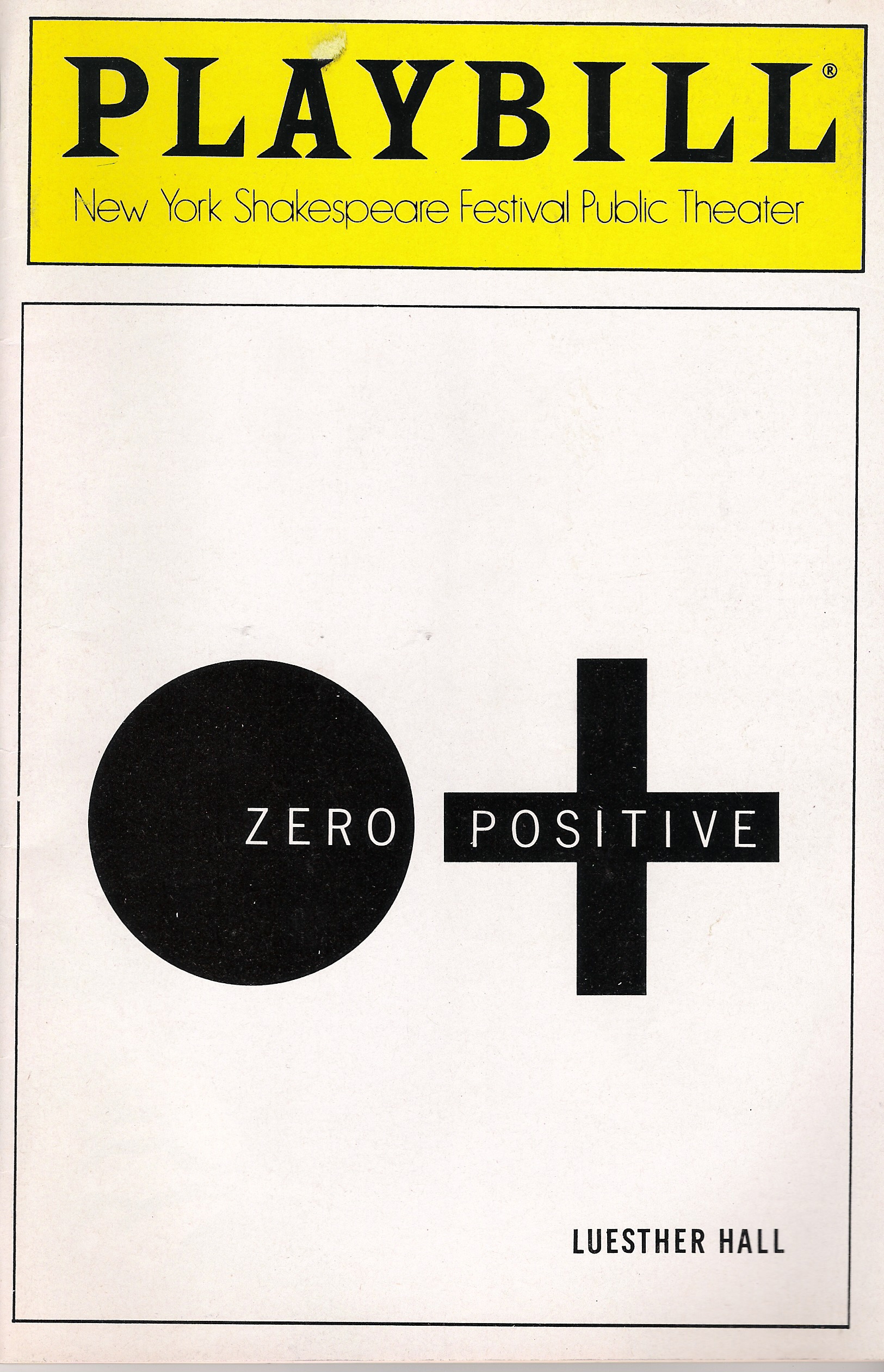
9.11.13 — The Public Theater’s New Work Now series has started including a play from the past, and this year’s selection was Harry Kondoleon’s Zero Positive, which Joseph Papp originally produced in 1988. Published in M. Elizabeth Osborn’s anthology The Way We Live Now, Zero Positive was part of the second wave of plays about AIDS, a lyrical and theatrically free-wheeling step beyond informative first-line dramas such as As Is and The Normal Heart. It’s one of the strongest plays in the body of work by Kondoleon, who sadly died of AIDS in 1994 at the age of 39. The original production was a troubled one in that the playwright became dissatisfied with the actor in the central role, Reed Birney, and fired him, which made the director, Mark-Linn Baker, resign in solidarity. Birney’s replacement was no slouch – David Hyde Pierce – and director Kenneth Elliott picked up the pieces, but the show didn’t make much of an impact, and the play remains one that is more admired than produced.
zero positive
Sarah Benson, artistic director of Soho Rep, assembled a fantastic cast for this one-night-only reading, which served the purpose of establishing that the play has lost none of its emotional resonance in the intervening years. Himmer lives with his father, Jacob Blank, a poet and philanderer whose estranged wife has very recently died, sending him into a grief-stricken time warp. Himmer’s BFF Samantha arrives with the news from her doctor that she and Himmer have both tested positive for HIV. Their friend Prentice, who is probably infected but is opposed to taking the test, insists, “It doesn’t mean anything.” Himmer knows different. “It’s a death sentence,” he says – a bit dramatic but not an untypical response in the dark ages before new treatment options made HIV manageable.

As a tribute to his mother, Himmer decides to put on a verse play called The Ruins of Athens he’s found among her papers and approaches his actor friend Patrick for help. Patrick is so spectacularly self-absorbed he can do little except complain about how his brilliant auditions never get him hired. He does know a woman named Debbie Fine who’s recently come into several million dollars from her family, and he enlists her to bankroll putting on the play. When Debbie Fine arrives, Jacob mistakes her for a nurse, she plays along, and they improbably fall in love. She makes a big donation to a local hospital to convert a conference room into a solarium that serves as theater for the play, in which they all perform.

I got to have a conversation after the reading with Benson, who told me she came across Harry Kondoleon’s plays when she was a young theater artist in her teens and twenties growing up in Scotland and eager to learn about American theater. We talked about what a strange play Zero Positive is – how it begins in a kind of living-room naturalism but then progressively departs from the mundane reality of clothes and food (the stage direction “It is lunchtime. It is always lunchtime” is a classic Kondoleon) until it arrives at a timeless theatrical zone. A toy train set figures heavily in act one and poetically implants a disorienting sense of scale. Each of the five scenes takes a slightly different form, almost becoming its own play. The fourth scene in particular becomes a kind of existential way station – the characters are ostensibly having an indoor picnic in the bare hospital room that will become their theater, yet they end up acting like they’re outdoors. And Kondoleon’s writing rises to exquisiteness as each character reveals something of his or her essence.

Debbie Fine describes her generic life before meeting Jacob Blank: “I had other boyfriends. We did things together, looked at movies, ran around tracks, ate unusual flavors and discussed fluctuations of all kinds.” Jacob, who seems crusty and cruelly remote until her arrival on the scene, surprisingly announces, “My childhood was only good, glorious I’d go as far as to say. I found two pearls on the open clam of my arrival: I called them my parents. They called me their prize.” Himmer reveals in one outburst his bedrock weltschmerz: “Enough of all these flowers – flowers are no more than, at their best, bright little sex organs hoodwinking insects into their sticky business and passing themselves off then hypocritically at holidays as fit subjects for centerpieces.”

Rehearsal for the original production at the Public Theater: Edward Atienza as Jacob Blank, playwright Harry Kondoleon, director Mark-Linn Baker, and Reed Birney as Himmer
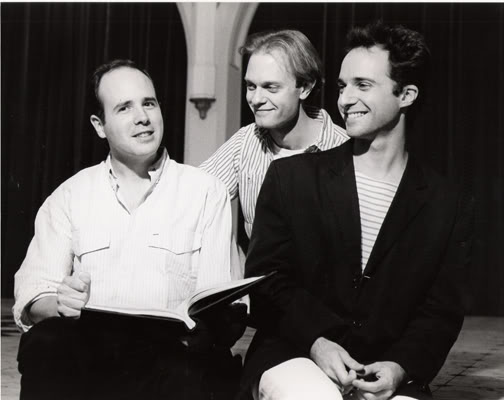
Rehearsal for the original production at the Public Theater: Edward Atienza as Jacob Blank, playwright Harry Kondoleon, director Mark-Linn Baker, and Reed Birney as Himmer

Director Kenneth Elliott, David Hyde Pierce as Himmer, and Kondoleon

Director Kenneth Elliott, David Hyde Pierce as Himmer, and Kondoleon

Benson, who directed Reed Birney in a blazing award-winning production of Sarah Kane’s Blasted, was aware of his unhappy history with the play and attempted to provide closure by casting him as Jacob Blank, but ultimately he wasn’t available and the great Larry Pine played the role in the reading. Himmer’s barely contained hysteria was suitably conveyed by the great Taylor Mac – the first time I’ve ever seen him not in elaborate drag (he returns to the Public Theater later this fall with a revival of Lear de Bessonet’s terrific production of Brecht’s The Good Person of Szechuan). Two wonderful actors, B.D. Wong and Ana Reeder, played Prentice and Debbie Fine, and two young actors new to me, Gayle Rankin and Arian Moayed, played Samantha and Patrick. Moayed (who appeared on Broadway in Bengal Tiger in Baghdad Zoo) blew me away with his quick-study portrait of Patrick, a tricky role to pull off with his two crazy a capella songs and easily parodied actor-ish narcissism. Tony Shalhoub played this role originally, magnificently, but I found Moayed especially touching in scene 4, when his self-centeredness became a poignant existential cry: “I just want a big part. I just don’t want to come on with very little to say and then go off. I’ve done that. I want to make a difference. I want to know when I go off it makes sense that I came on in the first place.” Don’t we all want that? And Rankin, playing a role first performed by Frances Conroy, assumed a transcendent radiance when Samantha, as the goddess in the play-within-the-play spoke lines that connected all the dots from ancient Greece to the AIDS epidemic to the aftermath of 9/11:

I answer your call

although the city is alive in death

with screams for salvation barely audible

as the walls are torn down to

the merry whistle of the flute.

Death’s caprice is playing there;

empires dissolve in song.

Many longtime Kondoleon fans and followers attended the reading. A bunch of us went out to dinner afterwards (Stephen Soba and his partner Jonathan, Mitchell Lichtenstein, Rita Ryack and her partner Porter, Ellen and Judy Dennis) for delicious food and wine at Aroma, where we reminisced about Harry and exchanged notes on the real-life experiences that fed into the writing of Zero Positive. We were all very grateful to Jonathan Lomma, the William Morris agent who represents Harry’s work, for instigating this return visit to a beautiful play.
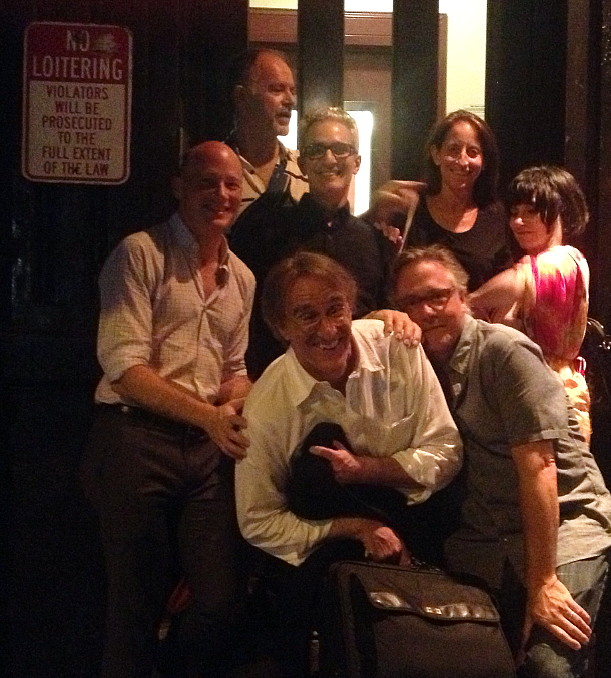
9-11 zero positive posse on doorstep

Quote of the day: FEAR

September 10, 2013

FEAR

I must say a word about fear. It is life’s only true opponent. Only fear can defeat life. It is a clever, treacherous adversary, how well I know. It has no decency, respects no law or convention, shows no mercy. It goes for your weakest spot, which it finds with unerring ease. It begins in your mind, always. One moment you are feeling calm, self-possessed, happy. Then fear, disguised in the garb of mild-mannered doubt, slips into your mind like a spy. Doubt meets disbelief and disbelief tries to push it out. But disbelief is a poorly armed foot soldier. Doubt does away with it with little trouble. You become anxious. Reason comes to do battle for you. You are reassured. Reason is fully equipped with the latest weapons technology. But, to your amazement, despite superior tactics and a number of undeniable victories, reason is laid low. You feel yourself weakening, wavering. Your anxiety becomes dread.

Fear next turns fully to your body, which is already aware that something terribly wrong is going on. Already your lungs have flown away like a bird and your guts have slithered away like a snake. Now your tongue drops dead like an opossum, while your jaw begins to gallop on the spot. Your ears go deaf. Your muscles begin to shiver as if they had malaria and your knees to shake as though they were dancing. Your heart strains too hard, while your sphincter relaxes too much. And so with the rest of your body. Every part of you, in the manner most suited to it, falls apart. Only your eyes work well. They always pay proper attention to fear.

Quickly you make rash decisions. You dismiss your last allies: hope and trust. There, you’ve defeated yourself. Fear, which is but an impression, has triumphed over you.

The matter is difficult to put into words. For fear, real fear, such as shakes you to your foundation, such as you feel when you are brought face to face with your mortal end, nestles in your memory like a gangrene: it seeks to rot everything, even the words with which to speak of it. So you must fight hard to express it. You must fight hard to shine the light of words upon it. Because if you don’t, if your fear becomes a wordless darkness that you avoid, perhaps even manage to forget, you open yourself to further attacks of fear because you never truly fought the opponent who defeated you.

— Yann Martel, Life of Pi

yann martel

Photo diary: bopping around Billyburg

September 8, 2013
tomatoes are in high season at the farmer's market

tomatoes are in high season at the farmer’s market

9-7 tomatoes 2

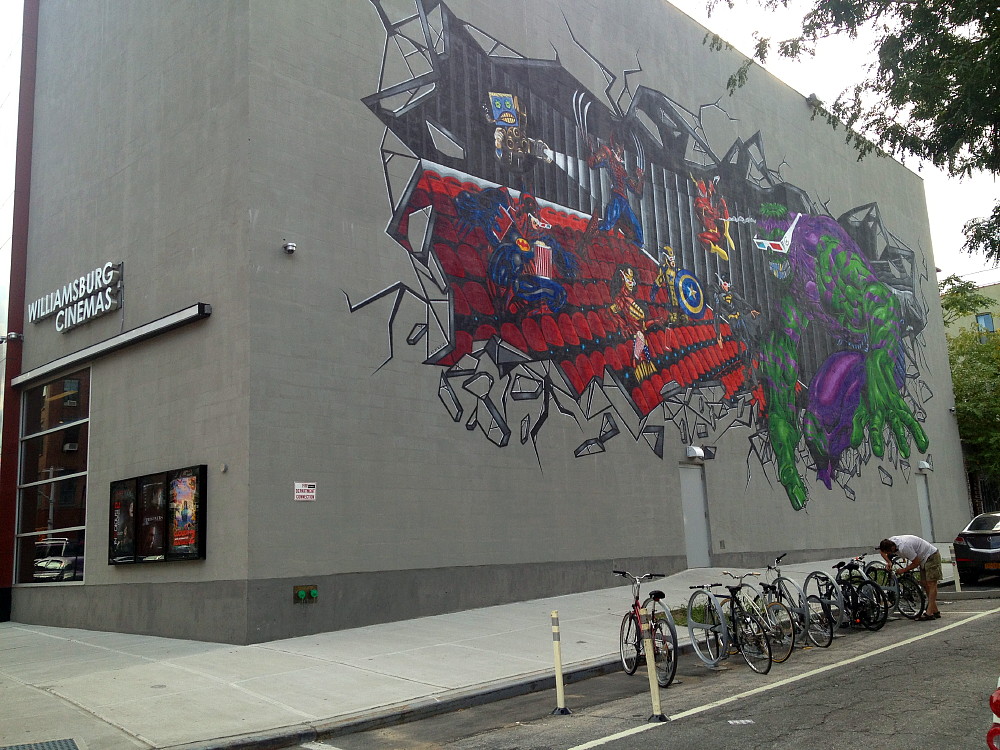
Andy and I had a hankering to see THE WORLD'S END, and we've spent almost no time ever in Williamsburg so decided to make an evening of it.

Andy and I had a hankering to see THE WORLD’S END, and we’ve spent almost no time ever in Williamsburg so decided to make an evening of it.

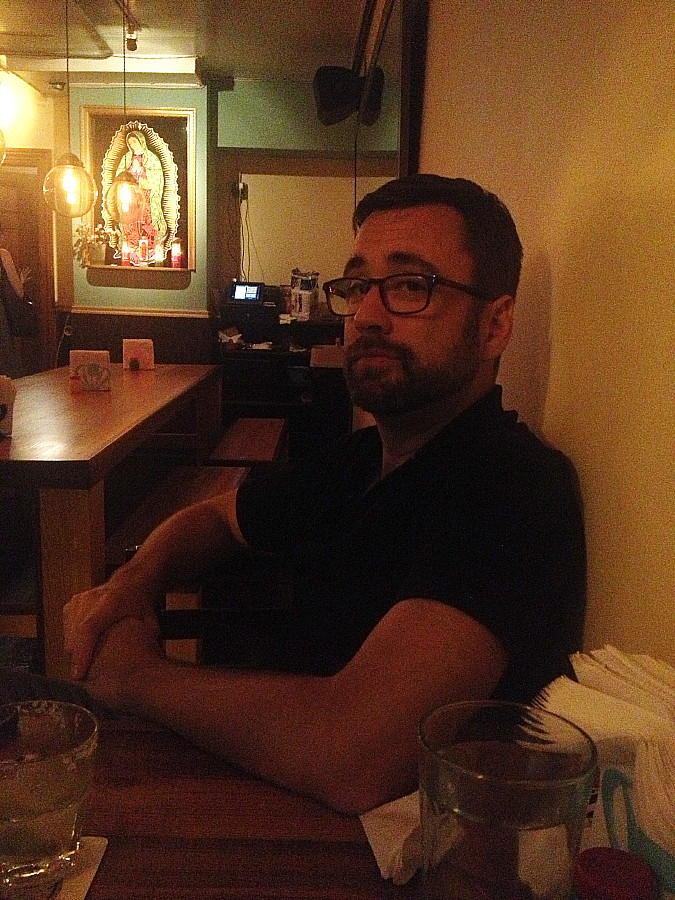
The movie was crazy and fun, and then we were hungry. Yelp notified us that there were a multitude of interesting-sounding restaurants nearby.  We tried Trayf and Xixa -- packed to the rafters. We ended up at Cervezeria Havemeyer -- low-key, very much to my taste, Mexico City-style tacos and enchiladas and margaritas, served by an Aussie who'd lived there and approved of our choices (including dessert: grilled string beans)

The movie was crazy and fun, and then we were hungry. Yelp notified us that there were a multitude of interesting-sounding restaurants nearby. We tried Trayf and Xixa — packed to the rafters. We ended up at Cervezeria Havemeyer — low-key, very much to my taste, Mexico City-style tacos and enchiladas and margaritas, served by an Aussie who’d lived there and approved of our choices (including dessert: grilled string beans)

9-7 99 cent wonder
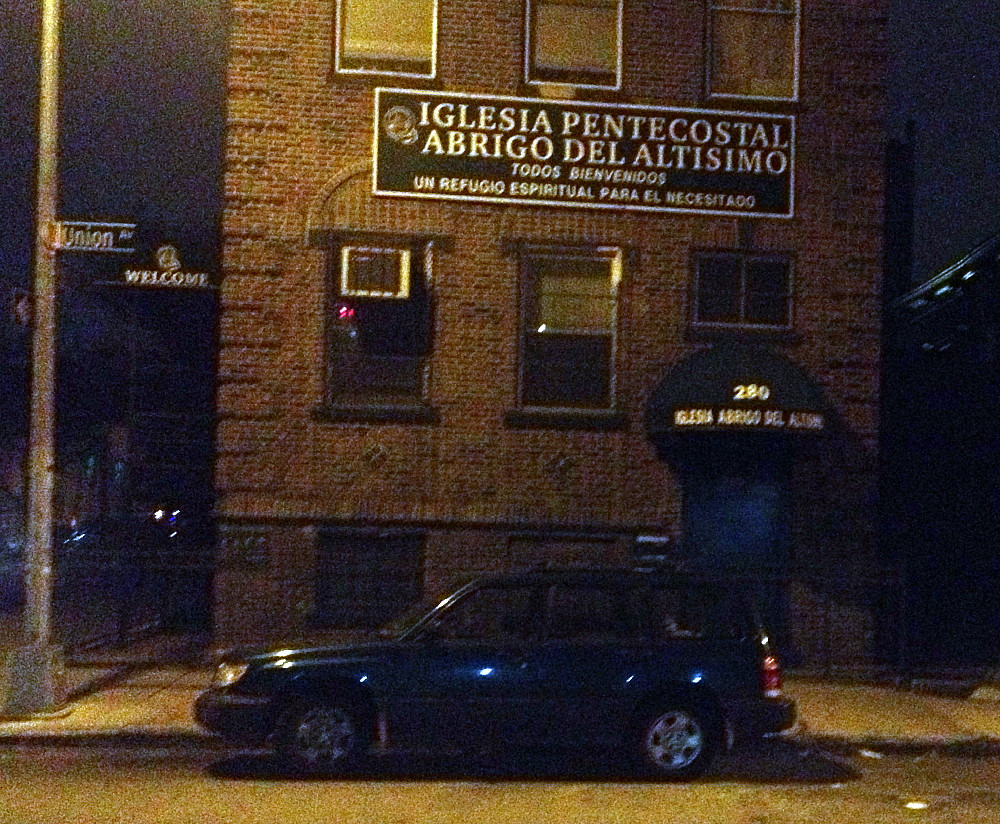
9-7 iglesia pentecostal

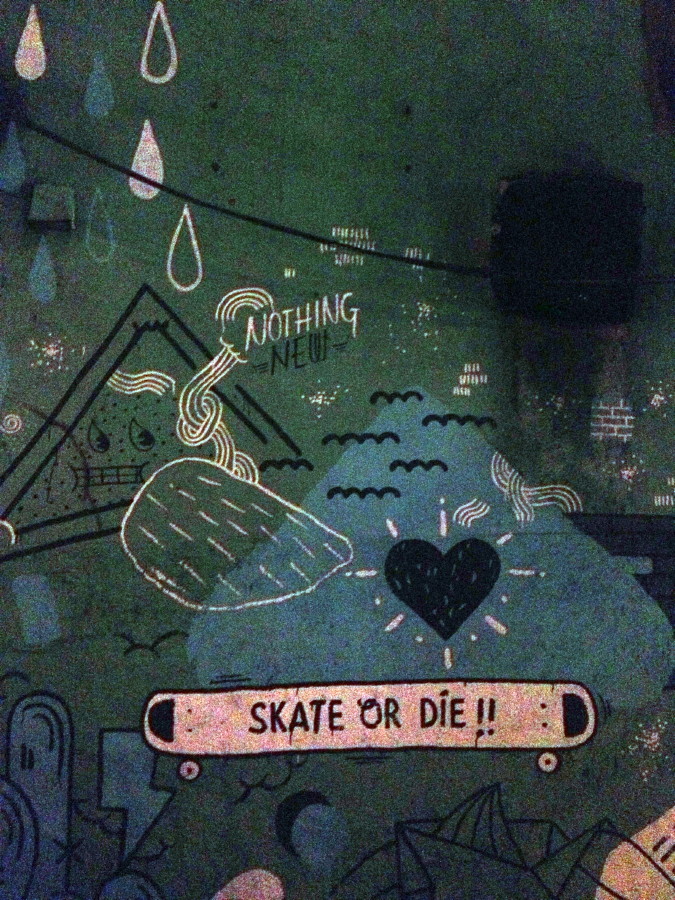
And then a stroll through the burg, on our way to meet one of Andy's swimmer friends at a brand-new bar called Knightsland, where we had a drink before heading back to Astoria through a ridiculous Saturday-night traffic jam

And then a stroll through the burg, on our way to meet one of Andy’s swimmer friends at a brand-new bar called Kingsland, where we had a drink before heading back to Astoria through a ridiculous Saturday-night traffic jam

Quote of the day: AGGRESSION

September 8, 2013

AGGRESSION

In your society, and to some extent in others the natural communication of aggression has broken down. You confuse violence with aggression and do not understand aggression’s creative activity or its purpose as a method of communication to prevent violence. You deliberately make great effort, in fact, to restrain the communicative elements of aggression while ignoring its many positive values, until its natural power becomes dammed up, finally exploding into violence. Violence is a distortion of aggression.

Birth is an aggressive action – the thrust outward with great impetus of a self from within a body into a new environment. Any creative idea is aggressive. Violence is not aggressive. It is instead a passive surrender to emotion which is not understood or evaluated, only feared, and at the same time sought. Violence is basically an overwhelming surrender, and in all violence there is a great degree of suicidal emotion, the antithesis of creativity. Both [sides]…in a war, for instance, are caught up in the same kind of passion, but the passion is not aggressive. It is its opposite – the desire for destruction.

Know that yearning is made up of feelings of despair caused by a sense of powerlessness, not of power. Aggressiveness leads to action, to creativity, to life. It does not lead to destruction, violence, or annihilation.

— Jane Roberts, The Nature of Personal Reality
9-7 aggression

In this week’s New Yorker

September 8, 2013

weirded out by fruit cartoon
I didn’t read everything, but I did read Rachel Aviv’s long, long, long profile of NYU president John Sexton, David Finkel’s very moving report on psychiatric treatment for traumatized veterans, and Jill Lepore’s essay on Woodrow Wilson, which told me a lot of things I never knew about our 28th president. Namely: he spent the last seventeen months of his presidency almost entirely confined to his bed [after a massive stroke], the state of his health unknown to the public and little known even to his own cabinet. He could see only out of a tiny corner of his right eye….He could not use his left arm. He could barely walk.” Wilson was president of Princeton University and governor of New Jersey before occupying the White House, and he’s only U.S. president who earned a Ph.D.

exercity cover
Eagle-eyed copy editor that he is, Andy pointed out the curious contradiction in the sign on the building on Bruce McCall’s cover (above) — intentional or not?

dog genie cartoonanteaters cartoon