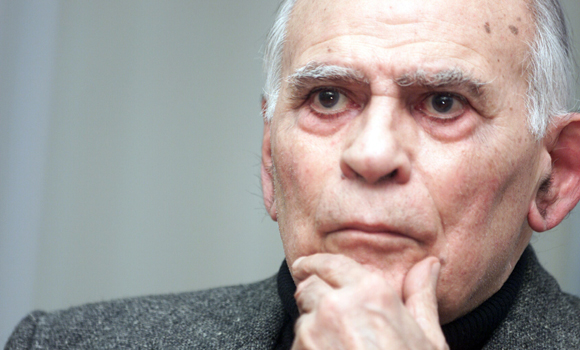
I only just yesterday learned by chance that the great Romanian-born theater director Liviu Ciulei died October 25 at the age of 88 at his home in Munich. I met him in 1984 when he was artistic director of the Guthrie Theater in Minneapolis and brought his countryman Lucian Pintilie over to make his American debut staging the best production of Chekhov’s The Seagull I’ve ever seen. He also invited Peter Sellars to the Guthrie to mount Hang On To Me, a beautiful mash-up of Gorky’s Summerfolk with Gershwin songs. I had the pleasure of interview Liviu several times, including for an article that ran in the Arts & Leisure section of the New York Times (Bruce Weber picked out all the best quotes for his obituary). He and his wife Helga were very smart, very sophisticated, very modest, and yet also not afraid to register sharp, witty criticism. Liviu was very much a product of the culture in which he created his career. On the one hand, he once told me with quiet outrage that under the Communist Ceauşescu regime in Romania, he was not allowed to stage Hamlet because it was forbidden to portray ghosts onstage. (He got to put on an excellent production at the Public Theater with Kevin Kline in the title role and the legendary Jeff Weiss as the Player King.) On the other hand, he insisted that story be off-the-record, lest it somehow get him in trouble. (Granted, this was before Nicolae and Elena Ceauşescu were driven from power and summarily executed on Christmas Day, 1989.)
Archive for November, 2011
R.I.P.: Liviu Ciulei
November 19, 2011Photo diary: in Las Vegas with my sisters
November 19, 2011
I visited another planet for the weekend: the M Resort in Las Vegas (actually, Henderson, the town next door)
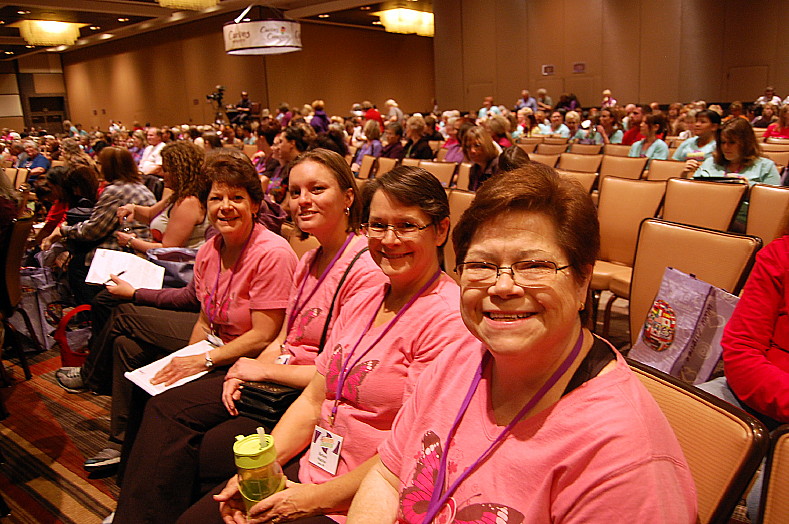
I was there attending a Curves convention with my sisters
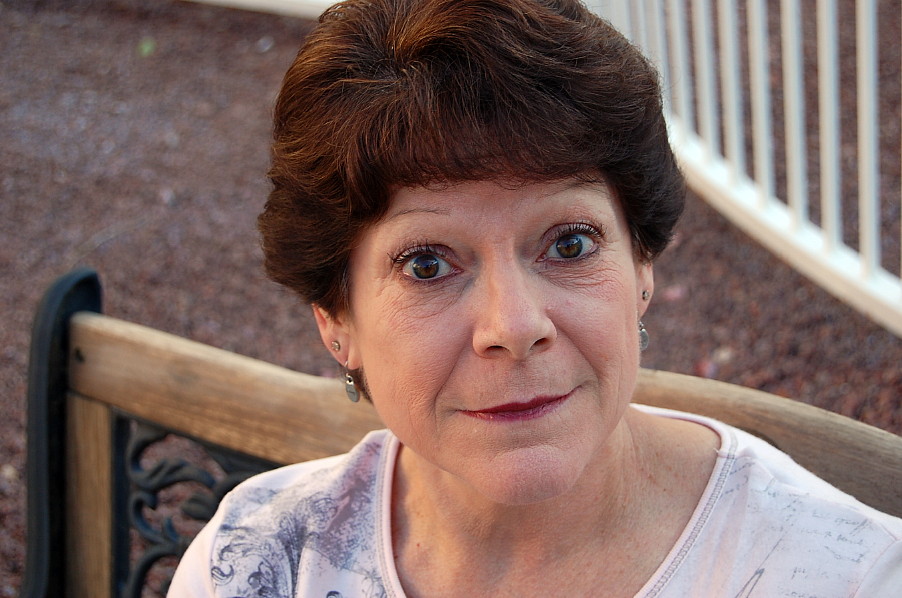
Marianne owns a Curves franchise in her small town in Maine. (In case you don't know, Curves is a gym for women that specializes in a 30-minute workout.)

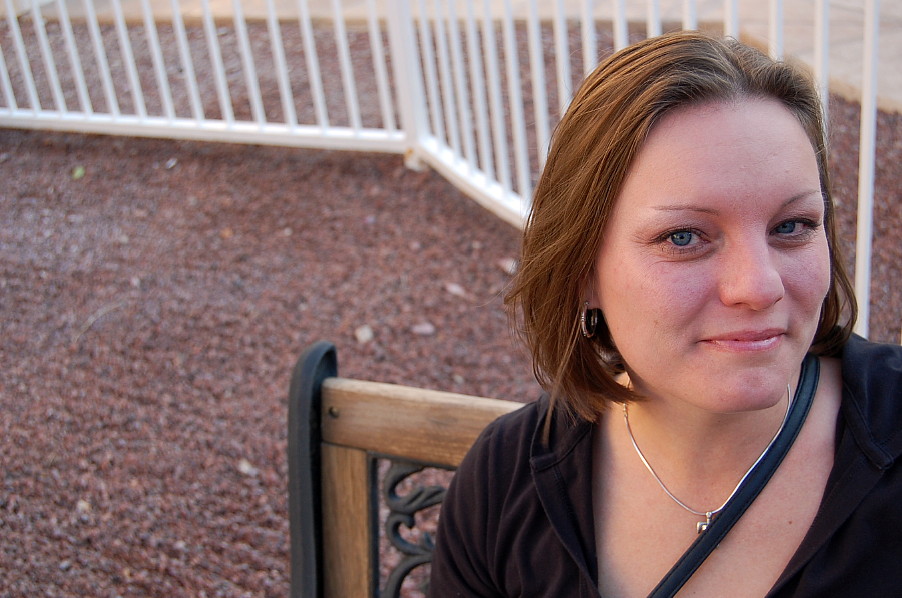
She goes to the convention every year, sometimes accompanied by Joanne (above)...
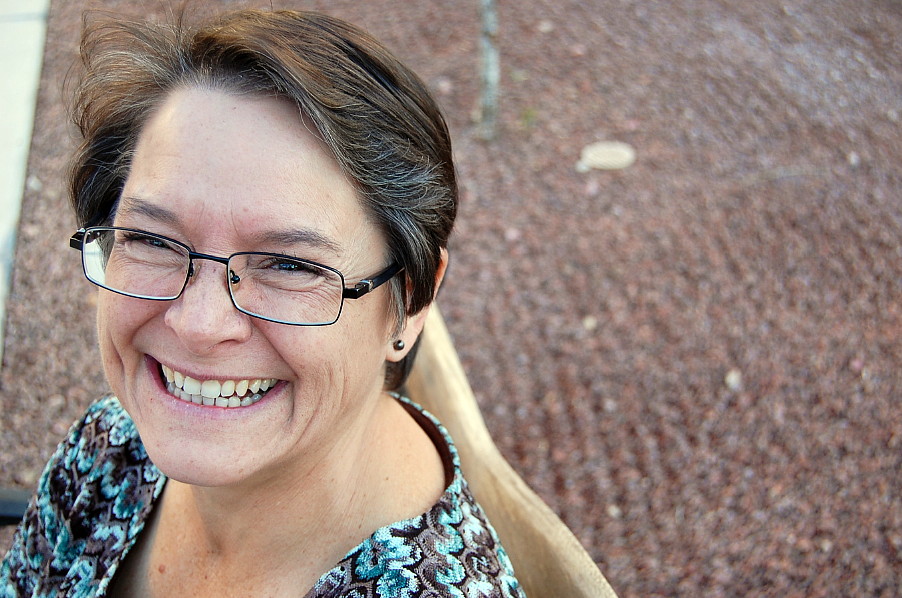
or Barbara. This year they both decided to go...
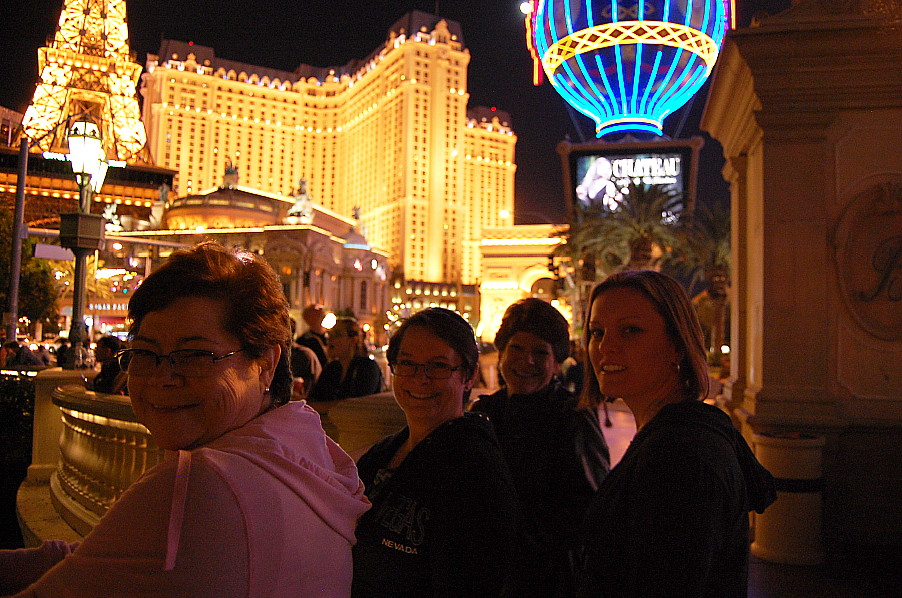
along with Barbara's daughter Carlee -- they all live in Denver.

I decided to invite myself since the four of us haven't been in the same place together in several years.

There was a long day of sales meetings and pep talks, followed by the inevitable Expo where we stuffed our gift bags with giveaways -- string cheese!

I even got a chance to experience Zumba, the dancercise craze that Curves has combined with some of its workouts.

Although to be honest the high point of the day for me was hanging out at the Hostile Grape, the snazzy wine bar in the basement of the M Resort, nibbling antipasti and sampling wines by the glass

The next day we made the obligatory pilgrimage to the Strip and wandered through the various crazy theme hotels -- the Luxor (above), the Excalibur, Mandalay Bay, the MGM Grand (jam-packed for a boxing match), playing $1 apiece in every casino we passed through
And we ended up at the Bellagio watching the dancing waters do their thing, to the tune of "One Singular Sensation..."
Quote of the day: HOPE
November 16, 2011HOPE
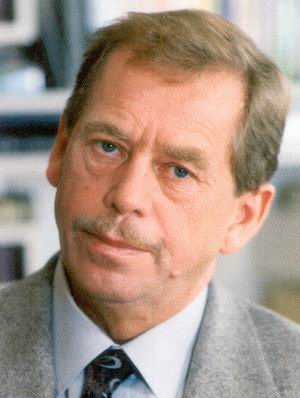
Hope, in this deep and profound sense, is not the same thing as joy that things are going well, or willingness to invest in enterprises that are obviously headed for success, but rather, an ability to work for something because it is good.
— Vaclav Havel
Quote of the day: BRAIN
November 15, 2011BRAIN
Q: What do you consider to be significant with regard to the latest discoveries about the brain?
For one, we know a lot more about what happens when people are upset – how we get emotionally hijacked by our upsets. A part of the brain called the amygdala developed as an alarm bell; it’s looking for negative information. That was very useful when we evolved – paying attention to avoid lethal threats – but we now know tht the amygdala tends to overreact.
When people are stressed, the hormone cortisol is released, which sensitizes the amygdala, and so it makes that alarm bell even louder. This undermines another part of the brain called the hippocampus, which both forms new memories and puts the brakes on the amygdala. So chronic stress has this really nasty one-two punch: one, it jacks up the alarm bell, and two, it weakens the brakes on the alarm.
Q: Okay, there’s apart of my brain that’s biased toward negativity. So if I’m being paranoid for no reason, how can I work with my brain to shift toward a more balanced view?
I’ll mention two methods in summary. First, research has shown that when you put words to your feelins, when you just label them, that does two things. One, it stimulates activity in what’s called the prefrontal cortex – the very front part of your brain – and second, it lowers activity in the amygdala alarm circuit. The simple act of naming to yourself what you’re feeling as you’re feeling it helps to dampen this overreaction.
The other method is based on science’s new understanding of how memory is actually formed. The brain is so fast and it has so many neurons that it can afford to rebuild a memory from scratch each time it brings it up. We can use this knowledge in a very practical way. When something painful is in awareness, if you also bring to mind positive information – especially positive feelings that are really felt and intense – you gradually infuse that negative experience with positive associations when it goes back into storage. And so the next time it comes up, it’ll bring a little bit of that positive tinge with it. It won’t change overnight; you need to stick with it. But over time, you can gradually help yourself from the inside out to shift your interior landscape.
Q: What have we learned about the brains of those who meditate?
Well, the studies are in their infancy, but basically the more you meditate, the better the effect. One of the major findings is that meditation thickens gray matter. You want more gray matter because that means more connections between neurons – which increases your functionality and performance in that part of your brain. When you meditate you stimulate and therefore strengthen the part of your brain that deals with increasing positive emotions and regulating negative emotions. This illustrates the general point that by using your mind in a targeted way, you can build up the circuits that you want to build up, and you can control the circuits you want to control. Science is beginning to identify those targets; it’s not perfect yet, but already there’s a lot of promise here.
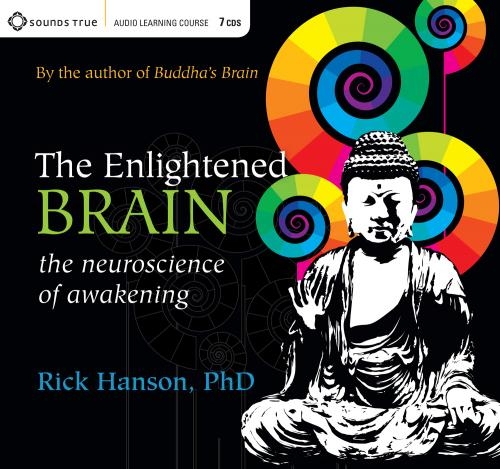
— Sounds True interview with Rick Hanson, author of The Enlightened Brain
Theater review: VENUS IN FUR
November 12, 2011
My review of David Ives’s play Venus in Fur, featuring Hugh Dancy and the newly minted Broadway star Nina Arianda, has just been posted on CultureVulture.net. Check it out and let me know what you think.
As I say in my review, “As a portrayal of sex, it’s extremely tame — there’s no nudity, and we never even see the whip that figures so heavily in [the main character’s] erotic fantasies. But there is one moment, as Dancy slowly, carefully zips Arianda into a pair of thigh-high black boots — when the play approaches that delicious moment in an erotic encounter when time appears to hold its breath.” You can read the review in its entirety here.
 another eye opens