Archive for January, 2010

Haiti disaster relief

January 15, 2010

The situation looks grim, and even getting medical aid and emergency supplies into Port-au-Prince and distributed effectively will be difficult and compromised by inevitable human conditions. Nevertheless, I can’t look on and do nothing. I’ve made donations to two organizations with a lot of experience on the ground in these circumstances:

Partners in Health

Doctors Without Borders

Consider making donations today. Both these websites make it quick, easy, and safe.

Quote of the day: BODY

January 11, 2010

i like my body when it is with your
body. It is so quite a new thing.
Muscles better and nerves more.
i like your body. i like what it does,
i like its hows. i like to feel the spine
of your body and its bones, and the trembling
-firm-smooth ness and which I will
again and again and again
kiss, i like kissing this and that of you,
i like, slowly stroking the, shocking fuzz
of your electric fur, and what-is-it comes
over parting flesh…And eyes big love-crumbs,

and possibly i like the thrill
of under me you quite so new

— e.e. cummings

Theater Review: PATAPHYSICS PENYEACH

January 9, 2010

On the occasion of New York Theater Workshop’s hosting a revival of Lee Breuer’s Pataphysics Penyeach: Summa Dramatica and Porco Morto, I’m re-posting what I wrote about the show when I saw it last January:

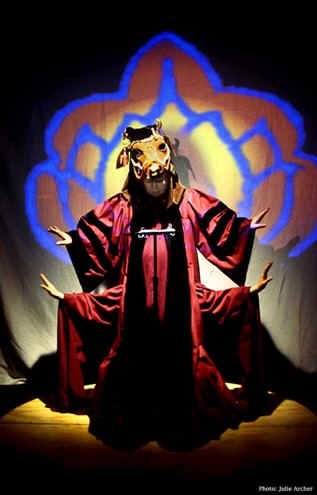
January 10 – I went to the Mabou Mines Studio to see Pataphysics Penyeach, two one-act animations by Lee Breuer – Summa Dramatica, primarily a lecture by the holy cow Sri Moo Parahamsa, played by Ruth Maleczech, and Porco Morto, a memorial service for and visitation of the spirit of Ponzi Porco, PhD, all voices performed by Greg Mehrten. As usual for Mabou Mines, these pieces (presented as part of the Under the Radar Festival) were opportunities for plentiful pun-filled philosophizing by Lee Breuer and fantastic performances by his longtime colleagues. Summa Dramatica is a chunk of Lee’s magnum opus La Divina Caricatura, a multidimensional meditation on art, life, love, animals, animation, theater, media, and the soul, alternately erudite and wise-cracking. Pataphysics Penyeach refers both to Alfred Jarry’s whimsical “science of imaginary solutions” and to James Joyce’s early book of poetry, Pomes Penyeach. Sri Moo is a sort of therapist cum acting teacher whose Institute for the Science of Soul in Cheesequake, New Jersey, treats deconstructed souls like Marge Simpson, who have been reduced to mere cartoons. And she speaks in gnomic phrases that are both sage and satirical at the same time: “I pledge allegiance to the hype…The soul is not immortal anymore. Money is immortal…The Greeks have been in denial for 3000 years. The truth is not beautiful.” Ruth plays Sri Moo inside an elaborate Hindu deity/cow costume with headdress, which she removes halfway through – in Lee Breuer’s own brand of Jack Smith Brechtianism, all the illusion-making aspects of theater are exposed, so we see Ruth reading her lines from a teleprompter, and the other performers manipulating puppets and projectors are not tidily tucked out of sight, the way they might be in a slicker piece of theater.

After a break, we returned to Porco Morto, which began as a solemn memorial, with Greg Mehrten dressed in Secret Service garb with wired-for-sound dark glasses and funeral suit filling us in on the gruesome and somewhat mysterious demise of Professor Porco, a comic caricature version of an hipster artist not unlike Lee Breuer: “I was there at the first drop of acid. I was On the Road with Jack.” (This character was the subject of an earlier Mabou Mines piece, Ecco Porco, in which the title character was played by Fred Neumann.) This morphs into a kind of funeral ceremony or séance for which Mehrten becomes a kind of shamanistic robed priest, through whom the stuttering voice of Porco is heard, while Porco himself is represented as a three-dimensional puppet resurrected from his coffin to share, among other things, his lifelong fetishistic obsession with the New York Times. Breuer always knows how to push the bad-boy edge, here incorporating a long manipulated video of Times reviewer Charles Isherwood. Crazy funny stuff. The piece ends with a kind of chorale, with Mehrten and the puppeteers and a musician who wizardly plays both harp and violin doing “Sweet Mystery of Life.” Mehrten is a master of voices and this is one more tour de force vocal performance by him.

HTML clipboard January 10 – On an entirely different scale of dense theatrical inventiveness, I went to the Mabou Mines Studio to see Pataphysics Penyeach, two one-act animations by Lee Breuer – Summa Dramatica, primarily a lecture by the holy cow Sri Moo Parahamsa, played by Ruth Maleczech, and Porco Morto, a memorial service for and visitation of the spirit of Ponzi Porco, PhD, all voices performed by Greg Mehrten. As usual for Mabou Mines, these pieces (presented as part of the Under the Radar Festival) were opportunities for plentiful pun-filled philosophizing by Lee Breuer and fantastic performances by his longtime colleagues. Summa Dramatica is a chunk of Lee’s magnum opus La Divina Caricatura, a multidimensional meditation on art, life, love, animals, animation, theater, media, and the soul, alternately erudite and wise-cracking. Pataphysics Penyeach refers both to Alfred Jarry’s whimsical “science of imaginary solutions” and to James Joyce’s early book of poetry, Pomes Penyeach. Sri Moo is a sort of therapist cum acting teacher whose Institute for the Science of Soul in Cheesequake, New Jersey, treats deconstructed souls like Marge Simpson, who have been reduced to mere cartoons. And she speaks in gnomic phrases that are both sage and satirical at the same time: “I pledge allegiance to the hype…The soul is not immortal anymore. Money is immortal…The Greeks have been in denial for 3000 years. The truth is not beautiful.” Ruth plays Sri Moo inside an elaborate Hindu deity/cow costume with headdress, which she removes halfway through – in Lee Breuer’s own brand of Jack Smith Brechtianism, all the illusion-making aspects of theater are exposed, so we see Ruth reading her lines from a teleprompter, and the other performers manipulating puppets and projectors are not tidily tucked out of sight, the way they might be in a slicker piece of theater.

After a break, we returned to Porco Morto, which began as a solemn memorial, with Greg Mehrten dressed in Secret Service garb with wired-for-sound dark glasses and funeral suit filling us in on the gruesome and somewhat mysterious demise of Professor Porco, a comic caricature version of an hipster artist not unlike Lee Breuer: “I was there at the first drop of acid. I was On the Road with Jack.” (This character was the subject of an earlier Mabou Mines piece, Ecco Porco, in which the title character was played by Fred Neumann.) This morphs into a kind of funeral ceremony or séance for which Mehrten becomes a kind of shamanistic robed priest, through whom the stuttering voice of Porco is heard, while Porco himself is represented as a three-dimensional puppet resurrected from his coffin to share, among other things, his lifelong fetishistic obsession with the New York Times. Breuer always knows how to push the bad-boy edge, here incorporating a long manipulated video of Times reviewer Charles Isherwood. Crazy funny stuff. The piece ends with a kind of chorale, with Mehrten and the puppeteers and a musician who wizardly plays both harp and violin doing “Sweet Mystery of Life.” Mehrten is a master of voices and this is one more tour de force vocal performance by him.

Quote of the day: WRITING

January 9, 2010

WRITING

On January 8, 1981, when Chilean-born Isabel Allende was living in Venezuela and working as a school administrator and freelance journalist, she got a phone call that her beloved grandfather, at 99 years old, was dying. She started writing him a letter, and that letter turned into her very first novel, The House of the Spirits. She said, “It was such a lucky book from the very beginning, that I kept that lucky date to start.”

January 8 is a sacred day for her, and she treats it in a ceremonial, ritualistic way. She gets up early this morning and goes alone to her office, where she lights candles “for the spirits and the muses.” She surrounds herself with fresh flowers and incense, and she meditates.

She sits down at the computer, turns it on, and begins to write. She says: “I try to write the first sentence in a state of trance, as if somebody else was writing it through me. That first sentence usually determines the whole book. It’s a door that opens into an unknown territory that I have to explore with my characters. And slowly as I write, the story seems to unfold itself, in spite of me.”

She said, “When I start I am in a total limbo. I don’t have any idea where the story is going or what is going to happen or why I am writing it.” She doesn’t use an outline, and she doesn’t talk to anybody about what she’s writing. She doesn’t look back at what she’s written until she’s completed a whole first draft — which she then prints out, reads for the first time, and goes about the task of revising, where she really focuses on heightening and perfecting tension in the story and the tone and rhythm of the language.

She said that she take notes all the time and carries a notebook in her purse so that she can jot down interesting things she sees or hears. She clips articles out of newspapers, and when people tell her a story, she writes down that story. And then, when she is in the beginning stages of working on a book, she looks through all these things that she’s collected and finds inspiration in them.

She writes in a room alone for 10 or 12 hours a day, usually Monday through Saturday from 9:00 a.m. to 7:00 p.m. During this time, she says, “I don’t talk to anybody; I don’t answer the telephone. I’m just a medium or an instrument of something that is happening beyond me.”

She’s the author of nearly 20 books published since 1982, among them Paula (1995), Daughter of Fortune (1999), Portrait in Sepia (2000), and the recent memoirThe Sum of Our Days (2008). Her work has been translated into 30 languages, and her books have sold more than 51 million copies. She continues to write fiction in Spanish though she’s lived in the United States for decades.

— The Writer’s Almanac

R.I.P.: Lhasa

January 9, 2010

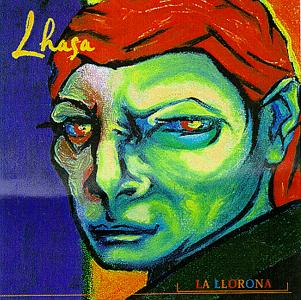
Sad to learn of the death on New Year’s day of the fine, fiery singer Lhasa, colleague and cohort for my buddies in the San Francisco performance world. Condolences to her family and loved ones.